
On August 6th 2001, the recently elected President George W. Bush received his daily brief. This day’s brief was titled Bin Laden Determined to Strike in US. This report, which was declassified in 2004, tells of a man called Osama bin Laden, who had been planning an attack on the USA since the late 1990s. The majority of the brief details previous attempts by Bin Laden to attack the United States. However, the ending of the report stated that since 1999, the FBI had been conducting investigations, reporting that Bin Laden was “[indicating] patterns of suspicious activity in this country, consistent with preparations for hijackings or other types of attacks, including recent surveillance of federal buildings in New York.” The briefing highlighted a growing threat from al-Qaeda, the Islamist militant organisation that bin Laden allegedly ran, but did not specify a timeline, method, or target. In hindsight, it became one of several missed warnings that were not translated into preventative action.

Up until 08:46 that morning, September 11th 2001 was a very average and very boring Tuesday, as had been the case much of the rest of 2001. No-one knew that American and world history would change that day. Captain John Ogonowski and First Officer Thomas McGuinness Jr, alongside nine cabin crew members, were on board American Airlines Flight 11, a Boeing 767 carrying 81 passengers out of Logan International Airport in Boston. At the time, airline security was seen as a relatively benign procedure, compared to today. Whilst American airport security is now run by federal employees of the Transportation Security Administration (TSA), they used to be managed by the airline companies themselves, with limited requirements being regulated by the Federal Aviation Administration (FAA), such as basic metal detectors and rudimentary x-ray machines. They weren’t particularly thorough with their checks, intent on making security a background procedure to allow family members to the gates to wish their loved ones goodbye as well as due to cost cutting and low levels of training. As a result, items such as boxcutters and other small knives were not prioritised, as the typical threat was bombs, following the bombings of Air India Flight 182 in 1985 and Pan Am Flight 103 over Lockerbie, Scotland, in 1988. This meant five men slipped through airport security with such items, largely unfazed.
Five men, led by Mohamed Atta, had managed to get through airport security. However, he was nearly stopped in his tracks. Atta began getting overly irate at a man at the ticket counter at Portland International Airport in Maine, as he was told he would have to check in again upon his arrival at Logan International. Fearing he’d be accused of racially profiling Atta, the ticket officer let him through. Atta was also stopped a second time for extra luggage scrutiny, before he was once again allowed to pass. Atta, as well as a second man, landed in Boston before 7:00, where they met up with the other three men. The men got through Logan’s airport security, with three of them facing luggage checks, before they boarded the plane in business class at 07:40. The flight took off at 07:59, around 14 minutes behind schedule. The fate of the people aboard that flight was sealed.

At 08:14, Peter Zalewski, an air traffic controller, lost contact with Flight 11. Operating within Boston’s airspace, the pilots were failing to respond to any form of contact with ground control. Whilst he wasn’t initially worried, he began to get worried when the flight changed course and its transponder turned offline. Typically, this means that there has been a massive system failure. But, when Zalewski checked the more primitive Primary Radar Returns, he could tell that the plane was still up in the air. This meant that the transponders had been manually turned off.
At 08:19, Flight Attendant Betty Ong contacted the American Airlines operations centre from a phone at the end of the plane. She identified herself before detailing that someone had been stabbed in business class and that someone had sprayed Mace in the cabin as a form of crowd control. She later elaborated that the stabbed individuals consisted of Daniel Lewin and two flight attendants, Karen Martin and Barbara “Bobbi” Arestegui. Lewin, an American-Israeli citizen, reportedly died from his wounds before the crash, making him the first victim of the attacks.
Five minutes later, Zalewski received a mysterious call from Flight 11, a voice later identified Atta. It’s believed that he was attempting to broadcast a message to the plane cabin but had accidentally sent a message to the entire Boston network, including air traffic control. He detailed that they would be returning to the airport and ordering everyone to “just stay quiet.” Nine minutes later, they receive a second similar message.
This was a great concern for Zalewski, but his superiors and peers were less worried. For starters, they couldn’t figure out what the garbled message said for quite some time. In addition, the precedent for hijackings of this sort was to make a demand of some kind. The most famous hijacking in American history up to this point, the DB Cooper incident, involved a request for thousands of dollars but, as far as they could tell, no such demands had been made aboard Flight 11. However, they still determined that they had a rogue 767 flying in Boston’s airspace. However, in order to do something about it before it entered New York’s airspace, as the new flight path indicated, there was an incredibly long chain of command in order to notify the entire system of the rogue plane and authorise military assistance. The notification had to go up from the Boston Air Traffic Control Centre (ARTCC) up through the FAA chain of command to the Pentagon, where the order to authorise escorts from the Secretary of Defence has to go all the way back down through North American Aerospace Defence Command, NORAD, before orders can be issued to Defence Sites. Part of the issue was that this was a chain of command developed during the Cold War for external enemy attacks. It was not designed for military intervention on a hijacking by an external enemy.

On the morning of 9/11, the existing protocol was unsuited in every respect for what was about to happen.
The 9/11 Commission Report, pg. 18
Soon, they notified the other potential airspaces that the plane might enter and managed to get the information up to the FAA Headquarters. However, for reasons that still remain a mystery to this day, the information stalled and went no further. As a result, a controller broke protocol and directly contacted the North East Defence Sector (NEADS). Major-General Larry Arnold, Commander of the Continental US Region of NORAD, also defied protocol and authorised the deployment of F-15 fighter jets from Cape Cod, Massachusetts, in order to monitor Flight 11, without seeking instructions from the higher chain of command. It would take approximately 10-15 minutes for the F-15s to get from their base to New York. This was far too late.
In New York City, brothers Jules and Gédéon Naudet, a pair of French-American filmmakers, were working on their second film: a documentary about the crew of a fire engine in the city. As a part of this documentary, Jules joined New York fire fighters whilst they were inspecting a possible gas leak from a storm drain at the intersection of Church and Lispenard Streets. This drain was about 0.8 miles away from the Twin Towers, some of the tallest buildings in the world and the largest parts of the World Trade Centre complex, a premier commercial and business complex in downtown Manhattan. As Jules filmed the drain at 8:46, the passing sound of a commercial airliner could be heard from overhead. Thinking it unusual that a plane was this close to the ground in this area of town, Jules followed where the plane was going with his camera.
Flight 11 struck the north side of the North Tower of the World Trade Centre at 8:46:40. The impact of the plane hitting the tower killed everyone on board the flight as well as countless others in between the 93rd and 99th floors of the building. With the floors above and below trapped by rubble on the stairs and elevators out of commission above the 50th floor, many jumped rather than facing what may come next. The 10,000 gallons of fuel in the plane atomised into a fine mist on impact, which ignited with sparks from electrical equipment in the building and the plane and led to an explosion and subsequent fire that burned for over 100 minutes. Zalewski, who recieved the news almost immediately, retreated to the Boston ARTCC car park where he fought back tears of guilt for not being able to stop the disaster sooner. The New York and New Jersey Port Authority, which oversees much of the regional transportation infrastructure, including bridges, tunnels, airports, and seaports within the Port of New York and New Jersey’s jurisdiction, did not deem evacuating the South Tower as a necessary precaution, under the assumption that the initial crash was just an accident. However, their opinion would change all too late.
A few minutes after the crash, at 8:51, Dave Bottiglia, an air traffic controller at New York’s ARTCC, lost contact with United Airlines Flight 175. This plane had taken off from Logan International Airport under the command of Captain Victor Saracini and First Officer Michael Horrocks with seven cabin crew members and 65 passengers. They took off around 14 minutes after their scheduled departure of 8:00. At 8:41, they reported suspicious transmissions they had received as they were departing from the airport. These were identified as the messages that Atta had accidentally broadcast across the entire Boston network. They felt it prudent to notify New York’s airspace as they entered it from Boston’s airspace. Bottiglia, who had received that message from United 175, was now in a similar position that Zalewski had been nearly an hour earlier. The transponder code was no longer updating and tried to notify the pilots of this error. However, assuming the pilots just weren’t paying attention, thought nothing of it. That was until he noticed a rapidly ascending and unrecognisable transponder code on his screen. Bottiglia initially believed these were two separate incidents, until he received information that the rogue plane was a United Airlines Boeing 767, the same plane as United 175.
Meanwhile Delta Airlines Flight 2315 was on a collision course with the rogue 175. Bottiglia yelled at the pilot to “Take any evasive action necessary,” leading to the plane narrowly missing 175 by only 300ft. Later, 175 nearly collided with TWA Flight 3, missing that one by only 500ft, and again with Midwest Express Flight 007 and missed that one by only 30ft. The pilot of 007 claimed that “I’ve never heard [Air Traffic Control] scream like that.” As this was going on, they suspected there had been a second hijacking aboard 175. Five men had boarded the flight, again with small knives in their luggage, and it is believed that they took control of the Airplane just before 8:51. One of the men, Marwan al-Shehhi, had called Atta’s cellphone at around 6:52. It is believed this call was to confirm that what came next was still going ahead. As New York ARTCC failed to contact the FAA, they instead called a smaller facility that, if their data was correct, should have had a clear view of Flight 175 and the already burning North Tower. Their assumption was correct, as they were on the phone with air traffic control as Flight 175 struck the South Tower of the World Trade Centre at 9:03. This was an image broadcast around the world, due to most news stations already covering the burning North Tower. An estimated 2 million people saw the live video of the plane hitting the tower.
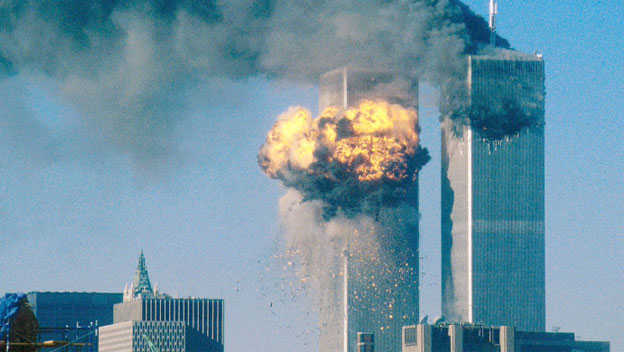
It was only at this point that Boston managed to fully decipher what Atta had said on the message. When they realised he had said “planes” (plural), they immediately scrambled to alert all planes in the Boston airspace to heighten cockpit security before calling the FAA Command Centre to request that they spread the message to other planes across the country. However, despite the Command Centre assuring Boston that they would, they took no such action.
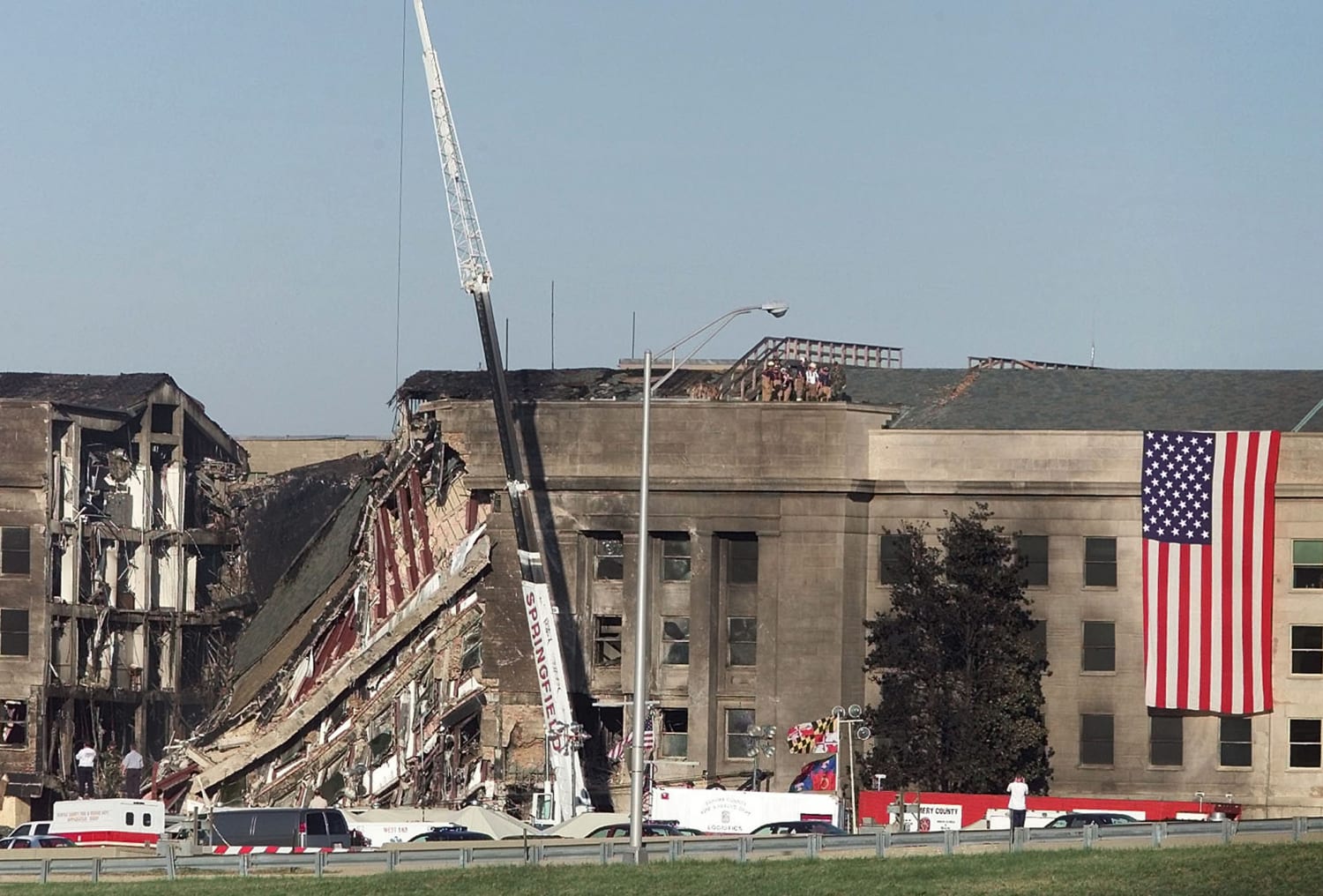
Meanwhile, Indianapolis ARTCC lost contact with American Airlines Flight 77 at around 08:51. This flight took off from Dulles International Airport in Northern Virginia and was piloted by Captain Charles Burlingame and First Officer David Charlebois, carrying 4 flight attendants and 58 passengers. Nothing was heard from Flight 77 until, at 09:37, the flight crashed with the Pentagon, the HQ of the United States Military. It’s believed that five hijackers took control of the plane shortly after 08:51, turned off the transponders and managed to make it vanish from the radar. It was initially interpreted as a crash upon the loss of contact so nothing was done to try and prevent the collision with the building. Everyone on board was killed immediately whilst 125 people within the building were killed or fatally injured.
Meanwhile United Airlines Flight 93 took off from Newark International Airport in New Jersey, around 10 miles from the Twin Towers. The flight left the airport only four minutes before Flight 11 struck the North Tower and over 40 minutes after its scheduled time of departure. Ed Ballinger, a United Airlines dispatcher, relayed a message to Captain Jason Dahl and First Officer LeRoy Homer Jr to “Beware any cockpit intrusion—Two [aircraft] hit World Trade Center” at 09:23. When Dahl sent back a message to confirm this statement, four hijackers breached the cockpit a mere two minutes later. Two mayday messages were sent out at 09:28 before the cockpit went quiet. A minute later, Bush went live on TV, during the middle of a public event to promote education initiatives, that America was facing a co-ordinated terrorist attack.
Meanwhile, passengers on board Flight 93 had been pushed to the back of the cabin, where all the Airfones on board the plane resided. Having communicated with their loved ones, they too learned of the scale of the attack. Not wanting any more lives to be lost, they began to organise. Despite being in the view and earshot of two of the hijackers, they continued to organise whilst the hijackers did nothing. Eventually a plan was concocted. Todd Beamer, a near-professional baseball player, made a request to Airplane Supervisor, Lisa Jefferson.
“Would you do one last thing for me?”
“Yes. What is it?”
“Would you pray with me?”
The passengers then recited the Lord’s Prayer together. At the end of this improvised sermon on the plane, Beamer concluded with a verse from Psalms 23
Yes, though I walk through the valley of the shadow of death,
The verse that Beamer recited on United 93, Psalms 23:4
I will fear no evil;
For thou art with me

Then Beamer told the other passengers and crew members “Are you guys ready? OK, let’s roll.”
The plane started moving around erratically as Ziad Jarrah, the pilot amongst the hijackers, asked his copilot “Is there something? A fight?” CeeCee Lyles, a flight attendant called her husband saying that the passengers were forcing their way into the cockpit of the aircraft. Jarrah turned the plane from side to side to knock the passengers off balance as he told the co-pilot that “They want to get in here. Hold, hold from the inside. Hold from the inside. Hold.” He then jerked the plane up and down 2 minutes into the assault. There was crashing, screaming and china and glass smashing. There were also shouts of pain from another hijacker outside the cockpit, presumed to be attacked. Jarrah stabilised the plane and asked, “Is that it? Shall we finish it off?” “No. Not yet,” says another hijacker, “When they all come, we finish it off.” Jarrah starts jerking the plane again and a passenger says, “In the cockpit. If we don’t, we’ll die.” And 16 seconds pass by. As a passenger screams, “Roll it!” they start using the food cart as a battering ram for the cockpit door. Having realised that the plan is over, Jarrah pushed the plane into a nosedive. The 9/11 Commission Report concluded that “The hijackers remained at the controls but […] the passengers were only seconds from overcoming them.” At 10:03, the plane crashed into a field outside of Shanksville, Pennsylvania, killing everyone on board.
Back in New York, the towers, due to the sustained weakening from the fires, collapsed at 9:59 for the South Tower and 10:28 for the North Tower. Fires caused inside by other flammable objects within the buildings, such as paper and furniture reached over 1,000°C, leading to the weakening but not melting of the steel beams that held up the building. As a result, the top floors of the building collapsed onto the next, creating a domino effect and the collapse of the buildings. Due to the spread of the fire caused by debris, the 7th building in the complex also collapsed at 17:20. The fires were inaccessible to the FDNY and the interior sprinkler system had failed leading to the collapse of a critical support column and the building itself. Almost 3,000 people were killed in the attacks, consisting of the pilots, the flight crews, the passengers, the terrorists and members of the FDNY and NYPD.
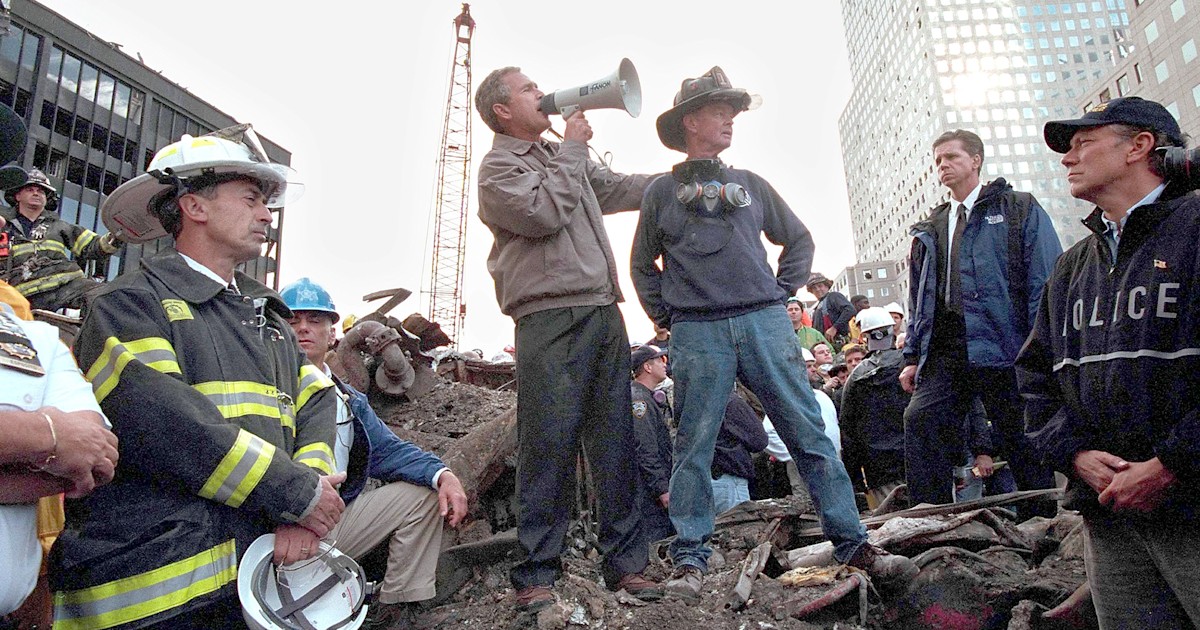
I can hear you. The rest of the world hears you. And the people who knocked these buildings down will hear all of us soon.
George W. Bush on the site of ground zero
In their aftermath, a wide range of conspiracy theories emerged, claiming the attacks were an “inside job,” a false-flag operation, or involved foreign intelligence services such as the Israelis. While such claims persist in popular culture, no credible evidence has substantiated them, and they are rejected by mainstream investigators and historians. After the attacks, the National Commission on Terrorist Attacks Upon the United States, more commonly known as the 9/11 Commission, concluded that the catastrophe resulted less from a lack of information but instead from failures of coordination, communication, and urgency within the US government. Many argued that the Commission’s findings were limited by political constraints and that accountability for these failures was minimal. As a result, public debate shifted away from how the attacks occurred toward why repeated warnings were not translated into effective preventative action.
As a result of the attacks, Congress authorised the invasion of Afghanistan, due to the Taliban, the Islamist militant organisation running the country, housing al-Qaeda and their leader, Osama bin Laden. The invasion of Afghanistan is the only time where Article 5 of NATO has been invoked. In the aftermath of a series of anthrax attacks framed to look like they were by a jihadist group, Republican Congressmen and the Bush administration used it and 9/11 to pass the Patriot Act, a law that authorised the expansion of government surveillance on American citizens. The extent of this surveillance was revealed by Edward Snowden, a former National Security Agency (NSA) contractor, and revealed that the NSA was surveilling billions of people around the world. Parts of the act were eventually amended or appealed in 2015 following Snowden’s whistleblowing. The attack was also used by the US Government to justify the invasion of Iraq in 2003, a war widely regarded as illegal under international law. Whilst many deemed the 1990s as “the end of history,” September 11th proved that it was merely the end of a chapter in a much wider story.
Nice work, S.