The Chernobyl Disaster

In 1932, in Cavendish University, J. D. Cockcroft and E. T. S. Walton bombarded lithium with protons from a particle accelerator. The protons caused the lithium atom to split. Many scientists realised that if they continued to split uranium and plutonium atoms, with the protons from one atom splitting another and the process repeating in a process called fission, they could make a new source of energy. Much of this energy was harnessed in Nuclear Power Plants. By 1986, there were 389 power plants, 37 of which resided inside the Soviet Union.

Reactor 4 of the Chernobyl Nuclear Power Plant was constructed in 1983, with Viktor Bryukhanov, manager of construction of the plant, telling higher ups in the Communist Party of the Soviet Union that a test had been conducted in order to ensure the safety of the reactor. However, this was false. Bryukhanov would later defend this saying that completing work ahead of schedule entitled party members to significant bonuses. Despite the lack of the safety check, the plant went into operation.
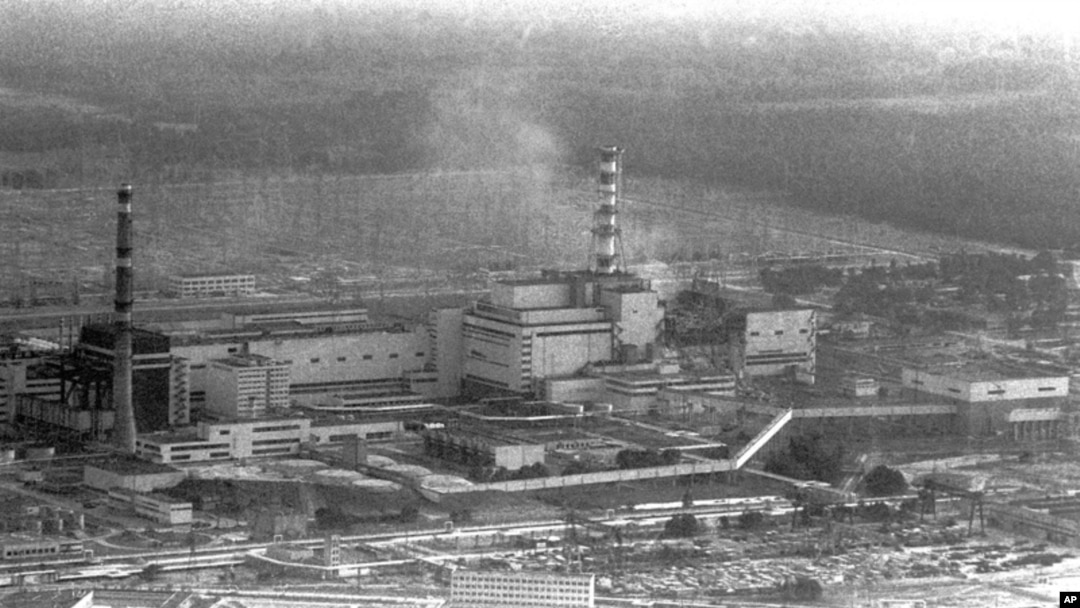
A photo of the plant before the explosion

Eventually, Nikolai Fomin, Chief Engineer, authorised the test to go ahead on April 25th, 1986 and the test would be performed by the workers of the afternoon shift. However, party officials from Kyiv requested that the test be delayed to late that night, as they did not want citizens to lose power in the middle of the day. Despite the workers of the afternoon shift being debriefed on what to do, the night shift workers were tasked with going ahead with the test instead.

Anatoly Dyatlov, deputy Chief Engineer, was monitoring the test, with the nightshift foreman, Alexander Akimov, and the Senior Reactor Control Engineer, Leonid Toptumov, who was only 25. Toptumov had only been operating the reactor for 2 months before the test, whilst neither Akimov or Toptumov had ever done the test before and weren’t properly briefed, with the test manual being heavily annotated and thus hard to follow. This meant that the two men were relying entirely on Dyatlov, as he was the most experienced in nuclear energy. In order to conduct the test, the reactors power levels had to be reduced to around 700 MW. However, an error was made by Toptumov.

A diagram of a Nuclear Reactor

Control rods help moderate the fission reactions, which heat up the water, which spins the turbines that generate the electricity. Toptumov’s mistake was that he had put these control rods in far too deep and the reactor practically went offline. Dyatlov was infuriated at the error but still insisted that the test go through anyway, despite the lack of power that was required to do so. He ordered that the control rods be raised, in an attempt to bring the power back up. The workers did what they were told and raised all but 8 control rods, whilst the minimum amount for safety is around about 30.

Many debate what happened next. Dyatlov claimed that everything was going as planned and part of the test was to press the emergency shut down button. However, many others testified that the power levels began to rise incredibly fast to dangerous levels. Whatever the case may be, what we know for certain is that Akimov pressed the AZ-5 emergency shut down button, which re-inserted every single control rod into the core.

Logically, this was supposed to immediately shut down all power. However, due to cutting cost, the rods were tipped with graphite, which got stuck at the heart of the core due to steam pressure. Graphite, when reacting with the radioactive elements, causes an increase in energy, before the control rods shut it down. The levels of energy rose higher and higher and, with the added steam pressure, the 1000 ton lid of the reactor was blown clean off. Then, once the core was exposed a second, undetermined, reaction occurred, causing and even larger explosion that blew the roof off the factory.

At 1:23 in the morning, the explosion echoed around the nearby city of Pripyat. Decimeters in the plant, that were only capable of detecting 3.6 roentgen per hour, broke due to the overload. The reactor was actually emitting over 15,000 roentgen per hour. Firefighters quickly arrived on the scene, many of whom succumbed to radiation sickness. Once they arrived at Pripyat Hospital, their highly radioactive clothes had to be taken off and we thrown into the basement, where they still rest to this day.

A photo of the firefighters clothes in the basement of Pripyat Hospital

Over 45,000 residents from Pripyat had to be evacuated. Eventually, a large sarcophagus was built over the reactor to contain the radiation, which was replaced by the Chernobyl New Safe Containment in 2016.

Dyatlov was sentenced to 10 years in prison for criminal negligence and failure to comply with the safety regulations of the test. He was released after serving only 4 years due to health concerns and died in 1995, aged 64 of bone marrow cancer, likely caused by his exposure to the plant’s radiation. Tomin, despite attempting to commit suicide multiple times, was also sentenced to 10 years in prison. He was also released from prison early and, as far as we’re aware, he is still alive today, living with his family in Udomlya. Bryukhanov sentenced to 10 years also, for gross violation of safety regulations, creating conditions that led to an explosion, mismanagement by understating the radiation levels after the accident, administrative negligence and sending people into known contaminated areas. He was released for good behaviour in 1991 and died in 2021 from an undisclosed disease, although we know he had Parkinson’s later in life.
Bryukhanov (left), Dyatlov (centre) and Tomin (right), on trial for their negligence at Chernobyl

To this day, the Russian Government still claims that only 31 people died from the disaster, whilst UN estimates claimed that 50 deaths were caused as a direct result of the explosion, with a further 4,000 succumbing to radiation sickness or other illnesses related to exposure such as cancer. Many scientists cite the Chernobyl Disaster as the worst disaster in the history of nuclear energy.
The Revenge of Olga of Kiev

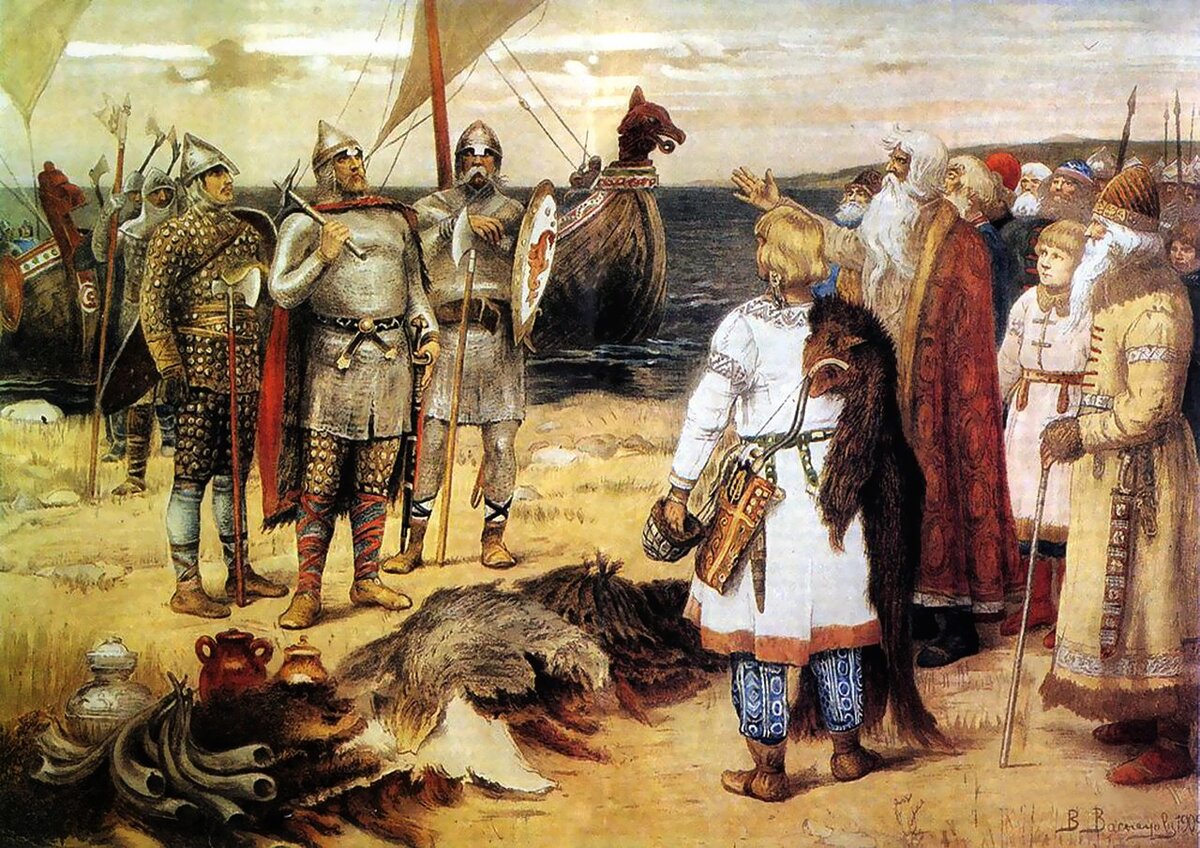
In the 10th Century, the Eastern European land of Rus was a collection of tribes who co-operated with one another for the primary purpose of trade. However, the tribes would often feud with one another, such as in the 9th Century when Slavic and Finnic tribes in Rus waged war on one another. In pursuit of peace, both the Slavs and Fins sought peace by both being governed by the Viking Ruler, Riurik. Riurik’s clan, the Varagians, had been “drove […] back beyond the sea” by the very same Slavic and Finnic tribes in an effort to establish self determination. Across the next few decades, the Varagians extended their rule over the lands of Rus all the way down to the now Ukrainian city of Kiev.

A painting Riurik and his two brothers coming to reestablish the peace

Oleg, the warrior who had conquered Kiev following Riurik’s death in 879, had a daughter who he named Olga. She married Igor, the son of Riurik and the pair soon became one of the most powerful and most loving marriages in Eastern Europe. They had one son, Syvatoslov. Upon the death of Oleg, Igor came to become Prince of Kiev and was considered a greedy, aggressive and unsuccessful ruler. In his two military expeditions to the Byzantine Empire, his fleets were destroyed by Greek Fire, although the peace settlement eventually led to a trade agreement. He extended Kiev’s authority over the neighbouring East Slavic tribes and the Pechenegs

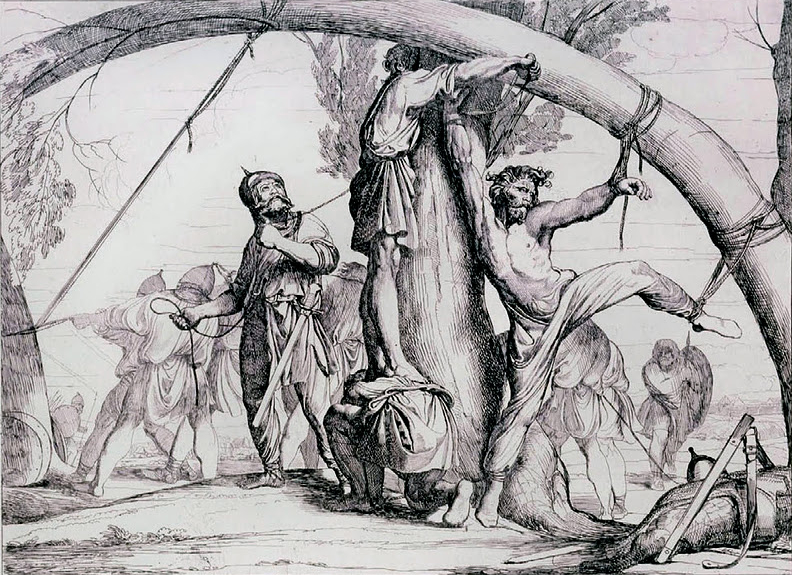
Upon Igor’s ascension to the throne, a rival tribe, known as the Drevlians, stopped paying tribute to Kiev in 912. By 945, Igor went with his army to the Drevlian capital of Iskorosten. Intimidated by the sight, the Drevlians seceded and began paying the tribute once more. However, Igor returned for more tribute payments than he was due. In response, the Drevlians decided to brutally murder him.

They had bent down two birch trees to the prince’s feet and tied them to his legs; then they let the trees straighten again, thus tearing the prince’s body apart.

Leo the Deacon, a Byzantine historian and chronicler
An illustration of the murder of Igor of Kiev

Following the death of Igor, the crown of Kiev fell to his infant son, Syvatoslov. However, due to the young age of the boy, his mother, Olga, claimed the regency until the boy was of age. Whilst many regents are often passive and are largely there to secure the position of the crown until the successor comes of age, Olga had much different ideas. Upon hearing of her husband’s brutal murder, she swore vengeance on the Drevlians and vowed to bring their tribe to a brutal end.

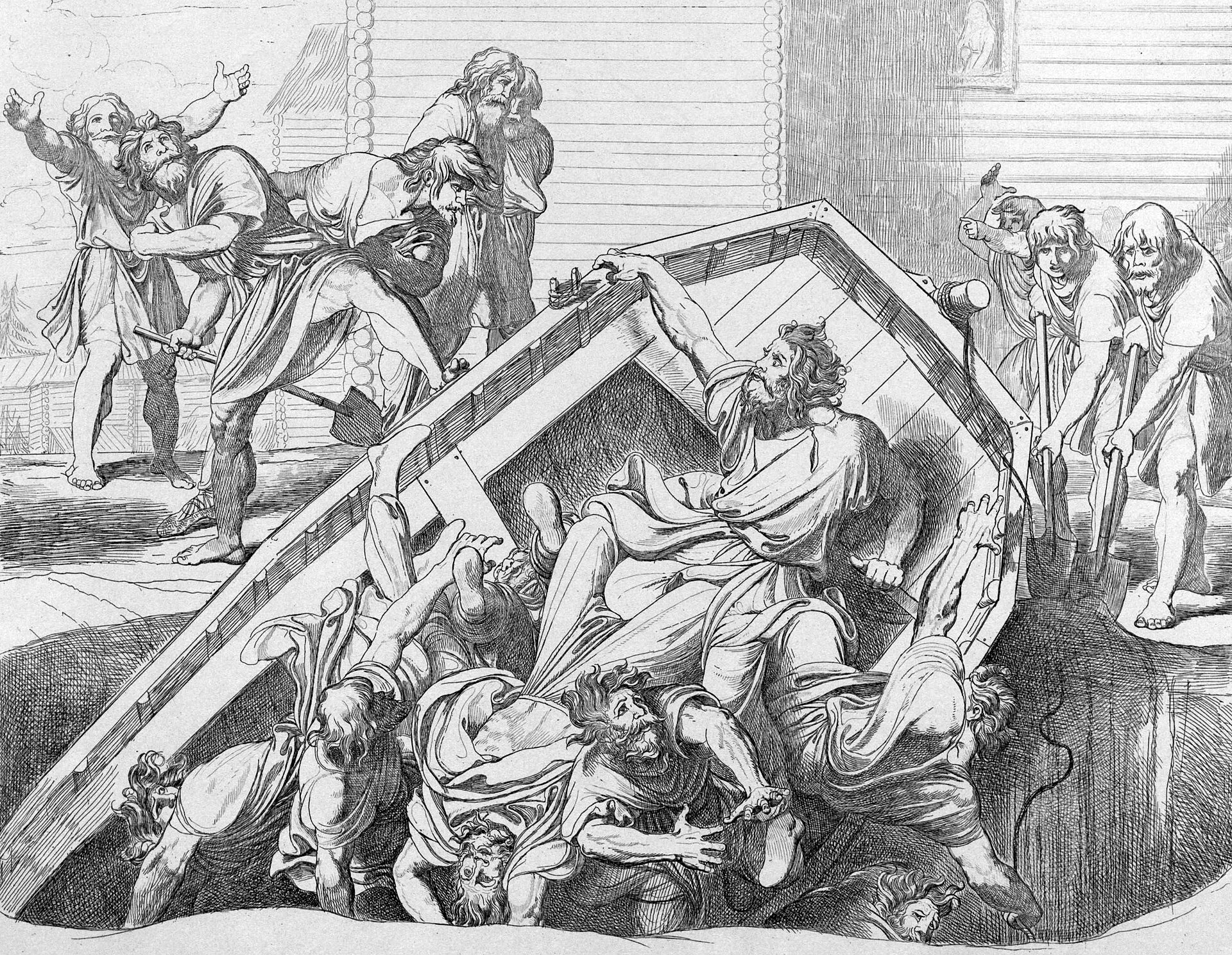
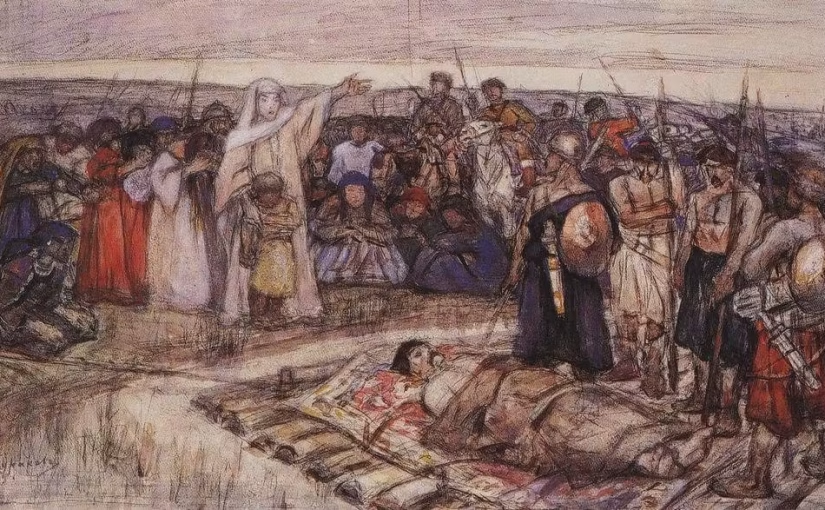
Her vengeance began when the Drevlians proposed that the recently widowed Olga marry the Drevlian Prince Mal. In response, Olga told the Drevlian emissaries to come back the next day while she considered the offer. Taking this as a good sign, the Drevlians left by boat and returned the next morning, where a group of Kievans picked up the boat and carried it across town. The ambassadors initially saw this as a sign of gratitude and welcoming, before the boat, with them inside, was thrown into a ditch that Olga had ordered to be dug the night before. The emissaries were subsequently buried alive. As they were buried, Olga allegedly kneeled next to the ditch and “inquired whether they found the honour to their taste.”

An illustration of the burial of the Drevlian Emissaries

Immediately after the first diplomatic party was buried alive, Olga sent a message to the Drevlians, requesting a second group of ambassadors. Unaware of the fate of the first group, a second group of men arrived, where they were offered a cleaning at a nearby bathhouse. Once the Drevlians were inside, Olga set fire to the bathhouse, beginning at the door, leaving the men trapped inside to burn to death. Olga offered another “olive branch” to the Drevlians, asking to gather as much mead as they could in Iskorosten, the city where her husband was killed, claiming to intending to “weep over his grave and hold a funeral feast for him.”

As Olga and her delegation arrived, they did as they promised: they wept over his grave and held a feast for him just outside of the city of Iskorosten. However, as the Drevlians drank and partied, the Kievan delegation abstained. Once the Drevlians were sufficiently drunk, Olga ordered her men to massacre the entire gathering, herself allegedly murdering some of the men personally. Whilst 5,000 Drevlians were murdered at the feast, Olga’s revenge was not yet complete.

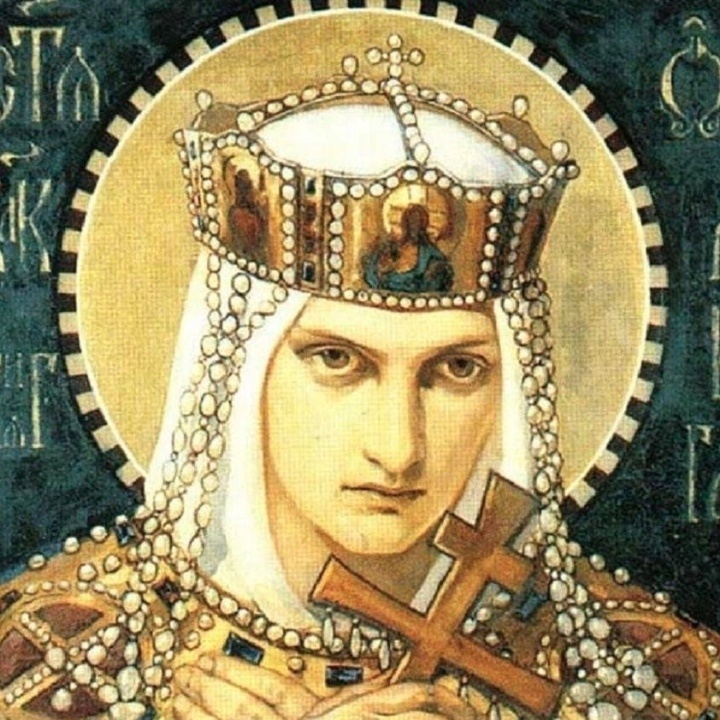
A painting of Olga

After the massacre, she led her army to the city and began to lay siege. For years, however, it remained unsuccessful. That was, until, Olga devised a plan. She first sent a message to the Drevlians.

Why do you persist in holding out? All your cities have surrendered to me and submitted to tribute, so that the inhabitants now cultivate their fields and their lands in peace. But you had rather die of hunger, without submitting to tribute.

Olga’s message to the Drevlian forces at Iskorosten

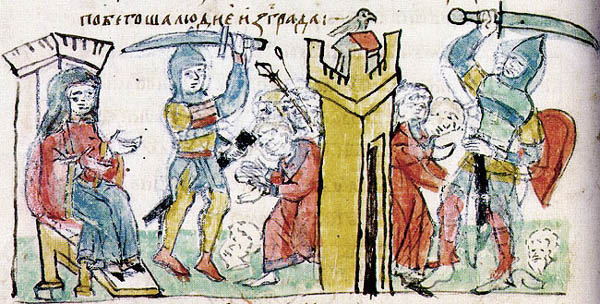
The Drevlians responded, claiming that they feared she still sought vengeance against them for the murder of Igor, something that Olga vehemently denied, claiming that the events of the feast and the diplomatic party murders had been enough for her. She instead asked for “three pigeons … and three sparrows from each house.” The Drevlians, rejoicing at the thought of the siege ending, gave her what she asked for. Upon receiving the birds, she ordered her army to tie a piece of sulphur bound by cloth to them. Then, once night fell, she ordered her men to set the sulphur aflame and release the birds. Once they returned to their nests in the houses of Iskorosten, they lit the highly flammable houses ablaze. Those who tried to escape were either massacred or taken as slaves. The survivors of the fire were forced to pay tribute.

An illustration of the burning of Iskorosten

Following her vengeance against the Drevlians, she was proposed marriage multiple more times, including by Constantine VII of the Byzantine Empire. She rejected every single one. Once her son rose to power, he allowed his mother to continue domestic affairs while he combatted foreign wars, during which time she created one of the first modern tax systems in Eastern Europe. She converted to Orthodox Christianity 957, taking the name Helena, before dying in 969. In 1547, she was canonised by the Russian Orthodox Church for being the first ruler of Kiev to convert to Christianity which laid foundational groundwork for the religion in the region.