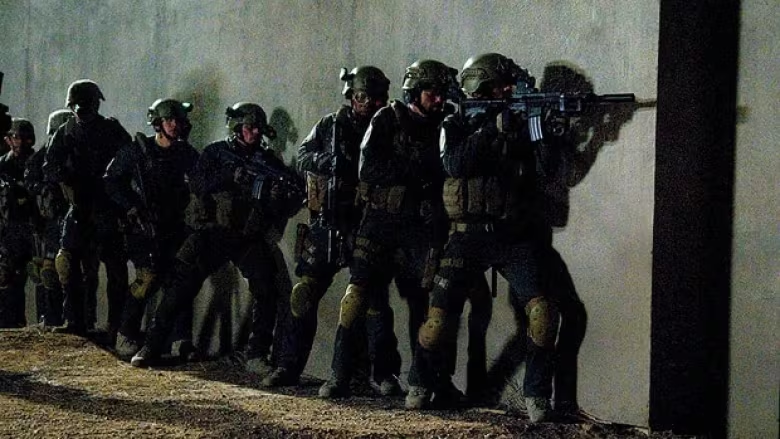
The operation was practised on one to one replicas of the compound by an elite squad of Seal Team Six operatives which were built in Nevada and Virginia. On April 28th, the operatives arrived in Jalalabad and awaited instructions.
That night, Obama was restless. If the whereabouts of Osama bin Laden were faulty or if the Pakistani government discovered the operation, it could set back him being tracked down by months or perhaps even years. On the other hand, if it was a success, the most wanted man in the world would be brought to justice. On May 1st, Obama decided what to do.
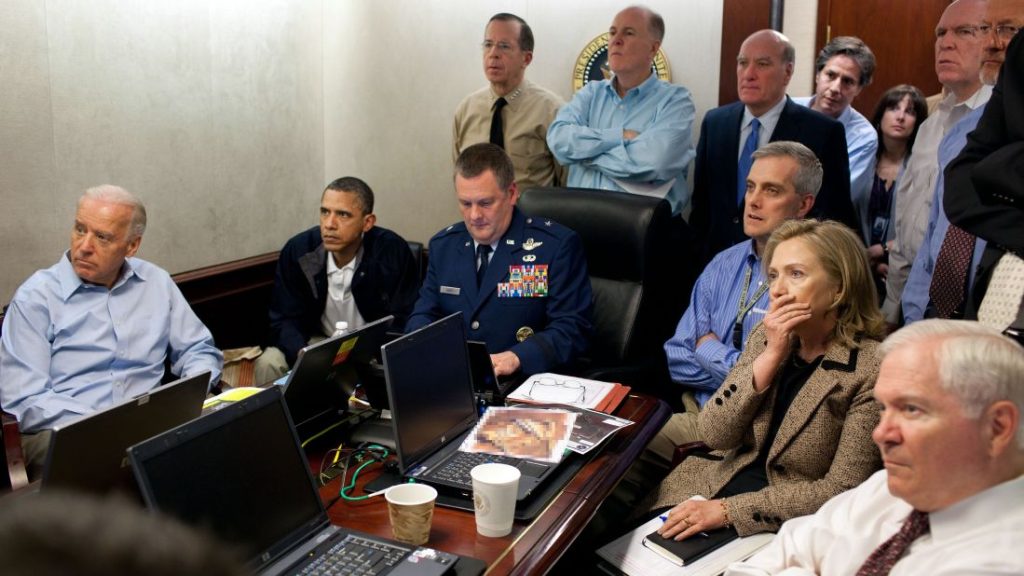
The White House staff, including President Barack Obama, Vice President Joe Biden and Secretary of State Hilary Clinton, receiving updates on the mission progress
Operation Neptune Spear began at around 11 pm local time, with 2 black hawk helicopters, which were modified to make less sound, approaching the compound in Abbottabad. Aboard the helicopters were the 23 SEALS, a translator and a dog named Cairo, who was there to look for hidden rooms and check for incoming Pakistani militant forces. 2 chinooks, carrying a spare 25 SEALS, were stationed at the ready incase of a hostile reaction from the Pakistani military.
The first helicopter was supposed to hover above the yard, letting the SEALS slide down a rope onto the lawn. However, due to weather conditions, the helicopter crashed inside the lawn. No-one was injured but they had lost the element of surprise. The SEALS from helicopter 1 breached the gates and moved through the compound whilst a group from helicopter 2, which touched down safely just outside the compound, were deterring neighbouring villagers.
A replica of the crashed helicopter from the behind the scenes of Zero Dark Thirty (2012)
3 SEALS from helicopter 1 split off to deal with the guest house whilst the SEALS not tasked with crowd control from helicopter 2 breached from the north. Those who went to deal with the guest house encountered Ahmed, to whom they engaged in a small firefight, resulting in the death of Ahmed. Meanwhile, the other SEALS managed to breach the main building, killing Ahmed’s brother and his brother’s wife.
After the stairway was breached, bin Laden’s 23-year-old son, Khalid bin Laden was killed in the stairwell. On the third floor, they discovered a tall thin man, peering out from behind the doorway of a bedroom. The SEALS took fire but either missed or landed non-lethal shots. One of the women in the room made a motion as if to charge at the lead SEAL but was shot in the leg. Robert O’Neill charged past the leader and spotted the man behind a woman, with his hands on her shoulders. As he went to push her, O’Neill shot the man twice in the head and once more as he crumpled to the floor.
Over the radio, the White house staff heard “For God and country. Geronimo. Geronimo. Geronimo.” That was the code word for an enemy killed in action. The most hated man in the USA, the most wanted man on the planet, the architect behind the deaths of 3,000 innocent American lives was finally dead.
There were no casualties on the American side with only 5 dead inside the compound. The assault was completed in only 15 minutes, with the rest of the time spent collecting hard drives whilst a demolition team destroyed any evidence of the helicopter crash. One of the chinooks helped the SEALS home as well as carrying the corpse of bin Laden, to a safehouse where his identity was officially confirmed.
The millennium dawned and, that November, a new President was to be elected. Bill Clinton served his two terms as allowed in the 22nd Amendment the Democrats needed a new candidate to lead them this election. The obvious choice fell to Clinton’s VP, Al Gore, who had Joe Lieberman, a Senator and former Attorney General from Connecticut, as his running mate. Whilst the Republican Primaries were a lot more competitive, George Bush, son of George H. W. Bush and Governor of Texas, came out on top, choosing Dick Cheney from Wyoming, the Secretary of Defence for his father and a former House Minority Whip, as his pick for VP. A lot of both the campaigns focused on domestic policy as, at the time, the United States was not involved in a single conflict.
I don’t think our troops ought to be used for what’s called nation-building. I think our troops ought to be used to fight and win war.
George Bush, Second Presidential Debate, 2000
A photo of a debate between Gore (left) and Bush (right)
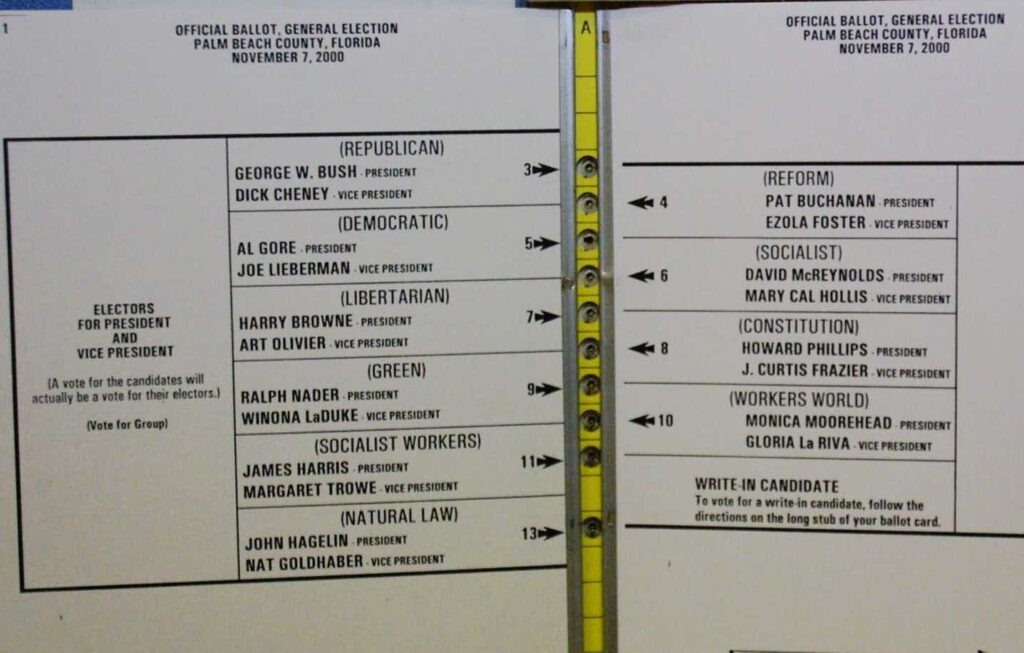
Election day came and no-one won. The states were relatively evenly divided, with Gore having 266 Electoral Votes and Bush having 246, out of the 270 needed to win. However, the problem was Florida. Their problem was that the ballots were designed to cater to old people, a large part of Florida’s population and especially in the county of Palm Beach, wherein a hole would be punched in the ballot as many could not hold a pen properly. Which seems reasonable enough until you see how the ballot was formatted.
A photo of the Florida Ballot for Palm Beach
Some punched two holes in a ballot, some punched a hole that wasn’t even in one of the designated holes and some suspected that many Gore supporters were attempting to vote for him but voted for Pat Buchanan of the Reform Party by mistake, as Buchanan occupied the second hole whilst Gore occupied the third which doesn’t quite make sense as Gore was the candidate for the second largest party in the country. In the end, the whole thing was a disaster. At one point it seemed like Gore had the lead, which would mean he would win. At others, it seemed as though Bush had the lead, meaning he would win.
Eventually the results came through and Bush won. However, the margin was so narrow that a recount was demanded. Once the recount came through, Bush still won but the margin was even smaller than before, with now only a 300 vote difference. Eventually, Gore ended up going to the Supreme Court to demand another recount. After 5 weeks of proceedings, Gore eventually conceded the election, with the official count standing at 570 votes in favour of Bush in Florida, meaning he won the election and became the 43rd President of the United States, with only 271 Electoral Votes. Gore still won the popular vote on a national scale by a 0.52% margin. This election was one of if not the closest in history. And it was an election that would change the world.
For the first few months of George Bush’s Presidency, he was considered relatively fine. He didn’t do much to change any of what had come before and mostly stuck to his campaign promises. However, all that changed one fateful day.
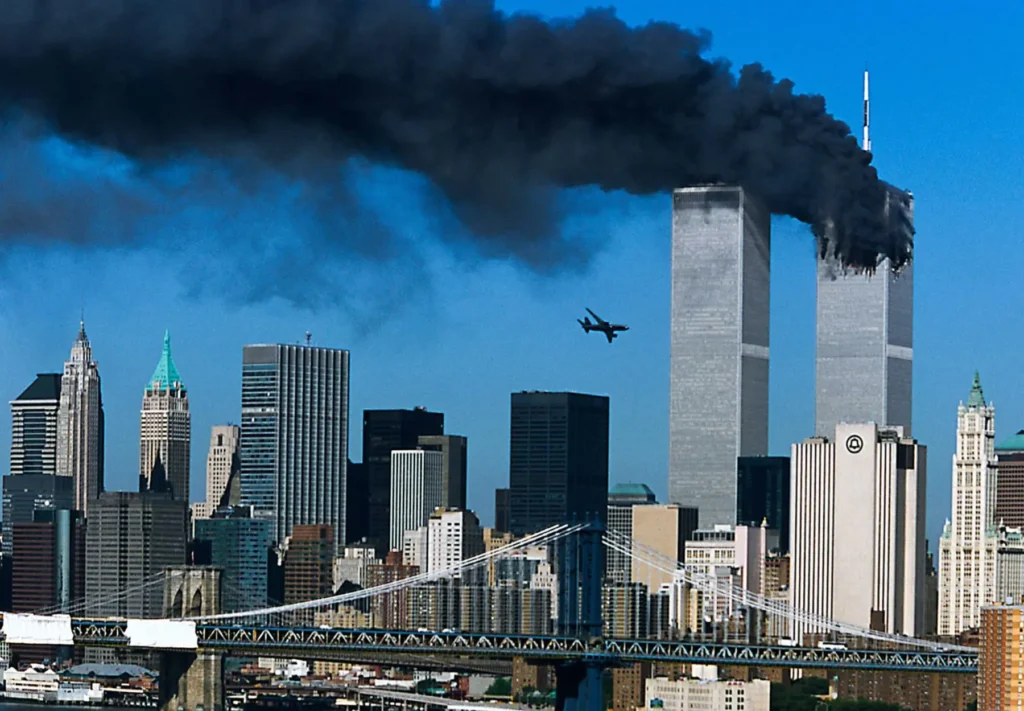
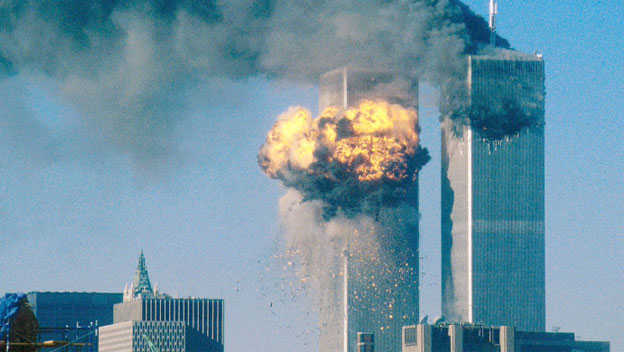
A photo of Flight 175 hitting the Second Tower of the WTC
In a response to 9/11, Congress, through the Authorisation for Use of Military Force, gave Bush the right to go to war against terrorism anywhere in the world, effectively declaring a War on Terror. With the Taliban removed from power and al-Qaeda weakened but not destroyed, senior officials increasingly turned toward a second objective. Much of the foreign policy of the Bush administration in the 2000s was centred around neo-Conservatism, the belief that the United States not only has the capacity but the duty to shape geopolitics. Under Ronald Reagan, it largely targeted communist militias. However, under Bush it morphed into a different force.
Following 9/11, Congress passed the Authorisation for Use of Military Force, granting the President broad powers to wage what became known as the “War on Terror.” Although the initial campaign focused on al-Qaeda and the Taliban in Afghanistan, attention within the Bush administration soon shifted toward Iraq. Senior officials, including Secretary of Defence Donald Rumsfeld, Dick Cheney, and Deputy to Rumsfeld Paul Wolfowitz, argued that Hussein represented a continuing threat to international security. This view was shaped partly by Iraq’s previous use of chemical weapons against Iran and its own population, its obstruction of United Nations weapons inspectors in the 1990s, and its defiance of earlier UN Security Council resolutions. Although no operational link was ever found between Hussein’s regime and al-Qaeda or any other terror group, members of the administration increasingly framed Iraq as part of the wider terrorist threat. Officials warned that Iraq could be supplying WMDs to extremist groups, a claim that did not rely on actual confirmed evidence in any capacity. Cheney asserted there was “no doubt” that Iraq possessed such weapons, while Rumsfeld suggested that Iraq’s failure to account fully for past programmes implied the existence of hidden stockpiles. In his 2002 State of the Union Address, Bush declared Iraq part of an “axis of evil” between itself, Iran and North Korea, accusing Hussein of creating nuclear, chemical, and biological weapons.
A photo of Cheney (left) and George W. Bush
Britain played a central role in reinforcing this narrative. Labour Prime Minister Tony Blair strongly supported the American position and committed Britain to a close alliance with Washington. His director of communications, Alastair Campbell, was instrumental in shaping the public presentation of intelligence. In September 2002, the British government published a dossier claiming that Iraq possessed WMDs that could be deployed within 45 minutes. This document was later criticised for overstating the certainty of its conclusions and for using unverified intelligence reports. A second dossier, released in early 2003, drew heavily on plagiarised academic material and outdated sources, earning it the nickname the “dodgy dossier” in the British press. Some of the claims published in the dossier were suggested to have been sourced from popular action films according to a public inquiry into Iraq. The inquiries also found that political pressure had encouraged intelligence to be presented with greater confidence than the underlying evidence justified.
It was pointed out that glass containers were not typically used in chemical munitions; and that a popular movie [The Rock] has inaccurately depicted nerve agents being carried in glass beads or spheres. […] The questions about the use of glass containers for chemical agents and the similarity of the description to those portrayed in The Rock had been recognised by [MI6]. There were some precedents for the use of glass containers but the points would be pursued when further material became available.
A transcript from the Chilcot Inquiry into the Iraq War
A photo of Tony Blair (right) and Downing Street Director of Communications, Alastair Campbell
By early 2003, more than 700 inspections by the UN had failed to uncover any chemical, biological or nuclear weapons. Hans Blix, head of the UN Inspection Commission, stated that, while Iraq had previously possessed such arms, there was no conclusive evidence that they still existed. Nevertheless, the United States and Britain argued that Iraq’s incomplete cooperation and past concealment justified military action.
In February 2003, Secretary of State Colin Powell addressed the UN Security Council, presenting satellite photographs, intercepted communications, and testimony from defectors as proof of hidden weapons facilities. One of his most memorable demonstrations involved holding up a small vial to illustrate the lethal potential of anthrax. He said that the small vial contained one teaspoon of a substance and claimed the same amount of anthrax shut down the US government. This conclusion was based on the Anthrax Attacks that took place throughout the autumn of 2001, including one letter sent to Senator Tom Daschle’s office on Capitol Hill. When it was discovered that over a hundred people had inhaled a lethal dose of anthrax, due to spores that had reached the air vents, the Capitol building, the seat of the US Government, was shut down and Congress was temporarily adjourned, at the height of debate regarding the controversial Patriot Act. In all, 5 people were killed and 17 were injured across Washington DC, Florida, New York, New Jersey and Connecticut due to letters sent containing anthrax. Whilst it was later revealed that the culprit was a domestic threat, according to the FBI’s report on the case, the killer used fake jihadist messaging, allowing the Bush administration to claim it was a biological islamic terror attack. He then claimed that Hussein had “enough to fill tens of thousands of teaspoons,” and that Hussein had supplied jihadists with the anthrax used in the attacks.
Powell showing the vial
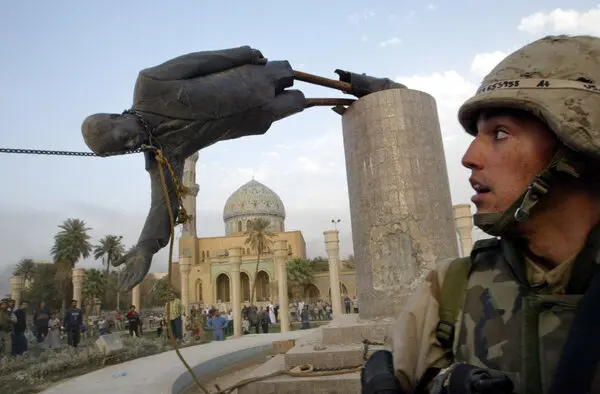
When it became clear that the Security Council would not authorise force, Washington and Westminster chose to proceed without UN approval. On March 19th 2003, coalition forces led by the United States and Britain launched Operation Iraqi Freedom. The invasion was publicly justified as a necessary act of pre-emption to prevent Iraq from deploying or transferring weapons of mass destruction, and later as part of a strategy to reshape the Middle East in the name of security and democracy. Hussein was eventually captured in late 2003 and executed. On May 1st, 2003, Bush declared “Mission Accomplished” aboard the USS Abraham Lincoln in a now infamous speech declaring that the invasion was a success and that Iraq would never be a problem again.
The collapse of Saddam Hussein’s regime in 2003 did not bring stability to Iraq. Instead, it created a political and security vacuum. The rapid dissolution of the Iraqi army and the Baʿath Party left hundreds of thousands of armed men unemployed and excluded from the new political order. Many former soldiers and officials joined local resistance groups, motivated by nationalism, fear of marginalisation, or hostility toward foreign occupation. At the same time, weak border controls allowed foreign Islamist fighters to enter Iraq, transforming what began as a largely nationalist insurgency into a hybrid conflict involving sectarian militias and transnational jihadist organisations.
A photo of Iraqi insurgents
One of the most significant developments was the emergence of al-Qaeda in Iraq (AQI) under the leadership of Abu Musab al-Zarqawi. The Sunni jihadist organisation sought to provoke civil war by deliberately targeting Shiite civilians and religious sites, hoping to destabilise Iraq and undermine the US-backed government. Sectarian violence escalated sharply after the bombing of the al-Askari Mosque in 2006, triggering widespread killings between Sunni and Shiite militias. Improvised explosive devices (IEDs), suicide bombings, and ambushes became defining features of the conflict, causing heavy casualties among coalition forces and Iraqi civilians alike. What had initially been presented as a swift regime change evolved into a prolonged and chaotic asymmetric counter-insurgency war.
Although Zarqawi was killed in a US airstrike in 2006, his organisation survived and adapted. During the late 2000s it split from the main al-Qaeda command and rebranded itself as the Islamic State of Iraq, attempting to present itself not merely as a terrorist organisation but as a state claiming territorial authority. The withdrawal of most US forces in 2011, combined with continued political exclusion of Iraq’s Sunni population by the Shiite-led government, allowed the group to build its strength. The outbreak of civil war in neighbouring Syria after 2011 further accelerated this process, providing new territory, recruits, and resources. By 2014, the organisation had expanded across borders and declared itself the Islamic State of Iraq and Syria, more commonly and infamously known as ISIS. During its time in power, ISIS became one of the most brutal terror organisations and became a symbol abroad for the evils of fundamentalist Islam.
A photo of Brussels Airport in the aftermath of a bombing by ISIS in 2015
The insurgency had major political consequences at home. In the United States, rising troop deaths and the failure to locate any WMDs steadily eroded public support for the war. Revelations of prisoner abuse at Abu Ghraib prison further damaged the credibility of the intervention, reinforcing the perception that the occupation was poorly planned and morally compromised. Although George W. Bush won re-election in 2004, the worsening situation in Iraq contributed to growing distrust with the Republican Party and fuelled large scale anti-war protests across the country. By the 2006 midterm Congressional elections, public frustration over Iraq helped deliver control of Congress to the Democrats and later the White House by 2009. In the United Kingdom, the insurgency undermined confidence in the war and in the government that had supported it. British forces were heavily involved in southern Iraq, particularly around Basra, where they faced sustained and brutal resistance from Shiite militias. As casualties mounted and instability persisted, criticism of Blair intensified. The exposure of flaws in the government’s intelligence claims led to public inquiries and long-term damage to trust in official statements about national security. The war became deeply unpopular, contributing to declining support for Blair’s New Labour and reinforcing scepticism about future British military interventions alongside the United States.
“[The Iraq War] divided parliament and set the government of the day against a majority of the British people as well as against the weight of global opinion. […] It was an act of military aggression launched on a false pretext as the inquiry accepts and has long been regarded as illegal by the overwhelming weight of international legal opinion. It led to the deaths of hundreds of thousands of people in Iraq and the displacement of millions of refugees. It devastated Iraq’s infrastructure and society. […] By any measure, the invasion and occupation of Iraq was a catastrophe. The decision to invade in 2003 on the basis of what the Chilcot report calls “flawed intelligence” about weapons of mass destruction has had a far-reaching impact on us all. It also led to a fundamental breakdown in trust in politics and our institutions of government.”
Jeremy Corbyn, Labour Party Leader at a speech in Westminster in 2016
A photo of an anti-war protest in Whitehall, London in 2003
When Barack Obama entered office in 2009, he inherited two active wars and a populace whose opinion on foreign intervention was deeply skeptical at best and downright opposed at worst. His campaign had criticised the invasion of Iraq as a strategic error and promised a shift away from large scale occupations toward diplomacy and limited military engagement. In practice, however, Obama pursued a mixed approach of reducing America’s physical footprint in the Middle East while expanding indirect forms of warfare. In Iraq, Obama oversaw the withdrawal of most US combat troops by 2011, fulfilling a key campaign pledge. However, the fragile political settlement left behind proved unstable. The Shiite government marginalised Sunni communities, and unresolved sectarian tensions created space for militant groups to reemerge. These conditions enabled the rapid rise of ISIS, which captured large parts of Iraq and Syria by 2014. The United States was drawn back into the conflict through airstrikes and support for local forces. Whilst nowhere near the levels of troops sent in 2003, it was still perceived as too much by the public.
Overall, the Iraqi insurgency transformed the meaning of the war. What had begun as an invasion justified by weapons inspections and regime change became a prolonged struggle against decentralised militant groups, and ultimately gave rise to a new extremist movement in the form of ISIS. At home, it reshaped political debate in both Britain and America, weakening confidence in political leaders, deepening public distrust of intelligence based justifications for war, and leaving caution toward foreign intervention that would influence policy for years to come.
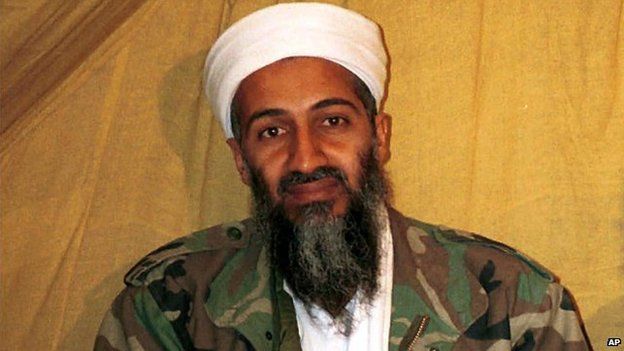
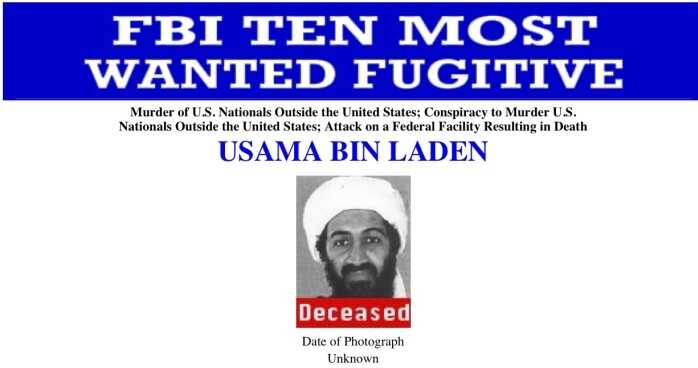
The FBI’s Most Wanted poster for Osama bin Laden. Until his death, bin Laden was wanted for $25,000,000
For three months after 9/11, new leads evaded the CIA and all the leads that they previously had went cold. This was even more troublesome for them when you consider that they very nearly looked evil in the eye. Towards the tail end of the Afghan Invasion, a battle was staged at Tora Bora. Afghan troops embedded themselves in the mountains of Tora Bora, with the possible objective of keeping Bin Laden safe. Whilst the battle raged on, it is believed that Bin Laden slipped into the neighbouring nation of Pakistan. Only 20 captives were detained and for a long time, none of them gave anything away. Until one of them did.
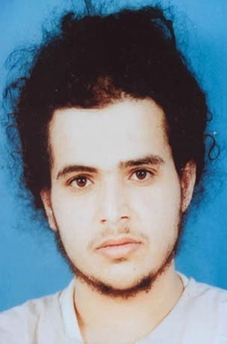
Previously off the FBI’s radar, Muhammad al-Qahtani denied any involvement in Al-Qaeda and the attacks on September 11th, saying that he was in Afghanistan to pursue his interests in falconry. However, once he was fingerprinted, the investigators realised that they already had a record of him.
al-Qhatani’s mugshot
On August 4th 2001, a little over 5 weeks before the attacks, al-Qahtani attempted to enter the United States at Orlando Airport. With $2,800 in cash and a one way ticket from Dubai to Orlando on him, the officer at customs denied him entry to the US, suspecting him of being an illegal immigrant. Furthermore, a call was made from Orlando Airport on that day to a number that investigators knew was connected to Al-Qaeda in the UAE. After scanning through hours upon hours of security footage of the airport in search of another lead, they discovered a rental car. A rental car which was currently being hired by Mohamed Atta, the ringleader behind the attacks and the main pilot of American Airlines Flight 11, which crashed into the North Tower of the World Trade Centre. Investigators believed that Atta had arrived to pick up al-Qahtani, believing al-Qahtani to possibly be one of the hijackers of United Airlines Flight 93, being the rumoured 20th hijacker. Al-Qahtani was among many Al-Qaeda informants who managed to give investigators a lead on the whereabouts of Bin Laden.
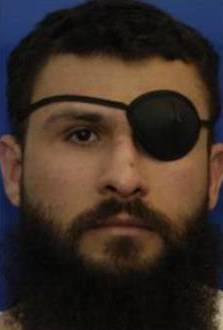
Zubaydah’s mugshot
Another one of these informants was Abu Zubaydah, who was arrested in a US-Pakistani raid on Faisalabad safehouses in Pakistan in March 2002. He was interrogated until he ratted out Khalid Sheikh-Mohammed, Al-Qaeda’s operational commander, who had been the planner behind the attacks on America. Furthermore, Qahtani revealed that Khalid had introduced him to a man in July 2001. This man’s name was Abu Ahmed al-Kuwaiti.
Even with all this information being revealed, they were no closer to finding bin Laden. The man’s name was obviously a pseudonym, being a direct translation to “The Father of Ahmed from Kuwaiti”. However, they knew bin Laden could still communicate. Tapes would come through and investigators believed that bin Laden could have possible contact with more minor leaders inside Al-Qaeda The investigators decided to look through bin Laden’s courier network, the people who transmitted letters and documents to and from bin Laden, in a vain attempt to try and find where he was hiding. It would be a long time before any results came in.
Forces from Kurdistan apprehended a man called Hassan Ghul in January 2004. Ghul was carrying a letter addressed solely to Osama bin Laden. He was later handed over to the Americans, who claimed that the man behind the name of al-Kuwaiti operated as a personal courier to bin Laden. However, conflicting information emerged. While Ghul claimed that al-Kuwaiti had a much higher role in the chain of Al-Qaeda’s command, with him being on friendly terms with Khalid and his successor, Abu Faraj al-Libbi, Khalid and al-Libbi vehemently denied these claims, with Khalid claiming that al-Kuwaiti had retired and was long since inactive. When investigations expanded, a man named Riduan Isamuddin, or Hambali, came forward. Hamabli was the leader of an affiliate group of Al-Qaeda from South-East Asia. He claimed that Kuwaiti played a key role, with him saying that al-Kuwaiti managed a safehouse in Karachi during the Taliban fleeing from Afghanistan. This conflicting information about al-Kuwaiti only made him a higher priority for investigators, making them believe that he must be in a higher position inside Al-Qaeda.
While much of the information acquired from these prisoners was vital in the capture of bin Laden, it was obtained through questionable methods in the US’ interrogation area called Guantanamo Bay. Many prisoners were subjected to various torture methods, including, but not limited to water boarding, sleep deprivation and forced nudity. Zubaydah drew and described his torture in graphic detail.
Among the images [published, one of them shows] masked agents physically threatening Zubaydah with anal rape. […] In another image, Zubaydah draws himself chained in the nude in front of a female interrogator. A further drawing shows guards threatening to desecrate the Qur’an – techniques which were never officially approved by the justice department.
Ed Pilkington of The Guardian “‘The forever prisoner’: Abu Zubaydah’s drawings expose the US’s depraved torture policy”
Mark Denbeaux, Zubaydah’s lawyer had Zubaydah draw these pictures. He stated that:
He was the first person to be tortured, having been approved by the Department of Justice based on facts that the CIA knew to be false. His drawings are the ultimate repudiation of the failure and abuses of torture.
Denbeaux speaking on Zubaydah
An extract from a document about the torture against Zubaydah. One of the torturer’s face had to be censored as it was that realistic it threatened his identity being verified
These were called “enhanced interrogation techniques” by CIA officials. A 712 page long fraction of 6,700 long Committee report claims that not only were these torture techniques not effective in capturing Osama bin Laden but also damaged the standing of the United States in the world of foreign politics.
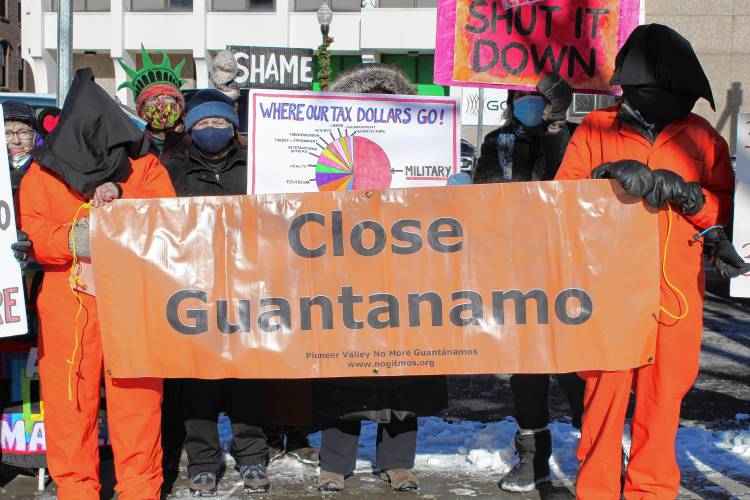
A protest against the interrogation methods used at Guantanamo Bay
Eventually, in 2007, the CIA finally attached a real name to al-Kuwaiti through an unknown foreign intelligence service. His real name was Ibrahim Saeed Ahmed, a Pakistani who lived in Kuwait for most of his childhood. It would not be until 2010 when they could finally track him down. Through phone calls, they were able to track Ahmed to Peshawar in northern Pakistan, where he was tailed by a Pakistani operative for the CIA back to his home. When they reached Ahmed’s home, the investigator’s were surprised.
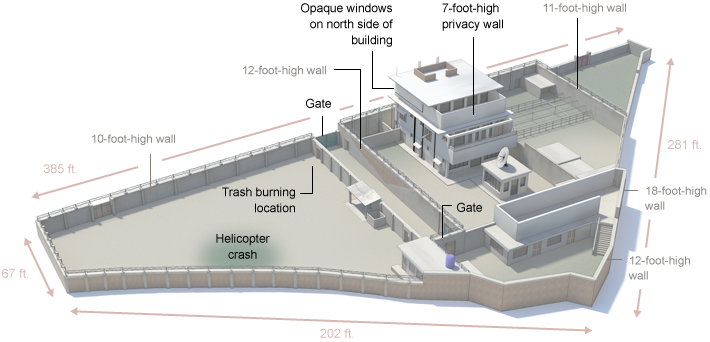
What they found was a large mansion encased inside walls that were 10-18 feet high. These walls were topped with barbed wire and were sparsely populated by 4 gates littered around the compound border. If this was where Ahmed was living, investigators thought, then bin Laden could possibly be here also. Upon investigation of the compound, they found that only 3 people would go outside the mansion inside the compound, Ahmed, his brother and a mysterious figure who regularly walked around the interior courtyard on a daily basis. This figure was tall, thin, wore a pashtun dress and a prayer cap. When photos were captured, they were not very clear. This mysterious figure was nicknamed Pacer.
A diagram of the compound found by investigators
Whether Pacer was bin Laden or not, Barack Obama knew he needed to act sooner rather than later. Many options were considered. Assaulting bin Laden with the assistance of the Pakistani Government was entirely out of the question. Pakistan had previously favoured the Taliban in their escape from Afghanistan and had previously harboured many other members of Al-Qaeda. Bombing raids were favoured by the majority of the President’s advisors but Obama was concerned about civilian casualties and the difficulty of confirming whether they had eliminated bin Laden so ruled that out. Eventually, they settled on an aerial to ground assault, in which bin Laden was either captured or killed and the Pakistani Government would not be notified. This would be extra risky, considering that the compound is only 3 and a half kilometres away, or 2 miles away, from a Pakistani Military Academy.
I would like to touch on one important point in this address. The actions by these young men who destroyed the United States and launched the storm of planes against it have done a good deed. They transferred the battle into the US heartland. Let the United States know that with God’s permission, the battle will continue to be waged on its territory until it leaves our lands, stops its support for the Jews, and lifts the unjust embargo on the Iraqi people who have lost more than one million children. The Americans should know that the storm of plane attacks will not abate, with God’s permission. There are thousands of the Islamic nation’s youths who are eager to die just as the Americans are eager to live.
Sulaiman Abu Gaith claiming responsibility for 9/11 on behalf of Al-Qaeda in a video on Al Jazeera, 2001
A photo of United Airlines Flight 175 about to strike the South Tower of the WTC, 2001
In the immediate aftermath of 9/11, US intelligence agencies intensified their investigation into Osama bin Laden and the network he led. Bin Laden had already been identified before 9/11 as the head of al-Qaeda, which had carried out earlier attacks on US targets, including the 1998 bombings of American embassies in East Africa and the 2000 attack on the USS Cole. Intelligence suggested that they were being housed in Afghanistan, controlled by the Taliban, a militant Islamist group that had emerged in the mid-1990s from the extremist elements of the Mujahideen. Drawing support from religious students educated in Pakistani Islamic education institutions and local warlords, the Taliban promised to restore order amid Afghanistan’s civil war following the collapse of the communist government. By 2001, they controlled most of the country and provided sanctuary to Osama bin Laden and al-Qaeda, allowing the group to plan and train for international attacks in exchange for loyalty and support.
While bin Laden initially denied direct involvement in 9/11, multiple sources, including intercepted communications, videotapes, and statements from captured al-Qaeda operatives, confirmed that he had authorised and overseen the attacks. By 2004, he publicly acknowledged responsibility. Evidence indicated that al-Qaeda had operated as a coordinated transnational network, with bin Laden at its helm, rather than as a loose collection of extremists acting independently. The US initially sought a diplomatic resolution, demanding that the Taliban surrender bin Laden and dismantle terrorist training camps. The Taliban responded that they would consider extradition only if evidence of bin Laden’s guilt was presented and if he were tried in an Islamic court, conditions that Washington rejected. With negotiations stalling, Bush issued an ultimatum, to surrender al-Qaeda’s leadership or be treated as enemies of the United States.
[T]he United States of America makes the following demands on the Taliban. Deliver to United States authorities all the leaders of al Qaeda who hide in your land. Release all foreign nationals, including American citizens, you have unjustly imprisoned. Protect foreign journalists, diplomats and aid workers in your country. Close immediately and permanently every terrorist training camp in Afghanistan, and hand over every terrorist, and every person in their support structure, to appropriate authorities. Give the United States full access to terrorist training camps, so we can make sure they are no longer operating.
These demands are not open to negotiation or discussion. The Taliban must act, and act immediately. They will hand over the terrorists, or they will share in their fate.
Bush’s ultimatum, September 20th, 2001
A photo of Bush declaring the “War on Terror”, 2001
Congress authorised the use of force and negotiations rapidly collapsed. On 7 October 2001, US and allied air strikes began against Taliban and al-Qaeda positions. Ground operations followed, coordinated with the Northern Alliance, an Afghan coalition opposed to Taliban rule. By the end of the year, the Taliban regime had fallen, and a new Western-backed government was installed in Kabul. However, bin Laden escaped during the Battle of Tora Bora in eastern Afghanistan and fled into Pakistan, while Taliban and al-Qaeda fighters dispersed into rural and mountainous regions, beginning a prolonged insurgency. Bin Laden was eventually killed in his safe house in Abbotobad, Pakistan, in 2011.
Once the occupation began, two new tasks fell upon the Americans and the other coalition forces that invaded, to reconstruct a new new government in a war torn nation whilst also countering terrorism. Due to the American occupation, insurgency groups had sprung up out of the remnants of the Taliban, who had established training camps in Pakistan. Much like Vietnam before it, the insurgents used asymetric warfare to counter the Americans, often resorting to disguising as civilians or using women and children to perpetrate terror attacks. Many Conservative media outlets struggled to justify Bush’s actions in both Afghanistan in Iraq as that war developed, but a teenager with genocidal coded writing found a way.
I am getting really sick of people who whine about “civilian casualties.” Maybe I’m a hard-hearted guy, but when I see in the newspapers that civilians in Afghanistan or the West Bank were killed by American or Israeli troops, I don’t really care. In fact, I would rather that the good guys use the Air Force to kill the bad guys, even if that means some civilians get killed along the way. One American soldier is worth far more than an Afghan civilian.
[…]
The Afghans tolerated and supported the Taliban for years, no matter what President Bush says. A group doesn’t conquer 95 percent of a country unless it has some support among the populace. The Afghans are fundamentalist Muslims. They didn’t seem to mind too much that their women were treated like dogs or that the Taliban enforced Shariah (Muslim law). So frankly, it doesn’t matter to me if some of their “civilians” get killed for involvement with the enemy. I’m glad the U.S. military decided to use a massive air campaign rather than going in full force with ground troops. The fewer dead American soldiers, the better.
[…]
If only Israel had acted as decisively as America did in Kabul, it would have gone in with F-16s and leveled Jenin. Civilian casualties? So be it. That might have struck a note of fear into the Palestinians – putting in ground troops sure doesn’t. […] In the end, this is a war to save humanity from the barbarity of fundamentalist Islam. It is inevitable for enemy civilians to be killed in war.
Ben Shapiro, Townhall, July 2002
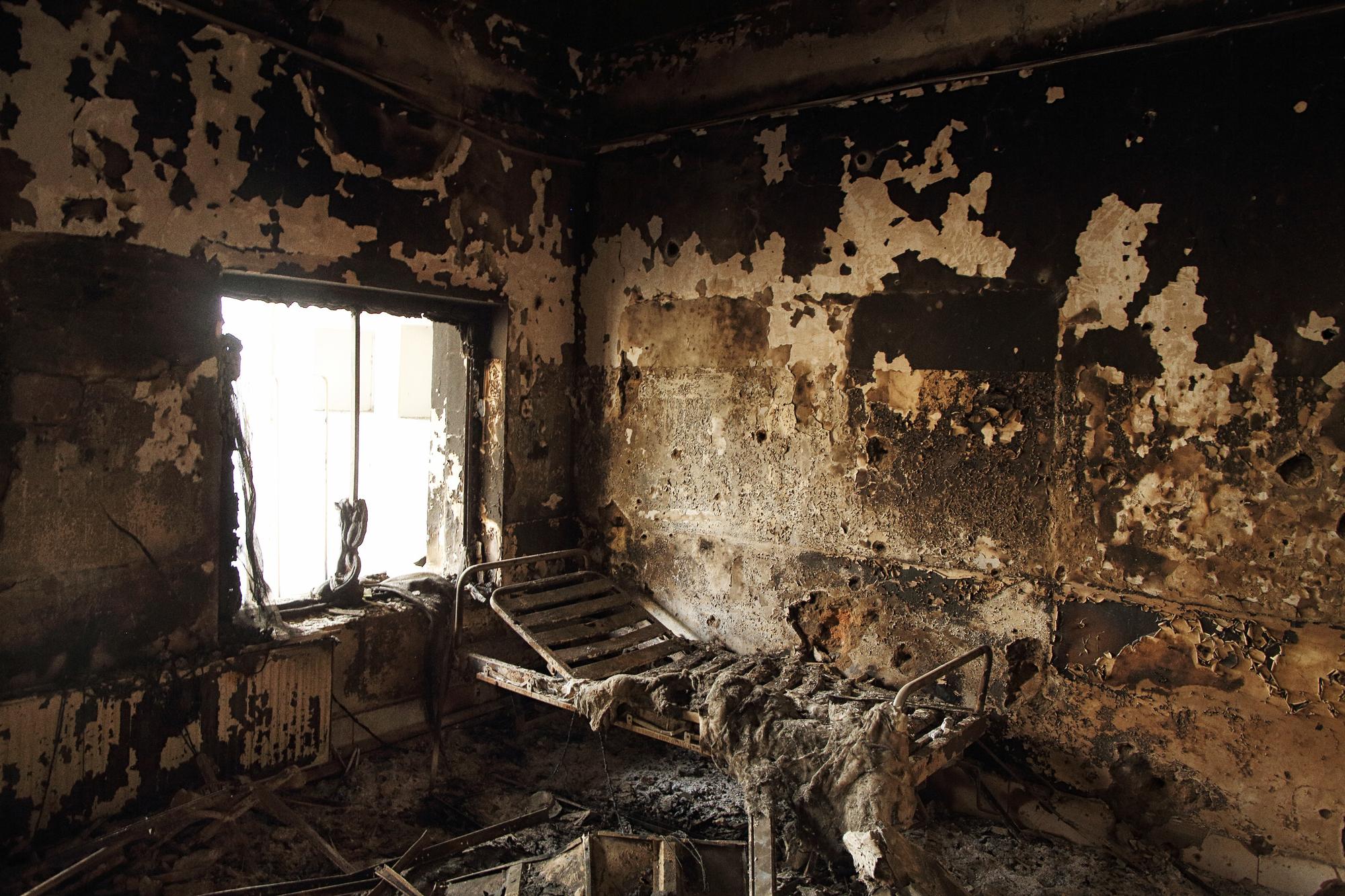
Upon election, Obama initially escalated US involvement rather than ending it. In 2009 he authorised a troop “surge” aimed at weakening the Taliban and stabilising the Afghan government before a gradual withdrawal in an attempt to avoid permanent occupation, but prevent outright collapse. The result was an extended war fought increasingly through training missions, special forces operations, and airpower, rather than conventional invasion. These operations were justified as a way to combat terrorism without deploying large numbers of troops, but they raised legal and ethical concerns, especially when multiple civilians were killed. Most notably was the airstrike on Kunduz Hospital in Afghanistan, which killed 15 innocent civilians. The left accused him of being no different than the neo-Conservatives who started the war whilst the right saw him as sabotaging a plan that would’ve made Afghanistan stable if he’d just waited a few more months. The expansion of remote warfare also allowed Obama to claim he was ending wars while simultaneously broadening the geography of counterterrorism operations.
A photo of Kunduz hospital in the aftermath of an airstrike, 2015
Due to these mass airstrikes, the occupying Americans began to slowly be despised by the Afghan population, leading to the Taliban making a comeback. They would organise terrorist attacks in the country, that would end up killing hundreds of innocent people and coalition soldiers. US Soldiers began training the Afghan army to combat the terrorists once they left and equipped them with American Weapons.
Twenty years passed since the Invasion of Afghanistan, and the war was still going. Whilst many saw Afghanistan as the greatest symbol of the “forever war,” the actual logistics of withdrawal were much harder than they seemed. If the President was to pull out troops, it would cause the almost immediate collapse of the Afghan government and the return of the Taliban, which would be political suicide to whoever was President when the collapse occurred. However, if the President didn’t pull out troops, they’d be open to the accusation of intentionally prolonging the war far longer than it had already been going on for. Donald Trump’s solution to this impossible dilemma was an incredibly cynical yet effective one, at least for him politically.
He decided to remove the Afghan government from the equation and directly negotiate with the Taliban. From 2018 to 2020, multiple ceasefire deals were proposed but ultimately shot down by the Taliban. However, a peace deal was signed in February 2020. An incredibly simplistic interpretation of Trump’s deal with the Taliban involved the withdrawal of all NATO troops from Afghanistan, a Taliban pledge to prevent al-Qaeda from operating in areas under Taliban control, a Taliban pledge to not attack United States troops and talks between the Taliban and the Afghan government.
Trump did not see the withdrawal of troops during his presidency however, due to his defeat in 2020. In fact, Trump intentionally extended it into the next term, so if he won he could portray himself as the guy who got the US out of Afghanistan but if he lost and it went horribly wrong, which was inevitable, Trump could simply blame the next guy. After his loss in the 2020 election but before Joe Biden’s inauguration, he purged a large amount of the Pentagon staff and replaced them with Trump loyalists, with orders to pull out as many troops as quickly as possible. Biden was now faced with an even more impossible version of the existing Afghanistan dilemma, either: Pull the unsustainably small deployment, which wouldn’t give enough time or resources to the Afghan government to peaceably transition and functionally guarantee immediate collapse or; deploy more troops which would make transition more sustainable but going back on the deal, betraying the Taliban and perceived as escalating the war that you promised to end. Very much a rock and a hard place position.
“I’m now the fourth United States President to preside over American troop presence in Afghanistan: two Republicans, two Democrats. I will not pass this responsibility on to a fifth.”
Biden in a speech in the White House
In an attempt to honour the deal set up by his predecessor, Biden went ahead with the withdrawal. This announcement gave the Taliban an opportunity to take back control, advancing on Kabul, forcing many Afghan soldiers to surrender themselves to the Taliban, before the Islamic Republic of Afghanistan was eventually toppled. In one of the largest airlifts in history, 122,000 people were airlifted from Kabul airport. American soldiers managed to fend off the Taliban for over 2 weeks as the Taliban captured Kabul. The last US plane left on August 30th, with the Taliban capturing the airport the next day and declaring a victory, taking the large amounts of US weapons left behind. The War in Afghanistan is considered by many to not only be a somewhat pointless war but its ending is considered to be one of the greatest military catastrophes in history. Much of the blame is pinned on Biden, but it could be argued that Trump intentionally set this up and political historians argue that it would’ve been a catastrophe for anyone. As of today, the Taliban still run the country, and are not recognised by any nation as a legitimate government, with only 11 countries supporting the Taliban government.
On August 6th 2001, the recently elected President George W. Bush received his daily brief. This day’s brief was titled Bin Laden Determined to Strike in US. This report, which was declassified in 2004, tells of a man called Osama bin Laden, who had been planning an attack on the USA since the late 1990s. The majority of the brief details previous attempts by Bin Laden to attack the United States. However, the ending of the report stated that since 1999, the FBI had been conducting investigations, reporting that Bin Laden was “[indicating] patterns of suspicious activity in this country, consistent with preparations for hijackings or other types of attacks, including recent surveillance of federal buildings in New York.” The briefing highlighted a growing threat from al-Qaeda, the Islamist militant organisation that bin Laden allegedly ran, but did not specify a timeline, method, or target. In hindsight, it became one of several missed warnings that were not translated into preventative action.
George Bush in the Oval Office
Up until 08:46 that morning, September 11th 2001 was a very average and very boring Tuesday, as had been the case much of the rest of 2001. No-one knew that American and world history would change that day. Captain John Ogonowski and First Officer Thomas McGuinness Jr, alongside nine cabin crew members, were on board American Airlines Flight 11, a Boeing 767 carrying 81 passengers out of Logan International Airport in Boston. At the time, airline security was seen as a relatively benign procedure, compared to today. Whilst American airport security is now run by federal employees of the Transportation Security Administration (TSA), they used to be managed by the airline companies themselves, with limited requirements being regulated by the Federal Aviation Administration (FAA), such as basic metal detectors and rudimentary x-ray machines. They weren’t particularly thorough with their checks, intent on making security a background procedure to allow family members to the gates to wish their loved ones goodbye as well as due to cost cutting and low levels of training. As a result, items such as boxcutters and other small knives were not prioritised, as the typical threat was bombs, following the bombings of Air India Flight 182 in 1985 and Pan Am Flight 103 over Lockerbie, Scotland, in 1988. This meant five men slipped through airport security with such items, largely unfazed.
Five men, led by Mohamed Atta, had managed to get through airport security. However, he was nearly stopped in his tracks. Atta began getting overly irate at a man at the ticket counter at Portland International Airport in Maine, as he was told he would have to check in again upon his arrival at Logan International. Fearing he’d be accused of racially profiling Atta, the ticket officer let him through. Atta was also stopped a second time for extra luggage scrutiny, before he was once again allowed to pass. Atta, as well as a second man, landed in Boston before 7:00, where they met up with the other three men. The men got through Logan’s airport security, with three of them facing luggage checks, before they boarded the plane in business class at 07:40. The flight took off at 07:59, around 14 minutes behind schedule. The fate of the people aboard that flight was sealed.
A photo of Atta (right) and Abdulaziz al-Omari passing the security checkpoint at Portland International
At 08:14, Peter Zalewski, an air traffic controller, lost contact with Flight 11. Operating within Boston’s airspace, the pilots were failing to respond to any form of contact with ground control. Whilst he wasn’t initially worried, he began to get worried when the flight changed course and its transponder turned offline. Typically, this means that there has been a massive system failure. But, when Zalewski checked the more primitive Primary Radar Returns, he could tell that the plane was still up in the air. This meant that the transponders had been manually turned off.
At 08:19, Flight Attendant Betty Ong contacted the American Airlines operations centre from a phone at the end of the plane. She identified herself before detailing that someone had been stabbed in business class and that someone had sprayed Mace in the cabin as a form of crowd control. She later elaborated that the stabbed individuals consisted of Daniel Lewin and two flight attendants, Karen Martin and Barbara “Bobbi” Arestegui. Lewin, an American-Israeli citizen, reportedly died from his wounds before the crash, making him the first victim of the attacks.
An extract Betty Ong’s call to American Airlines
Five minutes later, Zalewski received a mysterious call from Flight 11, a voice later identified Atta. It’s believed that he was attempting to broadcast a message to the plane cabin but had accidentally sent a message to the entire Boston network, including air traffic control. He detailed that they would be returning to the airport and ordering everyone to “just stay quiet.” Nine minutes later, they receive a second similar message.
A recording of Atta’s attempted announcement to the plane
This was a great concern for Zalewski, but his superiors and peers were less worried. For starters, they couldn’t figure out what the garbled message said for quite some time. In addition, the precedent for hijackings of this sort was to make a demand of some kind. The most famous hijacking in American history up to this point, the DB Cooper incident, involved a request for thousands of dollars but, as far as they could tell, no such demands had been made aboard Flight 11. However, they still determined that they had a rogue 767 flying in Boston’s airspace. However, in order to do something about it before it entered New York’s airspace, as the new flight path indicated, there was an incredibly long chain of command in order to notify the entire system of the rogue plane and authorise military assistance. The notification had to go up from the Boston Air Traffic Control Centre (ARTCC) up through the FAA chain of command to the Pentagon, where the order to authorise escorts from the Secretary of Defence has to go all the way back down through North American Aerospace Defence Command, NORAD, before orders can be issued to Defence Sites. Part of the issue was that this was a chain of command developed during the Cold War for external enemy attacks. It was not designed for military intervention on a hijacking by an external enemy.
A flow chart approximately representing the chain of command
On the morning of 9/11, the existing protocol was unsuited in every respect for what was about to happen.
The 9/11 Commission Report, pg. 18
Soon, they notified the other potential airspaces that the plane might enter and managed to get the information up to the FAA Headquarters. However, for reasons that still remain a mystery to this day, the information stalled and went no further. As a result, a controller broke protocol and directly contacted the North East Defence Sector (NEADS). Major-General Larry Arnold, Commander of the Continental US Region of NORAD, also defied protocol and authorised the deployment of F-15 fighter jets from Cape Cod, Massachusetts, in order to monitor Flight 11, without seeking instructions from the higher chain of command. It would take approximately 10-15 minutes for the F-15s to get from their base to New York. This was far too late.
In New York City, brothers Jules and Gédéon Naudet, a pair of French-American filmmakers, were working on their second film: a documentary about the crew of a fire engine in the city. As a part of this documentary, Jules joined New York fire fighters whilst they were inspecting a possible gas leak from a storm drain at the intersection of Church and Lispenard Streets. This drain was about 0.8 miles away from the Twin Towers, some of the tallest buildings in the world and the largest parts of the World Trade Centre complex, a premier commercial and business complex in downtown Manhattan. As Jules filmed the drain at 8:46, the passing sound of a commercial airliner could be heard from overhead. Thinking it unusual that a plane was this close to the ground in this area of town, Jules followed where the plane was going with his camera.
The footage that Jules Naudet took of Flight 11 hitting the North Tower of the WTC
Flight 11 struck the north side of the North Tower of the World Trade Centre at 8:46:40. The impact of the plane hitting the tower killed everyone on board the flight as well as countless others in between the 93rd and 99th floors of the building. With the floors above and below trapped by rubble on the stairs and elevators out of commission above the 50th floor, many jumped rather than facing what may come next. The 10,000 gallons of fuel in the plane atomised into a fine mist on impact, which ignited with sparks from electrical equipment in the building and the plane and led to an explosion and subsequent fire that burned for over 100 minutes. Zalewski, who recieved the news almost immediately, retreated to the Boston ARTCC car park where he fought back tears of guilt for not being able to stop the disaster sooner. The New York and New Jersey Port Authority, which oversees much of the regional transportation infrastructure, including bridges, tunnels, airports, and seaports within the Port of New York and New Jersey’s jurisdiction, did not deem evacuating the South Tower as a necessary precaution, under the assumption that the initial crash was just an accident. However, their opinion would change all too late.
A few minutes after the crash, at 8:51, Dave Bottiglia, an air traffic controller at New York’s ARTCC, lost contact with United Airlines Flight 175. This plane had taken off from Logan International Airport under the command of Captain Victor Saracini and First Officer Michael Horrocks with seven cabin crew members and 65 passengers. They took off around 14 minutes after their scheduled departure of 8:00. At 8:41, they reported suspicious transmissions they had received as they were departing from the airport. These were identified as the messages that Atta had accidentally broadcast across the entire Boston network. They felt it prudent to notify New York’s airspace as they entered it from Boston’s airspace. Bottiglia, who had received that message from United 175, was now in a similar position that Zalewski had been nearly an hour earlier. The transponder code was no longer updating and tried to notify the pilots of this error. However, assuming the pilots just weren’t paying attention, thought nothing of it. That was until he noticed a rapidly ascending and unrecognisable transponder code on his screen. Bottiglia initially believed these were two separate incidents, until he received information that the rogue plane was a United Airlines Boeing 767, the same plane as United 175.
Meanwhile Delta Airlines Flight 2315 was on a collision course with the rogue 175. Bottiglia yelled at the pilot to “Take any evasive action necessary,” leading to the plane narrowly missing 175 by only 300ft. Later, 175 nearly collided with TWA Flight 3, missing that one by only 500ft, and again with Midwest Express Flight 007 and missed that one by only 30ft. The pilot of 007 claimed that “I’ve never heard [Air Traffic Control] scream like that.” As this was going on, they suspected there had been a second hijacking aboard 175. Five men had boarded the flight, again with small knives in their luggage, and it is believed that they took control of the Airplane just before 8:51. One of the men, Marwan al-Shehhi, had called Atta’s cellphone at around 6:52. It is believed this call was to confirm that what came next was still going ahead. As New York ARTCC failed to contact the FAA, they instead called a smaller facility that, if their data was correct, should have had a clear view of Flight 175 and the already burning North Tower. Their assumption was correct, as they were on the phone with air traffic control as Flight 175 struck the South Tower of the World Trade Centre at 9:03. This was an image broadcast around the world, due to most news stations already covering the burning North Tower. An estimated 2 million people saw the live video of the plane hitting the tower.
Flight 175 hitting the South Tower
It was only at this point that Boston managed to fully decipher what Atta had said on the message. When they realised he had said “planes” (plural), they immediately scrambled to alert all planes in the Boston airspace to heighten cockpit security before calling the FAA Command Centre to request that they spread the message to other planes across the country. However, despite the Command Centre assuring Boston that they would, they took no such action.
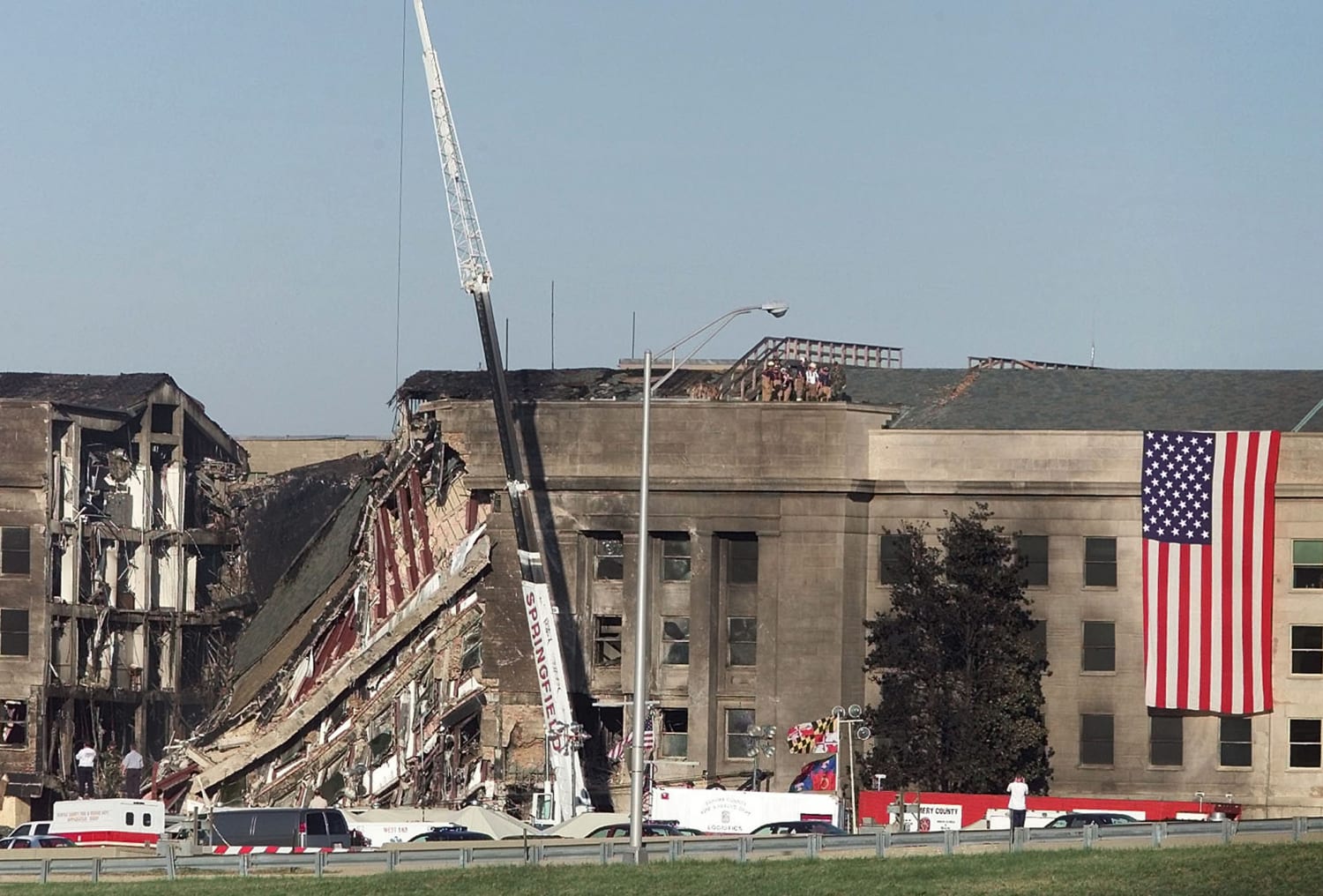
Meanwhile, Indianapolis ARTCC lost contact with American Airlines Flight 77 at around 08:51. This flight took off from Dulles International Airport in Northern Virginia and was piloted by Captain Charles Burlingame and First Officer David Charlebois, carrying 4 flight attendants and 58 passengers. Nothing was heard from Flight 77 until, at 09:37, the flight crashed with the Pentagon, the HQ of the United States Military. It’s believed that five hijackers took control of the plane shortly after 08:51, turned off the transponders and managed to make it vanish from the radar. It was initially interpreted as a crash upon the loss of contact so nothing was done to try and prevent the collision with the building. Everyone on board was killed immediately whilst 125 people within the building were killed or fatally injured.
The Pentagon after being struck by the plane
Meanwhile United Airlines Flight 93 took off from Newark International Airport in New Jersey, around 10 miles from the Twin Towers. The flight left the airport only four minutes before Flight 11 struck the North Tower and over 40 minutes after its scheduled time of departure. Ed Ballinger, a United Airlines dispatcher, relayed a message to Captain Jason Dahl and First Officer LeRoy Homer Jr to “Beware any cockpit intrusion—Two [aircraft] hit World Trade Center” at 09:23. When Dahl sent back a message to confirm this statement, four hijackers breached the cockpit a mere two minutes later. Two mayday messages were sent out at 09:28 before the cockpit went quiet. A minute later, Bush went live on TV, during the middle of a public event to promote education initiatives, that America was facing a co-ordinated terrorist attack.
Meanwhile, passengers on board Flight 93 had been pushed to the back of the cabin, where all the Airfones on board the plane resided. Having communicated with their loved ones, they too learned of the scale of the attack. Not wanting any more lives to be lost, they began to organise. Despite being in the view and earshot of two of the hijackers, they continued to organise whilst the hijackers did nothing. Eventually a plan was concocted. Todd Beamer, a near-professional baseball player, made a request to Airplane Supervisor, Lisa Jefferson.
“Would you do one last thing for me?”
“Yes. What is it?”
“Would you pray with me?”
The passengers then recited the Lord’s Prayer together. At the end of this improvised sermon on the plane, Beamer concluded with a verse from Psalms 23
Yes, though I walk through the valley of the shadow of death, I will fear no evil; For thou art with me
The verse that Beamer recited on United 93, Psalms 23:4
The bandana of one of the hijackers
Then Beamer told the other passengers and crew members “Are you guys ready? OK, let’s roll.”
The plane started moving around erratically as Ziad Jarrah, the pilot amongst the hijackers, asked his copilot “Is there something? A fight?” CeeCee Lyles, a flight attendant called her husband saying that the passengers were forcing their way into the cockpit of the aircraft. Jarrah turned the plane from side to side to knock the passengers off balance as he told the co-pilot that “They want to get in here. Hold, hold from the inside. Hold from the inside. Hold.” He then jerked the plane up and down 2 minutes into the assault. There was crashing, screaming and china and glass smashing. There were also shouts of pain from another hijacker outside the cockpit, presumed to be attacked. Jarrah stabilised the plane and asked, “Is that it? Shall we finish it off?” “No. Not yet,” says another hijacker, “When they all come, we finish it off.” Jarrah starts jerking the plane again and a passenger says, “In the cockpit. If we don’t, we’ll die.” And 16 seconds pass by. As a passenger screams, “Roll it!” they start using the food cart as a battering ram for the cockpit door. Having realised that the plan is over, Jarrah pushed the plane into a nosedive. The 9/11 Commission Report concluded that “The hijackers remained at the controls but […] the passengers were only seconds from overcoming them.” At 10:03, the plane crashed into a field outside of Shanksville, Pennsylvania, killing everyone on board.
Back in New York, the towers, due to the sustained weakening from the fires, collapsed at 9:59 for the South Tower and 10:28 for the North Tower. Fires caused inside by other flammable objects within the buildings, such as paper and furniture reached over 1,000°C, leading to the weakening but not melting of the steel beams that held up the building. As a result, the top floors of the building collapsed onto the next, creating a domino effect and the collapse of the buildings. Due to the spread of the fire caused by debris, the 7th building in the complex also collapsed at 17:20. The fires were inaccessible to the FDNY and the interior sprinkler system had failed leading to the collapse of a critical support column and the building itself. Almost 3,000 people were killed in the attacks, consisting of the pilots, the flight crews, the passengers, the terrorists and members of the FDNY and NYPD.
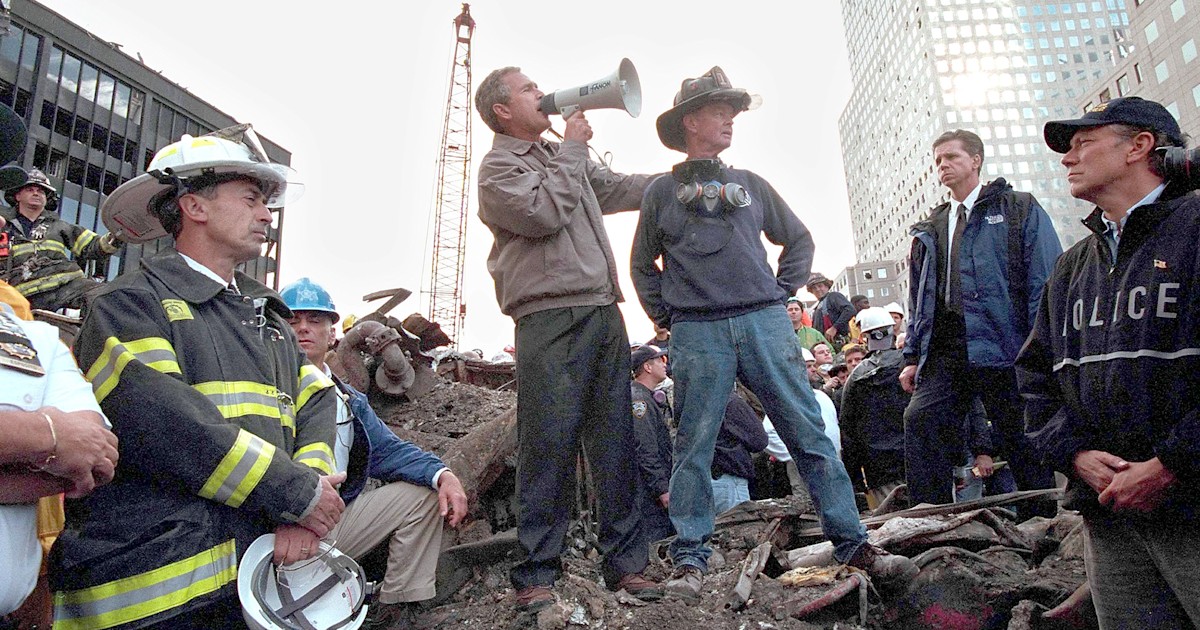
George W. Bush making a speech atop Ground Zero
I can hear you. The rest of the world hears you. And the people who knocked these buildings down will hear all of us soon.
George W. Bush on the site of ground zero
In their aftermath, a wide range of conspiracy theories emerged, claiming the attacks were an “inside job,” a false-flag operation, or involved foreign intelligence services such as the Israelis. While such claims persist in popular culture, no credible evidence has substantiated them, and they are rejected by mainstream investigators and historians. After the attacks, the National Commission on Terrorist Attacks Upon the United States, more commonly known as the 9/11 Commission, concluded that the catastrophe resulted less from a lack of information but instead from failures of coordination, communication, and urgency within the US government. Many argued that the Commission’s findings were limited by political constraints and that accountability for these failures was minimal. As a result, public debate shifted away from how the attacks occurred toward why repeated warnings were not translated into effective preventative action.
As a result of the attacks, Congress authorised the invasion of Afghanistan, due to the Taliban, the Islamist militant organisation running the country, housing al-Qaeda and their leader, Osama bin Laden. The invasion of Afghanistan is the only time where Article 5 of NATO has been invoked. In the aftermath of a series of anthrax attacks framed to look like they were by a jihadist group, Republican Congressmen and the Bush administration used it and 9/11 to pass the Patriot Act, a law that authorised the expansion of government surveillance on American citizens. The extent of this surveillance was revealed by Edward Snowden, a former National Security Agency (NSA) contractor, and revealed that the NSA was surveilling billions of people around the world. Parts of the act were eventually amended or appealed in 2015 following Snowden’s whistleblowing. The attack was also used by the US Government to justify the invasion of Iraq in 2003, a war widely regarded as illegal under international law. Whilst many deemed the 1990s as “the end of history,” September 11th proved that it was merely the end of a chapter in a much wider story.
Due to some territorial disputes, Iraq was thrust into war with Iran, a country that had recently undergone a fundamentalist Islamic revolution. During the fighting, Saddam Hussein deployed chemical weapons on his own people in the Kurdish areas, where Iran’s forces were advancing. At the time, the US, an ally of Iraq, turned a blind eye to these war crimes. However, the war eventually came to an end with no real winner on either side. However, because of the effort it took, Iraq had a lot of countries donate money, weapons and resources. One such country was Kuwait.
Kuwait was an incredibly rich country due to its plentiful oil fields however was currently undergoing a financial recession due to a stock market crash. Kuwait was in desperate need of money so they began asking Saddam Hussein for the money back. However, Iraq was in no position itself to give the money back. Iraq, as well as many other countries in OPEC (Organization of the Petroleum Exporting Countries) were also frustrated that Kuwait was producing too much oil and overfilling their quotas. Once Kuwait announced it would limit oil production, Hussein found another bone to pick with Kuwait, claiming that they were tapping Iraqi oil fields for their own production.
It is also possible that Hussein had an ulterior motive. Iraq and Kuwait were both formerly a part of the Ottoman Empire until its collapse after World War 1 and Hussein believed that Kuwait was rightful Iraqi territory.
Iraq demanded that Kuwait pay $10 billion to them. In exchange, Kuwait offered only a fraction of that, at $500 million. Outraged by this, Hussein ordered troops to begin invading Kuwait on August 2nd, 1990, around a year and a half before the collapse of the Soviet Union. Kuwait, due to its dire lack of military … anything, put up practically no fight. A puppet government was established before Hussein declared that Kuwait was now simply a province of Iraq.
A photo of the Iraqi Invasion of Kuwait
The UN Security Council immediately denounced the invasion unanimously, and demanded the immediate withdrawal of Iraqi troops from Kuwait. This council included the United States, who believed that Hussein was threatening US oil interests in the region. George H. W. Bush, the then president and former VP to Ronald Reagan and director of the CIA, feared that Hussein may invade Saudi Arabia next, a strong ally of the United States.
Bush managed to bring many other NATO countries on board for an attack if needed, including the United Kingdom, France, Egypt and Saudi Arabia, with many others providing support. However, the US would still lead the majority of the effort. Due to Gorbachev’s policies, the US had now become the lone superpower. However, Gorbachev and Bush both agreed that the Iraqi aggression had to be crushed.
[Gorbachev and I] are united in the belief that Iraq’s aggression must not be tolerated. No peaceful international order is possible if larger states can devour their smaller neighbors. [I]f old adversaries like the Soviet Union and the United States can work in common cause, then surely we who are so fortunate to be in this great Chamber—Democrats, Republicans, liberals, conservatives—can come together to fulfill our responsibilities here.
George H. W. Bush, Joint Congress Session, 1990
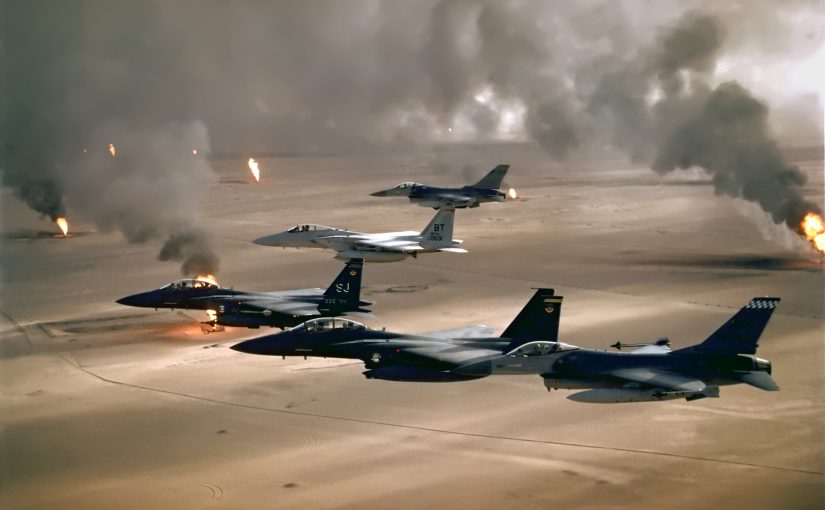
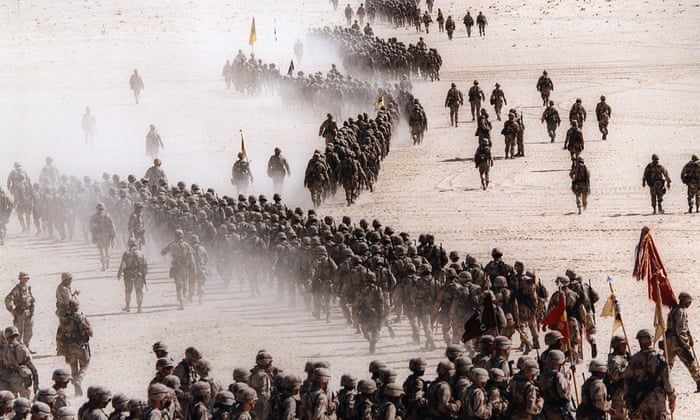
A trade embargo was then established on August 6th. However, despite all this, Hussein refused to back down, as many Kuwaiti protests occurred, which were often violently crushed. Eventually, an ultimatum was issued to Iraq, for troops to leave Kuwait by January of 1991 or the United Nations (and when I say the UN here, I mean the US but that’s not technically official but we move) would “use all necessary means” to force him out. Hussein, obviously, ignored this ultimatum and, on January 16th, Operation Desert Storm began.
A photo from the Battle of Medina Ridge
Bombing raids were conducted from the air whilst marines began moving into the Persian Gulf. In an attempt to bring other Muslim majority countries into the war, Hussein attacked Israel with missiles, hoping they would counter attack. Israel did not and Iraq stood alone against the coalition. Soon, ground forces began moving through Kuwait and overwhelmed the Iraqi soldiers. Their vastly inferior technology and weaponry stood no chance against the United States. Iraqi troops began burning oil fields, causing massive air pollution and costing Kuwait $1.5 billion. Instead of choosing to fully invade Iraq, Bush chose to withhold coalition forces, stating that:
“To occupy Iraq would shatter our coalition, turning the whole Arab world against us, and make a broken tyrant into a latter-day Arab hero,”
George H. W. Bush, “A World Transformed”, 1998
The embargo was never lifted on Iraq, which led to poverty and starvation skyrocketing to unforeseen levels. Northern Kurds and southern Shiites (a branch of Islam, like Catholicism or Protestantism in Christianity) both rebelled against Saddam in uprisings that were brutally crushed.
Due to the chemical weapons that were used in the Iran-Iraq War, the United States accused Hussein of hiding WMDs (Weapons of Mass Destruction), which is a wider umbrella term that includes nuclear and biological weapons as well as chemical. After Hussein denied the United Nations to check for such weapons, Bill Clinton, the president after George H. W. Bush, initiated Operation Desert Fox, which involved the dropping of bombs on Iraqi military sites, in an attempt to destroy any possible WMDs that Iraq may have had. George H. W. Bush’s son, also called George Bush, later invaded Iraq in the Iraq War, with troops not leaving until 2011.
In 1973, Mohammad Daoud Khan overthrew his own first cousin, the King of Afghanistan, establishing an autocratic one party nation. Despite his many economic reforms, similar to those of his cousins, Khan’s foreign policy strained tension with neighbours and factions within his own country. Eventually, Khan was overthrown and killed by the People’s Democratic Party of Afghanistan lead by Hafizullah Amin in 1978, making Afghanistan a Communist nation.
Insurgent cars arriving at the Presidential Palace, 1978
Soon, the new Communist Afghanistan, with new President, Nur Muhammed Taraki, began facing struggles. They tried to reform women’s rights, mainly to education, make the state more secular and enacted some awful land reforms. Anyone who spoke out about these reforms would be arrested. Soon, uprisings from Islamic Rural areas began occurring and Taraki began losing control of his nation. During the violence, Taraki was killed by Amin, allowing Amin to ascend to power
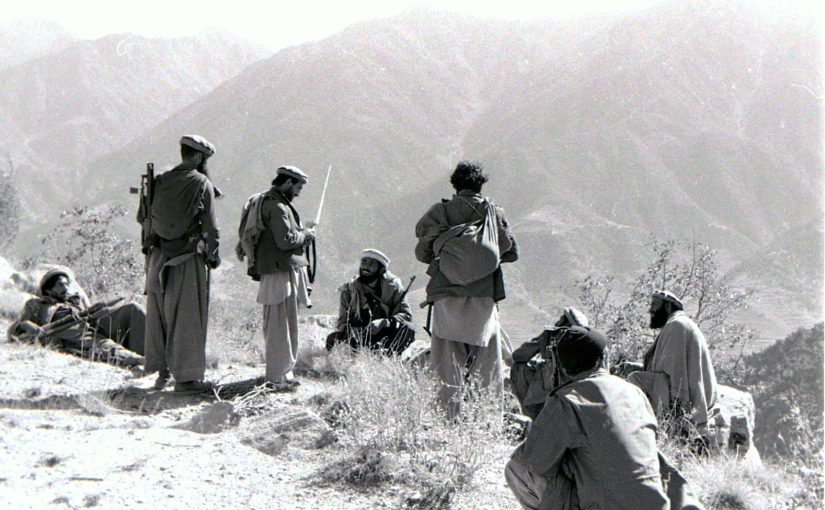
Meanwhile, Leonid Brezhnev, General Secretary of the Soviet Union, and the rest of the Kremlin did not trust Amin and decided that in order to secure their next door neighbour, not wanting yet another fundamentalist Islamic country on their doorstep like Iran before it, Amin had to die. On December 27th, 1979, Soviet forces raided the palace, killing Amin, putting a Soviet puppet in his place, Babrak Karmal. Whilst Soviet forces did manage to capture key military forts in cities and urban areas, they were unable to secure the insurgents in the mountainous countryside, who would use the mountainous terrain to wage brutal guerilla warfare. These insurgents were called the Mujahideen. And this was just the ticket, the US needed.
Outside of the Warsaw Pact, the international community strongly opposed the invasion, with many other Communist nations such as China, Muslim majority countries such as Pakistan and many more opposing the occupation. However, no-one was a stronger opponent than the United States, who imposed a trade embargo on Soviet products, boycotted the Olympic Games, which were being held in Moscow that year, and, most importantly funded the Mujahideen.
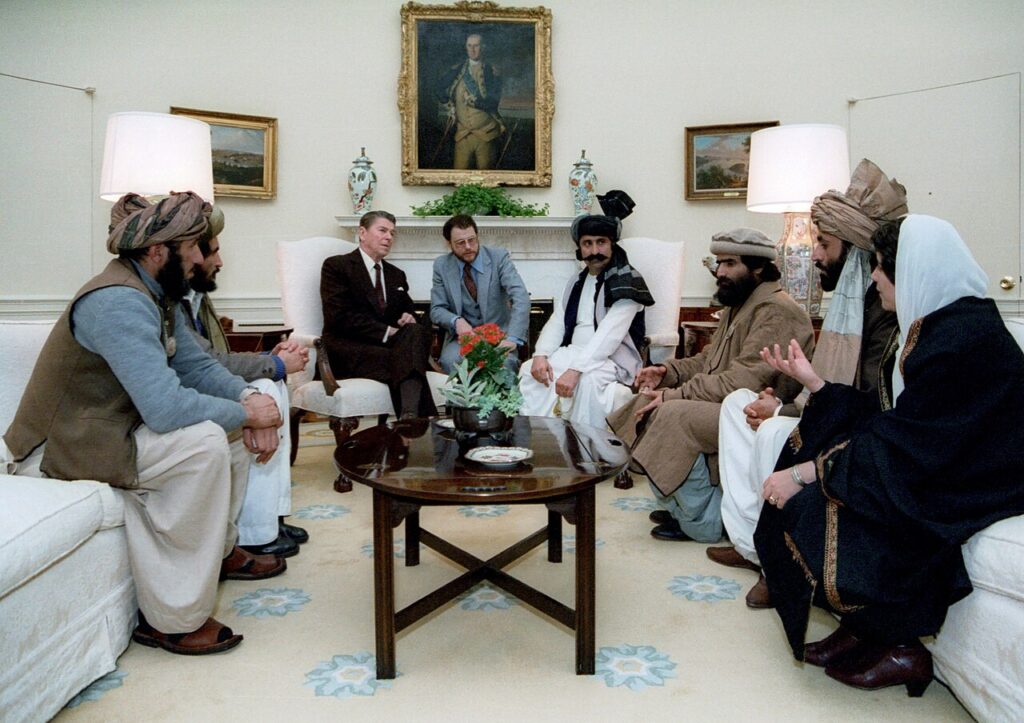
It was the height of the Cold War, and, after the Iran Hostage Crisis, Jimmy Carter had not won a second term. The new “tough on Communism” Ronald Reagan wanted to limit Soviet expansion as much as possible, whilst also wanting to give the Soviets their own Vietnam.
2/2/1983 President Reagan meeting with Afghan Freedom Fighters in the Oval Office to discuss Soviet atrocities in Afghanistan
We must not break faith with those who are risking their lives—on every continent from Afghanistan to Nicaragua—to defy Soviet-supported aggression and secure rights which have been ours from birth.
Reagan in his 1985 State of the Union address.
Over six years, in Operation Cyclone, the CIA would funnel $3.2 billion worth of weapons, economic help and military training towards the Mujahideen. Pakistan was also a large supporter of the Mujahideen’s efforts against the Soviets, serving as an operational base for the Mujahideen. The British were also a key supplier of finances and weapons, with MI6 assisting from their base in Islamabad.
During the war, atrocities were committed by both sides, with the Soviet Forces engaging in chemical warfare and airstrikes on civilian targets, whilst the Mujahideen brutally tortured captives. These acts forced 4 million citizens to seek asylum and did nothing to help either side.
Soon, the USSR, under the new leadership of Mikhail Gorbachev, realised that there was no winning this conflict. It began to slowly withdraw whilst stabilising a Communist government under their new puppet, Mohammad Najibullah, who, despite his decent reforms, did not help the trust in the communist government. They also restricted direct involvement, only training and funding a new Communist Afghan Army, which ultimately resulted in failure.
The Soviet-Afghan War was an absolute catastrophe for the Soviets. It showed the weakness in the Belly of the Bear, and proved that, with time, the Soviet Union could be defeated. Many historians cite the war as laying the groundwork for the collapse of the Soviet Union, only 2 years after the end of the war. The Communist regime eventually collapsed, thrusting Afghanistan into civil war, with one of the factions of the Mujahideen, the Taliban, taking control of the country in 1996 and were not deposed until 2001 during the War in Afghanistan, starting a terrorist insurgency that would last 2 decades, eventually returning to power in 2021 after the American withdrawal from the country. By many scholars, the Taliban and the rule they imposed over Afghanistan, as well as their insurgency, is currently considered to be one of the greatest enemies to the United States and the world at large
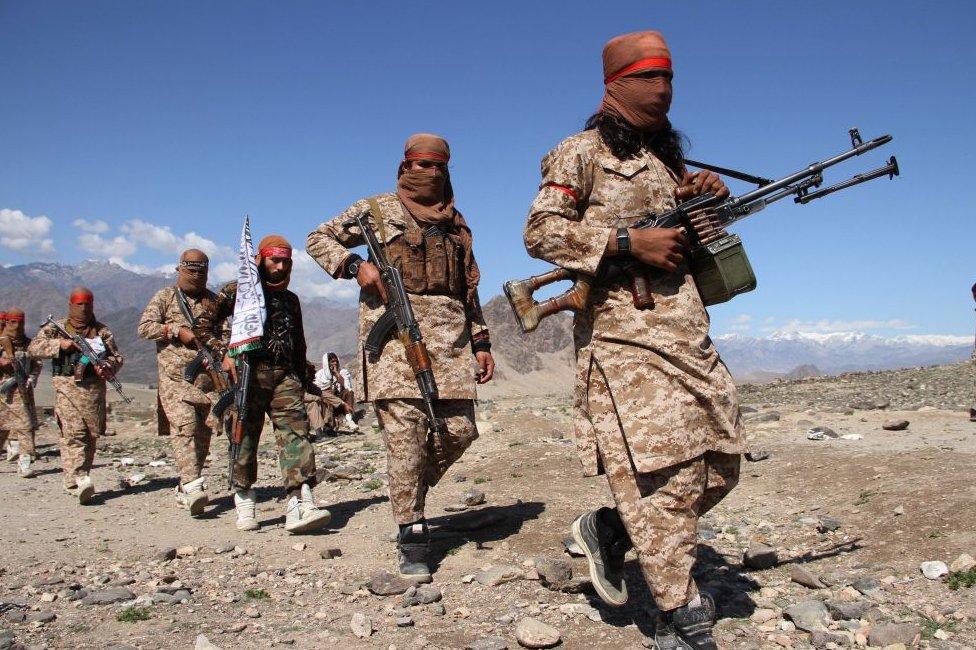
A modern day photo of Taliban Insurgents in Afghanistan
The United States respects the people of Afghanistan […] but we condemn the Taliban regime. […] It is not only repressing its own people, it is threatening people everywhere by sponsoring and sheltering and supplying terrorists. By aiding and abetting murder, the Taliban regime is committing murder.
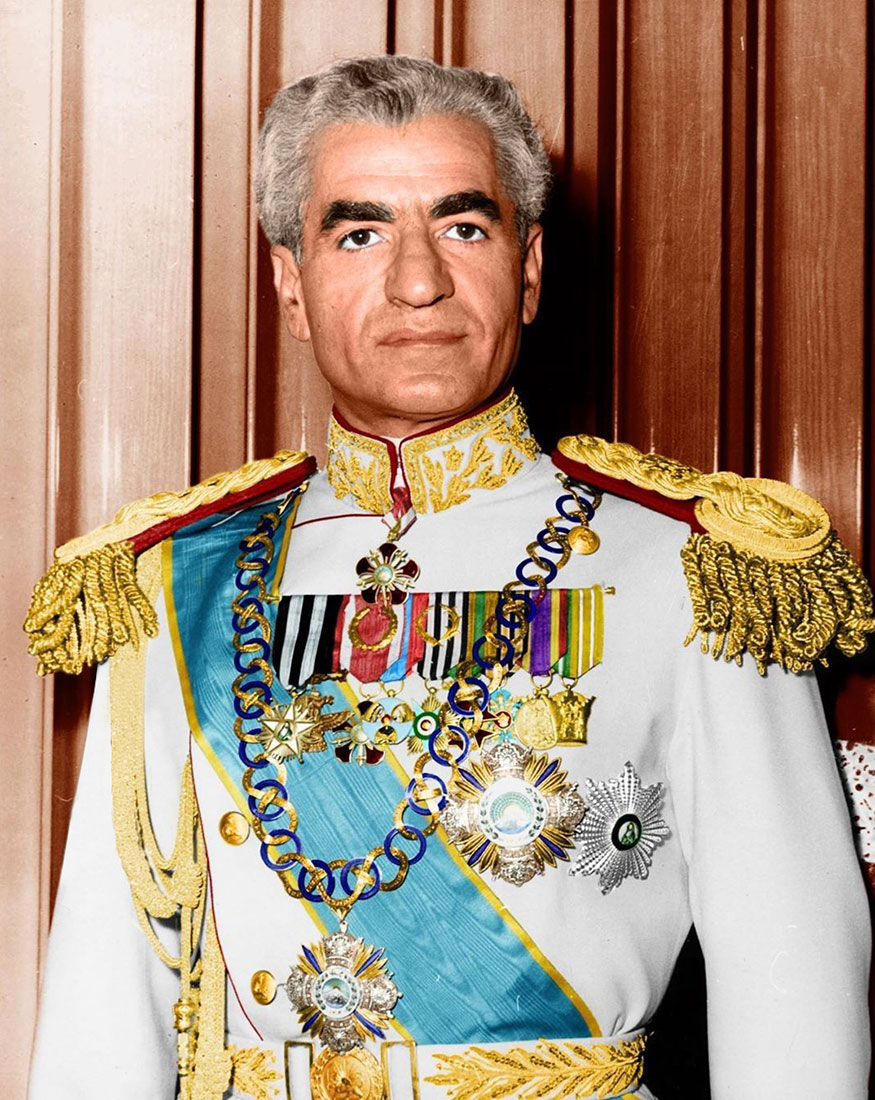
In 1952, Mohammed Mosaddegh was elected to the office of Prime Minister of Iran by the Iranian People. An openly socialist leader, he increased social security, mandated higher taxes and enacted mass land reforms. The most famous of his policies was to nationalise Iranian Oil. These oil fields were initially owned by the British in Persian land, through the private Anglo-Persian Oil Company. This meant that the fields were now under state ownership, posing a problem to British and American oil interests in the region. On August 19th, 1953, the MI6 and CIA backed a coup in Iran, overthrowing the democratically elected Mosaddegh and centralising power under the absolute monarchy of Mohammad Reza Pahlavi, who had been the Shah of Iran in a constitutional standing since the end of the Second World War.
A photo of Mohammad Reza Pahlavi
The kings had been absolute rulers of Iran for millennia before a parliament was introduced in 1906. The rule of Reza Shah Pahlavi, the father of Mohammad Reza Pahlavi, was widespread with oppression and suppression of minority groups. He was forced to abdicate in 1941 and Mohammad Reza Pahlavi took power. After the Second World War, Britain began to allow democracy to have more power in Iran. Once oil was nationalised under Mosaddegh, who was backed by an Iranian Communist party, the coup was orchestrated and democracy died.
Between 1963 and 1975, the Shah was considered to be quite a decent ruler. He reorganised the oil industry, which went from producing $555 million in 1964 to $20 billion by 1976. Much of this money was re-invested into infrastructure and education. The population grew, infant mortality fell and a professional middle class was beginning to develop. However, the problem was these reforms were coming fast and hard. Many universities pumped out graduates quicker than jobs could be made, especially prevalent in the capital city of Tehran, where this effect was most dire. After 1975, the Shah ruled with absolute autocratic power. Many political prisoners were tortured and arrested by a brutal secret police known as the SAVAK. He abolished all political parties, replacing them with the pro-Monarchy, Conservative Liberal Resurgence party.
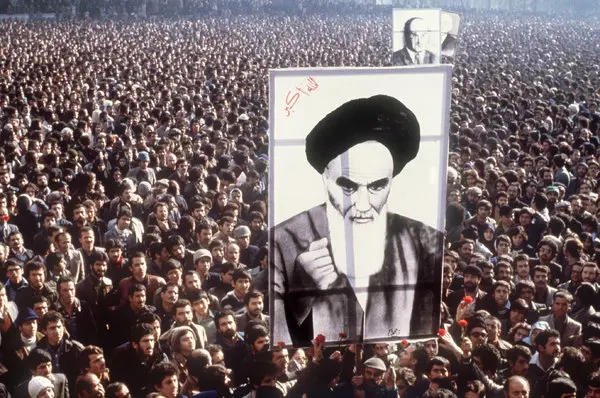
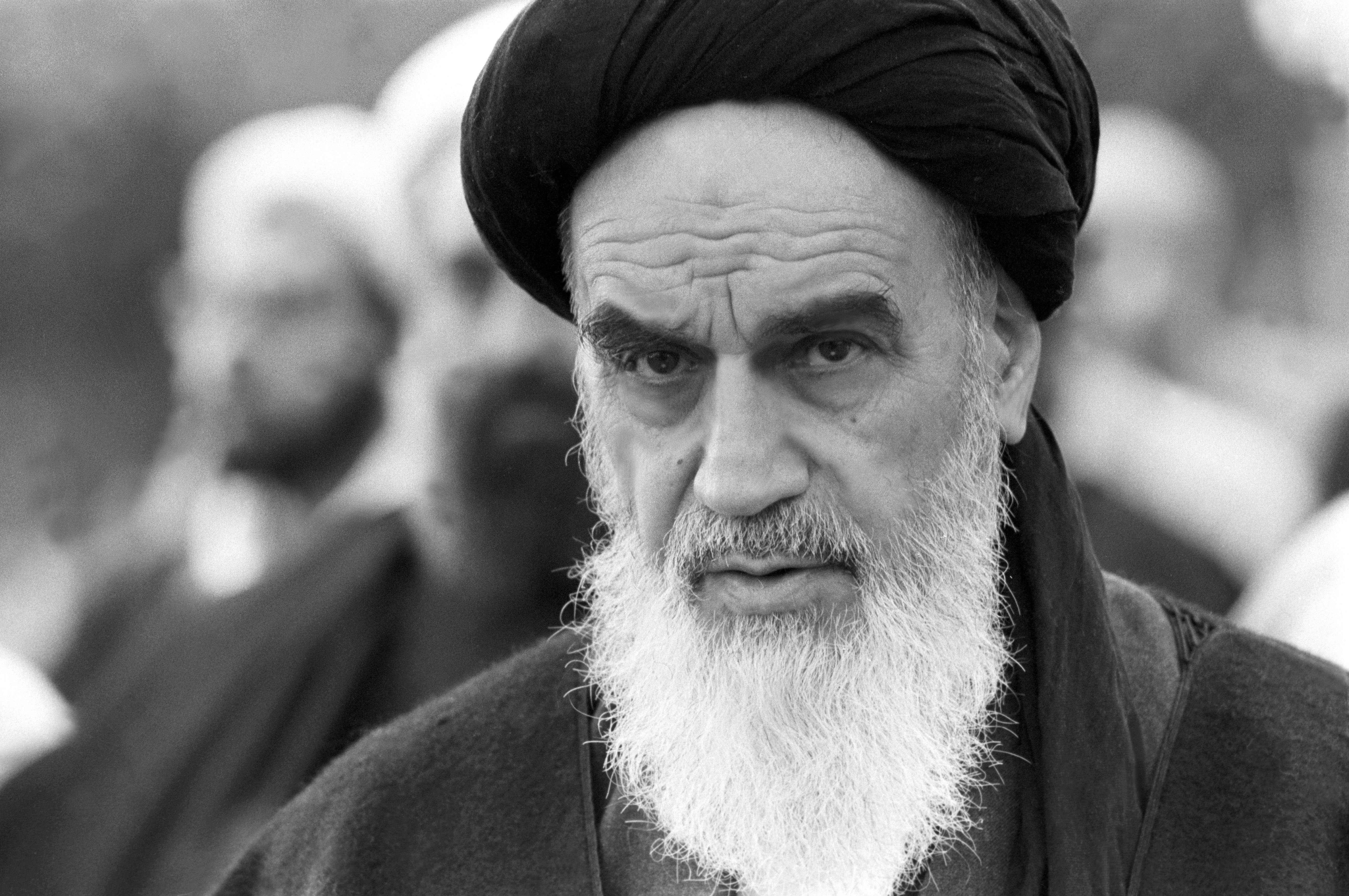
Many of the positive reforms, however, were largely opposed by Ruhollah Khomeini, a Shia Cleric from Qom. He mainly complained that the reforms would give women too many rights, including the right to vote, as well as saying that the government neglected the poor and was strongly opposed to the sale of Iranian Oil to Israel. Khomeini believed that a king was inherently un-Islamic and that he must be deposed. Due to his opposition, he was exiled to Türkiye in 1964. Iran was a powder keg of economic inequality and vast oppression. All it needed was a match.
A photo of Khomeini
On January 7th, 1978, an Iranian Newspaper published an article that was highly critical of Khomeini. Small demonstrations began to break out across the country. However, these grew once the army began to fire on protestors. Once more protestors arrived, the army would once again crack down and the cycle would continue. Many had also grown discontent with the West’s influence in Iranian life and society.
American lifestyles had come to be imposed as an ideal, the ultimate goal. Americanism was the model. American popular culture – books, magazines, film – had swept over our country like a flood…We found ourselves wondering ‘Is there any room for our own culture?
A woman interviewed by Michael Axworthy
A confused Shah had no idea why the people were protesting him, suspecting them to either be Communists or controlled by the British. Despite his attempts to appease the people, he was forced to flee to the United States on January 16th, leading to a break down of diplomatic relations between Iran and the United States from then on. Many say that these initial protests were not about fundamental Islam, however, but with a discontent with a decreased standard of living. In the second phase of the revolution, Khomeini moved to establish an Islamic Republic, which involved extreme anti-American fever and the taking of hostages inside the US Embassy in Iran.
Since the revolution, Iran has become a fundamentalist Islamist dictatorship, with the people’s vote in parliament and President ultimately being worthless, when all parliamentary legislation can be superseded by God, embodied by the Supreme Ruler, who, from 1979 until his death, was Khomeini. To ensure the support of an Islamic Republic in Iran, the Islamic Revolutionary guards and Hezbollah were created in order to ensure there would be no counter coup. Sharia law was strictly enforced, with those who disobeyed receiving harsh punishments. By at least October of 1979, several hundred people had already been executed. Everything was owned by the state, including the media, who always bowed down to the Supreme Leader. Repression is still rife in Iran, perhaps even more than it was under the Shah, especially in relation to women’s rights, which have been highly supressed.
In the aftermath of World War 2, many of the war torn countries, such as France and Poland, began to turn to Communism in order to rebuild. Wanting to expand their influence, the Communist USSR, lead by Joseph Stalin, wanted to expand Communism all across Europe. Meanwhile, the United States opposed this, wanting more countries to embrace free market economies, capitalism and democracy. This lead to tensions rising between the two factions who were once allies against the Nazis. This divide between Western Capitalism and Eastern Communism was no clearer than in Greece.
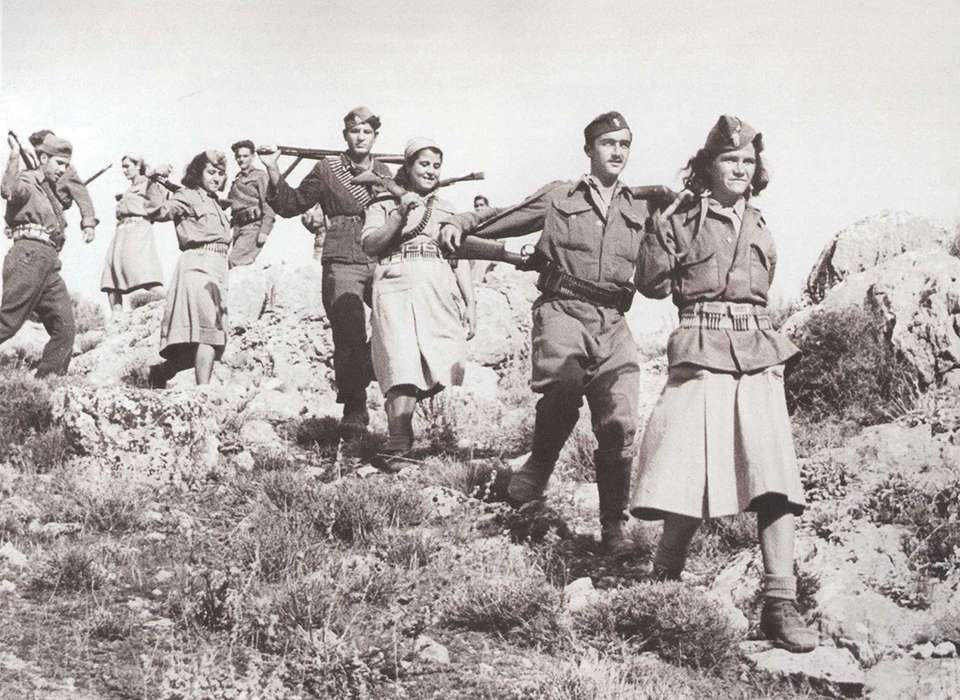
A photo of Greek Nationalist troops
From 1946-1949, Greece was in a civil war, between the Nationalists, backed by the United States, and the Communists. Whilst Harry Truman, President of the United States, feared that the Soviets may back the Greek Communists, Stalin’s focus was more on Turkey, and seeing if they would become a Communist nation, due to their oil production in Iran needing to pass through Turkish waters, requesting a military base in the country and transit rights through the Dardanelles Strait and the Sea of Marmara. Due to the economic impacts of having the water being Soviet Occupied, the United States sought a democracy in Turkey.
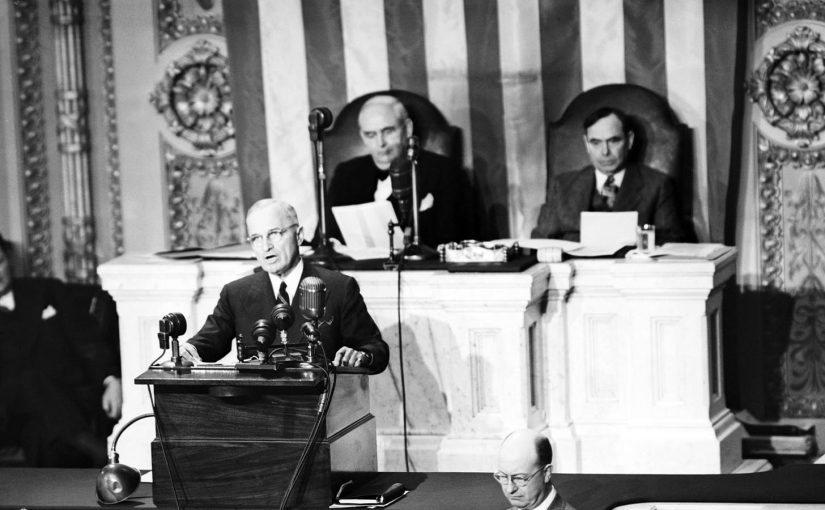
Many people feared that the Soviet Union would have a monopoly over the Mediterranean if Greece and Turkey fell to Communism. Truman chose to take action and addressed Congress with his plan on March 12th, 1947
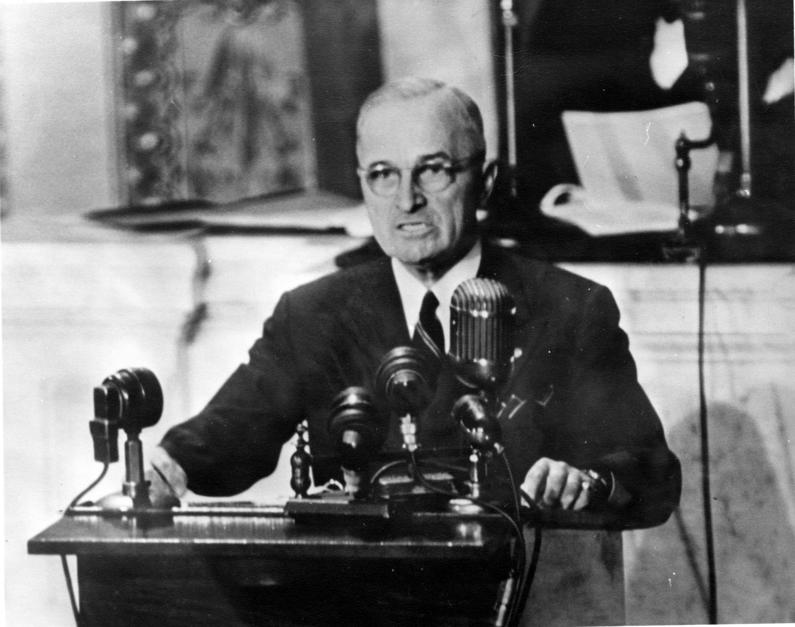
Truman addressing Congress
One way of life is based upon the will of the majority, and is distinguished by free institutions, representative government, free elections, guarantees of individual liberty, freedom of speech and religion, and freedom from political oppression.
The second way of life is based upon the will of a minority forcibly imposed upon the majority. It relies upon terror and oppression, a controlled press and radio; fixed elections, and the suppression of personal freedoms.
I believe that it must be the policy of the United States to support free peoples who are resisting attempted subjugation by armed minorities or by outside pressures. I believe that we must assist free peoples to work out their own destinies in their own way.
An excerpt from Truman’s speech to Congress
Truman was very careful to not explicitly name Communism or the USSR, but everyone knew what he was talking about. In order to truly combat communism, Truman, with the advise from Senator Arthur Vandenburg, over exaggerated the crisis, to such a degree where it would scare the American people and get them to side against Communism. Many modern historians cite the Truman Doctrine as the declaration of the Cold War.
In 1932, in Cavendish University, J. D. Cockcroft and E. T. S. Walton bombarded lithium with protons from a particle accelerator. The protons caused the lithium atom to split. Many scientists, the most notably of whom were under Nazi governance in Germany, realised that if they continued to split uranium and plutonium atoms, with the protons from one atom splitting another and the process repeating in a process called fission, they could make a new source of energy. However, with this power, the results could also be used for much more sinister means.
August, 1939. About a month before the outbreak of WW2, Albert Einstein, a highly accomplished scientist who discovered the theory of relativity (E=mc2) sent a letter to Franklin D. Roosevelt, then President of the United States, on a highly serious matter. Einstein believed that the Germans were working on a super weapon, a super weapon that would harness the power of Cockcroft and Walton’s work and make a fission bomb, that could wipe cities off the map. Despite being a pacifist, Einstein believed that such a weapon would be better in the hands of the Americans than the Germans. By August of 1942, the development of an atomic weapon was granted by FDR. A group of hundreds of scientists all were called upon by the US government to assist in the development of the technology.
One of the top scientists on the project, who led the scientific research and design of the bomb, was Dr J Robert Oppenheimer. He graduated in chemistry from Harvard and obtained his doctorate in physics from the University of Göttingen in Germany. Whilst abroad in Europe, he learned a lot about quantum physics, a field that was not that expanded in the United States. One of the most notable German physicians was Werner Heisenberg, who thought of the famous Heisenberg Uncertainty Principle. Many believed that Heisenberg was working on the German Nuclear bomb.
A photo of Oppenheimer
Back to Oppenheimer, he joined the faculty of the University of California, Berkley, where he expanded the field of Quantum Physics in the United States, becoming a professor in 1936. He even partially discovered a black hole in 1939. He was considered to be one of the greatest minds in Atomic Research, the kind of man that the US was after. However, he was under observation by the FBI since 1941 due to his ties to communist groups and union activity whilst in California. Most notably, he was a leading figure in the Federation of Architects, Engineers, Chemists, and Technicians (FAECT), a white collar union for technical professions, and met many close friends through the Communist Party of the USA, of which his brother Frank was a member.
His wife, Kitty, was a former member of the Communist Party before leaving in the 1930s before they met. He also had an on and off affair with active Communist Party member, Jean Tatlock, who committed suicide in 1944. However, whether he was actually a member of the party was heavily debated. During his 1954 security clearance hearing, he testified that he agreed with many of the ideas of communism but would not tow a party line. He also openly campaigned and funded the Republicans in the Spanish Civil War, before joining the American Committee for Democracy and Intellectual Freedom, which campaigned against Jewish persecution in Nazi Germany. The group was later branded as communist during the era of McCarthyism. As Chief of Security for the Manhattan Project, Colonel Boris Pash was asked to assess Oppenheimer regarding his alleged communist ties. Whilst stating that he “may still be connected with the Communist Party”, Pash did not believe Oppenheimer to be a spy, believing that “Oppenheimer’s personal honour and concern for his reputation would deter him from such action”. Pash therefore did not recommend his removal from the project, but instead that Oppenheimer be accompanied by counter-intelligence agents.
Oppenheimer, as well as many other notable scientists such as Richard Feynman, Edward Teller and Isidor Isaac Rabi, were gathered in Los Alamos, a remote part of the New Mexican Desert where a small town was built in order for the scientists to do their research and accommodate their families. The bomb, codenamed the Manhattan Project, was worked on for months on end. The first contained chain reaction occurred in a secret lab under a Chicago University football stadium. The theory’s were now fact and the development of the bomb begun. During the time creating the bomb, Italy fell after an allied invasion and a small civil war. The Axis powers were on the ropes and the President, now Harry Truman after the death of FDR on April 12th of 1945, was confident that this bomb would be the final push to end the German War Machine. However, it ended a lot sooner than expected.
A newspaper about the death of Hitler
On the 21st of April 1945, the Soviet forces entered Berlin. Only 9 days later, Hitler fed cyanide to his wife, Eva Braun, and shot himself in his bunker in Berlin. A little over a week later, Germany surrendered. 2 out of the 3 major Axis powers were out of the war as well as the bomb’s target. Truman began to reconsider the target. He had been bombing the Japanese for months on end and he believed that a mainland invasion of Japan would only cost more American lives. With the Soviets beginning to invade Japanese occupied Manchuria, he decided what to do.
A photo of the bomb test
On July 16th 1945, in the middle of the New Mexican desert, a fireball erupted. The infamous Trinity Test had been conducted. The bomb worked. Around a month later, in the city of Hiroshima, Japan, the first bomb was dropped.
Photos of the bombings (Hiroshima left and Nagasaki right)
Buildings were instantly turned to rubble and people were vaporised on the spot, leaving only their shadows on the pavement. However, some would consider these the lucky ones. Akiko Takakura was at the Bank of Hiroshima when the bomb dropped. Despite being within 300 metres of the hypo-centre, she survived the initial bomb.
When I regained consciousness, I found myself in the dark. […] After a while, it began to rain. The fire and the smoke made us so thirsty and there was nothing to drink, no water, and the smoke even disturbed our eyes. As it began to rain, people opened their mouths and turned their faces towards the sky and try to drink the rain, but it wasn’t easy to catch the rain drops in our mouths. It was a black rain with big drops. […] We opened our mouths just like this, as wide as possible in an effort to quench our thirst. Everybody did the same thing. But it just wasn’t enough.
Takakura’s account of the aftermath of the bombing
A drawing that Takakura made of her drinking the thick black rain
Takakura’s account is likely due to the bomb vapourising all the exposed water in the surrounding area, hence her dire thirst. The evaporated water had then mixed with the radioactive soot in the atmosphere, producing the thick black rain. Her friend, who also drank the water, succumbed to radiation sickness.
Private Shigeru Shimoyama just stepped into a concrete reinforced warehouse that was only 6 blocks away from the hypo-centre. He was flug against a back wall by the force of the explosion, saving him from falling debris. When he awoke, he found that his arms and shoulders had been impaled on nails protruding from the wall, leaving him hanging about a metre off the ground. Upon freeing himself and leaving the building, he spotted a group of bureucrats carrying a life sized portrait of Hirohito (Emperor Shōwa) throught the rubble. He spied a naval vessel patrolling through the river, full of dead bodies, which paused and the crew bowed to the Emperor.
A photo of Hirohito
He then turned around and saw a peculiar, pinkish white, fleshy horse. It was then that he realised the horse had gone through a phenomenon known as de-gloving, in which the skin of the horse was removed by the force of the blast, but still kept the horse alive. Shigeru, horrified, ran from the scene. Whenever he turned back, the horse continued to follow him.
Another soldier stationed outside the city heard the bomb go off and saw the mushroom cloud arise from the horizon. At the train station he was at, a passenger train rolled through from Hiroshima, all its windows smashed and most of its passengers burnt to a crisp. Those who weren’t stared out the windows with blank expressions on their faces. Every coach was at least smouldering with two coahces entirely engulfed in flames. After bringing a train to a stop, the group of soldiers decided to turn back in an effort to help survivors. On their way back, they encountered lines of people walking along the railway line, who all had their clothes, skin and muscles peeling off. These people were dubbed the Ant Walkers of Hiroshima.
A drawing of the Ant-Walkers by a survivor of the bombing
3 days later, another bomb was dropped, this time on Nagasaki, another nearby city. Anywhere between 150,000 and 246,000 people were killed in the bombings, the majority of which were civilians. The Japanese issued surrender on August 15th, with the surrender taking effect on September 2nd. World War 2 was over, lasting 6 years and 1 day.
The Japanese Minister of Foreign Affairs, Mamoru Shigemitsu, signing the peace proclamation aboard the USS Missouri
In the ensuing Tokyo Trials, seven out of the 28 people on trial were executed for crimes against peace, war crimes or crimes against humanity, including the Japanese Prime Ministers, Kōki Hirota and Hideki Tojo. Other Prime Ministers during this time were not executed, either sentenced to prison, dying before Japanese surrender or simply not being tried. Most notably, Senjūrō Hayashi and Fumimaro Konoe both died before Japanese surrender, from a brain haemorrhage and cyanide ingestion respectively. Kiichirō Hiranuma was sentenced to life at Tokyo before passing away in 1953. Nobuyuki Abe was arrested by the American occupation government but was never tried for any war crimes. The Emperor, however, was not tried on such crimes, despite being complicit in them, as the United States believed that in order to secure Japan for a democratic future, a stable Emperor must help them in their efforts. In addition, no-one on trial ever implicated Hirohito in any of the atrocities they committed in China and the Pacific.
However, the head of Unit 731, the Japanese human experimentation unit, Shirō Ishii, was not indicted for such crimes, as the Americans wanted to exchange their findings for immunity in court. Some of Unit 731’s experiments involved largely biological research. On occasion, they would release the bubonic plague into populated Chinese villages to study the rate of infection. They would give various diseases to prisoners of war and vivisecting them to observe the results on the human body. They would also cut open a person whilst they were still alive to remove organs to observe what impact it would have on the human body, including connecting the guts back up to the throat. This is only the tip of the iceberg of these experiments and the man behind these experiments got off Scott free.
After the bombing, Oppenheimer became and advisor to the United States Atomic Energy Commission (AEC), where he strongly advocated for international control of nuclear power in order to prevent a nuclear arms race with the Soviets. After the testing of the first Soviet nuclear bomb in 1949, Oppenheimer was suspected of allowing Russian spies into Los Alamos due to his communist ties. He had a feud with Lewis Strauss, the commissioner of the AEC, who felt sidelined by Oppenheimer’s contributions to the commission and atomic policy at large. Most notably, Oppenheimer believed that the government should be more open about American nuclear capabilities, whilst Strauss believed that such openness would benefit nobody but Soviet military planners. In 1949, Oppenheimer mocked a suggestion by Strauss in a public hearing regarding the medical use of isotopes. This was something that Strauss found humiliating and would never forget.
A photo of Strauss testifying in the 1950s
Eventually, Strauss began to develop a feud beyond just personal and political disagreements. He eventually began to suspect Oppenheimer of being a Soviet Spy. Strauss requested of J Edgar Hoover that he conduct surveillance on Oppenheimer, who discovered no evidence of disloyalty to the United States. However, Strauss persisted, organising with William L. Borden, former executive director of the United States Congress Joint Committee on Atomic Energy, to revoke Oppenheimer’s security clearance. Borden sent a letter to the FBI, stating that “more probably than not J. Robert Oppenheimer is an agent of the Soviet Union.” The clearance hearing was organised by Strauss, who appointed the board of three men as well as the lawyer to lead the case against Oppenheimer. Most of the evidence used against Oppenheimer was obtained illegally and was not shared with Oppenheimer’s lawyers in advance. Many government officials and scientists at Los Alamos testified at the hearing. Most notably, Lieutenant General Leslie Groves, Military Director of the Manhattan Project, stated the following.
In this case I refer particularly to associations and not to the associations as they exist today but the past record of the associations. I would not clear Dr. Oppenheimer today if I were a member of the Commission on the basis of this interpretation.
Excerpt from Groves’ testimony on Oppenheimer
Oppenheimer’s clearance was revoked in a 2-1 vote. He was shunned from the scientific community and political life for years until Lyndon B. Johnson gave him the Enrico Fermi Award, named after the Italian Physicist who created the first artificial nuclear reactor.
Many scholars today still wonder if the use of nuclear bombs on Japan was necessary. Some say that Japan would’ve surrendered regardless and that the bombing was merely Truman showing the power of the United States. No matter what you may think of the ethics of the bombing may be, the impact of the bombing was undeniable, with many people fearing nuclear annihilation due to rising tensions between nuclear powers, a fear that began in the 40s and is still very prevalent to this day.
A military parade in North Korea in present day, showing off North Korea’s nuclear warheads
The longer the fighting goes on [in Ukraine], the more lives will be lost and the greater risk of nuclear escalation. Those who fuel escalation must know that in the event of a nuclear war, nobody wins.
Jeremy Corbyn, former UK Labour Party Leader, in an article for ‘Tribune’ magazine