The Battle of Hastings

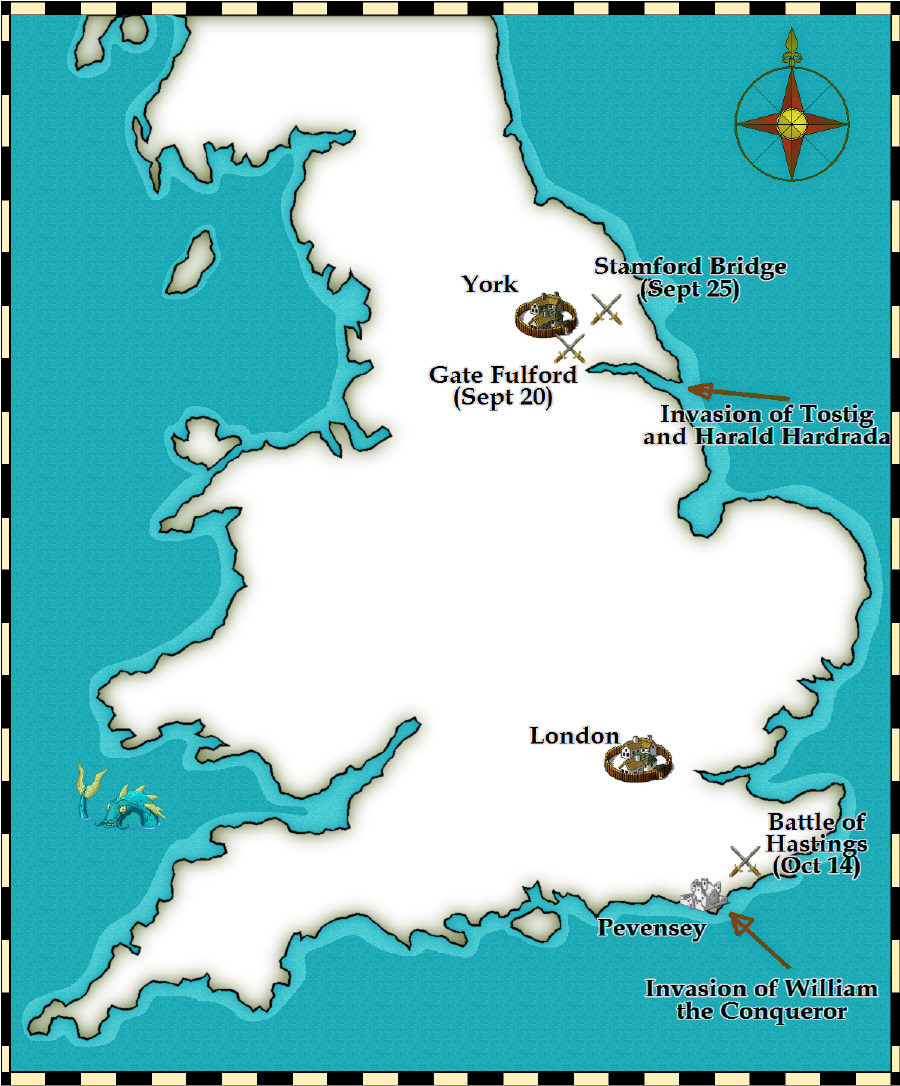
On September 25th 1066, King Harold Godwinson had won one of the greatest victories in English history. At Stamford Bridge, he had destroyed the invading Norwegian army and killed both Harald Hardrada and his own brother, Tostig Godwinson. It appeared that England’s succession crisis had been settled. It had not. While Harold fought in the north, the winds over the English Channel finally changed. For weeks, William, Duke of Normandy, had been trapped by unfavourable weather, unable to launch his invasion. Now, with the sea finally calm, his fleet of several hundred ships crossed the Channel almost unopposed. On 28 September 1066, William landed at Pevensey on the Sussex coast with an army of around 7,000 men, made up of Norman, Breton and Flemish soldiers. Rather than marching immediately on London, William established a secure base, constructed a wooden castle at Hastings and began devastating the surrounding countryside. Villages were burned, crops destroyed and livestock seized. It was a deliberate strategy. William hoped to provoke Harold into attacking before the English king had time to rest his exhausted army or gather reinforcements.
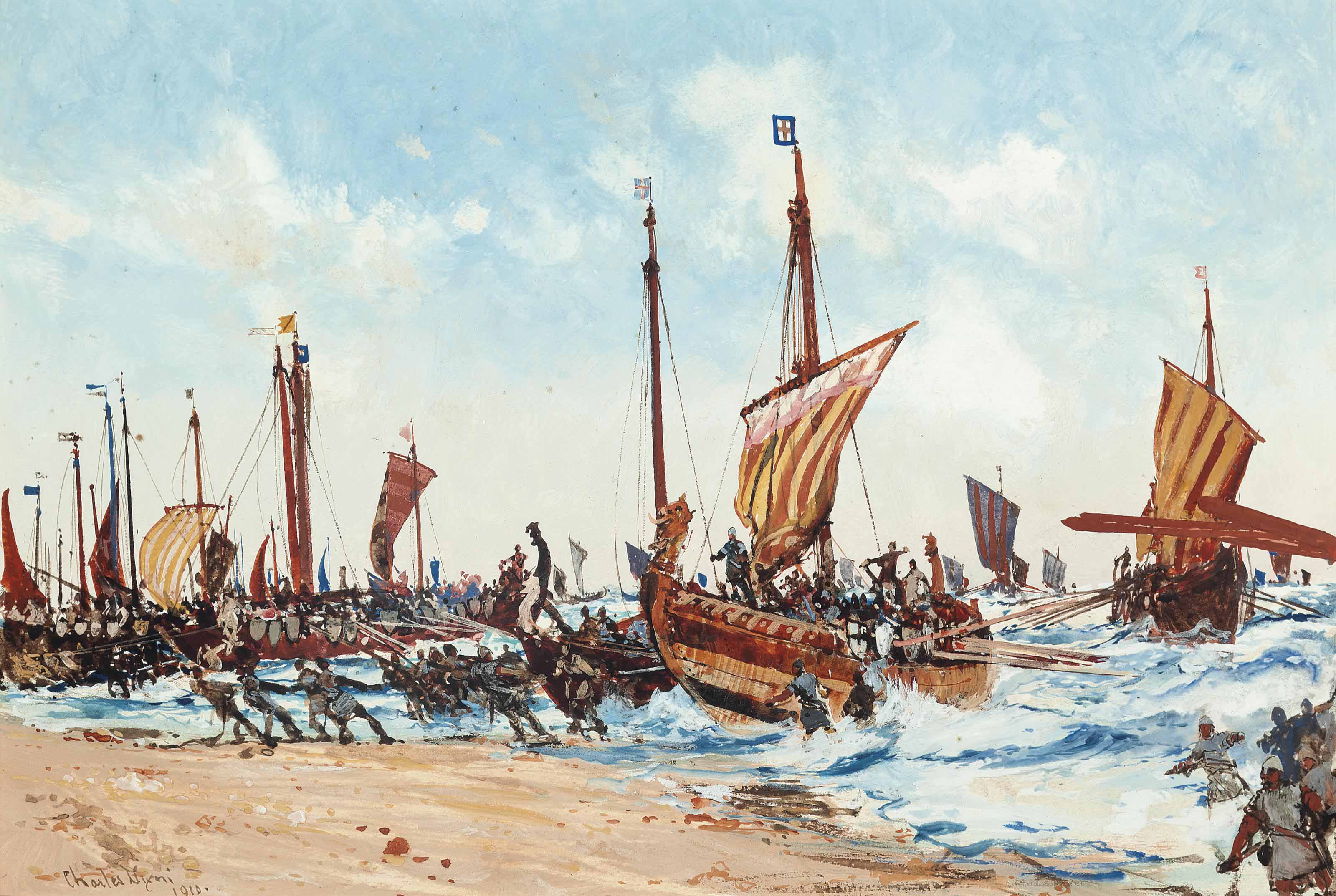
An illustration of the Norman landing at Pevensy

The tactic worked. Having marched almost 190 miles north to defeat Hardrada, Harold now turned his army around and marched roughly 250 miles back to southern England in little more than two weeks. Although some advisers urged him to wait for additional troops, Harold knew every day William remained in England strengthened the Norman position. He decided to confront the invaders immediately.

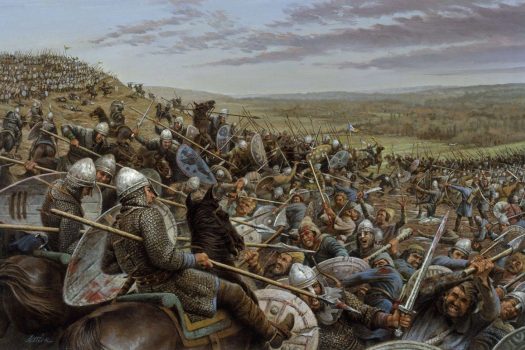
On the morning of October 14th 1066, the two armies met on Senlac Hill, just north of Hastings. Harold deployed his army along the crest of the ridge in a dense shield wall, one of the strongest defensive formations in Anglo-Saxon warfare. Packed shoulder to shoulder, English housecarls and fyrd locked their shields together, presenting an almost impenetrable barrier of wood and steel. The position forced the Normans to attack uphill, giving Harold a considerable defensive advantage. William organised his army into three divisions. Breton troops held the left flank, Normans occupied the centre under William’s own command, while French and Flemish soldiers formed the right. Unlike the English, William possessed a balanced army of infantry, archers and heavily armoured cavalry, giving him greater tactical flexibility. The battle began with a volley of Norman arrows, but the steep slope meant many projectiles either struck the English shields or flew harmlessly overhead. William then ordered his infantry forward. Wave after wave climbed the hill only to be met by the disciplined English shield wall. Axes, spears and swords cut down attackers as they struggled up the incline, and the Norman assault stalled.
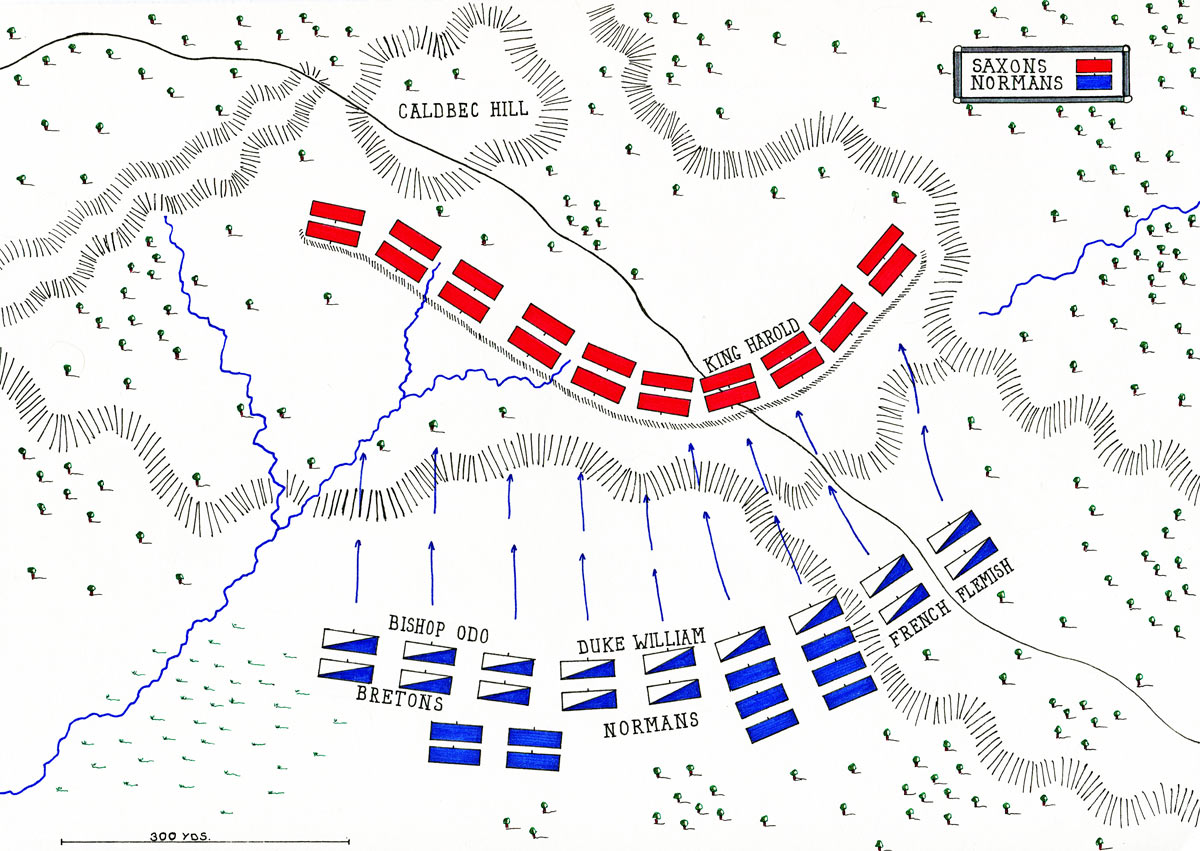
A map of the battle

William next committed his cavalry. Charging horses into a solid wall of overlapping shields proved no easier than the infantry attack. Again and again the Norman knights were thrown back down the hillside. By midday, it seemed Harold’s defensive position might hold. Then the battle took an unexpected turn. At some point during the fighting, part of the Norman army broke and fled. Medieval chroniclers disagree over exactly why. Some claimed a rumour spread that William himself had been killed. Others suggested sections of the Breton line simply lost their nerve after suffering heavy casualties. Whatever the cause, part of the Norman army retreated down the hill.

Believing victory was within reach, sections of the English line abandoned the safety of the shield wall and pursued the fleeing enemy. It was a costly mistake. William, who was very much alive, reportedly removed his helmet so his soldiers could recognise him before rallying his men. Turning his cavalry back towards the pursuing English, he launched a devastating counterattack. The English soldiers who had broken formation suddenly found themselves isolated from the main shield wall. Surrounded by mounted knights, many were cut down where they stood.

The Bayeux Tapestry depicting William (central) removing his helmet as to be recognised by his men

Whether this retreat had been planned from the beginning or was simply exploited by William remains one of the great debates of medieval history. Whatever the truth, the tactic worked. Throughout the afternoon, further Norman assaults gradually weakened the English line, each attack creating fresh gaps in Harold’s once-formidable defence. As daylight began to fade, the battle reached its climax.

King Harold himself was killed during the fighting. How exactly he died remains uncertain. The famous image from the Bayeux Tapestry appears to show a man, traditionally identified as Harold, struck in the eye by an arrow before being cut down by Norman knights. However, many modern historians question whether this interpretation is correct. Contemporary accounts simply agree that Harold died in the final stages of the battle while fighting amongst his household troops.
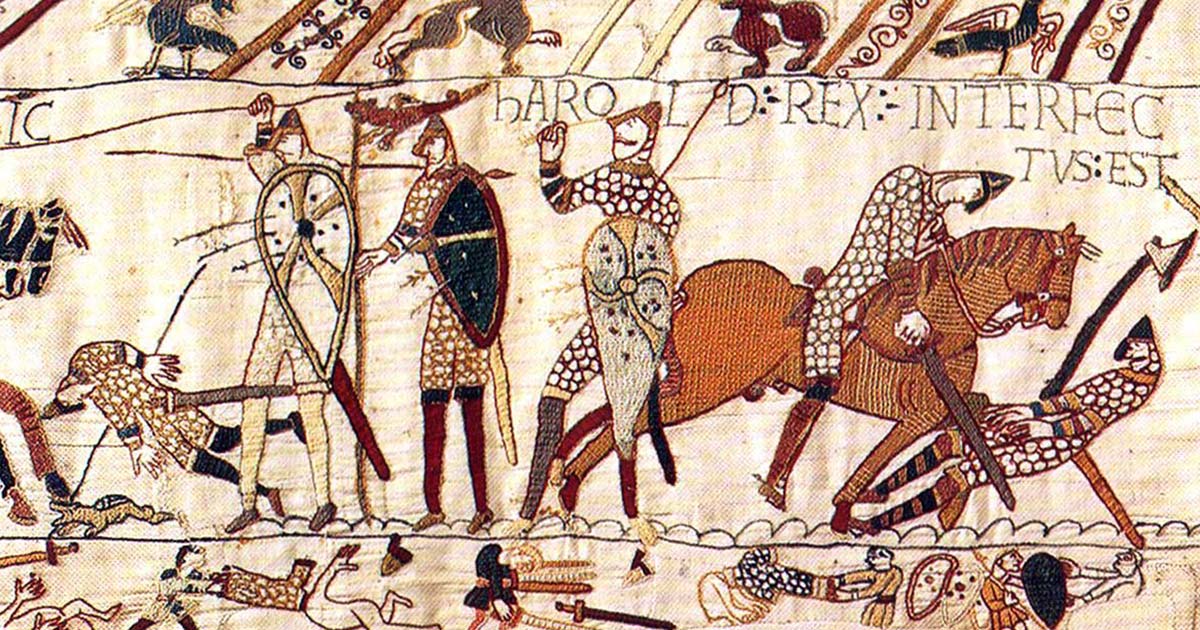
The Bayeux Tapestry depicting the death of Harold Godwinson (central)

Around him, the last of the English housecarls continued fighting long after the battle had already been lost. Many died where they stood, refusing to abandon their fallen king. By nightfall, the English army had collapsed. Harold’s death left England leaderless. Although several English nobles proclaimed Edgar Ætheling king, there was little hope of organising effective resistance. William advanced steadily towards London, accepting the surrender of towns along the way while devastating those that resisted. Eventually, England’s leading nobles recognised that further resistance was futile. On Christmas Day 1066, William was crowned King of England in Westminster Abbey.

Even his coronation reflected the uncertainty surrounding his rule. As those inside the abbey shouted their acclamations for the new king, Norman soldiers stationed outside misunderstood the noise, believing a rebellion had broken out. Panicking, they set fire to nearby buildings while searching for attackers. Smoke drifted into the abbey as the coronation continued, a fitting symbol of the uneasy beginning of Norman rule. Yet William’s victory at Hastings did not immediately secure England.

An illustration of William’s coronation

Over the following years, rebellions erupted across the country. The most serious came in the north, where English nobles, joined at times by Danish fleets, repeatedly rose against Norman authority. William responded with overwhelming force. During the winter of 1069–1070, he launched what became known as the Harrying of the North. Villages, crops and livestock were systematically destroyed across large parts of Yorkshire and surrounding counties. Medieval chroniclers described entire communities left starving as farmland was burned and food supplies deliberately eliminated. Modern historians continue to debate the scale of the devastation, but there is little doubt that it was one of the harshest campaigns ever carried out in medieval England. The suppression of these rebellions finally secured William’s hold over the kingdom. Over the next two decades he transformed England’s government, replacing much of the Anglo-Saxon nobility with Norman lords, constructing hundreds of castles to enforce royal authority and commissioning the Domesday Book, one of the most comprehensive land surveys of the medieval world.

For many Englishmen, the death of Edward the Confessor had initially raised hopes that a new king would simply restore stability after a disputed succession. Instead, the crisis of 1066 ushered in one of the most turbulent periods in the nation’s history. Three major battles were fought in the space of a single month, thousands died, England’s ruling elite was almost completely replaced, and Norman French became the language of the royal court for centuries to come. The Battle of Hastings was not merely the end of Harold Godwinson’s reign. It marked the beginning of a new England – one whose language, laws, aristocracy and culture would be permanently reshaped by the Norman Conquest.
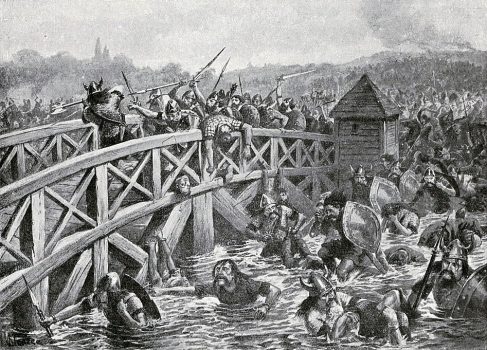
The Battle of Stamford Bridge

Just five days after suffering defeat at the Battle of Fulford, England’s fortunes changed dramatically. King Harold Godwinson, having learned of Harald Hardrada’s victory in northern England, acted with astonishing speed. Rather than waiting for reinforcements, Harold gathered his household troops—the elite housecarls—and every available soldier he could muster before marching nearly 190 miles (305 km) from London to Yorkshire in just four days. It was one of the fastest military marches recorded in medieval Europe.

A map of England, demonstrating the distance between London and York

Meanwhile, Harald Hardrada believed his campaign was progressing exactly as planned. Following his victory at Fulford, the city of York had agreed to submit to the Norwegian king. The city’s leaders promised to formally surrender and hand over hostages a few days later at Stamford Bridge, a small crossing over the River Derwent around eight miles east of York. Confident that the English king was still hundreds of miles away in the south, Hardrada marched to the meeting place with only part of his army. Many of his warriors left their armour behind aboard the fleet anchored at Riccall, believing they were travelling to a peaceful exchange rather than a battle. Although they still carried weapons, the absence of mail coats and helmets would soon prove disastrous.

On the morning of September 25th 1066, the Norwegians received an unpleasant surprise. Emerging over the surrounding hills was the banner of King Harold Godwinson and the full English army. Realising they had been caught completely off guard, Harald Hardrada hurriedly organised his men into a shield wall while messengers raced back towards Riccall to summon the rest of the Norwegian army under Eystein Orre. Every minute they could delay the English advance increased the chances that reinforcements would arrive. According to later Norse tradition, that delay came from a single extraordinary warrior. As the English army approached Stamford Bridge, one enormous Viking is said to have taken up position on the narrow wooden crossing. Wielding a massive Dane axe, he allegedly held off dozens of English soldiers by himself, cutting down anyone who attempted to cross. The story claims that the lone warrior was finally killed only when an English soldier floated beneath the bridge in a barrel and thrust a spear upwards through the gaps in the planks.

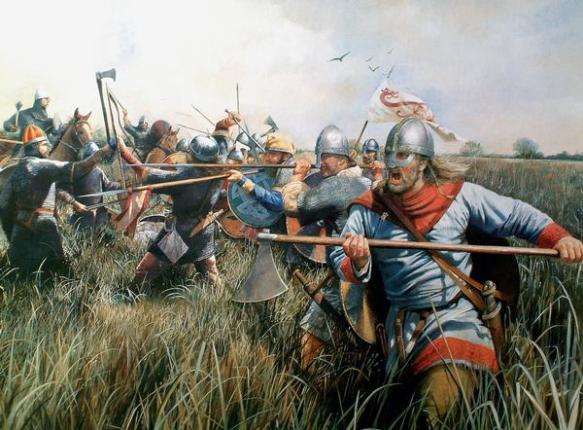
An illustration of the lone Viking fending off the English Army

Whether this duel actually happened is impossible to know. The story first appears in later Norse sagas rather than contemporary English accounts, and many historians regard it as legendary. Nevertheless, it remains one of the most famous tales of the Viking Age and illustrates the fierce reputation of Norse warriors. Whatever delayed Harold’s advance, it gave Hardrada enough time to form his army into a defensive position. The battle began with the English advancing against the Norwegian shield wall. Harold’s experienced housecarls, armed with heavy two-handed axes, clashed with Viking warriors in brutal hand-to-hand combat. For a time the Norwegians held firm, and the fighting was fierce across the line. In the thick of the battle, Harald Hardrada himself fought at the front of his army. According to the Icelandic historian Snorri Sturluson, the sixty-year-old king wore no armour, believing speed and mobility were more valuable than protection. Towering over many of his men, Hardrada reportedly fought with characteristic ferocity until an English arrow struck him in the throat, killing him almost instantly.

The death of their king sent shockwaves through the Norwegian army. Command then passed to Tostig Godwinson, Harold’s estranged brother. According to several medieval sources, Harold paused the fighting and offered Tostig his old earldom back if he abandoned the invasion. Tostig refused, instead asking what Harald Hardrada would receive. Harold reportedly replied that, because the Norwegian king was so tall, he would grant him “seven feet of English ground – or perhaps a little more.” Whether these words were actually spoken is uncertain, but they became one of the most famous exchanges in medieval history.

A painting of Hardrada being slain

Soon afterwards, Eystein Orre finally arrived from Riccall with the remaining Norwegian troops after running several miles in full armour under the late September sun. Exhausted before they even reached the battlefield, they nevertheless launched a desperate counterattack, remembered in Norse tradition as Orre’s Storm. The assault briefly checked the English advance but quickly lost momentum as fatigue overwhelmed the reinforcements. By late afternoon, the Norwegian army collapsed. Thousands of Viking warriors were killed, including Harald Hardrada, Tostig Godwinson and many of Norway’s leading nobles. So devastating were the losses that, according to the Anglo-Saxon Chronicle, only 24 of the approximately 300 ships that had carried the invasion force to England were needed to transport the survivors home.

The Battle of Stamford Bridge is often regarded as marking the end of the Viking Age in England. Although Scandinavian influence would remain strong around the North Sea, no Viking king would ever again mount such a serious attempt to conquer the English throne. Yet Harold Godwinson had little time to celebrate. Just three days after his victory, news arrived that the winds in the English Channel had finally changed. William, Duke of Normandy, had landed on the south coast with his invasion army. Harold immediately turned his exhausted troops around and began another forced march – this time nearly 250 miles back towards London. Less than three weeks after Stamford Bridge, England’s fate would be decided once more on the battlefield, at Hastings. There, Harold’s greatest triumph would be followed by his greatest defeat, and the course of English history would change forever.

The Battle of Fulford

In the summer of 1066, England stood on the brink of invasion. Following the death of Edward the Confessor, Harold Godwinson had been crowned king, but his claim was disputed by rivals both at home and abroad. Expecting an invasion from William, Duke of Normandy, Harold stationed his army along England’s southern coastline. Day after day, however, the invasion never came. Unfavourable southernly winds trapped William’s fleet in Normandy, preventing him from crossing the English Channel.

The Bayeux tapestry depicting the Norman men preparing their supplies

By early September, Harold faced a different problem. England’s fyrd – a militia made up largely of farmers – could not remain under arms forever. Harvest season had arrived, food supplies were running low, and many men needed to return home to gather their crops before winter. Reluctantly, Harold dismissed much of his army and navy, believing that the threat of invasion had passed for the year. It was at precisely this moment that disaster struck.

While the winds held William in France, they carried Harald Hardrada, King of Norway, across the North Sea. Accompanied by around 300 longships and perhaps 10,000 warriors, Harald was joined by Tostig Godwinson, Harold’s exiled younger brother. Tostig had once been Earl of Northumbria before being driven into exile after a rebellion. Bitter towards his brother for refusing to restore him to power, he now sought revenge by helping Hardrada seize the English throne. The Norwegian fleet landed on the Yorkshire coast before sailing up the Humber and River Ouse. As they advanced inland, villages were plundered for food and supplies, while terrified communities fled before the Viking army. Their objective was not simply to raid but to conquer. The ancient city of York, England’s second-largest city, stood directly in their path.

A depiction of the Viking landing in York

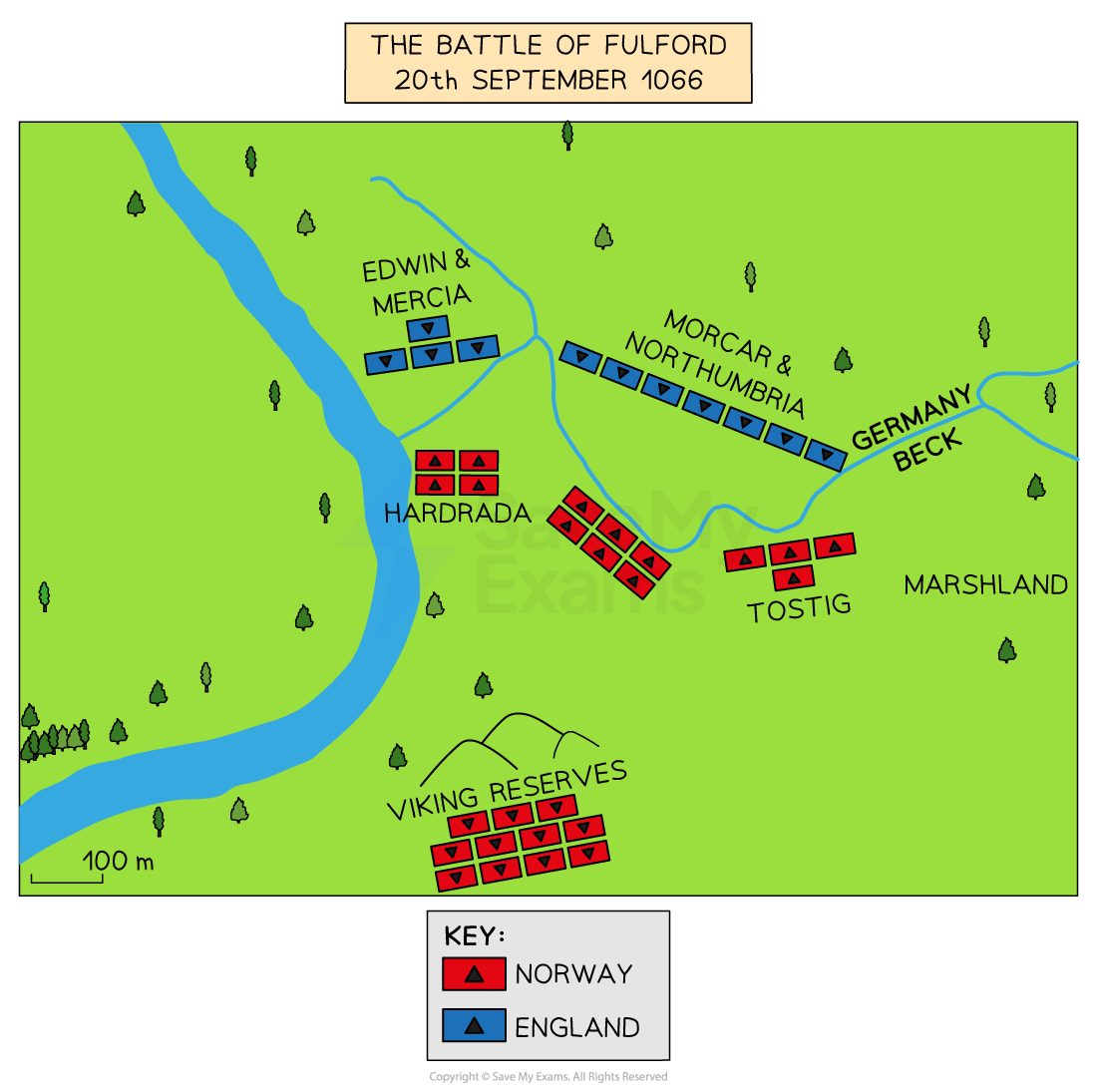
To stop the invasion, the defence of northern England fell to two powerful earls: Edwin, Earl of Mercia, and Morcar, Earl of Northumbria. Together they assembled the regional fyrd and marched south from York to intercept the invaders before they could reach the city. On September 20th 1066, the two armies met just outside York near the village of Fulford. The battlefield heavily favoured the defenders – or so it first appeared. The English army formed a shield wall on a strip of firm ground between the River Ouse to one side and a stretch of marshland crossed by the Cock Beck on the other. This narrow front prevented the Norwegians from bringing their superior numbers to bear all at once. If the English line held, the Vikings would be forced into a costly frontal assault. Harald Hardrada nevertheless accepted battle.

The fighting began with both armies crashing together in a brutal contest of shields, spears and axes. Contemporary accounts and later Norse sagas describe desperate hand-to-hand combat lasting for hours. Morcar is said to have fought fiercely at the front of the English line, encouraging his men as they resisted repeated Norwegian assaults. The narrow battlefield initially prevented either side from gaining a decisive advantage. Gradually, however, the tide began to turn. As the marshland was flooded by the incoming tide, parts of the English line became compressed against the higher ground, creating confusion among the defenders. Hardrada recognised the opportunity. Rather than continuing a simple frontal attack, he committed fresh troops that had been held in reserve, extending his line around the weakened English flank. Once the English formation began to buckle, the Norwegian warriors poured through the gap.

A modern map of the battle

The battle quickly became a rout. Many English soldiers attempting to retreat were trapped between the marshes and the River Ouse, where countless men were cut down or drowned trying to escape. Others fled back towards York pursued by the victorious Vikings. The defeat was devastating for northern England. Morcar and Edwin survived, but their army had been shattered. With no force left capable of defending the city, York negotiated its surrender to Hardrada only a day later. The Norwegian king appeared to be on the verge of fulfilling his claim to the English crown. Yet victory at Fulford would prove to be short-lived. When news of the invasion reached Harold in London, he reacted with astonishing speed. Gathering his household troops and every available soldier he could muster along the way, he marched nearly 190 miles in just four days – one of the most remarkable forced marches in medieval military history. Rather than waiting for Hardrada to consolidate his position in the north, Harold intended to strike immediately. Only five days after the Battle of Fulford, the two kings would meet at Stamford Bridge, in one of the bloodiest and most decisive battles ever fought on English soil.

Claimants to the English Crown

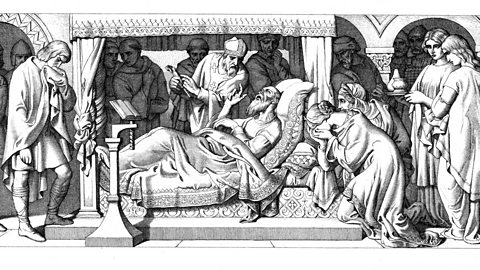
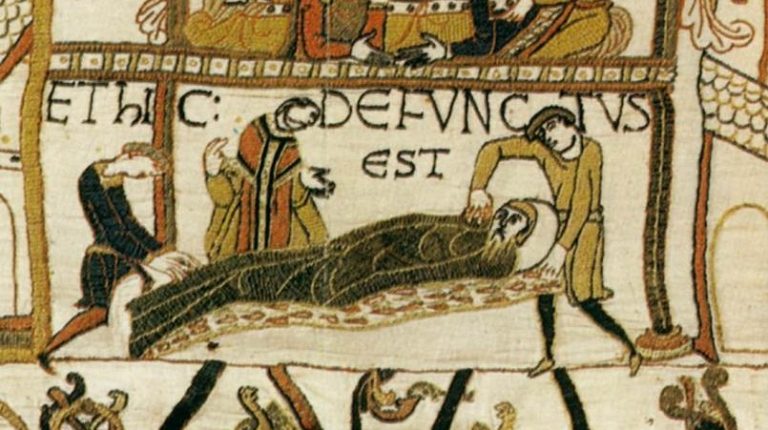
When Edward the Confessor died on January 5th 1066, he left behind one enormous problem: he had no children to inherit the throne. Unlike today, there was no fixed law stating that the eldest child automatically became monarch. Instead, the succession often depended on blood ties, promises made by previous kings, military strength and, crucially, the support of England’s leading nobles. Within days of Edward’s death, four men emerged as serious claimants to the English crown.

A tapestry of Edward the Confessor’s death

The strongest hereditary claim belonged to Edgar Ætheling. Edgar was Edward’s great-nephew and the last surviving male descendant of the ancient royal House of Wessex that had ruled England before the Danish invasions. By blood alone, many believed he should inherit the throne. However, Edgar was only around fourteen or fifteen years old and had little political or military experience. With England facing the threat of foreign invasion, many nobles doubted that a teenage king could defend the kingdom.

Another claimant was Harald Hardrada, the formidable King of Norway. Before becoming king, Harald had spent decades fighting across Europe and the Byzantine Empire as a mercenary commander, earning a reputation as one of the greatest warriors of his age. His claim dated back to an agreement made a generation earlier. King Magnus of Norway and King Harthacnut of Denmark and England had agreed that if either died without an heir, the survivor would inherit both kingdoms. Harthacnut died childless in 1042, but instead of a Norwegian king taking the English throne, the English nobles invited Edward the Confessor to become king. Harald, who later succeeded Magnus as King of Norway, believed that this agreement meant the English crown now rightfully belonged to him.

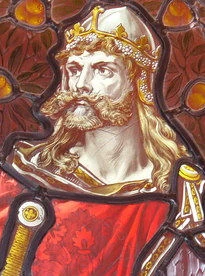
A glass window portrait of Hardrada

The most powerful English noble was Harold Godwinson, Earl of Wessex. Harold came from the immensely influential Godwin family. His father, Earl Godwin, had once been implicated in the death of Edward’s younger brother, Alfred Ætheling, who had been captured, blinded and later died after attempting to return to England during the reign of the Danish king Harold Harefoot. Although this created lasting tension between Edward and the Godwins, the two sides eventually reconciled. Edward married Harold’s sister, Edith, making Harold the king’s brother-in-law. Over the following years Harold became England’s leading military commander, Edward’s closest adviser and, in practice, the most powerful man in the kingdom after the king himself.

A portrait of Godwinson

The final claimant was William, Duke of Normandy. Edward’s mother, Emma of Normandy, was a Norman princess, and Edward himself had spent nearly three decades living in Normandy while England was ruled by the Danish kings Sweyn Forkbeard, Cnut and their sons. During this exile, Edward formed close ties with the Norman nobility, including William. William later claimed that Edward had promised him the English throne. To strengthen this claim further, William also argued that Harold Godwinson had sworn a sacred oath over holy relics while visiting Normandy, promising to support William’s succession. Harold would later insist that this oath had been made under duress and was therefore invalid.

A painting of William, Duke of Normandy

Edward died with Harold Godwinson at his bedside. According to Harold, the dying king entrusted him with the defence of England and named him as his successor. Whether Edward actually intended this remains one of the great historical debates, but the Witenagemot – the council of England’s leading nobles and churchmen – accepted Harold’s claim. He was crowned King Harold II in Westminster Abbey on January 6th 1066, just one day after Edward’s death. Yet while Harold now wore the crown, three other men believed it belonged to them. Before the year was over, their competing claims would plunge England into one of the most famous succession crises in European history, culminating in three great battles that changed the country forever.

The Revenge of Olga of Kiev

In the 10th Century, the Eastern European land of Rus was a collection of tribes who co-operated with one another for the primary purpose of trade. However, the tribes would often feud with one another, such as in the 9th Century when Slavic and Finnic tribes in Rus waged war on one another. In pursuit of peace, both the Slavs and Fins sought peace by both being governed by the Viking Ruler, Riurik. Riurik’s clan, the Varagians, had been “drove […] back beyond the sea” by the very same Slavic and Finnic tribes in an effort to establish self determination. Across the next few decades, the Varagians extended their rule over the lands of Rus all the way down to the now Ukrainian city of Kiev.

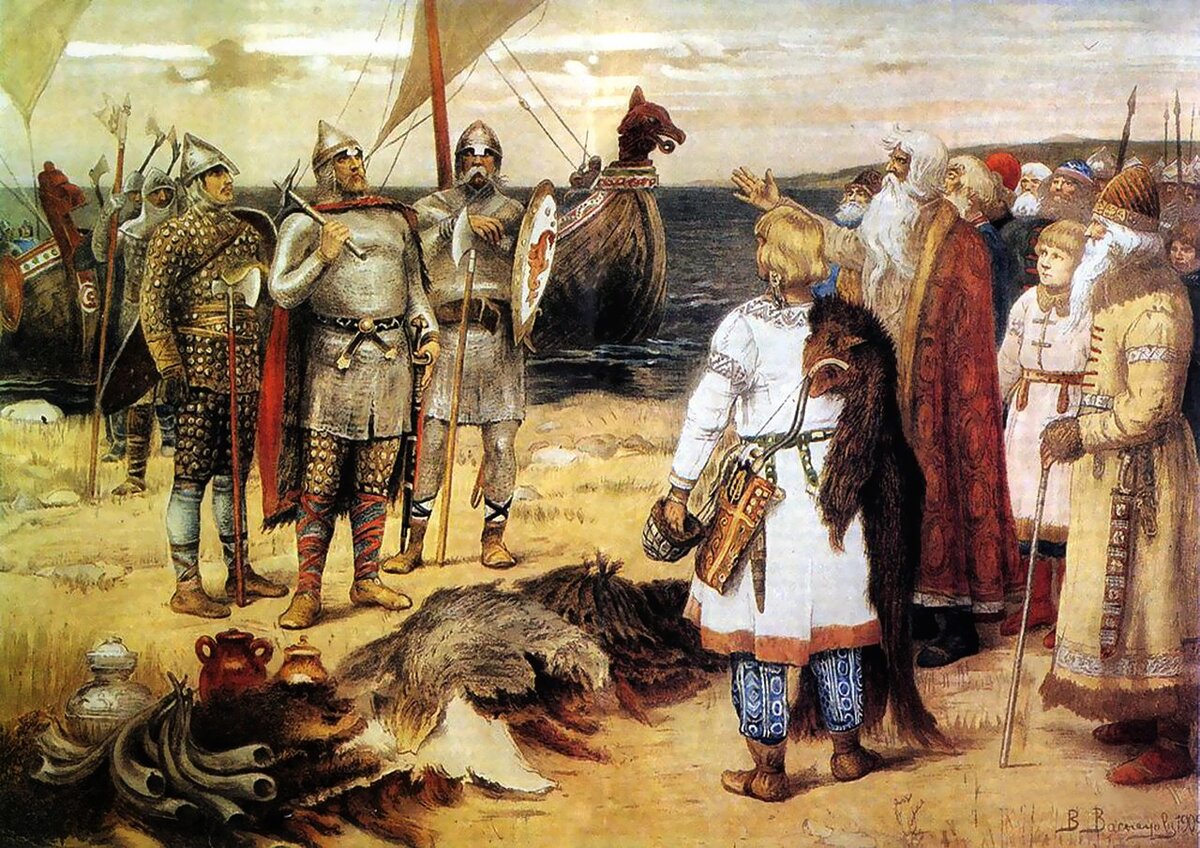
A painting Riurik and his two brothers coming to reestablish the peace

Oleg, the warrior who had conquered Kiev following Riurik’s death in 879, had a daughter who he named Olga. She married Igor, the son of Riurik and the pair soon became one of the most powerful and most loving marriages in Eastern Europe. They had one son, Syvatoslov. Upon the death of Oleg, Igor came to become Prince of Kiev and was considered a greedy, aggressive and unsuccessful ruler. In his two military expeditions to the Byzantine Empire, his fleets were destroyed by Greek Fire, although the peace settlement eventually led to a trade agreement. He extended Kiev’s authority over the neighbouring East Slavic tribes and the Pechenegs

Upon Igor’s ascension to the throne, a rival tribe, known as the Drevlians, stopped paying tribute to Kiev in 912. By 945, Igor went with his army to the Drevlian capital of Iskorosten. Intimidated by the sight, the Drevlians seceded and began paying the tribute once more. However, Igor returned for more tribute payments than he was due. In response, the Drevlians decided to brutally murder him.

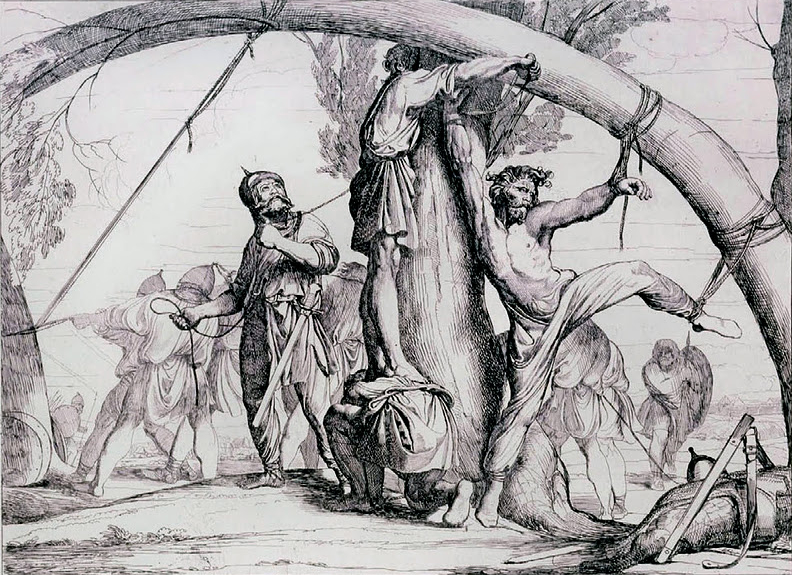
They had bent down two birch trees to the prince’s feet and tied them to his legs; then they let the trees straighten again, thus tearing the prince’s body apart.

Leo the Deacon, a Byzantine historian and chronicler
An illustration of the murder of Igor of Kiev

Following the death of Igor, the crown of Kiev fell to his infant son, Syvatoslov. However, due to the young age of the boy, his mother, Olga, claimed the regency until the boy was of age. Whilst many regents are often passive and are largely there to secure the position of the crown until the successor comes of age, Olga had much different ideas. Upon hearing of her husband’s brutal murder, she swore vengeance on the Drevlians and vowed to bring their tribe to a brutal end.

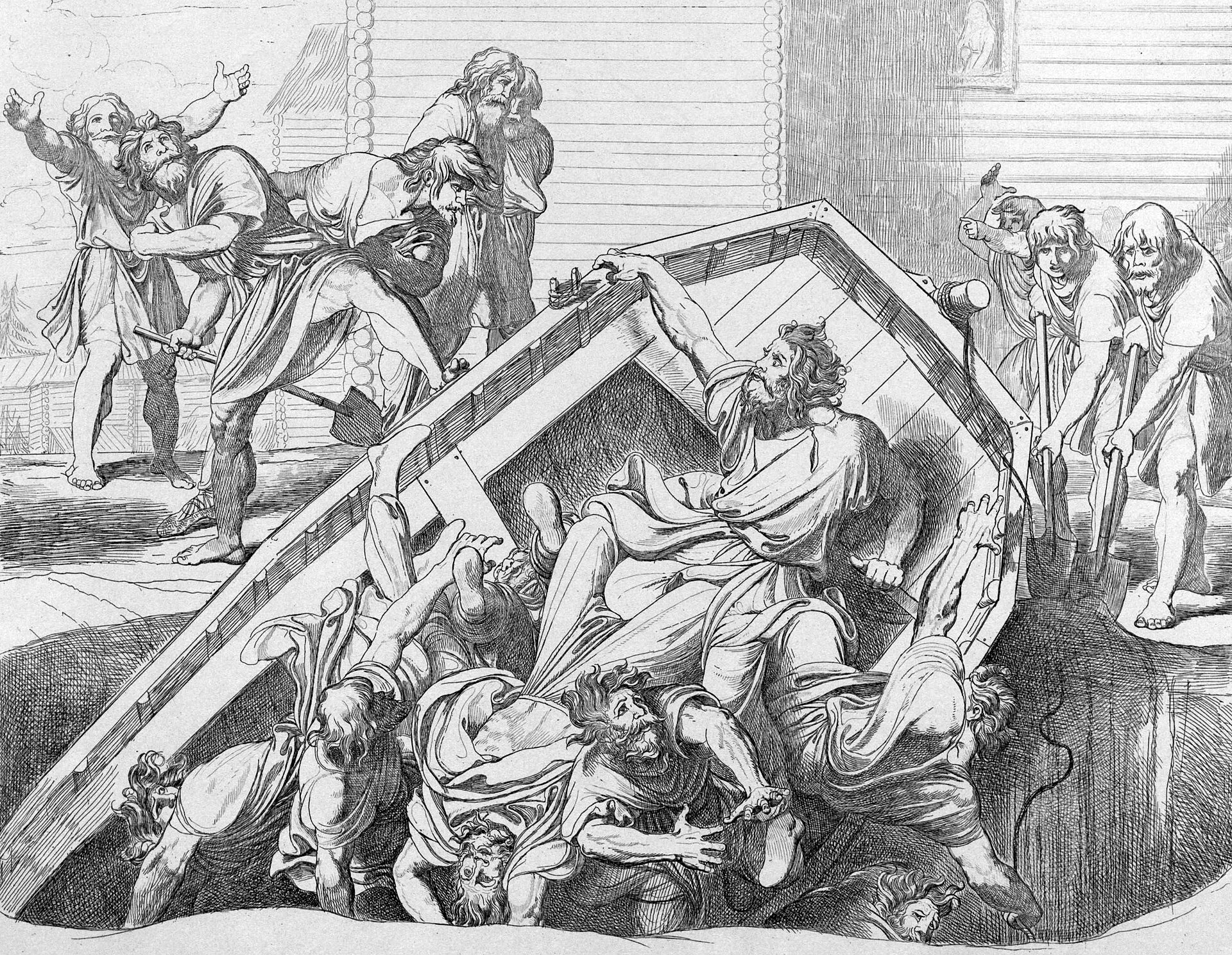
Her vengeance began when the Drevlians proposed that the recently widowed Olga marry the Drevlian Prince Mal. In response, Olga told the Drevlian emissaries to come back the next day while she considered the offer. Taking this as a good sign, the Drevlians left by boat and returned the next morning, where a group of Kievans picked up the boat and carried it across town. The ambassadors initially saw this as a sign of gratitude and welcoming, before the boat, with them inside, was thrown into a ditch that Olga had ordered to be dug the night before. The emissaries were subsequently buried alive. As they were buried, Olga allegedly kneeled next to the ditch and “inquired whether they found the honour to their taste.”

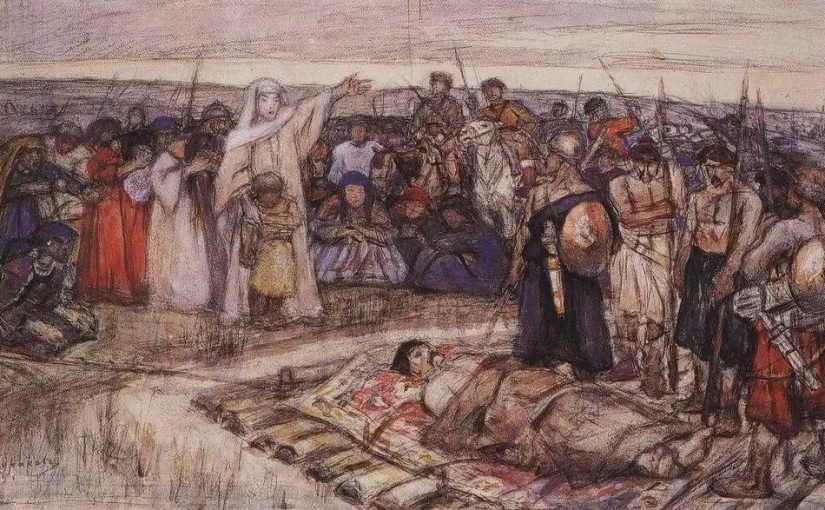
An illustration of the burial of the Drevlian Emissaries

Immediately after the first diplomatic party was buried alive, Olga sent a message to the Drevlians, requesting a second group of ambassadors. Unaware of the fate of the first group, a second group of men arrived, where they were offered a cleaning at a nearby bathhouse. Once the Drevlians were inside, Olga set fire to the bathhouse, beginning at the door, leaving the men trapped inside to burn to death. Olga offered another “olive branch” to the Drevlians, asking to gather as much mead as they could in Iskorosten, the city where her husband was killed, claiming to intending to “weep over his grave and hold a funeral feast for him.”

As Olga and her delegation arrived, they did as they promised: they wept over his grave and held a feast for him just outside of the city of Iskorosten. However, as the Drevlians drank and partied, the Kievan delegation abstained. Once the Drevlians were sufficiently drunk, Olga ordered her men to massacre the entire gathering, herself allegedly murdering some of the men personally. Whilst 5,000 Drevlians were murdered at the feast, Olga’s revenge was not yet complete.

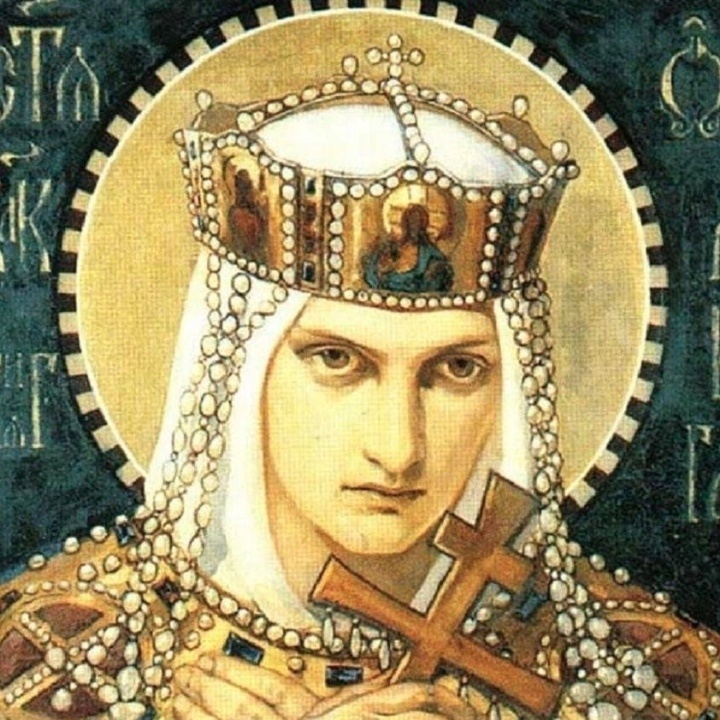
A painting of Olga

After the massacre, she led her army to the city and began to lay siege. For years, however, it remained unsuccessful. That was, until, Olga devised a plan. She first sent a message to the Drevlians.

Why do you persist in holding out? All your cities have surrendered to me and submitted to tribute, so that the inhabitants now cultivate their fields and their lands in peace. But you had rather die of hunger, without submitting to tribute.

Olga’s message to the Drevlian forces at Iskorosten

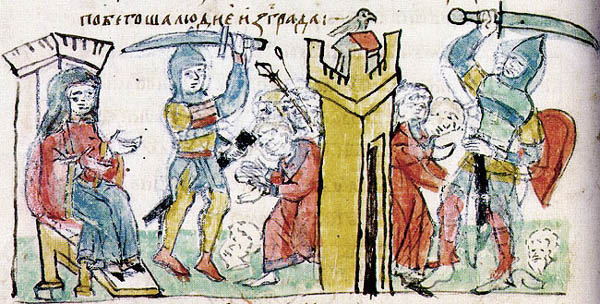
The Drevlians responded, claiming that they feared she still sought vengeance against them for the murder of Igor, something that Olga vehemently denied, claiming that the events of the feast and the diplomatic party murders had been enough for her. She instead asked for “three pigeons … and three sparrows from each house.” The Drevlians, rejoicing at the thought of the siege ending, gave her what she asked for. Upon receiving the birds, she ordered her army to tie a piece of sulphur bound by cloth to them. Then, once night fell, she ordered her men to set the sulphur aflame and release the birds. Once they returned to their nests in the houses of Iskorosten, they lit the highly flammable houses ablaze. Those who tried to escape were either massacred or taken as slaves. The survivors of the fire were forced to pay tribute.

An illustration of the burning of Iskorosten

Following her vengeance against the Drevlians, she was proposed marriage multiple more times, including by Constantine VII of the Byzantine Empire. She rejected every single one. Once her son rose to power, he allowed his mother to continue domestic affairs while he combatted foreign wars, during which time she created one of the first modern tax systems in Eastern Europe. She converted to Orthodox Christianity 957, taking the name Helena, before dying in 969. In 1547, she was canonised by the Russian Orthodox Church for being the first ruler of Kiev to convert to Christianity which laid foundational groundwork for the religion in the region.