From the 1840s onward, New York City became a major destination for European immigrants. Irish immigrants arrived in large numbers following the Irish Famine of 1845, while many German immigrants fled political upheaval after the Revolutions of 1848. By the outbreak of the Civil War, New York was a rapidly growing and deeply divided city marked by ethnic tensions, class conflict and fierce political rivalries. Although New York strongly supported the Union overall, sections of the city’s Democratic political establishment and business community were economically tied to the South through the cotton trade. In January 1861, Democratic mayor Fernando Wood controversially suggested that New York City might declare itself independent from both New York State and the federal government in order to preserve its commercial interests with the South.

Racial tensions were also high. Many white working-class New Yorkers feared economic competition from free black labour, fears that were intensified by partisan newspapers and anti-Republican politicians after the Emancipation Proclamation. Some Democrats argued that emancipation would lead formerly enslaved people to migrate north and compete for already scarce jobs. In 1863, Congress passed the Enrollment Act, introducing the first federal draft in U.S. history. The law applied to male citizens and immigrants who had filed for citizenship between the ages of 20 and 45. The provision allowing wealthier men to avoid service by paying a $300 commutation fee, around $8,000 today, made the draft especially unpopular among working-class New Yorkers, particularly Irish immigrants, who believed they were being forced to fight a war that benefited the wealthy while threatening their own economic position.
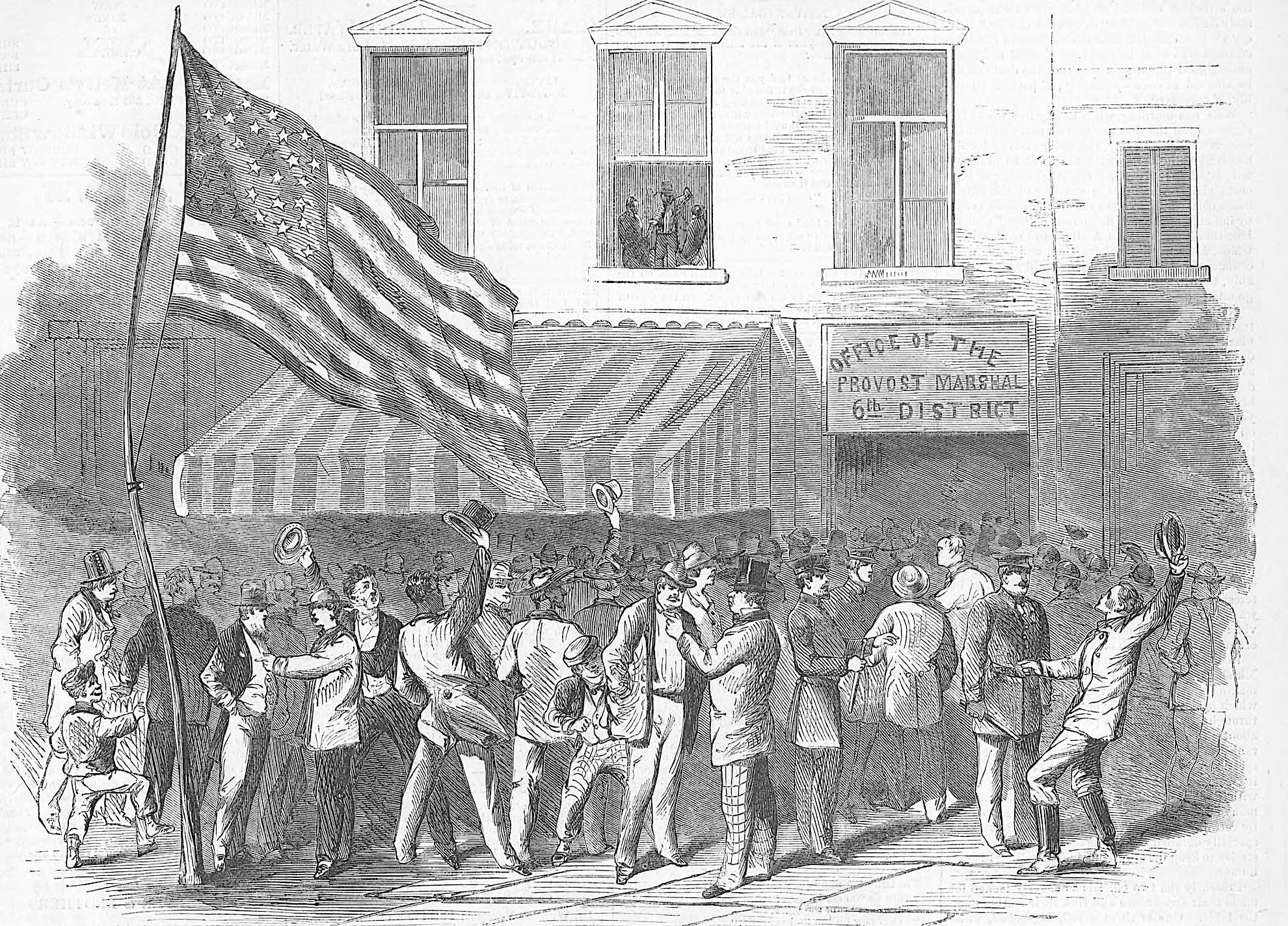
On July 13th, ten days after the Union victory of Gettysburg, crowds of angry working-class New Yorkers, many of them Irish immigrants, gathered outside the Ninth District draft office, where the second day of draft lottery drawings was taking place. Rioters hurled paving stones through the windows before storming the building and setting it on fire. As the violence spread, mobs attacked streetcars, destroyed property, and cut telegraph lines in an effort to disrupt communications. Firefighters and police attempting to respond were assaulted. Superintendent John Alexander Kennedy personally arrived to assess the situation but was recognised by the crowd and brutally beaten, suffering severe injuries from which he never fully recovered.
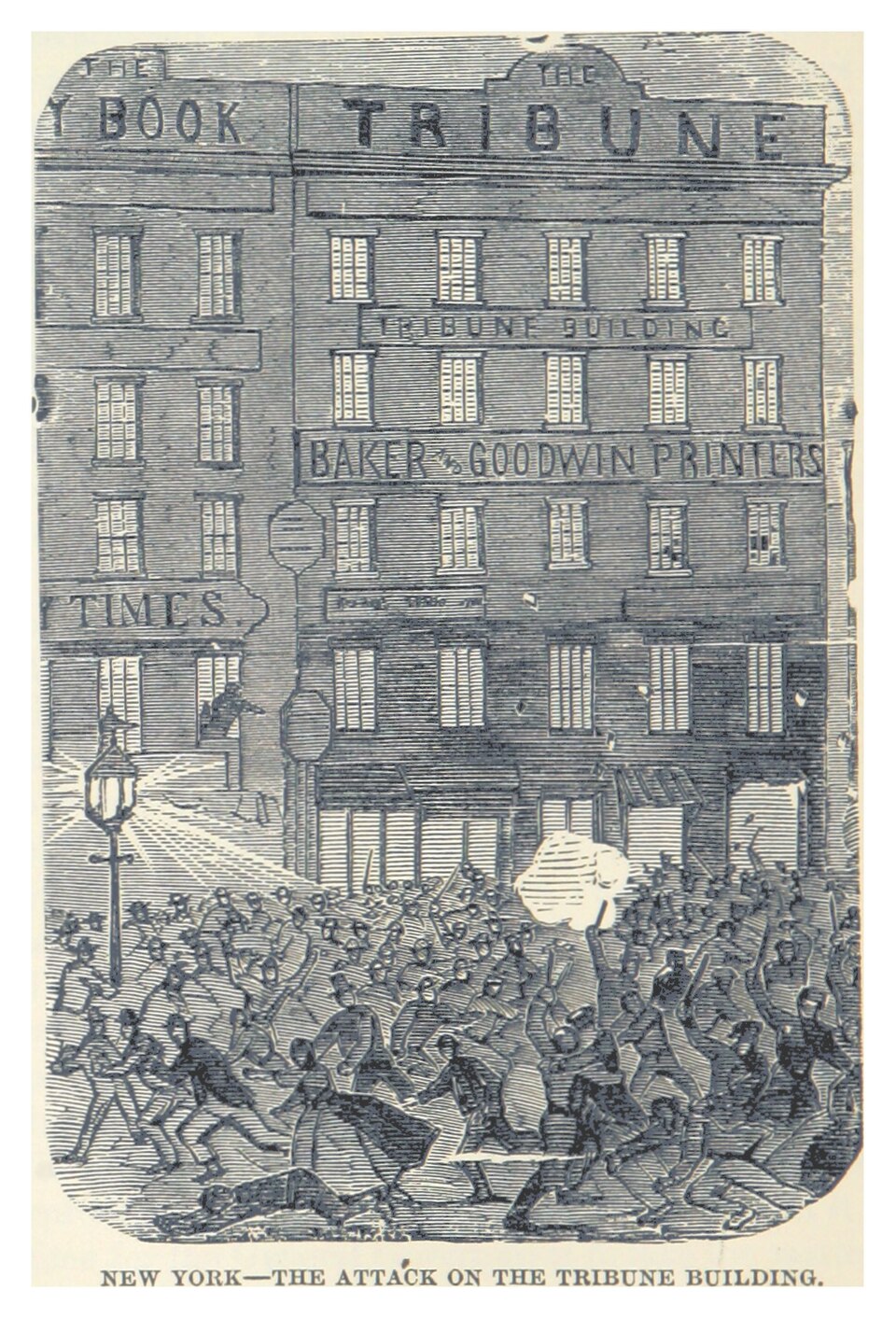
The police, despite their batons and revolvers, were vastly outnumbered by the rioters. However, they did manage to contain them to below Union Square and out of lower Manhattan. The army – specifically the 19th Company/1st Battalion US Army Invalid Corps – attempted to quell the rioters with gunfire but were too overwhelmed, leading to 14 soldiers injured and one presumably killed. Multiple buildings connected to symbols of Republican authority and anti-slavery politics such as police stations, were attacked and set ablaze, including a hotel that refused to serve the men alcohol. They were diverted away from the mayor’s residence by a speech by Judge George G. Barnard. They attempted to assault the HQ of the New York Times, where they were repelled by employees with gatling guns. The New York Tribune was also attacked and set on fire by the rioters.
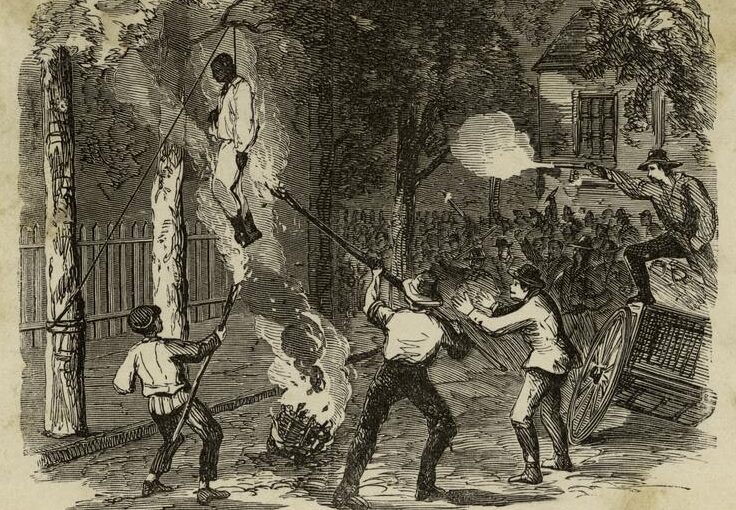
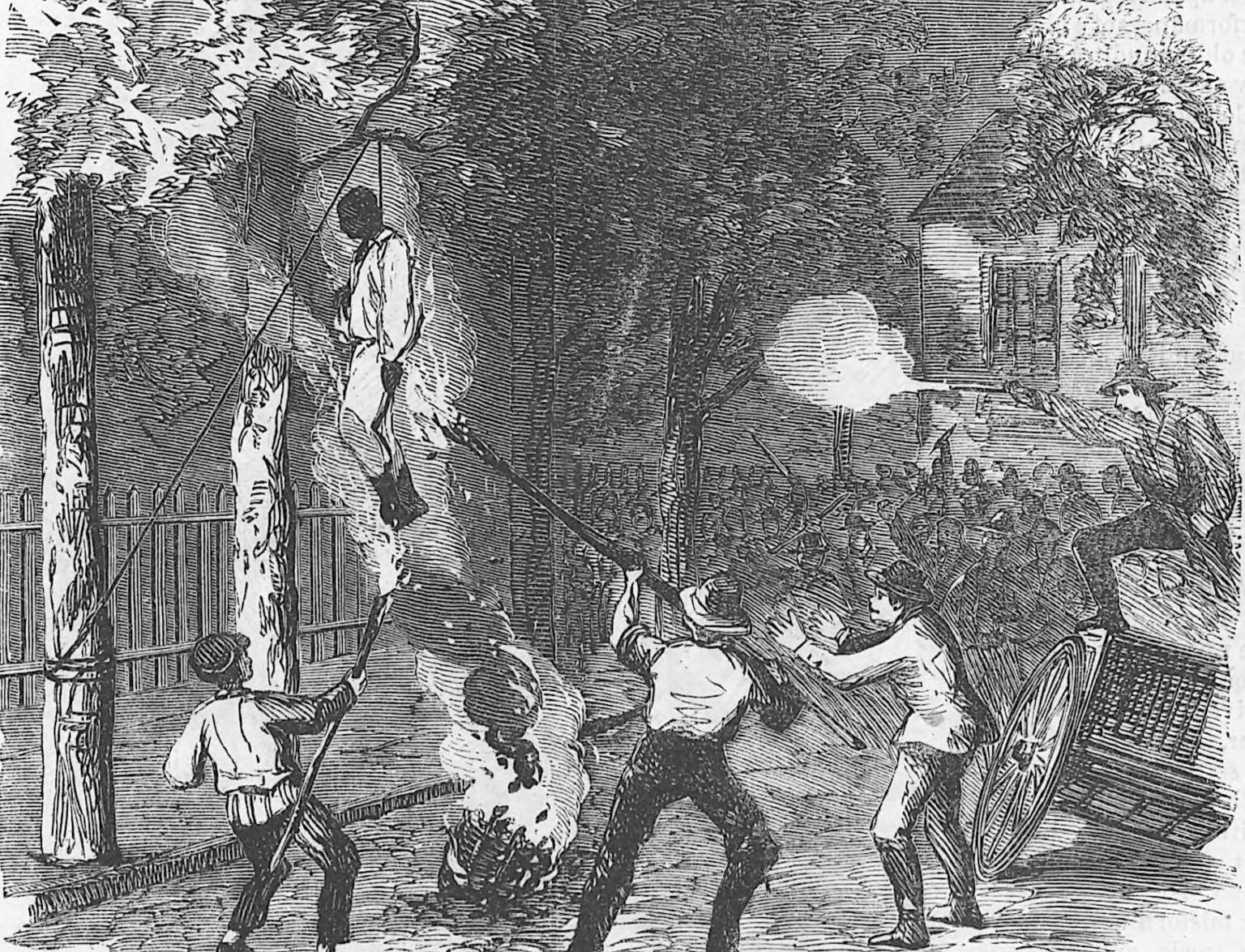
Whilst the flames were being extinguished at the Tribune, a rioter was shot and killed by an officer on Second Avenue who had attempted to attack the armoury on the street. In response, the mob broke every window on the street with paving stones they had torn up from the street. In addition, they beat, tortured and murdered multiple black civilians, including one man who was attacked by a crowd of 400 men with clubs and paving stones before he was lynched and his body was hanged from a nearby tree. His body was then set ablaze.
Meanwhile, the Colored Orphan Asylum on Fifth Avenue was subject to attacks. A mob of several thousand people looted the building of its food and supplies before setting it on fire. Thankfully, the police had managed to organise an evacuation of the building via the back entrance and all 233 orphans survived the attack, whereupon they were housed by one Sergeant Petty for three days. At the docks, rioters went into the streets in search of “all the negro porters, cartmen and laborers.” White dockworkers attacked brothels, dancehalls, boarding houses and tenements that catered to black people. They then stripped the clothes off the white men who owned these businesses.
Over the next three days, the violence and burnings continued. Despite the rains on the night of the 13th dispersing some crowds and assisting in fire quelling efforts, they attacked the homes of abolitionists and what they referred to as “amalgamationists,” including two women who were married to black men and a sex worker who accommodated them. Governor Horatio Seymour attempted to calm the crowds, criticising the draft as unconstitutional and urging rioters to disperse, but his appeals failed to restore order. General John E. Wool began to mobilise hundreds of soldiers to quell the violence. The peace was eventually restored by July 16th. Whilst the death toll is unknown, estimates range from 119 to over 2,000. The dockyards were hit especially hard by the violence.
West of Broadway, below Twenty-sixth, all was quiet at 9 o’clock last night. A crowd was at the corner of Seventh avenue and Twenty-seventh Street at that time. This was the scene of the hanging of a negro in the morning, and another at 6 o’clock in the evening. The body of the one hung in the morning presented a shocking appearance at the Station-House. His fingers and toes had been sliced off, and there was scarcely an inch of his flesh which was not gashed. Late in the afternoon, a negro was dragged out of his house in West Twenty-seventh street, beaten down on the sidewalk, pounded in a horrible manner, and then hanged to a tree.
“The New York Riot: The Killing of Negroes” – Buffalo Morning Express and Illustrated Buffalo Express, July 18, 1863.
Property damage was estimated, in the modern day, in the tens of millions. Around fifty buildings, including multiple Protestant churches and the Orphanage, had been burned to the ground, leading to over 4,000 troops being withdrawn from the frontlines in Pennsylvania to suppress the chaos. The riots also had lasting demographic consequences. Many Black residents fled Manhattan permanently after the violence, causing a sharp decline in the city’s Black population during the following years. In some industries and neighbourhoods, white workers reinforced racial exclusion in the aftermath of the riots.
Although the draft resumed shortly afterwards with comparatively little resistance, the riots exposed the depth of racial hostility, class resentment and political division within the Union’s largest city. Historian Samuel Eliot Morison wrote that the riots were “equivalent to a Confederate victory,” and is often characterised by some as a racial pogrom against the black population of the city.