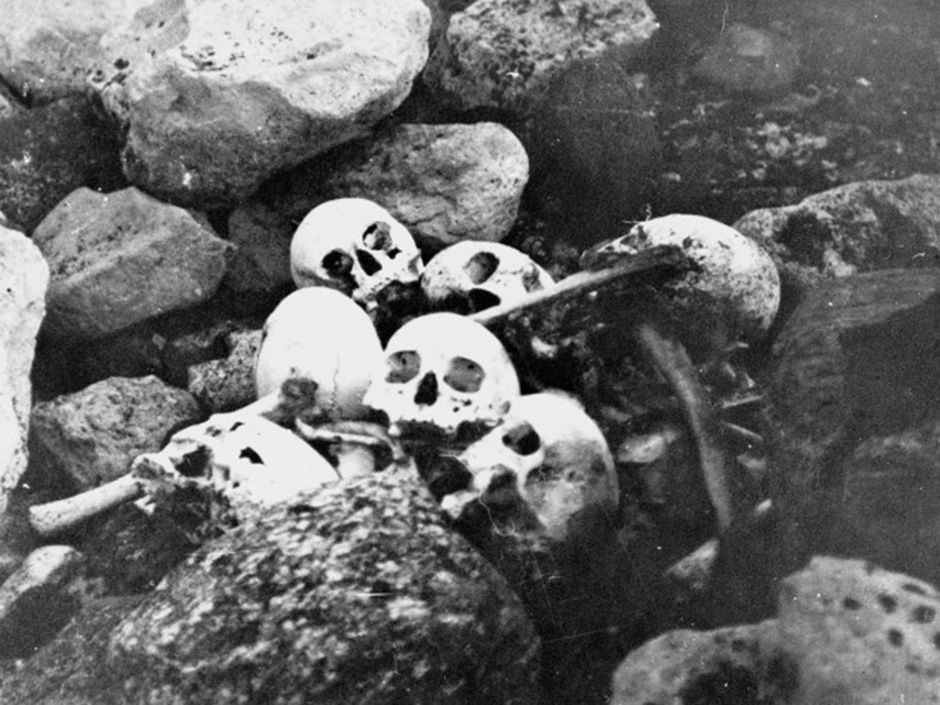
In 1888, London was the largest city on the planet. At the height of the industrial revolution, this was the peak of capitalism, with many factory owners making lots of money very quickly.

However, just down the road from where all these rich men lived in Kensington were their workers, who lived in the infamous Victorian London Slums, which were rife with cholera outbreaks, rats and typhoid. Many of the men laboured in the highly dangerous factories to make a living for their family whilst the children were hired as chimney sweeps, where some would get trapped and die. The women sometimes turned to prostitution in order to make a living. One of the most famous of these slums was the expansive district of Whitechapel.
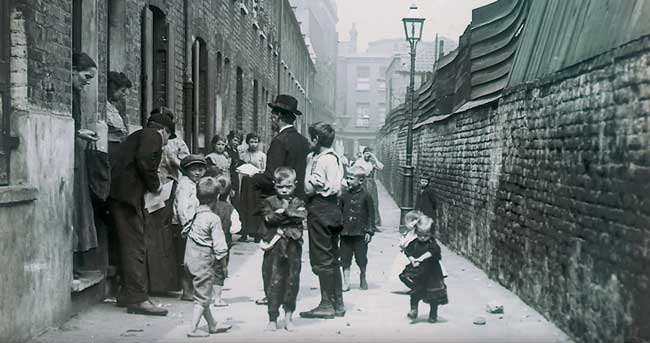
On the 31st August 1888 at around 3:40 am, Charles Cross was walking down Buck’s Row in Whitechapel when he saw a woman lying on her back on the ground. He rushed over, to find her hands cold to the touch. Robert Paul came to his side and the two analysed the body. However, not wanting to be late for work, the two men left the scene, hoping to find a police officer on their way. This effort was, thankfully, for naught as 5 minutes later PC John Neil happened upon the same body himself.
Neil, who had a lantern so could see much better, found a large cut across the woman’s throat. It was deemed to be relatively fresh, as the wound was still bleeding and different parts of the body were still warm. Another constable arrived who grabbed a doctor who determined that she had been dead for half an hour, which meant that Cross and Paul found the body only 10 minutes after the murder.
She was quickly rushed to the morgue not long after, where she was identified as Mary Ann Nichols, a 43 year old woman with 6 children who had turned to prostitution in order to get into a lodging house she had been denied from earlier that night. She was last seen, by a close friend, walking down Whitechapel Road, around 800 metres from her murder site, whilst visibly drunk. This was around 2:30, only one hour before her death.

The doctors determined that there were two slits to the throat as well as a slice across the abdomen and that she had been disembowelled. Whilst no organs had been removed, the doctors still determined that the killer had a decent anatomical knowledge. Many police officers compared it to another murder earlier that month, that being Martha Tabram. Both women were prostitutes, killed incredibly violently and ferociously, had no discernible motive for their respective murders and were around the same age. However, the difference was in the wounds. Whilst Tabram had been repeatedly stabbed, Nichols wounds were more consistent with slashes and slices. Despite this, the police still suspected the two murders of being linked.
On September 8th, a little over a week after the first murder, at 4:45 am, John Richardson was walking along Hanbury Street before making a stop at No. 29. He walked through the house to check the security of the basement door in the back yard before sitting on the back doorstep, where he trimmed a piece of leather from his boot. He then left the premises back through the front door and closed it behind himself, continuing on his walk to work. An hour later, a tenant on the third floor by the name of John Davis walked down stairs. The front door was now wide open but the back door was closed. Davis walked outside only to find the body of a woman lying on her back by the fence in the yard.
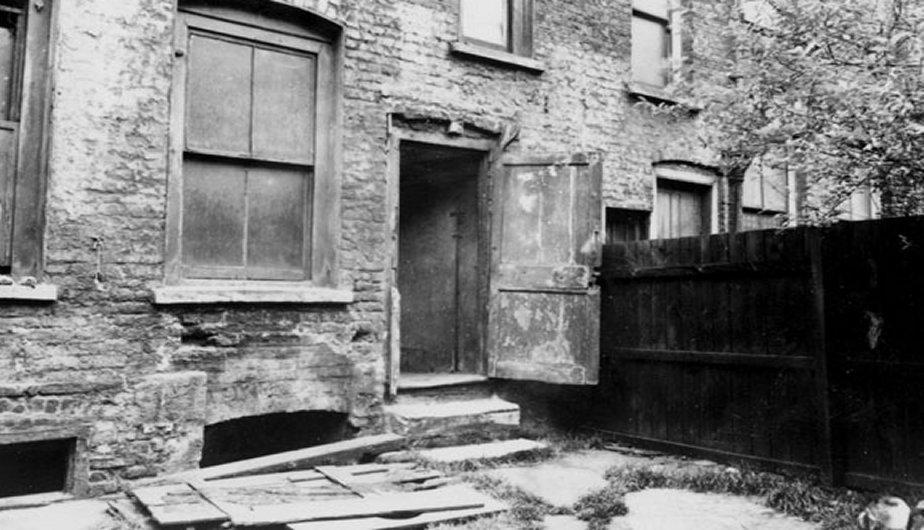
A doctor and a police officer soon arrived on the scene. The doctor said that she had been “terribly mutilated”. The specifics include a deep cut in her throat and her intestines had been lifted from her body and wrapped around her neck. By the woman’s feet they found a cloth and two combs, which were suspected to be belonging to the victim but had been arranged by the murderer.
At the mortuary she was identified as Annie Chapman, a 47 year old woman, who occupied herself with crochet work, flower selling and casual prostitution on the side. The last official sighting of Chapman was when she was denied lodging at 35 Dorset Street due to insufficient funds. However, at 5:30, a woman named Elizabeth Long saw Chapman conversing with a man just metres away from 29 Hanbury Street. Many suspect that this man, who Long could not see as his back was facing her, was the killer.

However, this creates a conflict, as the doctor determined the time of death was at 4:30. Richardson claimed that when he entered the backyard at 4:45 there was no body, and that it was impossible for him to not have seen it if it was there. The doctor did concede saying that he mainly judged the time of death based off the temperature of the body, which could’ve been effected by the cold night. This would place Chapman’s death between 5:30 and 5:45 in the morning. However, this creates a chilling reality, where, with the dim light of dawn slowly creeping through the streets, the residents of 29 Hanbury Street would have had an unobstructed view of the murder. However, no-one was reported as having observed the murder.
At the mortuary, marks were discovered on her fingers, consistent with someone aggressively taking off a ring. Other parts of the abdomen were removed and not found, including Chapman’s womb. Doctor’s determined that, because of this, the killer must have some kind of anatomical knowledge, whether that be a surgeon, a medical student or a butcher.
Many in Whitechapel began to question the competence of the police, despite the overwhelming odds stacked against them. In an attempt to stop the attacks, a man named George Lusk established the Whitechapel Vigilance Committee, a vigilante task force set on hunting down the killer. Due to a leather apron being found at the scene of Chapman’s murder, newspapers began to suspect that a Jewish man was behind the attacks, due to a Polish Jewish boot maker in Whitechapel named John Pizer often being characterised by his leather apron. The Vigilance Committee began to severely harass Jewish Businesses.
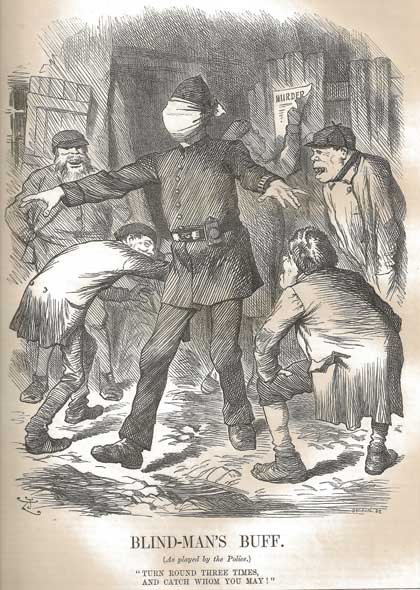
The newspapers whipped the people up into a frenzy, which encouraged many people to write into the police offices and newspapers claiming to be the murderer. Many of these were dismissed as pranks or false allegations. However, one sent to the Central News Agency in London caught their eye. The letter, which arrived on the 27th of September, read as follows in bright red ink.
Dear Boss,
I keep on hearing the Police have caught me, but they won’t fix me just yet. I have laughed when they look so clever and talk about being on the right track. That joke about Leather Apron gave me real fits. I am down on whores and I shan’t quit ripping them till I do get buckled. Grand work the last job was. I gave the lady no time to squeal. How can they catch me now? I love my work and want to start again. You will soon hear of me with my funny little games. I saved some of the proper red stuff in a ginger beer bottle over the last job to write with, but it went thick like glue and I can’t use it. Red ink is fit enough I hope ha. ha. The next job I do I shall clip the lady’s ears off and send to the police officers just for jolly wouldn’t you. Keep this letter back till I do a bit more work, then give it out straight. My knife’s so nice and sharp I want to get to work right away if I get a chance. Good Luck. Yours truly
Jack the RipperDon’t mind me giving the trade name
PS Wasn’t good enough to post this before I got all the red ink off my hands curse it. No luck yet. They say I’m a doctor now. ha ha
The letter sent to the Central News Agency
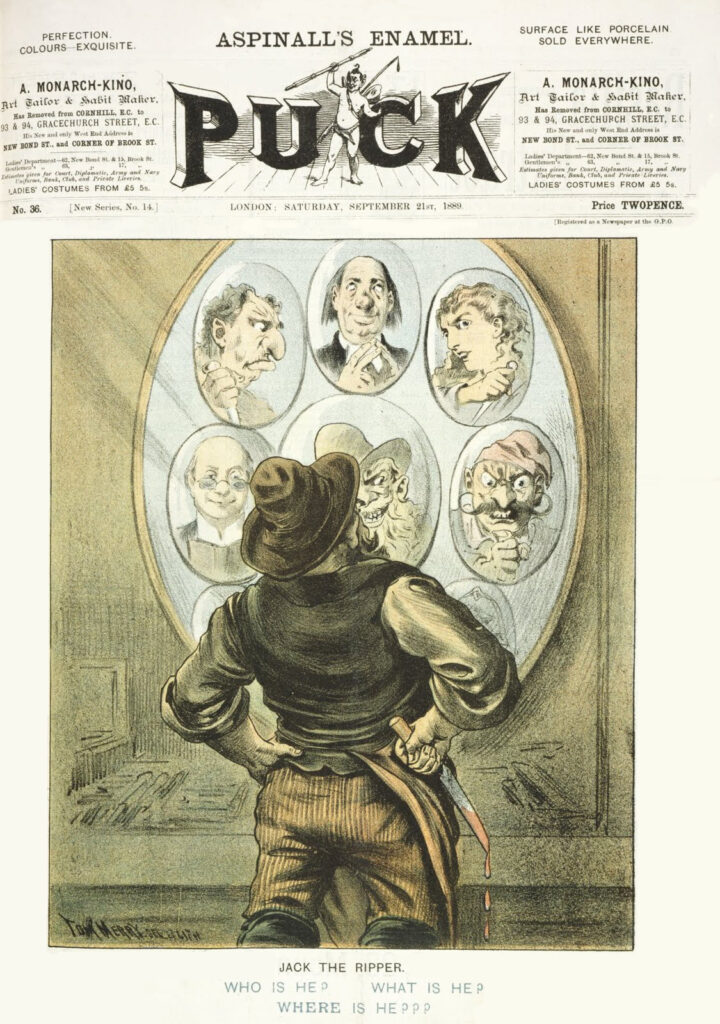
The name at the bottom of the letter would ring throughout history as one of if not the most famous serial killer of all time. The Agency forwarded this to the police, who were more skeptical. However, their opinion would soon change.
On September 29th, just two days after the “Dear Boss” Letter, 40 Berner Street was holding a meeting for the Socialist Club. The meeting came to a close and some chose to stay and drink. At half past midnight, Joseph Lave used the side entrance, which led into Dutfields Yard, to grab some fresh air. He lingered for 10 minutes, facing into Berner Street before retreating into the building. Moments later a man named Morris Eagle, who was a member of the club and had come back after escorting a woman home, turned right off Berner Street into Dutfields Yard and used the same entrance into No. 40.

Barely 20 minutes went by before a horse and carriage, driven by Louis Diemschutz, made the same turn that Eagle did, turning right into Dutfields Yard off Burner Street. However, once he entered the yard, the horse veered to the left. He looked down and saw the body of a woman lying by the wall. He went inside to check on his wife before a small crowd gathered outside. They determined that the woman was dead and then dispersed to find a police officer.
The name of the victim was Elizabeth Stride, a 44 year old cleaner and prostitute. She had been spotted 3 times through out the night with a man described as having a “respectable appearance” the last one of these being at around 12:35, about 25 minutes before the body was found.

The most notable sighting was by Israel Schwartz, who spotted a man violently shoving a woman at the entrance of Dutfields Yard. Schwartz crossed the street, deciding to not intervene, before the man yelled “Lipski”, a Jewish slur, which encouraged another man to follow Schwartz for quite some distance. Whether this was a co-conspirator or the man was simply frightened too and happened to walk down the same way as Schwartz is up to interpretation. This occurred only 5 minutes before the body was discovered and it is believed that the woman was Stride and the man shoving her was the killer.
She did not have as many brutal wounds as the other victims, with just a slit of her throat, which lead many to believe that she was not actually a victim of the Ripper. However, what many believe is that when Diemschutz rolled his cart down Dutfields Yard, he had inadvertently interrupted the murder, and the murderer had hidden at the end of the alleyway. Once Diemschutz went inside to check on his wife, it is believed that the murder slipped out of the yard and went on the hunt for another victim.
Later that night, at around 1:45, PC Edward Watkins discovered another body on his patrol route around the area of Mitre Square, only 15 minutes away from Dutfields Yard. She was taken to the mortuary and identified as Catherine Eddowes, a 46 year old street vendor and prostitute. Eddowes had been jailed earlier that night, for being so drunk she collapsed on the pavement, and was not released until 1 in the morning. 35 minutes later, she was spotted in the company of a man near an entrance to Mitre Square.
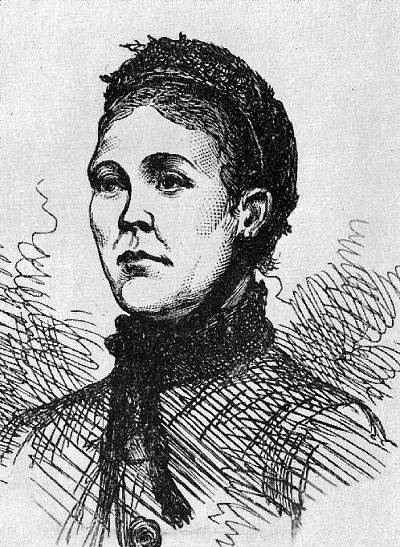
The post mortem found that she too had been disembowelled, with some of her organs being removed, most notably her womb and her left kidney, reinforcing their theory that the killer had decent anatomical knowledge. What was also notable was that there had been a small incision made on her left earlobe. This indicated that the murderer was attempting to cut Eddowes’ ear off, as detailed in the letter, before he was, once again, interrupted. This was somewhat confirmed by a postcard sent 2 days later. Whilst it was much shorter than the letter sent on the 27th, many detectives still believed this to be from the actual killer, as it was written before any information about the two murders had been released to the public or the press.
I was not codding dear old boss when I gave you the tip, you’ll hear about Saucy Jacky’s work tomorrow double event this time number one squealed a bit couldn’t finish straight off. Had not got time to get ears off for police thanks for keeping last letter back till I got to work again.
The postcard sent to the Central News Agency
In addition, two blocks away from Mitre Square, a piece of blood stained cloth was found on the pavement, which was found to be a part of Eddowes’ apron that she was wearing. Above it, in large sprawling text on the wall, was written:
The Juwes are the men that will not be blamed for nothing
The graffito found on Goulston Street.
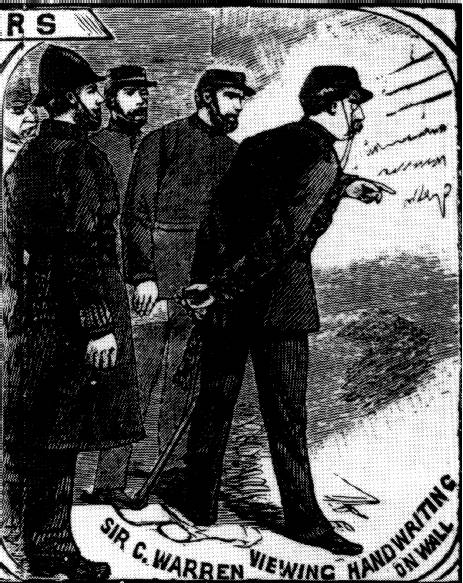
The meaning of this is heavily debated. Was it written by the killer in an attempt to divert attention away or towards the Jewish Community of London? Was it just discarded there by chance under to some anti-semitic graffito by someone who wasn’t the killer? To this day, no-one knows the answer to any of these questions. No matter what the case was, Commissioner Charles Warren ordered it to be removed for fear of civil unrest.
A final confirmed letter was sent to George Lusk on the 16th of October and was redirected to the police force after its arrival. It appeared as though the handwriting was much worse than the previous two, as well as the spelling. However, some suspect that this was done on purpose to throw the police off to make the killer seem uneducated.
From hell.
Mr Lusk,
Sir
I send you half the Kidne I took from one women prasarved it for you tother piece I fried and ate it was very nice. I may send you the bloody knife that took it out if you only wate a while longer
signedCatch me when you can Mishter Lusk
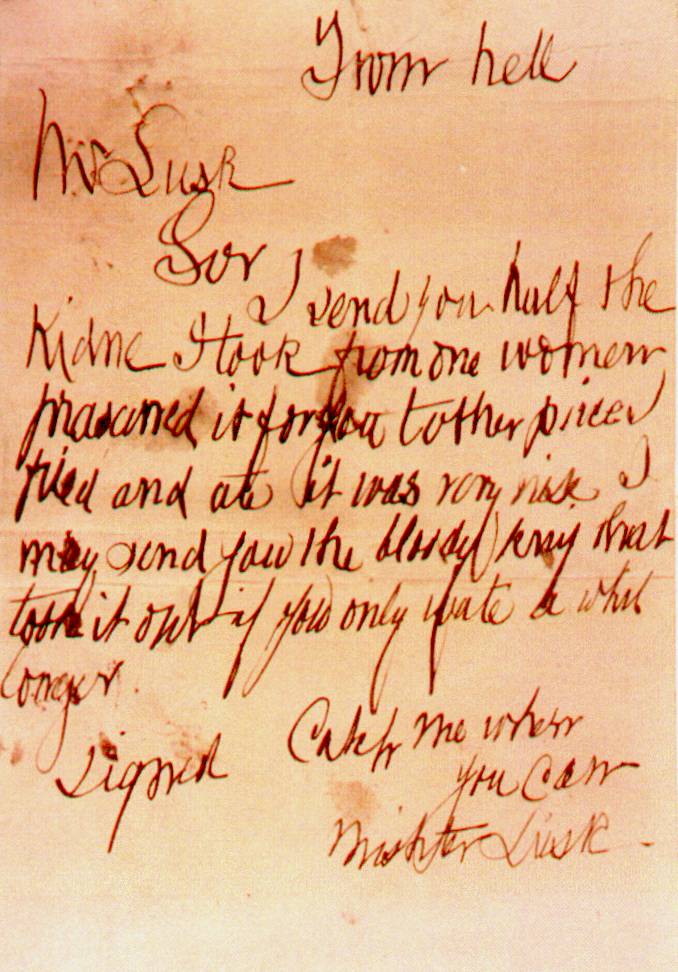
With the letter there was a parcel which, as the letter described, contained half a human kidney. There was no way of confirming, however, if this was actually Eddowes’ kidney or something that a medical student had done as a prank. Whatever the case may be, this is what many believe to be the final letter from Jack the Ripper, and there was relative peace in London for quite some time. For over a month, not a single murder was reported and many believed that the Ripper had simply stopped.
[I]t daily becomes evident that the Whitechapel murderer has gone out of business [and i]t is pretty certain that, despite […] the bravado exhibited by Jack the Ripper in his recent letter, the monster has become frightened at the magnitude of the police arrangements for his detection and has suspended his horrible work for the present, if not for good.
The Dunkirk Observer Journal, October 29th, 1888
In the property of Millers Court on November 9th, 1888, landlord John McCarthy had noticed that the tenant of number 13, one Mary Jane Kelly, had fallen behind on her rent. At around 10:45 am, he instructed his assistant, Thomas Bowyer, to collect the money. Bowyer knocked on the door twice and, after receiving no response, decided to peer through the window to see if Kelly was home. After seeing what was inside he quickly ran to his boss and summoned him to look upon the horror in 13 Miller’s Court.
The sight we saw I cannot drive away from my mind. It looked more like the work of a devil than of a man. [Kelly]’s body was lying on the bed undressed. She had been completely disembowelled, and her entrails had been taken out and placed on the table. It was those that I had seen when I looked through the window, and took to be lumps of flesh. The woman’s nose had been cut off, and her face gashed and mutilated so that she was quite beyond recognition. Both her breasts, too, had been cut clean away, and placed by the side of her liver, and other entrails on the table. I had heard a great deal about the Whitechapel murders, but I declare to God I had never expected to see such a sight as this. The body was, of course, covered with blood, and so was the bed. The whole scene is more than I can describe, I hope I may never see such a sight again.
John McCarthy’s testimony he gave to the press
Kelly was the youngest victim. She was somewhere in her mid twenties and was, up until the start of the month, cohabitating with a man named Joseph Barnett, who had split with Kelly on the 30th of October, due his disapproval of her life as a prostitute as well as the circles she hung around with.
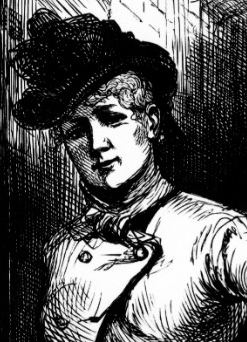
Kelly was seen by Barnett in 13 Millers Court on the evening of November 8th, the former of which was in the company of a woman who was on her way out the door. Whilst many accounts conflict on this, Barnett claims he arrived anywhere between 7:00 and 7:45 and left before 9:00. At 11:45, Kelly’s neighbour spotted her entering her home with a man, whilst she was in a drunken state. She was heard singing by this same neighbour and was still singing by the time the neighbour left Miller’s Court at 1am.
It is then alleged that she left Miller’s Court and met up with George Hutchinson, asking for some spare coins as the two were well acquainted. When Hutchinson told Kelly he had no spare money, she walked down the street and was spotted in the company of a well dressed man by Hutchinson. Believing the presence of a well dressed man in the accompaniment of a woman like Kelly to be strange, he scrutinised the appearance of the man.

Hutchinson then shadowed the couple up to Miller’s Court, whereupon the man gave Kelly a red handkerchief before being invited inside. The detail about the red handkerchief matches up with the testimony of the last person to see Eddowes alive, who described the man he sighted as having a “reddish handkerchief” tied around his neck. Hutchinson then stuck around for around an hour before leaving.
Once Kelly’s neighbour returned, at around 3:00, there was now no sound or light coming from Kelly’s room. At 4:00, the residents above and across from Kelly heard “cries of murder” from nearby, whilst other residents heard absolutely nothing at all. Doctors were unsure where to place the time of death as, despite Hutchinson’s testimony, some believe that he embellished the truth or simply lied in order to gain more public attention. The certainty was not helped by the fact that some witnesses described seeing and even speaking to her as late as 8 or 10 o’clock on the morning of November 9th.
These 5 murders described above are the suspected “Canonical Five” Victims. Whilst there were some murders in the area before and some since, these are usually the ones collectively agreed upon as the murders that were committed by Jack the Ripper. To this day, the case still remains unsolved. With hundreds upon hundreds of suspects, ranging from Charles Cross, who discovered the body of Nichols, to Lewis Carroll, the writer of Alice in Wonderland, the case will likely never be solved. Even with all these advances in modern science, with some DNA tests being conducted on cloth samples, this one simple question can not be answered nearly 200 years later.
Who was Jack the Ripper?