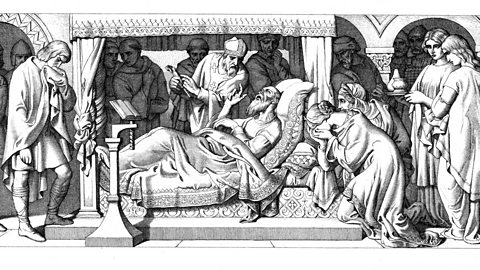
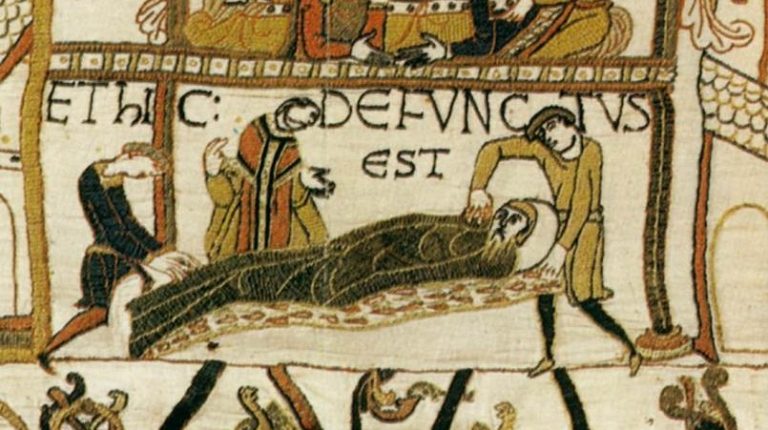
When Edward the Confessor died on January 5th 1066, he left behind one enormous problem: he had no children to inherit the throne. Unlike today, there was no fixed law stating that the eldest child automatically became monarch. Instead, the succession often depended on blood ties, promises made by previous kings, military strength and, crucially, the support of England’s leading nobles. Within days of Edward’s death, four men emerged as serious claimants to the English crown.
The strongest hereditary claim belonged to Edgar Ætheling. Edgar was Edward’s great-nephew and the last surviving male descendant of the ancient royal House of Wessex that had ruled England before the Danish invasions. By blood alone, many believed he should inherit the throne. However, Edgar was only around fourteen or fifteen years old and had little political or military experience. With England facing the threat of foreign invasion, many nobles doubted that a teenage king could defend the kingdom.
Another claimant was Harald Hardrada, the formidable King of Norway. Before becoming king, Harald had spent decades fighting across Europe and the Byzantine Empire as a mercenary commander, earning a reputation as one of the greatest warriors of his age. His claim dated back to an agreement made a generation earlier. King Magnus of Norway and King Harthacnut of Denmark and England had agreed that if either died without an heir, the survivor would inherit both kingdoms. Harthacnut died childless in 1042, but instead of a Norwegian king taking the English throne, the English nobles invited Edward the Confessor to become king. Harald, who later succeeded Magnus as King of Norway, believed that this agreement meant the English crown now rightfully belonged to him.
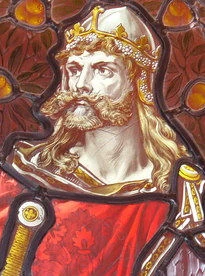
The most powerful English noble was Harold Godwinson, Earl of Wessex. Harold came from the immensely influential Godwin family. His father, Earl Godwin, had once been implicated in the death of Edward’s younger brother, Alfred Ætheling, who had been captured, blinded and later died after attempting to return to England during the reign of the Danish king Harold Harefoot. Although this created lasting tension between Edward and the Godwins, the two sides eventually reconciled. Edward married Harold’s sister, Edith, making Harold the king’s brother-in-law. Over the following years Harold became England’s leading military commander, Edward’s closest adviser and, in practice, the most powerful man in the kingdom after the king himself.

The final claimant was William, Duke of Normandy. Edward’s mother, Emma of Normandy, was a Norman princess, and Edward himself had spent nearly three decades living in Normandy while England was ruled by the Danish kings Sweyn Forkbeard, Cnut and their sons. During this exile, Edward formed close ties with the Norman nobility, including William. William later claimed that Edward had promised him the English throne. To strengthen this claim further, William also argued that Harold Godwinson had sworn a sacred oath over holy relics while visiting Normandy, promising to support William’s succession. Harold would later insist that this oath had been made under duress and was therefore invalid.

Edward died with Harold Godwinson at his bedside. According to Harold, the dying king entrusted him with the defence of England and named him as his successor. Whether Edward actually intended this remains one of the great historical debates, but the Witenagemot – the council of England’s leading nobles and churchmen – accepted Harold’s claim. He was crowned King Harold II in Westminster Abbey on January 6th 1066, just one day after Edward’s death. Yet while Harold now wore the crown, three other men believed it belonged to them. Before the year was over, their competing claims would plunge England into one of the most famous succession crises in European history, culminating in three great battles that changed the country forever.