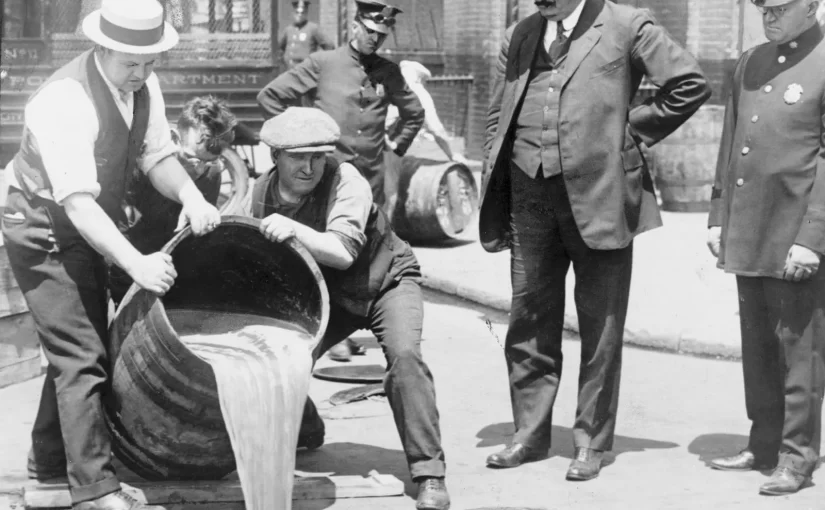
Alcohol had long been a central part of social and cultural life in the United States. From the earliest days of European settlement, it was widely consumed across all levels of society. Colonial settlers brought beer and spirits with them across the Atlantic, and by the time of the American Revolution, alcohol was already deeply embedded in daily life. Even prominent figures such as George Washington were known to provide their troops with regular rations of alcohol. By the 19th century, consumption had reached particularly high levels. Americans drank significantly more alcohol per person than they do today, with whiskey, beer, and cider forming a routine part of everyday life.

However, this widespread consumption increasingly became a source of concern. Excessive drinking was associated with poverty, domestic violence, and declining workplace discipline, particularly in rapidly industrialising urban centres. Much of the early opposition to alcohol emerged from religious and social reform movements. Among the most prominent was the Women’s Christian Temperance Union, founded in 1874. Its members, many of them women affected by the consequences of alcohol abuse within the home, campaigned for temperance, initially advocating moderation, and increasingly promoting complete abstinence. Their activism took the form of public demonstrations, petitions, and organised campaigns aimed at closing saloons and restricting access to alcohol.
Over time, the movement expanded beyond moral persuasion into political action. A key turning point came with the rise of the Anti-Saloon League in the late 19th century. Unlike earlier reform groups, the League focused almost exclusively on prohibition and operated with a highly organised and strategic approach. Under the leadership of Wayne Wheeler, it became one of the most effective lobbying organisations in American history. Wheeler and the League built broad support by tailoring their arguments to different audiences. To industrialists, alcohol was presented as a threat to productivity and efficiency. To workers, it was framed as a social ill that worsened living conditions. Religious groups were mobilised on moral grounds, while others were persuaded through appeals to public order and national strength. This flexibility allowed the movement to unite groups with otherwise very different political and social views.
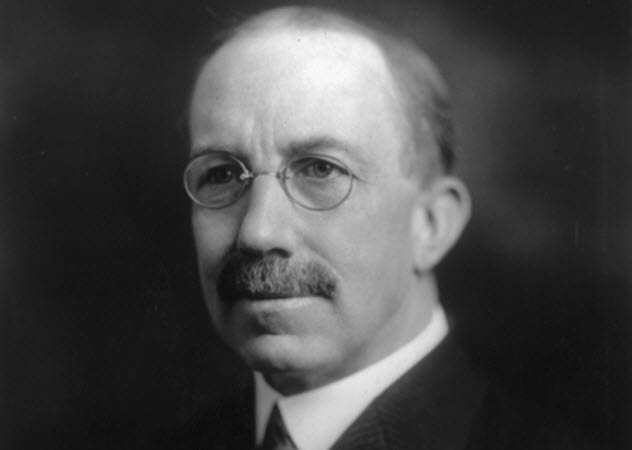
By the early 20th century, prohibition had become a major national issue. At the same time, broader developments were helping to shift opinion further in its favour. When the United States entered the World War I in 1917, temporary restrictions were placed on alcohol production in order to conserve grain for the war effort. Anti-German sentiment also played a role, as many breweries were owned or associated with German-American communities, making beer in particular a target of suspicion and criticism. Another significant factor was economic. Alcohol taxes had long provided a substantial portion of federal revenue. However, the ratification of the Sixteenth Amendment in 1913, which introduced a federal income tax, reduced the government’s reliance on alcohol-related income. This removed one of the major financial obstacles to prohibition.
With public support growing and political resistance weakening, the movement achieved its ultimate goal. In 1919, the Eighteenth Amendment was ratified, banning the manufacture, sale, and transportation of intoxicating liquors across the United States. Its provisions were enforced through the Volstead Act, which defined the scope of the ban and established mechanisms for enforcement. Prohibition was introduced as a solution to a range of social problems, from crime and poverty to public health and morality. Yet almost immediately, it became clear that enforcement would be far more difficult than its supporters had anticipated. Despite the legal ban, demand for alcohol did not disappear. Instead, it moved underground, setting the stage for a new and often more dangerous phase in American social and political life.