
Napoleon returned to Paris from his campaign in Italy and was lauded as a hero. His campaign was so successful that the French Government believed that Napoleon was capable of an invasion of mainland Britain. However, as the War of the Second Coalition broke out, Napoleon soon realised that the French Navy was nowhere near powerful enough to take on the powerful Royal Navy. Instead, he decided to take out Britain’s supply line to India by taking control of Ottoman Controlled Egypt, whilst also securing the Sultan of the Indian Mysore Kingdom as a potential ally.
By 1798, Napoleon was elected to the French Academy of Sciences, after which he went to Egypt with 40,000 soldiers, and a collection of 167 scientists, mathematicians, naturalists, chemists and geodesists. However, on the way there, he managed to capture Malta, then under the control of The Order of St John of Jerusalem. They put up little fight and Napoleon only lost 3 men. On July 1st of 1798, Napoleon’s forces landed in Alexandria. They combatted the Ottomans on multiple occasions, most notably at the Battle of the Pyramids, which was located approximately 24km (15 miles) from the Great Pyramids of Giza. In the battle, there was less than 30 French casualties compared to the nearly 2,000 they inflicted.
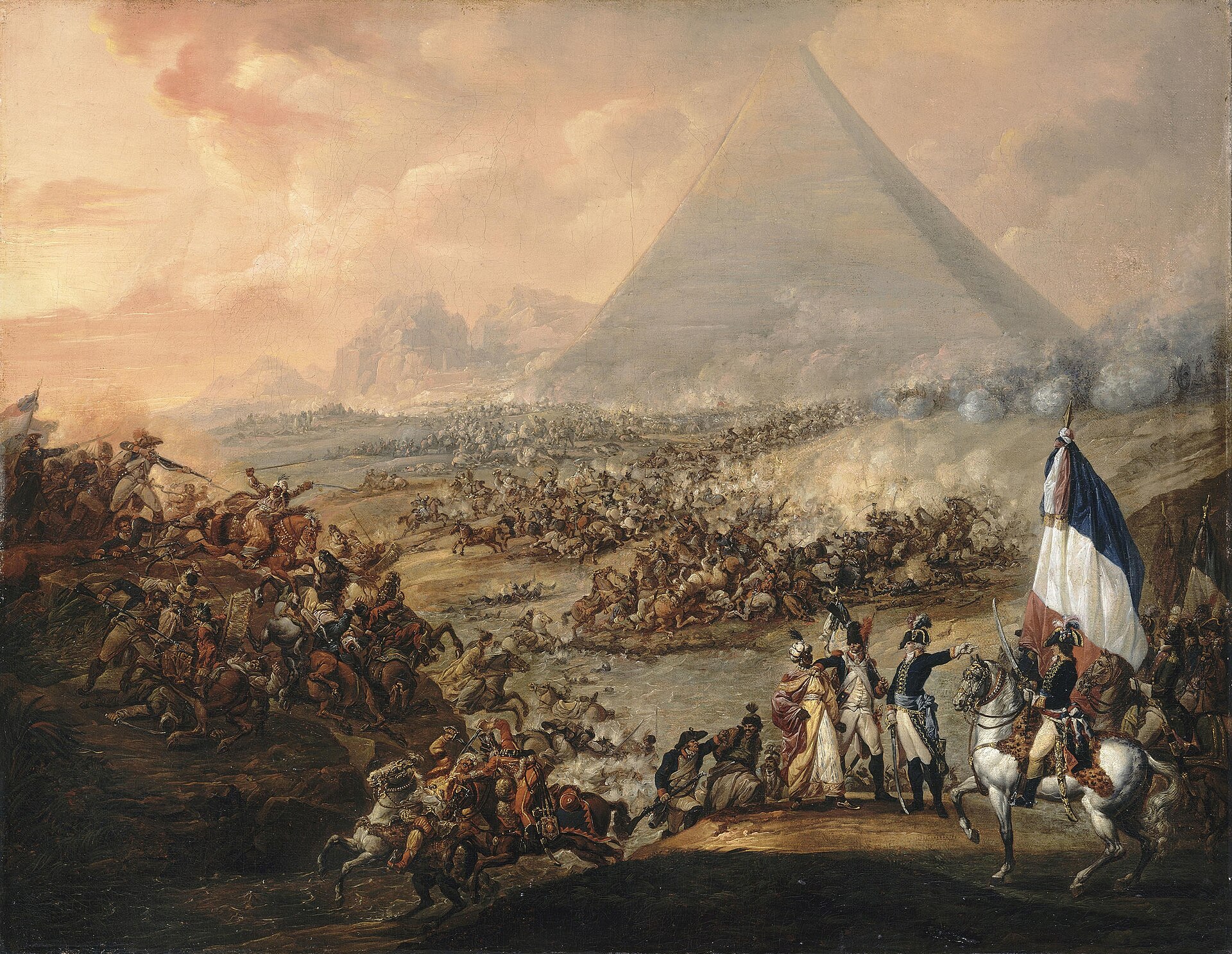
Despite this increase to French morale, disaster struck when Admiral Horatio Nelson destroyed or captured all but 2 out of 17 French Ships in the Battle of the Nile. After this decisive loss in the Mediterranean Campaign, Napoleon travelled north to Damascus with 13,000 men, capturing the port towns of Gaza, Arish, Haifa and Jaffa. Most notably, Napoleon noticed that, when he attacked Jaffa, the defenders were largely made of Albanian prisoners of war on parole. As a result, when he conquered the town, he ordered the garrison to be executed by bayonet and drowning. Then, all the men, women and children were pillaged, murdered or raped for 2 days and nights.
Napoleon’s army eventually reached the city of Acre. Believing it to be an easy victory, Napoleon decided to only use infantry to attack the city, believing that they would capitulate easily. He believed it would only take two weeks to capture the city before he would then march on Jerusalem. However, after one and a half months, the city stood firm. Many believe this was in part due to the large Albanian population of the city, fearing that they may share the same fate as Jaffa if they fell. Not only that but the British came in to assist, supplying the city’s defences with fresh sailors and marines, and sunk multiple French siege artillery ships. Once the French forces had finally managed to make a break through the wall of the city they discovered that the defenders had built a much deeper wall within. A cold, hungry and plague ridden French Army eventually retreated on May 21st, 1799, after a two month long siege.
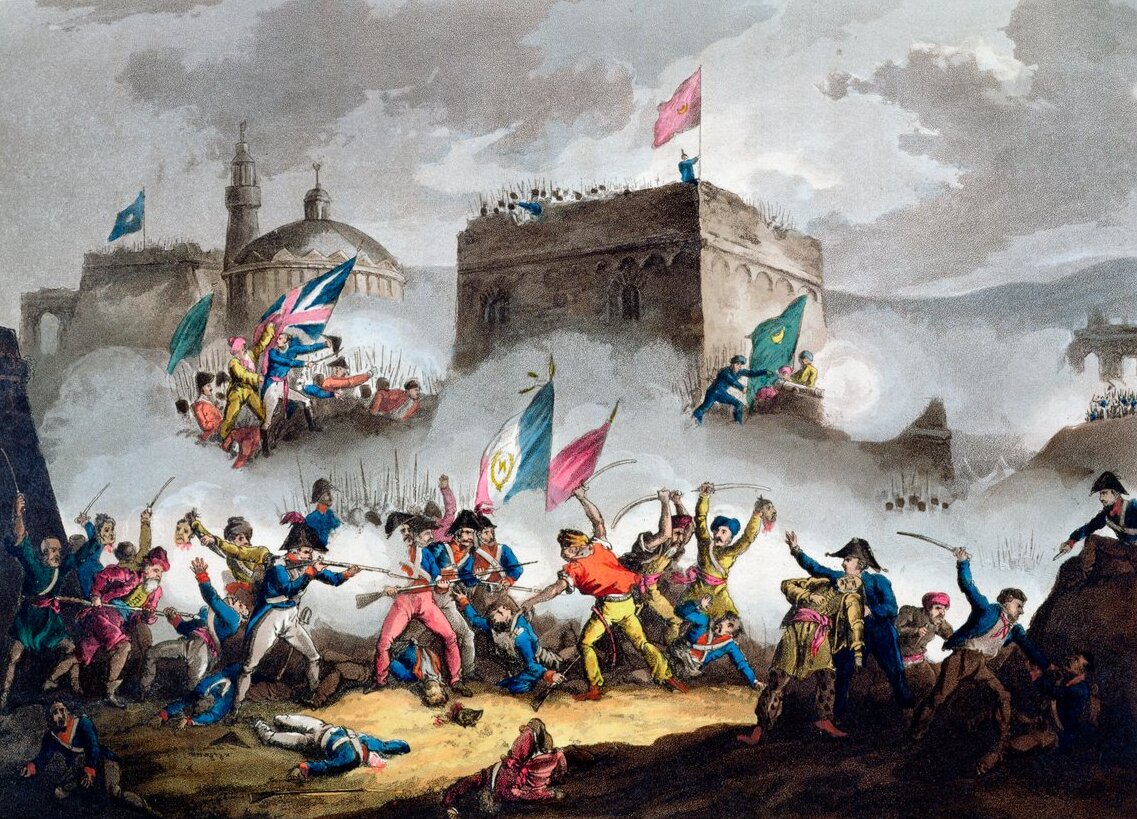
Napoleon returned to Egypt, having lost over 5,000 men in the siege, 2,000 of whom had succumbed to the bubonic plague. After this humiliating defeat, Napoleon decided to return to France without his army, fearing that the French Republic may soon collapse. Or was it perhaps him taking advantage of an opportunity?