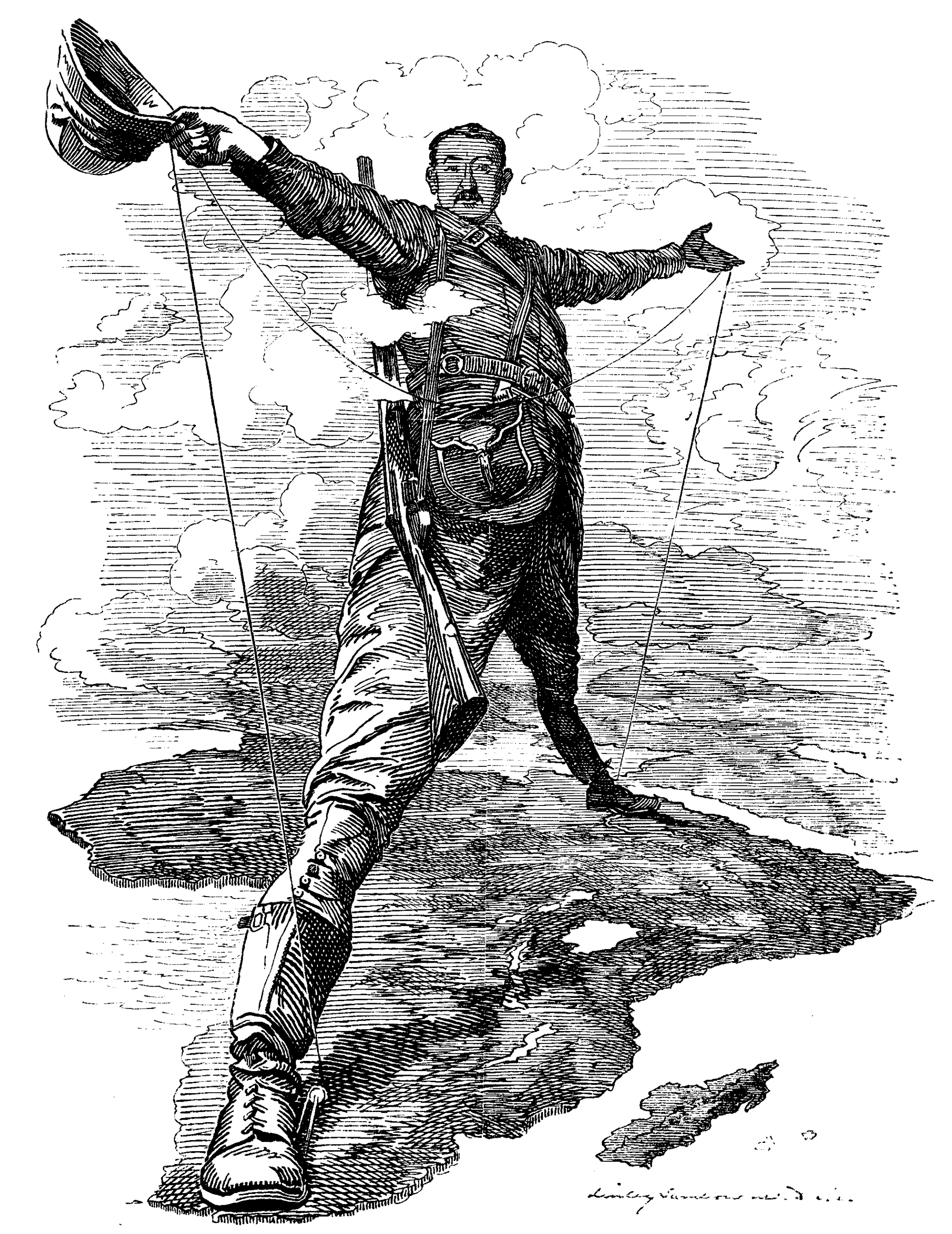
In the late 19th century, resource rich territories in Northern and Western territories in what is now Zimbabwe caught the eye of Cecil Rhodes, a British Mining Magnate. Using his royally chartered company, the British South Africa Company (BSAC), he was able to force his way into the area, despite resistance from native tribes. Eventually, British settlers began coming en-masse to find work and land. BSAC was henceforth given full control of the region which would later become known as Rhodesia, named in honour of BSAC’s founder.
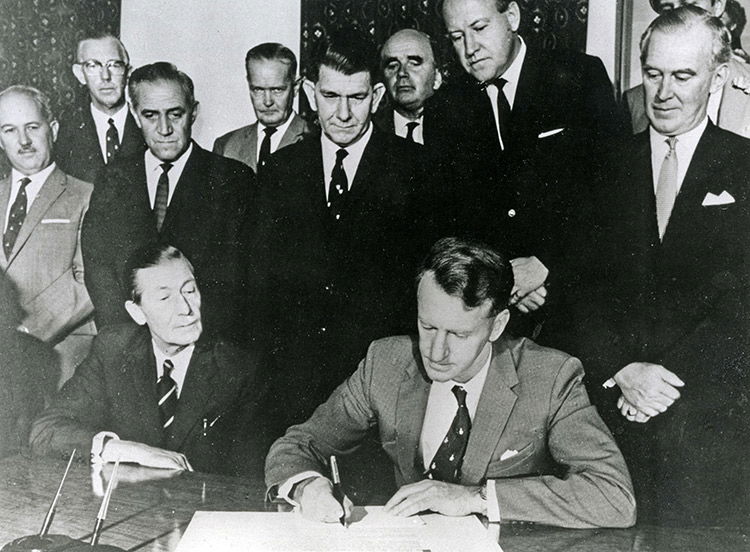
However, land disputes between the British settlers and the indigenous population soured racial tensions between the two groups. Much of Rhodesia’s domestic policy relied on a segregationist system, similar to the Jim Crow South, that favoured the white minority population. Despite only making up 5% of the Rhodesian population, they controlled all aspects of government, with only 15 seats of the 65 seats in the Rhodesian Parliament being allocated to black politicians in the 1962 election by Rhodesian Prime Minister Ian Smith. Whilst the black population were given the right to vote, the registration process required a higher education, something that was systematically made much more accessible to the white population than the black population.
As anti-monarchist and anti-colonial sentiment in British life began to make waves, the decolonisation efforts of Harold Wilson’s Labour Government began to be enforced. Their policy was simple. “No independence before majority rule.” The white ruling class of Rhodesia began to panic, fearing a similar fate to the mass upheaval that befell the Congo upon its independence from Belgium. In this panic, the government unilaterally declared independence from Britain in 1965. Smith stated that:
Rhodesia did not want to seize independence from Britain. It was forced upon us.
Rhodesian Prime Minister, Ian Smith
This was condemned at large by the international community but Rhodesians saw this as an act of survival. From this date forth, they were privately funded by South Africa and Portuguese Mozambique. However, many Rhodesian Black Nationalists, wanting a majority rule, saw this as an opportunity. The black majority population of Rhodesia saw the Rhodesian declaration of independence as a move in order for the white majority government to secure more power for themselves and undermine the black population and their rights even more than they had before.
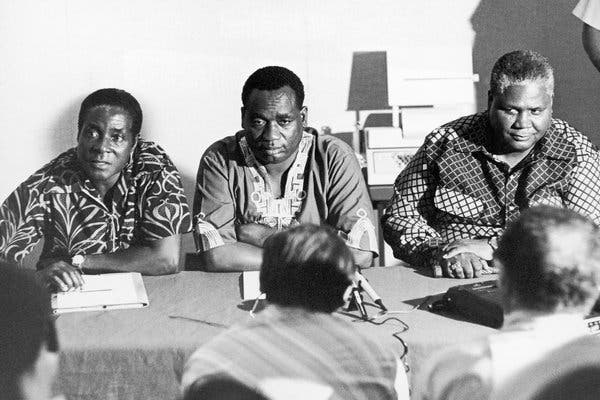
The two notable factions of the black nationalists were the Zimbabwean Africa People’s Union (ZAPU) and the Zimbabwe African National Union (ZANU), both of whom adhered to communism. Whilst ZAPU adhered to Marxist-Leninist doctrine and preferred traditional open warfare, ZANU, a splinter group of ZAPU, adhered to Maoism and received backing from China, whilst practicing guerilla fighting. However, both these groups had been banned following the 1964 killing of Andrew Oberholzer by ZANU insurgents. Largely condemned as a political crime against an innocent foreman, key figures from both groups, such as Joshua Nkomo, head and co-founder of ZAPU, Ndabaningi Sithole, co-founder of ZANU, and Robert Mugabe, head of ZANU, were sentenced to ten years in prison, whilst their paramilitary branches went into exile. Eventually, insurgent operations conducted from exile eventually devolved into an asymmetric bush war.
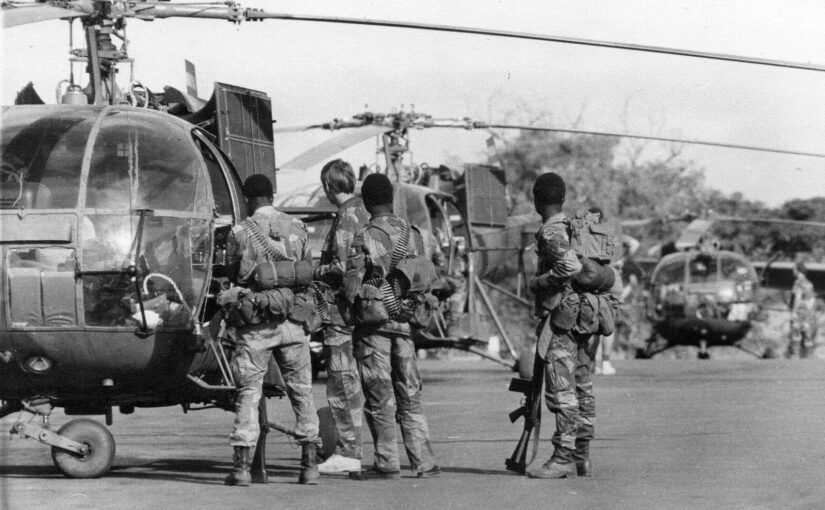
When the declaration of independence escalated conflict between black nationalist cells and the Rhodesian government, Rhodesia was not fully alone in the conflict. Despite a UN embargo, the secret pipelines through South Africa and Portuguese Mozambique kept them supplied. Despite their vast advantage over the enemy, with the highly trained SAS and air superiority, many of the ZANU and ZAPU forces had taken extensive training in Cuba, the USSR and North Korea. In addition, the Rhodesians could not secure their borders from the guerillas, who were being actively assisted by insurgents from Mozambique. Most of the fighting took place trying to secure the North eastern border. However, the insurgents were becoming much more resilient to Rhodesia’s efforts. Much of this led to both sides committing great atrocities. The black nationalists abducted children into their cause to fight and conducted raids on white farms whilst the Rhodesian army often tortured and executed insurgents extrajudicially.
When Portugal’s African colonies claimed their independence, the Rhodesians began working with South Africa for a ceasefire, unintentionally allowing the resistance to regroup. However, by 1975, ZANU and ZAPU had resorted to infighting, including the assassination of leaders and targeting each other as much as they did with the Rhodesian army. ZANU was eventually forced into retreating to a headquarters in Mozambique before resuming the fighting by early 1976, much more brutally than before. In response, the Rhodesians began conducting operations outside of Rhodesia’s borders in order to crush external militia help. Most notably, a group of Rhodesian soldiers disguised as Fromila (Mozambique black nationalist) soldiers entered Nyadzona in Mozambique, and began opening fire on a camp just outside the city. This drew mass controversy as the camp did not just consist of insurgents but also refugees, including the elderly, women and children. The raid killed over 1000 people, according to Amnesty International. Due to this, South Africa withdrew its support. Rhodesia was now completely isolated.

Eventually, peace talks between the black nationalists and Smith’s administration began. Bishop Abel Muzorewa, leader of the United African National Council, began talks with Smith, establishing Zimbabwe-Rhodesia as a transitional government to stable majority rule, whilst still allowing white representation. This angered many guerilla forces, seen as appeasing the white minority rule. The fighting escalated, leading to more atrocities committed by the Black Nationalists, such as the infamous Elim Mission Massacre, where ZANU forces killed 12 Christian missionaries, including a child in its pyjamas, and raped 4 of the 5 women at the mission. As ZANU marched west and ZAPU marched east, their fighting often focused more on each other than Rhodesian security forces, desperate to stop the skirmishes turning into all out civil war.
Eventually, the Lancaster House Agreement of 1979 eventually marked a shift towards peace. Under temporary British rule, Rhodesia collapsed and Zimbabwe took its place. In the subsequent 1980 elections, allegations of voter intimidation and a potential military coup were rife. As a result, Robert Mugabe rose to become Prime Minister of Zimbabwe and later President, positions that he would control for almost 40 years. Whilst his administration expanded healthcare and education opportunities, it was also mired by mass political suppression and the violent seizure of land from white farmers, which led to decreased food production and a famine. The former guerilla fighters became a private militia for Mugabe by 2000, who killed more than 100 people in violent election campaigns. Mass hyperinflation was a large problem under Mugabe’s regime, leading to the introduction of a Z$100 trillion note, that only made the economy worse. Currently, £1 in the UK (worth about $1.34 USD) is worth over Z$87,100. He was eventually ousted in a coup in 2017 and replaced by Emmerson Mnangagwa, a regime change that has merely led to even more political suppression. Mugabe passed away in 2019. As of 2025, Zimbabwe is still not a member of the Commonwealth, despite its efforts to be readmitted.
The reputation and legacy of both Rhodesia and the black nationalists are controversial. Whilst Rhodesia’s economy prospered greatly despite the international sanctions, its foundational systematic racist segregation policies has led to the flag being embraced as a symbol by modern white supremacist movements. Many perceive the black nationalists as liberators from colonial rule, whilst some focus on their brutality during the war and the political suppression, corruption and dire economy once in power to condemn them. The Rhodesian Bush War has been described by many as Africa’s equivalent to the Vietnam War.