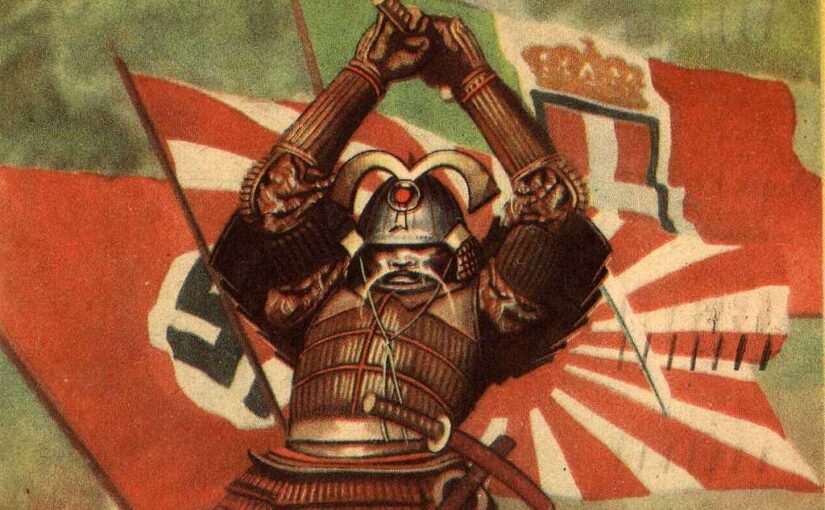
Adolf Hitler, leader of the Nazi Party in Germany, was appointed Chancellor of Germany by President Paul von Hindenburg on January 30th, 1933. He proposed a foreign policy ideal when he was appointed, that being the ‘Heim ins Reich’ or ‘Back Home to the Reich’ in English. It was the idea that all German speaking peoples should be united under a “Greater Germany”. One of the main targets of this policy was Austria.

Austria has an almost entirely German speaking population and is the second largest population of German speakers. The First Austrian Republic was established in the aftermath of the First World War and the collapse of the Austro-Hungarian Empire. Due to much political instability, massive violent riots and economic hardship, Chancellor Engelbert Dollfuss of the Fatherland Front, a right-wing conservative, authoritarian, nationalist, corporatist, and Catholic organisation that opposed what it called “heathen” Nazism, took power in March 1933. Dollfuss suspended parliament in 1933 and gradually established an authoritarian state, replacing Austria’s democratic system by 1934. However, political instability persisted, leading to a short civil war between the Fatherland Front and social democrats in February of 1934, ending in Dollfuss’ assassination by Austrian Nazis in July. Because of Hitler’s policy regarding the Austrians, they began receiving political and economic backing from Fascist Italy.
Italy, governed by Fascist Dictator Benito Mussolini, was the birthplace of fascism which German Nazism came from. It stemmed from groups of veterans of the First World War, who believed that much of the territory that Italy gained in the Treaty of London was not worth the struggle, especially considering it was a lot less than what was originally promised to them by the British and French in 1915. They were organised into the National Fascist Party by Benito Mussolini, a former socialist journalist, and seized power by marching on Rome in 1922, demanding that Mussolini be appointed Prime Minister by the King. He would often threaten political opponents through extrajudicial violence through a violent fascist paramilitary group known as the Blackshirts. These threats materialised with the murder of Giacomo Matteotti, an anti-fascist, socialist opposition leader in the Italian Parliament, the Chamber of Deputies. When the Blackshirts met with Mussolini after the murder, they demanded that he crush the opposition or they would undermine his position and do it themselves. At a speech in the Chamber of Deputies, Mussolini took responsibility for the murder and other political violence waged by the Blackshirts and challenged the Deputies to depose him. When nobody did, he assumed absolute power and transformed Italy into a one party state.
Fascism, the Government and the Party, is at its highest efficiency. Gentlemen, you have deceived yourselves! You thought that Fascism was over because I was restraining it, that the Party was dead because I was holding it back. If I would use one one-hundredth part of the energy that I used to contain the Fascists, to unleash them…. Oh! You would see, you would see then…
An excerpt from Mussolini’s Speech to the Chamber of Deputies, 1925

Attempting to establish a Greater Italy, Mussolini waged war against Libyan rebels, leading to the Libyan Genocide, with estimates ranging from 40,000 to over 70,000 killed. He also bombed Corfu and secured Fiume through the Treaty of Rome in 1924 after diplomatic pressure. Mussolini feared that German action in Austria would threaten the Italian province of South Tyrol, as it is a German speaking former territory of the Austro-Hungarian Empire. This led to Italian and German relations being initially sour by the first half of the 1930s.
In 1934, Hitler met with Mussolini in Venice, where he promised him that he would leave Austria alone, at least for now. However, after Dollfuss’ assassination and the failed Nazi coup, Mussolini, feeling his position to be insecure, turned to France for an alliance. He was eventually pushed away after the invasion of Ethiopia in 1935 and was sanctioned. However, when Hitler remilitarised the Western Rhineland province of Germany, he demonstrated the weakness of British and French opposition, encouraging Mussolini to seek closer ties with Germany as sanctions collapsed. This softened Mussolini’s initially hardline stance on Austria and began speaking of a potential Rome-Berlin axis by 1936. German Italian relations would soon be brought closer together by the Spanish Civil War.
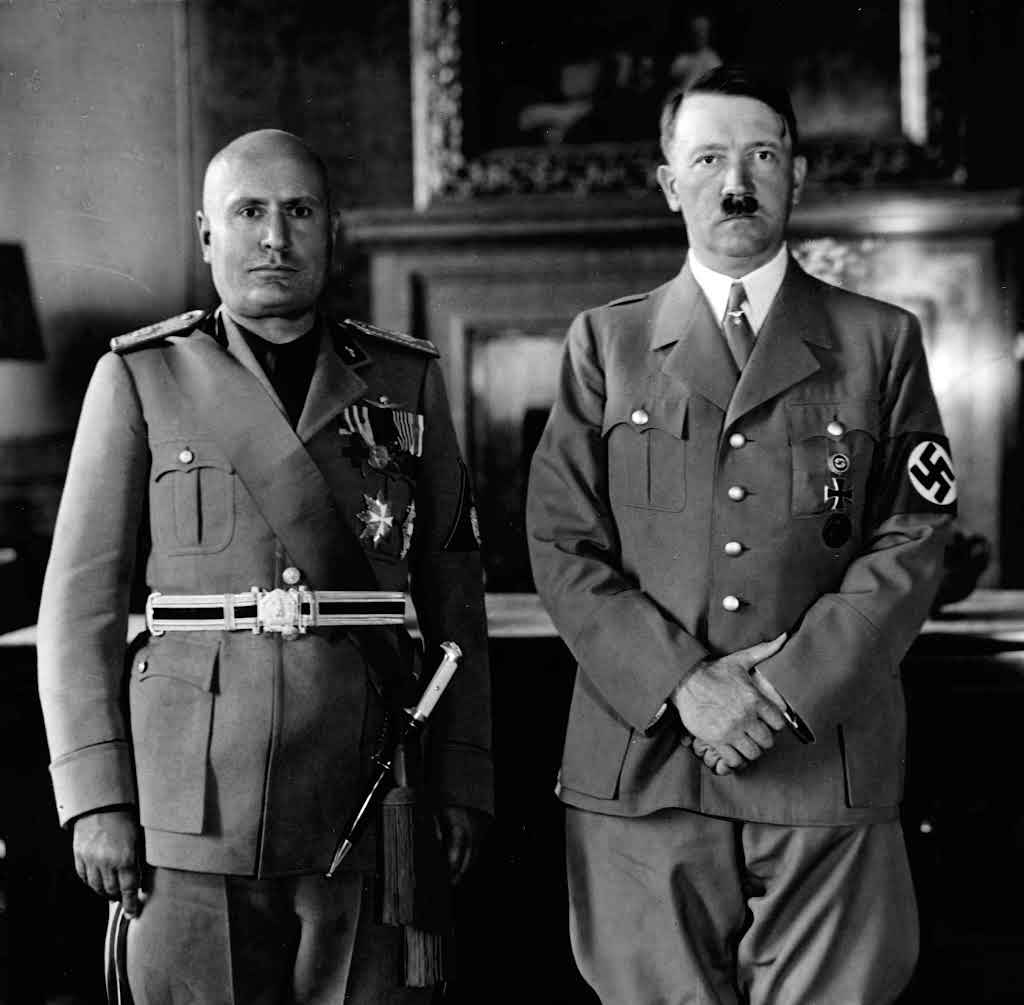
Entering the 20th Century, Spain was strongly divided between a growing liberal movement and the old elitist collective of bureaucrats, landowners and the clergy, the latter of which manipulated politics in order to remain in power. Eventually, General Miguel Primo de Rivera seized power in a coup in 1923, which had backing from King Alfonso XIII. However, his military dictatorship alienated the leftists and the conservative elite and was eventually forced into resigning in 1930 after great economic downturn that led to civil unrest.
After the loss of Rivera, support for the monarchy collapsed, Alfonso fled the country and the Second Republic was born. Leftists sought radical change, by curbing the power and influence of the clergy, army and landowners, which the right saw as an existential threat. After an attempted coup by General José Sanjurjo in 1932, leftists began to suspect that there was a fascist conspiracy to stop their reforms. By 1933, a right wing government undid much of the leftist reforms and led to mass civil unrest. However, by 1936, the leftists had narrowly won a majority. However, the right and military factions believed that this government, which some suspected had committed fraud in the election, was unacceptable so organised a coup in July 1936. However, it failed in capturing Madrid, so a civil war was born between the right-wing Nationalists and the left-wing Republicans.
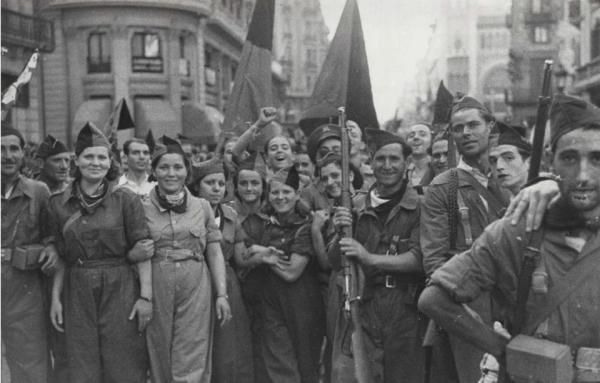
Both Germany and Italy began assisting the side of the nationalists. Mussolini and Hitler both supported the fascist elements of the nationalist movement whilst also opposing much of the socialist, Marxist, Stalinist and anarchist sects of the republican movement. Specifically, Hitler wanted to create an ally south of France in the event that France acted upon his planned annexations of Austria, Czechoslovakia and Poland. One of the first key operations was helping General Francisco Franco, a key leader of the nationalist movement and commander of the elite and brutal colonial Moroccan forces, bring his troops out of Morocco and across the strait of Gibraltar. However, this, as well as many other actions taken by German and Italian forces, was in violation of the Non-Intervention Committee of 1936, organised by the British and French which aimed to stop intervention by foreign powers in the Spanish Civil War. Neville Chamberlain, the Prime Minister of the United Kingdom following Stanley Baldwin’s resignation in 1937, especially prioritised Italy in the agreement, as he saw keeping Mussolini on side as incredibly important. However, as the war continued, Italy, Germany and the Soviet Union consistently violated the Committee ruling. France also was prone to violating it from time to time.
A leaky dam, better than no dam at all.
Anthony Eden, British Foreign Secretary (1935-1938)

Specifically, Soviet intervention on the side of the republicans came at a price, forcing communist voices, especially those who were pro-Stalin, to become more influential in the movement, enabling the nationalists to decry that the Republic was nothing more than a Bolshevist movement set on destroying Spain. This further envigorated the firmly anti-socialist Germany and Italy to continue their support for Spain, which also helped their relationship. One notable instance of assistance was at the bombing of Guernica during a northern Campaign.
Guernica was an old town in North Spain with, at the time, a population of 7,000 people. At around 4:30 in the afternoon on the 26th of April 1937, Luftwaffe and Italian planes blotted out the Sun as the whistling of bombs echoed through the streets. For an hour and a half, Italian and German planes flew over and bombed the town, killing between 170 and 300 people. The indiscriminate nature of the attack caused the bombing to become a symbol of fascist terror. This event was immortalised by Pablo Picasso in one of his most well-known works, simply titled ‘Guernica’. Picasso was in Paris at the time of the German Occupation of France. When a German Officer came into his apartment, he spotted ‘Guernica’. The officer asked Pablo, “Did you do that?” to which Pablo replied, “No, you did.”

The outcome of the Spanish war was settled in London, Paris, Rome, Berlin – at any rate not in Spain.
George Orwell in ‘Looking Back on the Spanish War‘
The war would continue for another 3 years. Whilst Franco, who later became the leader of Spain from 1939 until his death in 1975, was not a fascist, he practiced a very authoritarian and dictatorial government, incorporated much fascist symbolism into his regime and did appreciate Hitler. Spain never formally joined the Axis powers and were never involved in direct fighting in the Second World War, with only limited logistical support given to the Germans. As Spain was otherwise occupied, Hitler turned his attention elsewhere, specifically to the far east and the Empire of Japan.
After the First World War, Imperial Japan had claimed many of the former German territories of the Pacific Ocean. However, by the 1930s, the Great Depression had caused a global trade halt, key to the economy of the island nation of Japan. After a far-right military faction instigated a false flag operation, the Japanese conquered Manchuria, an eastern Chinese province, and established the puppet state of Manchukuo, which was also created to establish dominance against the Soviet East. However, this conquest was done without oversight from the civilian government, undermining their influence in Japanese governance.
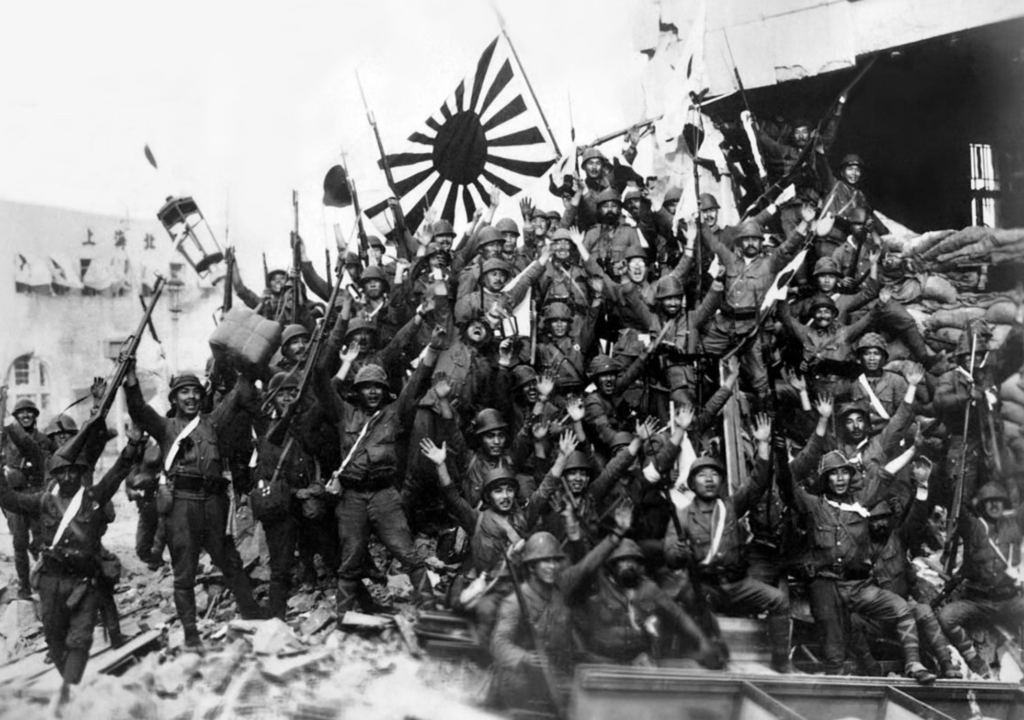
In February of 1936, the Kōdōha faction, or the Imperial Way, in the Japanese Military had attempted to organise a coup by murdering a series of government and police officials. Once the uprising was suppressed, the faction purged and the partakers executed, the Japanese military began exerting more control over the civilian government, weaponising their role in the suppression of the coup in order to gain more influence. They pressured the new Prime Minister, Kōki Hirota, about his cabinet appointments and demanded that only active duty officers could serve in ministerial defence positions, a role only reserved for retired officers before this. This meant that a defence Minister could resign and refuse to appoint a successor and a government would bend to their will, shown when Hisaichi Terauchi resigned as Minister of War when Hirota refused to dissolve the Japanese Parliament, the Diet. Whilst Hitler believed that he could secure neutrality with the British, he believed that an alliance with the Japanese would be more prudent, as he thought that Japan was under threat from a Jewish plot and that securing them as an ally would stop the Jews from whatever plans he believed they had.
It was not in the interests of Great Britain to have Germany annihilated, but primarily a Jewish interest. And to-day the destruction of Japan would serve British political interests less than it would serve the far-reaching intentions of those who are leading the movement that hopes to establish a Jewish world-empire.
Hitler in Mein Kampf
Both Japan and Germany also shared a hatred of communism, demonstrated through their war plans against the Soviet Union, further strengthening Hitler’s want for an alliance. Hokushin-ron, the Japanese doctrine, and Lebensraum, the German doctrine, both stated that expansion into the Soviet Union was inevitable. Soon, the pair agreed upon and signed the Anti-Comintern Pact, an agreement to undermine the Communist International, a Soviet international body committed to global revolutionary socialism. The Nazis officially qualified the Japanese as those it considered to be honorary Aryans. Yasuhito, Prince Chichibu, brother of incumbent Emperor Shōwa (Hirohito), visited the Nazi Party Congress, more commonly known as the Nuremberg Rally, of 1937. Mussolini later signed the pact, one of the first stepping stones in the creation of the Axis Powers, that would come to terrify the world in years to come.
