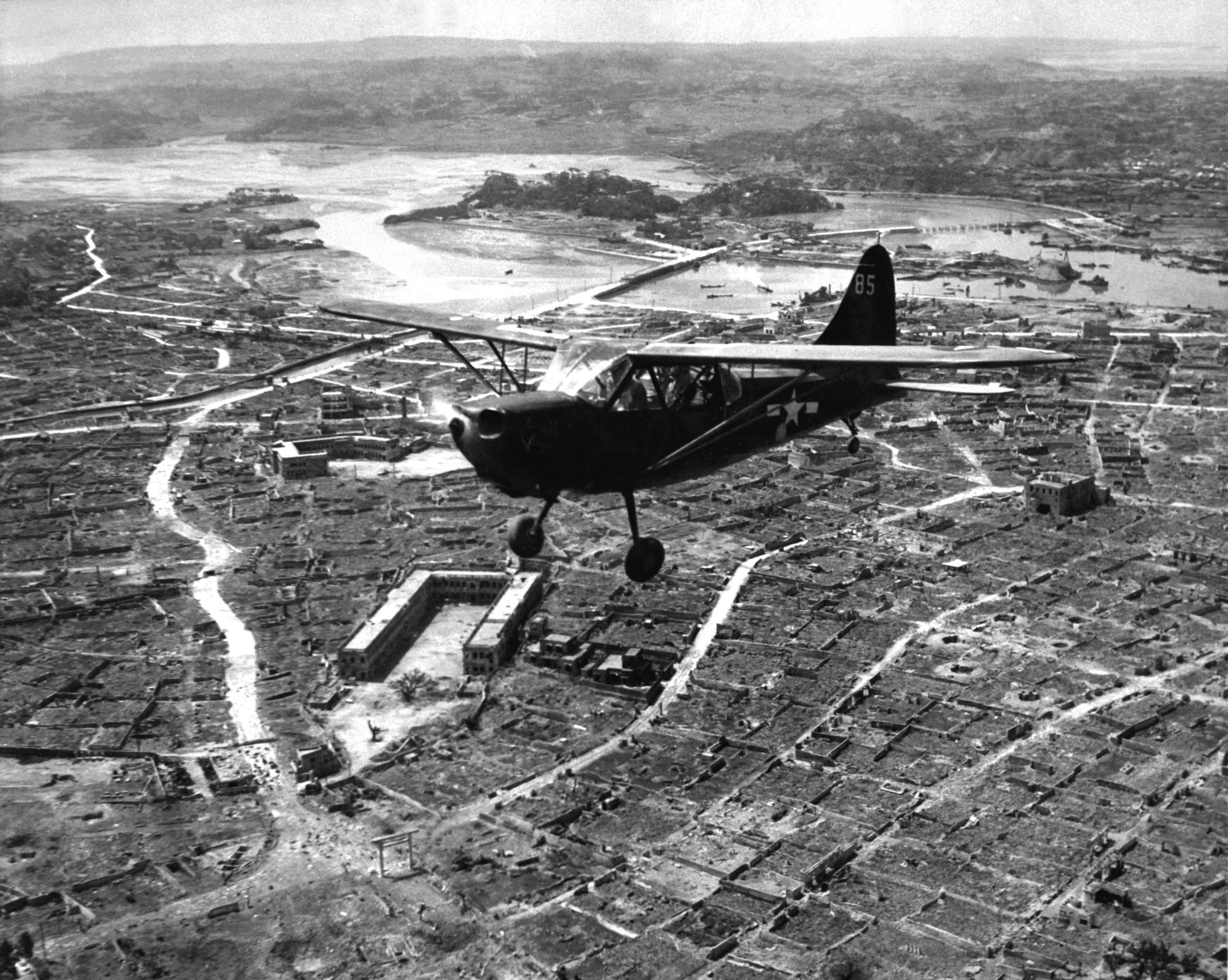
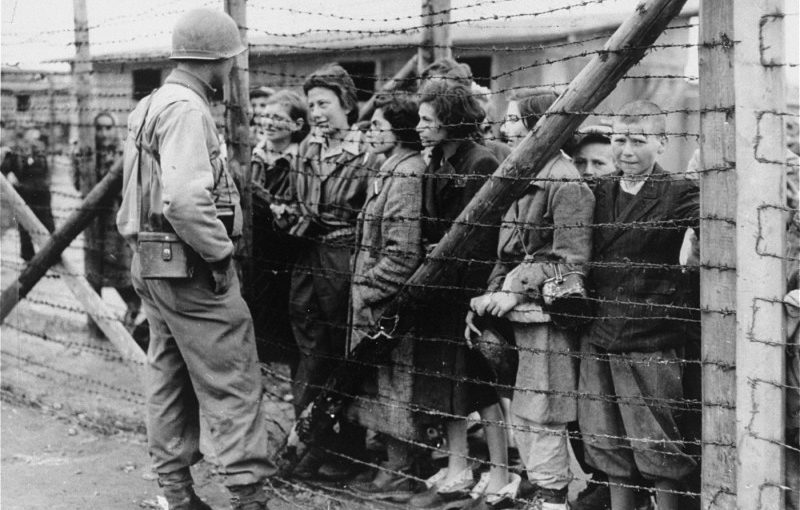
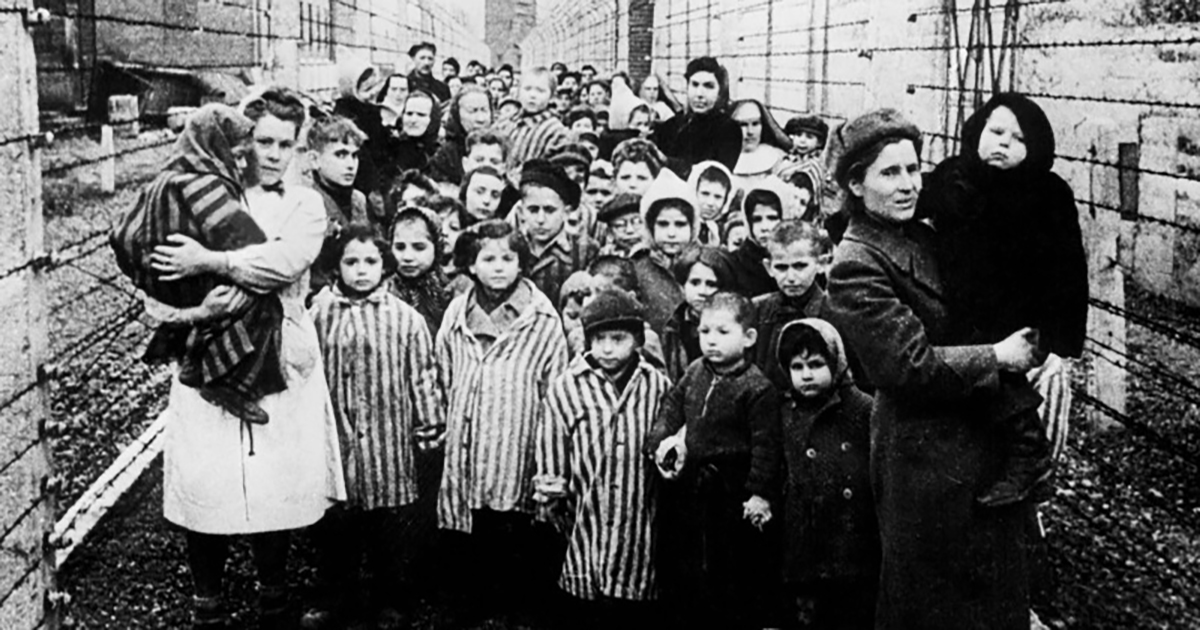
After the end of World War 2, the 4 major powers that defeated the Nazis, the Americans, French, British and Soviets gathered together to discuss the matter of Germany. The powers feared that if Germany were to be reunited, at least immediately, the ideas of Nazism and Fascism could make a rise once more. An idea was proposed, that Germany be divided into West and East as a temporary measure, the West being occupied by the USA, UK and France and the East being controlled by the USSR.
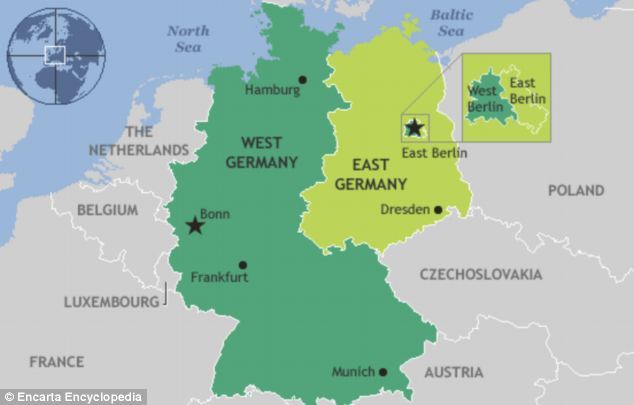
However, soon the question of Berlin came up. Being around 200 miles into East Germany, logic dictated that Berlin fell into the hands of the Soviets. However, whoever controlled the capital practically controlled the country so a subdivision was set up, wherein France, Britain and America made the Western side of Berlin a part of West Germany, whilst the Eastern half was controlled by East Germany.
A contemporary map of post-war Germany
Soon, this temporary measure became somewhat permanent. The city of Berlin soon became divided into East Berliners and West Berliners. The West promoted the values of the countries occupying such as democracy and liberal market economies whilst the East promoted communism, not just in East Germany but other countries surrounding themselves. Trade from West to East was banned and a practically impenetrable border was made across East Germany and Czechoslovakia.
From Stettin in the Baltic to Trieste in the Adriatic, an iron curtain has descended across the Continent. Behind that line lie all the capitals of the ancient states of Central and Eastern Europe. Warsaw, Berlin, Prague, Vienna, Budapest, Belgrade, Bucharest and Sofia, all these famous cities and the populations around them lie in what I must call the Soviet sphere, and all are subject in one form or another, not only to Soviet influence but to a very high and, in many cases, increasing measure of control from Moscow. Athens alone — Greece with its immortal glories — is free to decide its future at an election under British, American and French observation.
Winston Churchill speaking at a Midwestern College, 1946
Whilst East Germans weren’t strictly allowed to leave East Germany to West Germany, the East Berliners, could simply walk across the road to West Berlin and were allowed to move from there. By 1961, 3.5 million people had followed this practice. This open border posed a problem to the Soviets. The Soviets had been portraying the West as a continuation of Nazism and their citizens were soon finding that wasn’t the case.
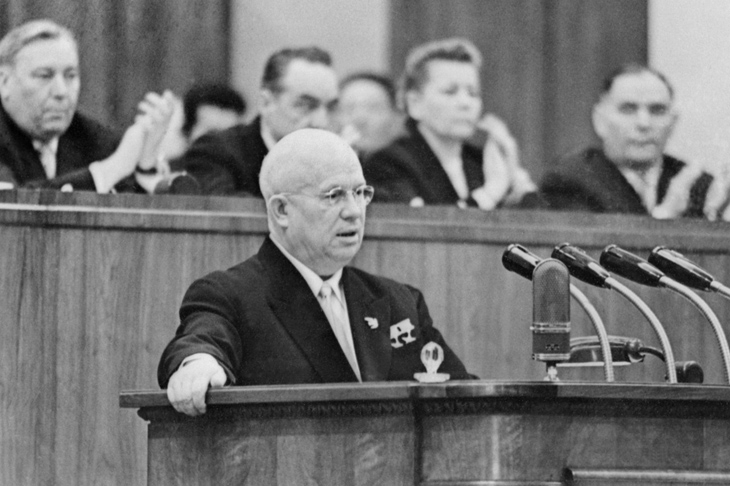
Whilst the Western Allies were promoting the reconstruction of Germany after the war, Soviets were extracting resources as war reparations, making the economic situation dire. Many East Berliners sought jobs in the West due to the more stable currency, whilst West Berliners bought products for cheaper prices in the East. Whilst education and healthcare were free in the East, consumer goods, salaries and general freedoms were better in the West, in no small part to the Eastern Secret police, called the Stasi, who would report on and arrest anyone accused of Anti-Soviet behaviour. Eventually, the General Secretary of the Soviet Union, Nikita Khrushchev had enough of the emigration.
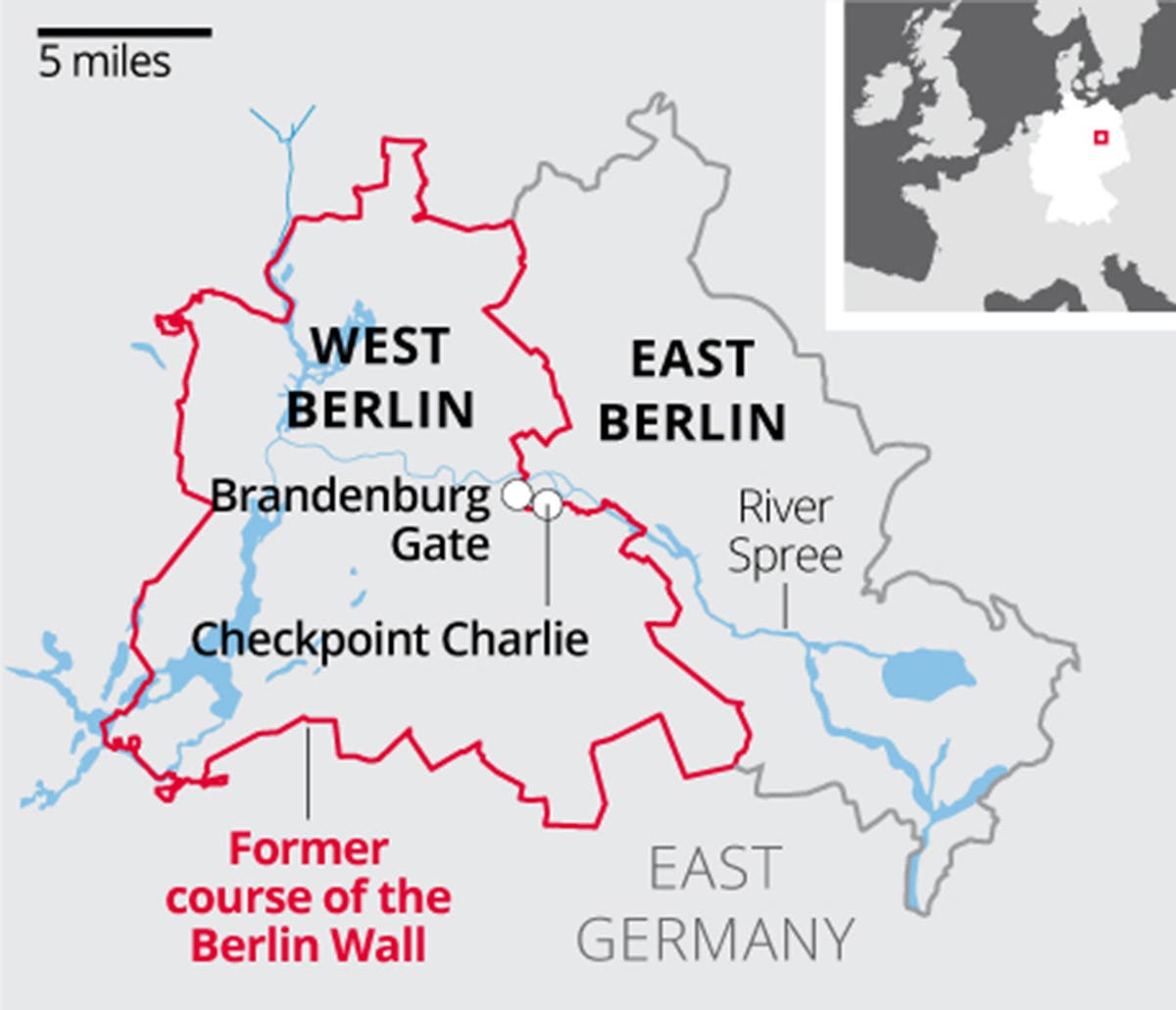
On August 13th, 1961, Berliners woke up to a large fence surrounding West Berlin. With 43km (27 miles) across Berlin and a further 112km (69.5 miles) in East Germany, Berlin was permanently divided. Before further construction could continue, some chose to leap over the barbed wire into the West but, before long, the Berlin Wall was fully constructed.
Map of the Berlin Wall
By 1975, large concrete barricades, rising to 3.6m (11ft) in height replaced the fences, with a smooth pipe to prevent climbing on the West Side. 302 watchtowers were set up in a new area called the Death Strip, a 100m (328ft) wide area in between the main wall and a less developed wall on the Eastern side. This area was littered with landmines, guard dogs and spike traps. Families were divided, friends separated and the ultimate symbol of the Eastern Bloc had been built, an authoritarian impassible wall that represented everything the West believed about Communism.
A photo of the Death Strip in Berlin
Two thousand years ago the proudest boast was “civis Romanus sum.” Today, in the world of freedom, the proudest boast is “Ich bin ein Berliner.”
[…]
There are many people in the world who really don’t understand, or say they don’t, what is the great issue between the free world and the Communist world. Let them come to Berlin. There are some who say that communism is the wave of the future. Let them come to Berlin. And there are some who say in Europe and elsewhere we can work with the Communists. Let them come to Berlin. And there are even a few who say that it is true that communism is an evil system, but it permits us to make economic progress. Lass’ sie nach Berlin kommen. Let them come to Berlin.
Freedom has many difficulties and democracy is not perfect, but we have never had to put a wall up to keep our people in, to prevent them from leaving us. […] While the wall is the most obvious and vivid demonstration of the failures of the Communist system, for all the world to see, we take no satisfaction in it, for it is, as your Mayor has said, an offense not only against history but an offense against humanity, separating families, dividing husbands and wives and brothers and sisters, and dividing a people who wish to be joined together.
What is true of this city is true of Germany–real, lasting peace in Europe can never be assured as long as one German out of four is denied the elementary right of free men, and that is to make a free choice. [This] generation of Germans has earned the right to be free, including the right to unite their families and their nation in lasting peace, with good will to all people.
[…]
Freedom is indivisible, and when one man is enslaved, all are not free. When all are free, then we can look forward to that day when this city will be joined as one and this country and this great Continent of Europe in a peaceful and hopeful globe. When that day finally comes, as it will, the people of West Berlin can take sober satisfaction in the fact that they were in the front lines for almost two decades.
All free men, wherever they may live, are citizens of Berlin, and, therefore, as a free man, I take pride in the words “Ich bin ein Berliner.”
John F. Kennedy speaking at the Rudolph Wilde Platz in Berlin, 1963
JFK making his famous “Ich bin ein Berliner” speech, 1963
By 1953, Cuba was politically unstable. When Spain first established control over the island in the early 16th century, it created a society structured around hierarchy and exploitation. At the top were Spanish-born elites, known as Peninsulares, while those of Spanish descent born on the island, Creoles, occupied a secondary position. Beneath them were enslaved Africans and their descendants, whose forced labour became central to Cuba’s plantation economy. Although the island’s indigenous population declined drastically following European arrival, Cuban society became increasingly diverse, shaped by a mixture of African, European, and mixed-race communities.
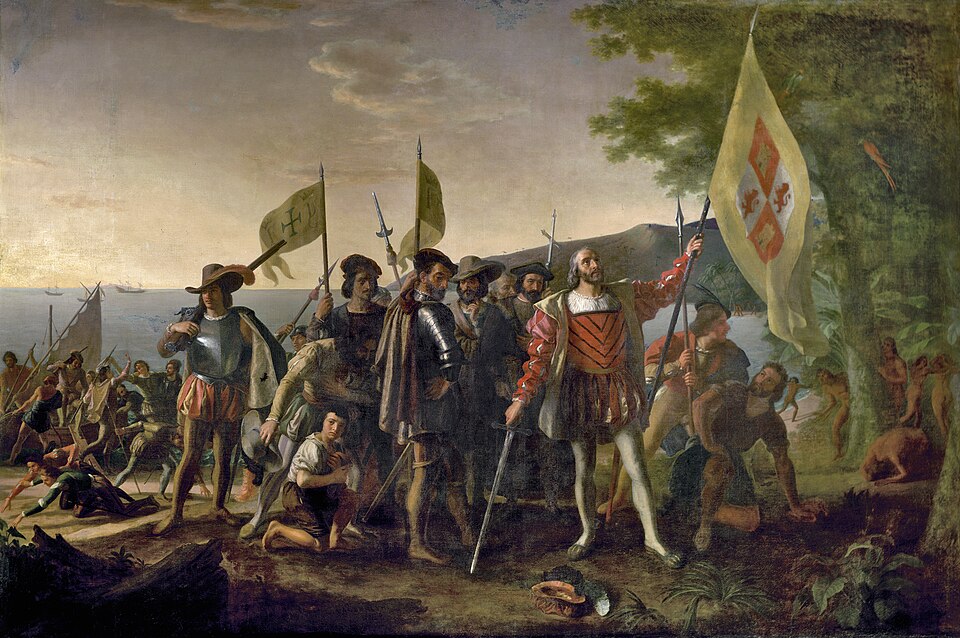
A photo of Christopher Columbus landing in Central America in 1492
By the 19th century, tensions within this system had begun to grow. Wealth and power remained concentrated in the hands of a small elite, while many Cubans, particularly in rural areas, lived in poverty. At the same time, a distinct Cuban identity was beginning to emerge, especially among Creole elites who resented both Spanish control and their exclusion from the highest levels of authority. These tensions would eventually give rise to a series of independence movements, the most significant of which was led by José Martí. Martí, a writer, political thinker, and revolutionary, envisioned an independent Cuba free not only from Spanish rule but also from foreign domination. In 1895, he helped launch a new war of independence against Spain. Although Martí was killed early in the conflict, the war continued, gradually weakening Spanish control over the island.
By the late 1890s, Spain was struggling to maintain its hold on Cuba, both militarily and economically. In 1898, the conflict took a decisive turn when the United States intervened following the explosion of the USS Maine in Havana harbour. The cause of the explosion remains disputed, but it was widely blamed on Spain in the American press, creating public pressure for war. Under President William McKinley, the United States declared war on Spain, quickly defeating Spanish forces in what became known as the Spanish-American War. Although Cuban rebels had fought for independence for years and done most of the effort, it was the American intervention that ultimately brought the war to a close.
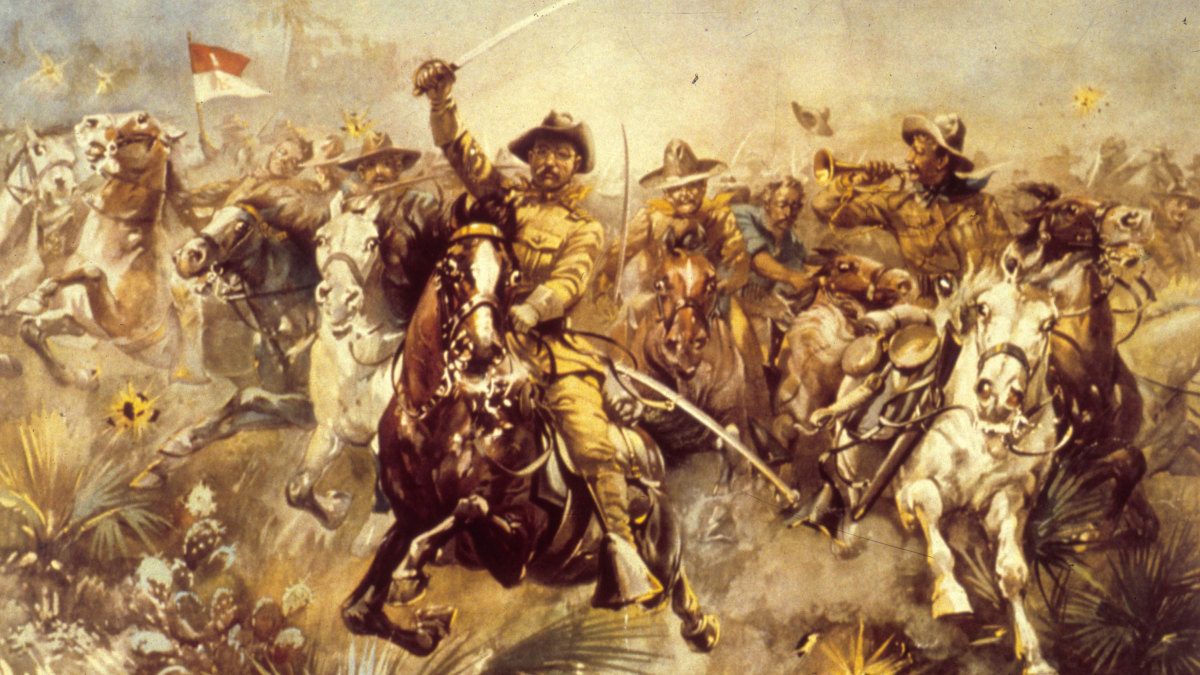
A painting of Theodore Roosevelt, then assistant Secretary of the Navy, charging into battle in Cuba
In its aftermath, Spain relinquished control of Cuba, but full independence did not immediately follow. Instead, the United States established a military government on the island and retained significant influence over its future. This influence was formalised in 1901 through the Platt Amendment, which granted the United States the right to intervene in Cuban affairs and limited Cuba’s sovereignty in foreign policy. It also allowed the establishment of a permanent American naval base at Guantánamo Bay. While Cuba was formally independent by 1902, in practice it remained heavily dependent on and influenced by the United States.
Economic ties deepened this relationship. American businesses invested heavily in Cuba, particularly in the sugar industry, which became the backbone of the island’s economy. By the early 20th century, a significant portion of Cuba’s land, infrastructure and key industries were controlled by U.S. companies. While this brought periods of economic growth, it also created a system that was highly dependent on American markets and vulnerable to external shocks. These weaknesses became painfully clear during the Great Depression. As demand for Cuban sugar collapsed, unemployment soared and living standards declined sharply, especially in rural areas. Economic hardship quickly translated into political unrest.
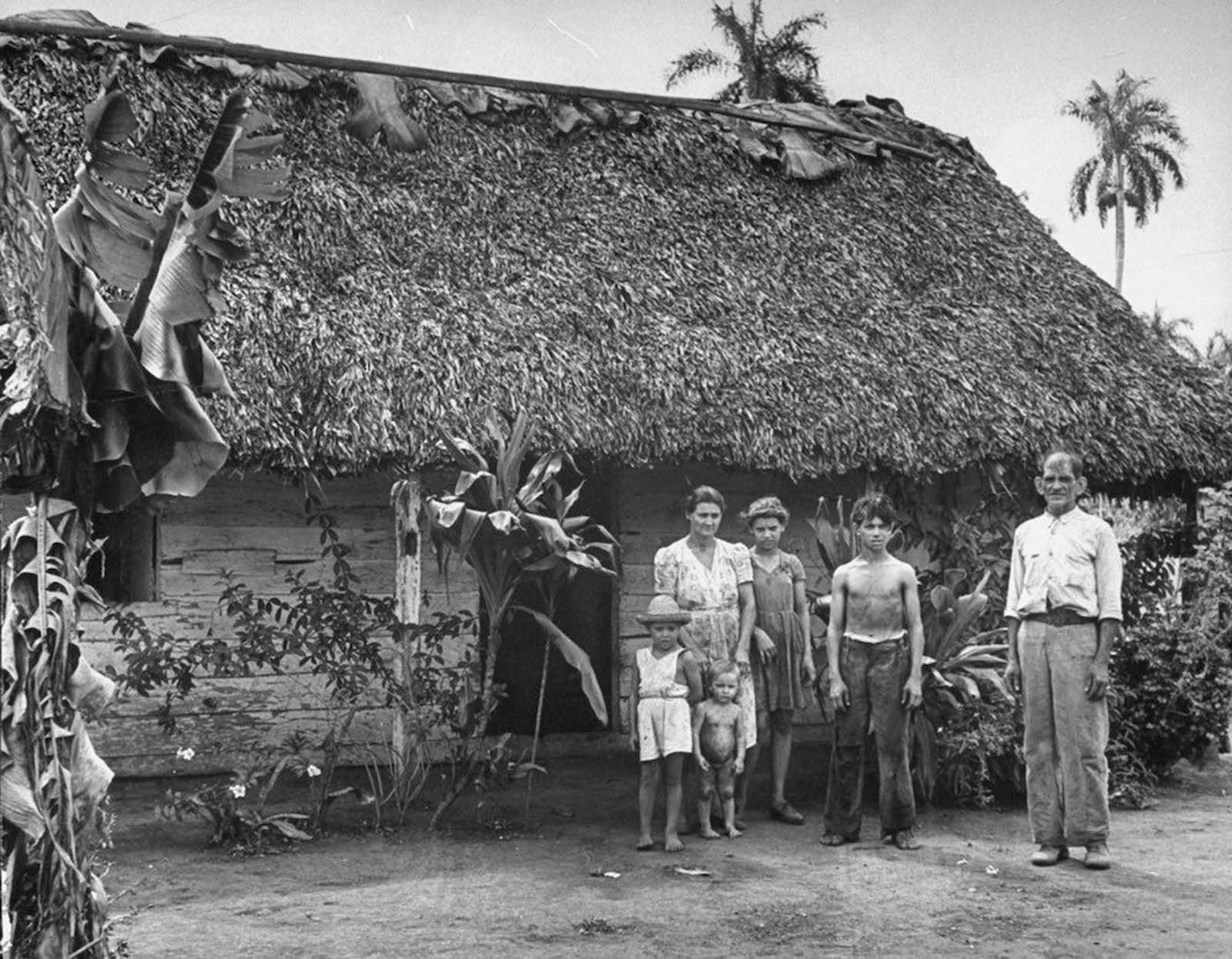
A family of rural cane cutters during this period
By the early 1930s, opposition to the government of pro-American Gerardo Machado had reached a breaking point. Machado’s increasingly authoritarian rule, combined with the economic crisis, sparked widespread protests, strikes and violence across the island. In 1933, his government collapsed under mounting pressure from America, who were losing confidence in his leadership. What followed was not a stable transition, but a period of political turmoil, marked by rapidly changing governments and competing factions struggling for control. Out of this instability emerged a new and influential figure, Fulgencio Batista.
Initially rising through the ranks as a military officer during the so-called “Sergeants’ Revolt,” Batista became the dominant figure behind the scenes, exerting control over the Cuban government throughout the 1930s and 1940s. Although Cuba experimented with constitutional government during this period, political corruption, economic inequality and social unrest remained persistent problems. In 1952, Batista seized power directly in a military coup, cancelling elections and establishing a dictatorship. His regime maintained close ties with the United States and oversaw continued economic growth in some sectors, particularly in urban areas such as Havana. However, this growth was unevenly distributed. Large sections of the population, especially in rural regions, continued to live in poverty, while political repression increased.
An image of Batista in 1957
The […] most disastrous of our failures, was the decision to give stature and support to one of the most bloody and repressive dictatorships in the long history of Latin American repression. Fulgencio Batista murdered 20,000 Cubans in seven years – a greater proportion of the Cuban population than the proportion of Americans who died in both World Wars, and he turned Democratic Cuba into a complete police state – destroying every individual liberty. Yet, [the United States] publicly praised Batista – hailed him as a staunch ally and a good friend – at a time when Batista was murdering thousands, destroying the last vestiges of freedom, and stealing hundreds of millions of dollars from the Cuban people, and we failed to press for free elections.
John F. Kennedy’s speech at a Democratic Party dinner, 1960
Batista’s regime radicalised many among the Cuban populace. Confidence in democratic institutions was severely undermined and they began to believe that American foreign policy regarding anti-Communism had been prioritised over the needs of the Cuban people. One of the radicalised individuals was a young lawyer by the name of Fidel Castro. Castro, who had previously ran for political office and legally challenged Batista, had largely given up on the rule of law and believed that only an armed revolution could stop him. Castro was not originally a communist or particularly anti-American by the beginnings of his political activity, having hired multiple anti-communists in his government when he rose to power. However, these people were eventually sidelined as his regime progressed.
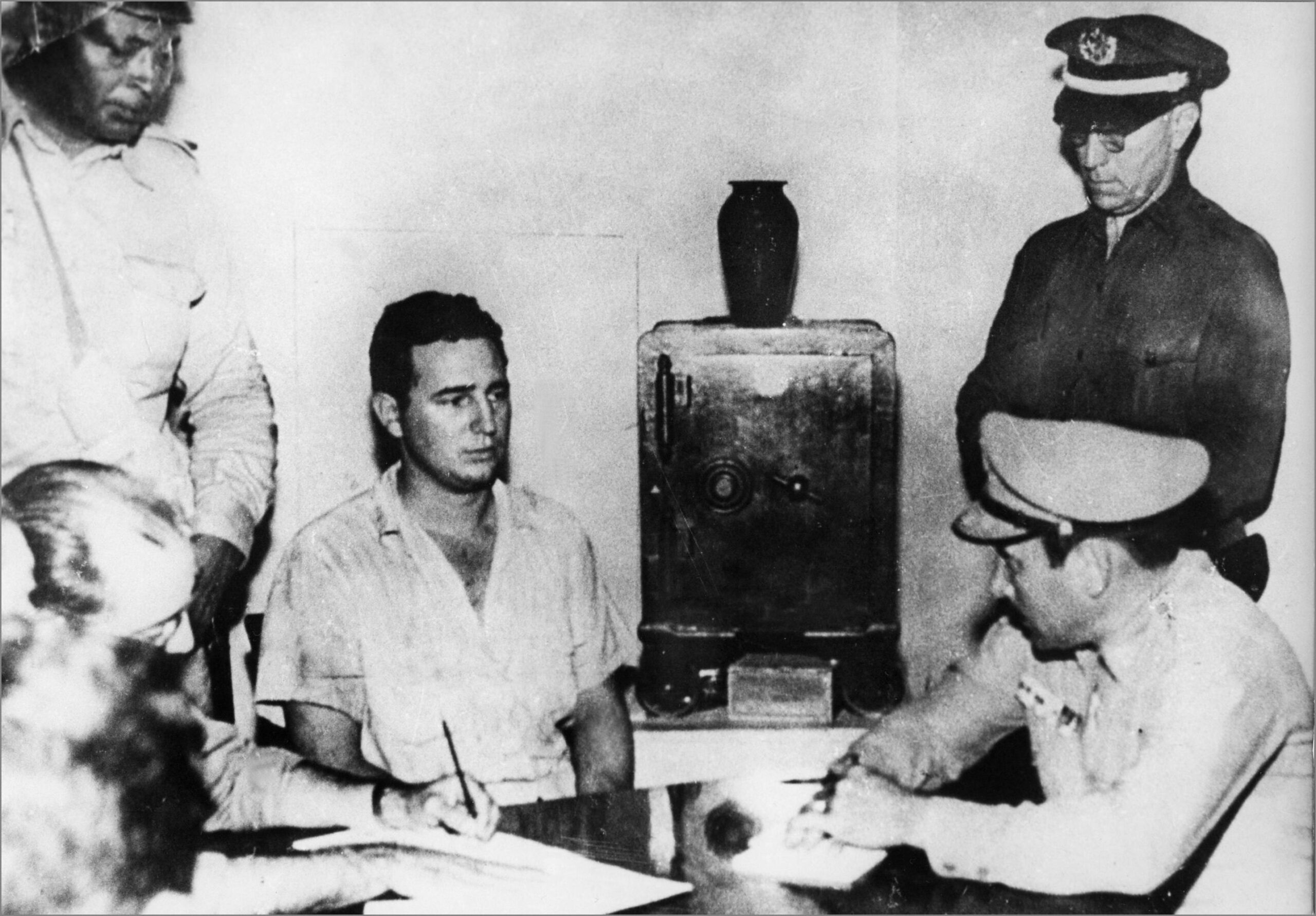
Castro under arrest after the 1953 Moncada Attack
In July of 1953, Castro led over 160 people in an attack on the Moncada army barracks in Santiago de Cuba, in an attempt to enact a mass popular uprising. However, this was an abject failure, with many of the rebels being captured, tortured and executed. Both Castro and his brother were arrested, but he managed to use the trial as a platform for his ideology and the platform that would build the foundations for the later revolution. The pair were released in May 1955 and founded the July 26th Movement, named after the date of the Moncada attacks, before retreating to Mexico to regroup and reorganise. Here, they met Che Guevara.
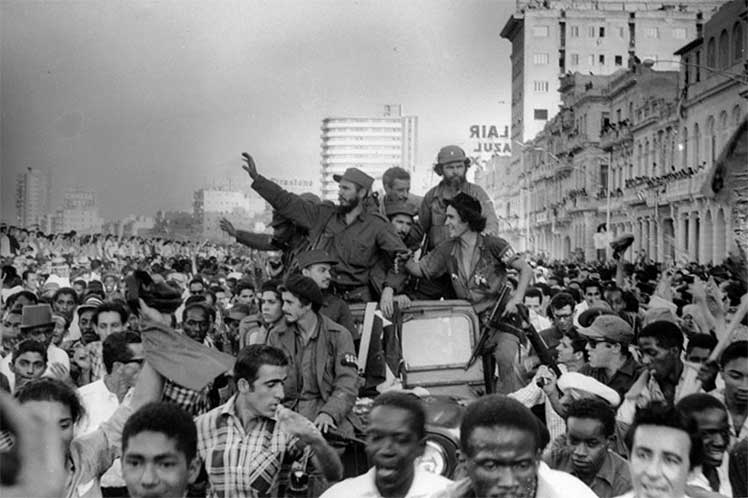
A former medical student, Ernesto “Che” Guevara de la Serna believed that much of the poverty, hunger and disease that he had witnessed was a product of a capitalist system of exploitation by the United States against Latin America, an ideology that was solidified after the CIA assisted overthrow of Guatemalan President Jacobo Árbenz. The Castro brothers, Guevara and some 80 revolutionaries crowded onto a yacht and set sail to Cuba in 1956, where they were ambushed by Cuban forces. A handful of survivors retreated into the mountains. From here, the plan for the revolution was devised, where it would be split between guerilla fighting in the mountains and an insurgency in urban areas. Eventually, a combination of military defeats, loss of public support and the backing out of elites and the US led to Batista fleeing the country in early 1959. Castro and Guevara’s forces entered Havana largely unopposed due the collapse of the Cuban government.
Castro arriving in Havana
Whilst there was a great demand for change within Cuba, the support for Castro’s movement in particular was not universal. It was undecided what was to come post-Batista amongst the Cuban populace, which Castro believed could become a breeding ground for a US-backed counter revolution, ideas which were reinforced by the CIA backed failed Bay of Pigs invasion in 1961. As a result of this belief even prior to the invasion, he suppressed the vast majority of political opposition whilst pursuing closer diplomatic and economic ties with the Soviet Union, which led to economic sanctions by the US. Using their economic backing from the USSR, Castro advanced social reforms in education and healthcare, but many of these programmes became strained following the dissolution of the USSR in 1991. Despite this, the US sanctions on Cuba have persisted, despite the near yearly declarations by the UN to lift the sanctions. Many have described the vast poverty in Cuba caused by the sanctions as a humanitarian crisis.
By 1953, Joseph Stalin had dominated Soviet politics for almost three decades. Rising from a relatively obscure revolutionary in the years before the Russian Revolution, he gradually consolidated power after the death of Vladimir Lenin in 1924, outmanoeuvring rivals such as Leon Trotsky, Grigory Zinoviev and Lev Kamenev until he emerged as the undisputed leader of the Soviet Union.
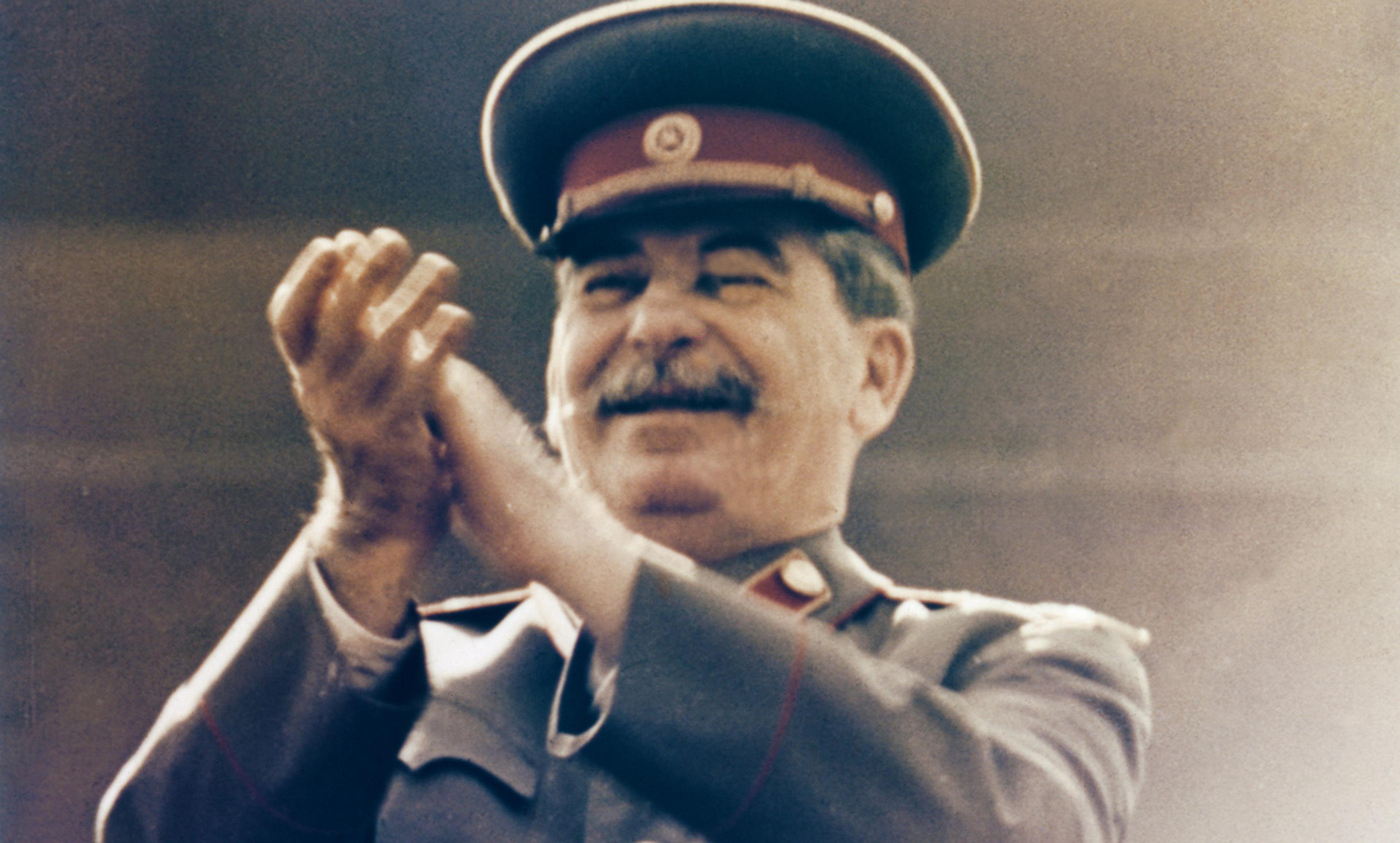
Stalin applauding at a parade
Under Stalin, the Soviet Union underwent a dramatic transformation. Through a series of ambitious Five-Year Plans, the country was rapidly industrialised, turning what had largely been an agrarian society into one of the world’s leading industrial powers. Massive factories, railways and infrastructure projects were constructed across the country, while collectivisation fundamentally reshaped Soviet agriculture. These policies helped lay the foundations for the Soviet Union’s emergence as a global superpower, but they came at an immense human cost. Millions died during famines, political repression and forced labour programmes, while entire communities were uprooted in the pursuit of economic and political objectives.
The Soviet victory over Nazi Germany in the Second World War further elevated Stalin’s status. To many Soviet citizens, he was the leader who had guided the country through its darkest hour and emerged victorious. Across the Soviet bloc, portraits of Stalin hung in factories, schools and government buildings, while state propaganda cultivated an immense personality cult around him. Criticism of the leader was unthinkable.
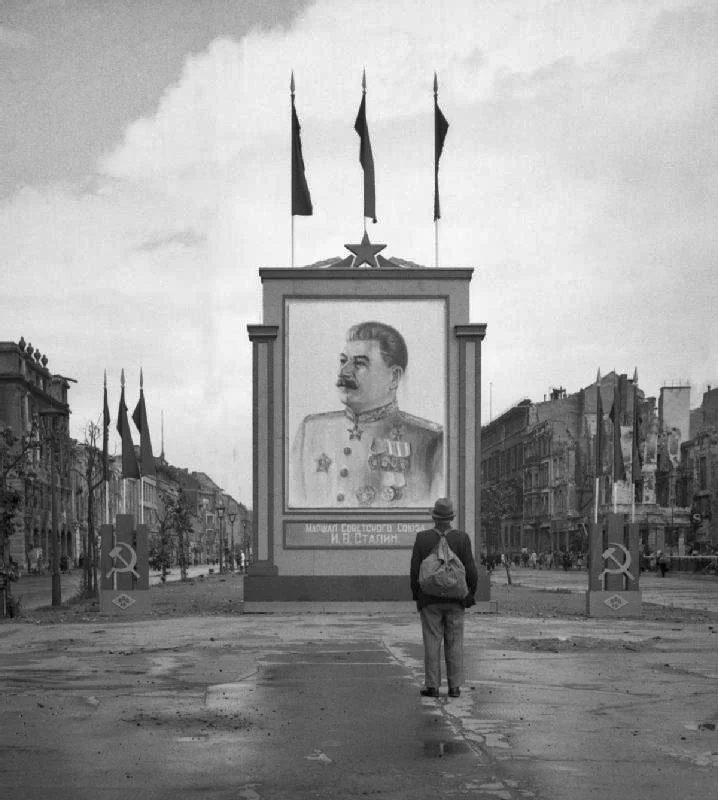
A portrait of Stalin in the centre of Berlin
Yet beneath this image of strength lay a system increasingly shaped by fear. Stalin’s distrust of both real and imagined enemies had fuelled the Great Purges of the 1930s, during which hundreds of thousands were executed and millions more were imprisoned in the Gulag system. Senior party officials, military commanders, intellectuals and ordinary citizens all lived under the constant threat of denunciation and arrest. Even members of Stalin’s inner circle understood that a single mistake could end their careers, their freedom or their lives.
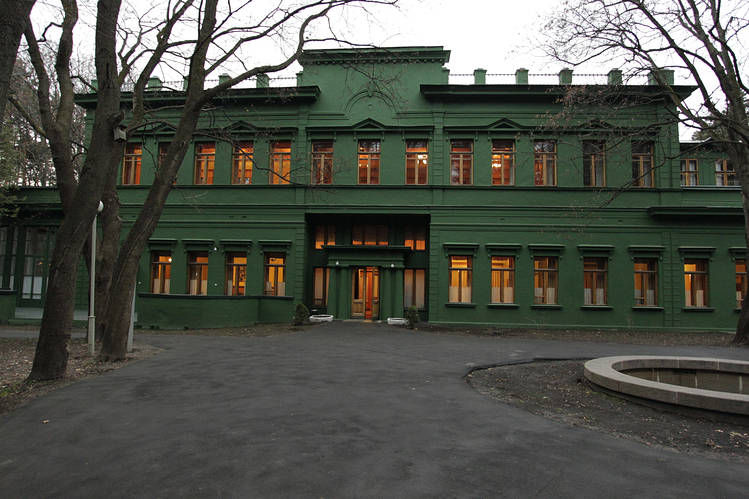
On the evening of 28 February 1953, Stalin invited several members of his inner circle to his dacha at Kuntsevo, west of Moscow. Among the guests were Lavrentiy Beria, Georgy Malenkov, Nikita Khrushchev and Nikolai Bulganin. Such gatherings were a regular feature of Stalin’s final years. The Soviet leader often kept his subordinates awake into the early hours of the morning, eating, drinking and discussing politics while they carefully navigated the dangers of displeasing one of the most feared men in the world. The meeting stretched late into the night. The guests eventually departed shortly after four o’clock in the morning on 1 March, leaving Stalin alone. Before retiring, he instructed his guards not to disturb him. This was not unusual. Stalin frequently worked irregular hours and expected complete obedience from those around him.
An image of Stalin’s Dacha
As the day progressed, however, something seemed wrong. Normally, Stalin would emerge from his rooms or summon staff at some point during the morning. This time there was only silence. The guards grew increasingly anxious but were reluctant to investigate. Years of Stalin’s rule had taught them that interrupting him without permission could have severe consequences. The hours passed. Afternoon became evening. Still there was no sign of movement from inside Stalin’s quarters. Shortly after 10 p.m., a member of staff noticed a light had come on in Stalin’s room. The guards took this as a sign that he was awake and hesitated to enter. When no further activity followed, concern finally overcame fear. One of the guards cautiously opened the door. The scene inside was alarming. Stalin was lying on the floor beside a table, partially paralysed and unable to speak.
The guards immediately informed senior Soviet officials. Beria, Malenkov, Khrushchev and others soon arrived at the dacha. Yet even then, precious time was lost. Some accounts suggest that Beria initially dismissed the situation, insisting that Stalin was merely asleep. Whether this was genuine misjudgement or political calculation remains one of the most debated questions surrounding Stalin’s final days. Doctors were eventually summoned, but they arrived many hours after Stalin had first collapsed. Their diagnosis was grim. The seventy-three-year-old Soviet leader had suffered a severe cerebral haemorrhage that had left much of his body paralysed. Over the following days, members of the leadership gathered around his bedside as millions of Soviet citizens remained unaware that the man who had ruled their country for a generation was dying. Ultimately, Stalin died on March 5th of 1953, leaving the Politburo without Stalin’s guidance, while Malenkov assumed the role of acting General Secretary. Whilst many were distraught by this, some saw an opportunity. Out of those, 3 members of the Politburo emerged from the power struggle, all vying for the top job.
Georgy Malenkov – Deputy Premier of the Soviet Union
A photo of Malenkov
A loyal Stalin lieutenant who had spent years climbing through the Communist Party bureaucracy, Malenkov had become one of the most influential men in the Soviet Union during the final years of Stalin’s rule. Calm, methodical and politically experienced, he initially appeared to have the strongest claim to leadership. In the days after Stalin’s death, he assumed several of Stalin’s government responsibilities and seemed destined to emerge as the new dominant figure.
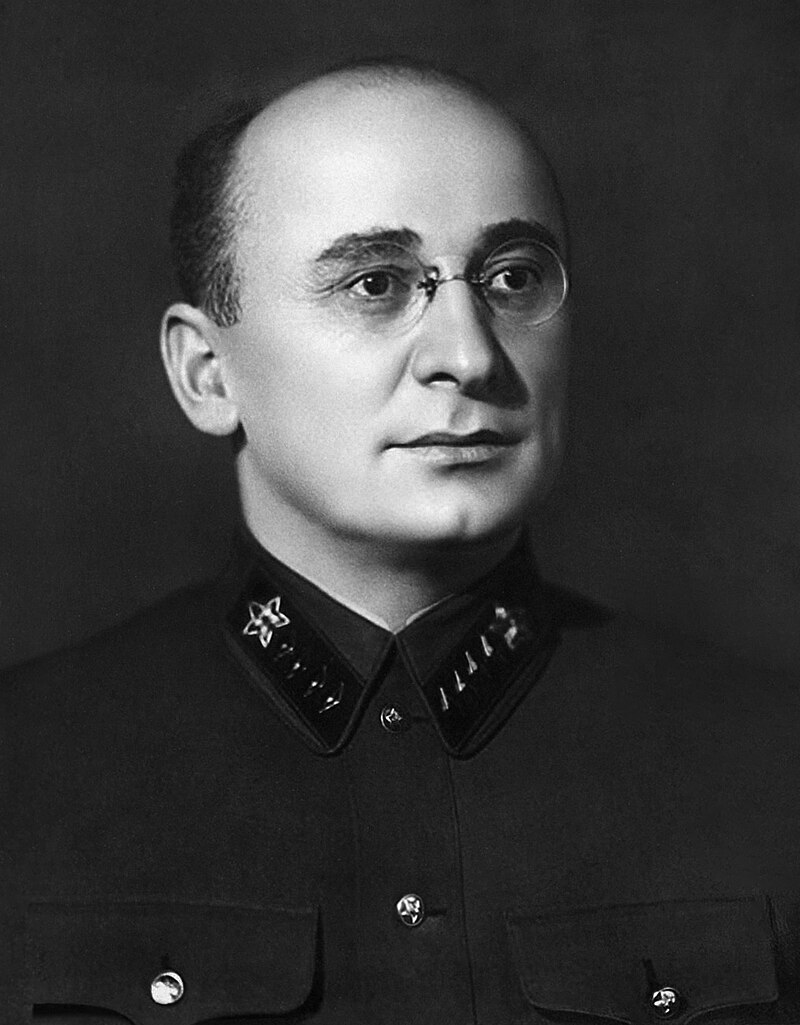
Lavrentiy Beria – Former Head of the NKVD
A photo of Beria
If Malenkov possessed legitimacy, Beria possessed power. As the longtime chief of Stalin’s security apparatus, Beria had overseen some of the darkest chapters of Stalin’s rule. Millions had passed through institutions under his control, from prisons and labour camps to the secret police itself. Feared throughout the Soviet Union, Beria understood the inner workings of the Soviet state better than almost anyone alive. With Stalin gone, many of his colleagues feared that Beria could use his influence over the security services to seize power for himself.
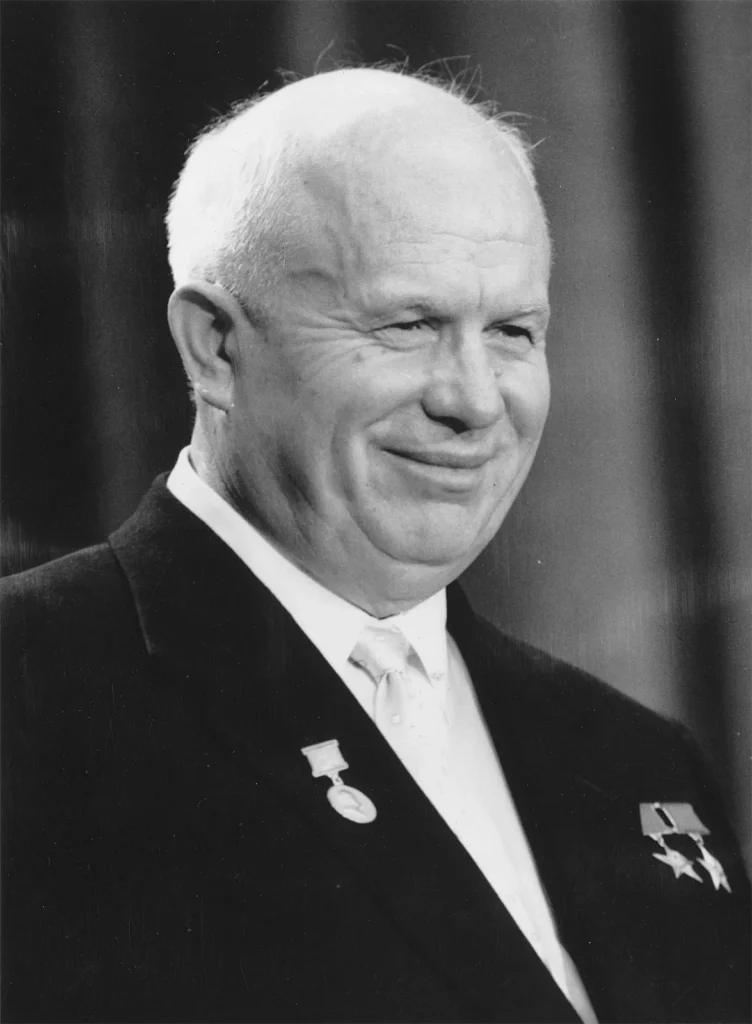
Nikita Khrushchev – Moscow Party Head
A photo of Khrushchev
Unlike Malenkov and Beria, Khrushchev was not initially seen as the frontrunner. A former miner who had risen through the Communist Party ranks, he had survived Stalin’s political purges through a mixture of loyalty, political skill and an ability to avoid attracting unwanted attention. Though often underestimated by his rivals, Khrushchev had spent years building relationships throughout the party. While others focused on titles and institutions, he quietly cultivated support among the officials whose votes would ultimately decide the future of the Soviet Union.
Rather than appoint a new supreme leader, the leading figures agreed to govern collectively. On paper, Georgy Malenkov emerged as the most powerful man in the Soviet Union. He became Chairman of the Council of Ministers, effectively the Soviet premier, while also briefly retaining a senior position within the Communist Party itself. Yet it was Lavrentiy Beria who appeared to hold the strongest hand. Within weeks of Stalin’s death, he had regained control over the Soviet security apparatus by merging the Ministries of Internal Affairs and State Security under his authority, in an organisation that eventually became the KGB. This gave him influence over the police, intelligence services and prison system. Many of his colleagues viewed this development with alarm. They had spent years watching Stalin use the security services to destroy rivals and now feared that Beria might do the same.
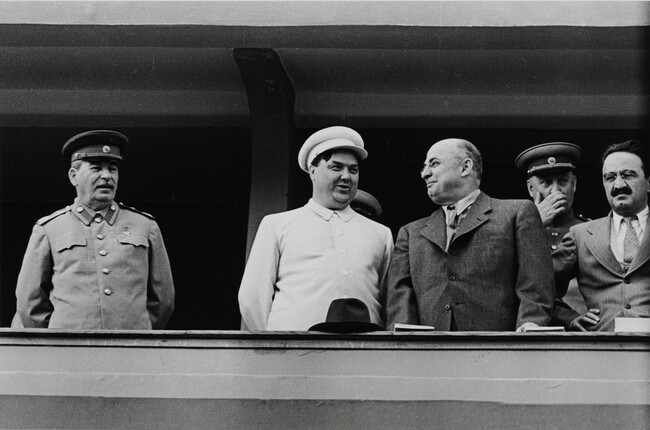
(Left to right) Stalin, Malenkov, Beria and Anastas Mikoyan at the Dynamo Stadium in Moscow
At first, Beria appeared surprisingly reform-minded. He oversaw a large amnesty that released over a million prisoners from Soviet camps and prisons, scaled back several ongoing political investigations and signalled support for a less confrontational foreign policy. He even suggested that East Germany might need a different political approach after growing unrest there. Whether these proposals reflected genuine reformist beliefs or an attempt to build political support remains a matter of debate among historians. Whatever his intentions, Beria’s actions frightened many members of the Soviet leadership. To some, he appeared to be positioning himself as a new Stalin: a man with control over the security services and the ability to remove opponents at will. Nikita Khrushchev in particular became convinced that Beria had to be stopped before he could consolidate power.
One man whose support Khrushchev desperately needed was Georgy Zhukov. Zhukov was one of the most celebrated military commanders in Soviet history, having played a central role in the defence of Moscow, the victory at Stalingrad and the capture of Berlin. Although Stalin had sidelined him after the war, his prestige within the armed forces remained immense. Khrushchev and his allies feared that Beria’s control of the security services made him too dangerous to confront without military backing. Zhukov agreed to support the conspiracy and organised loyal army officers to intervene when the moment came.
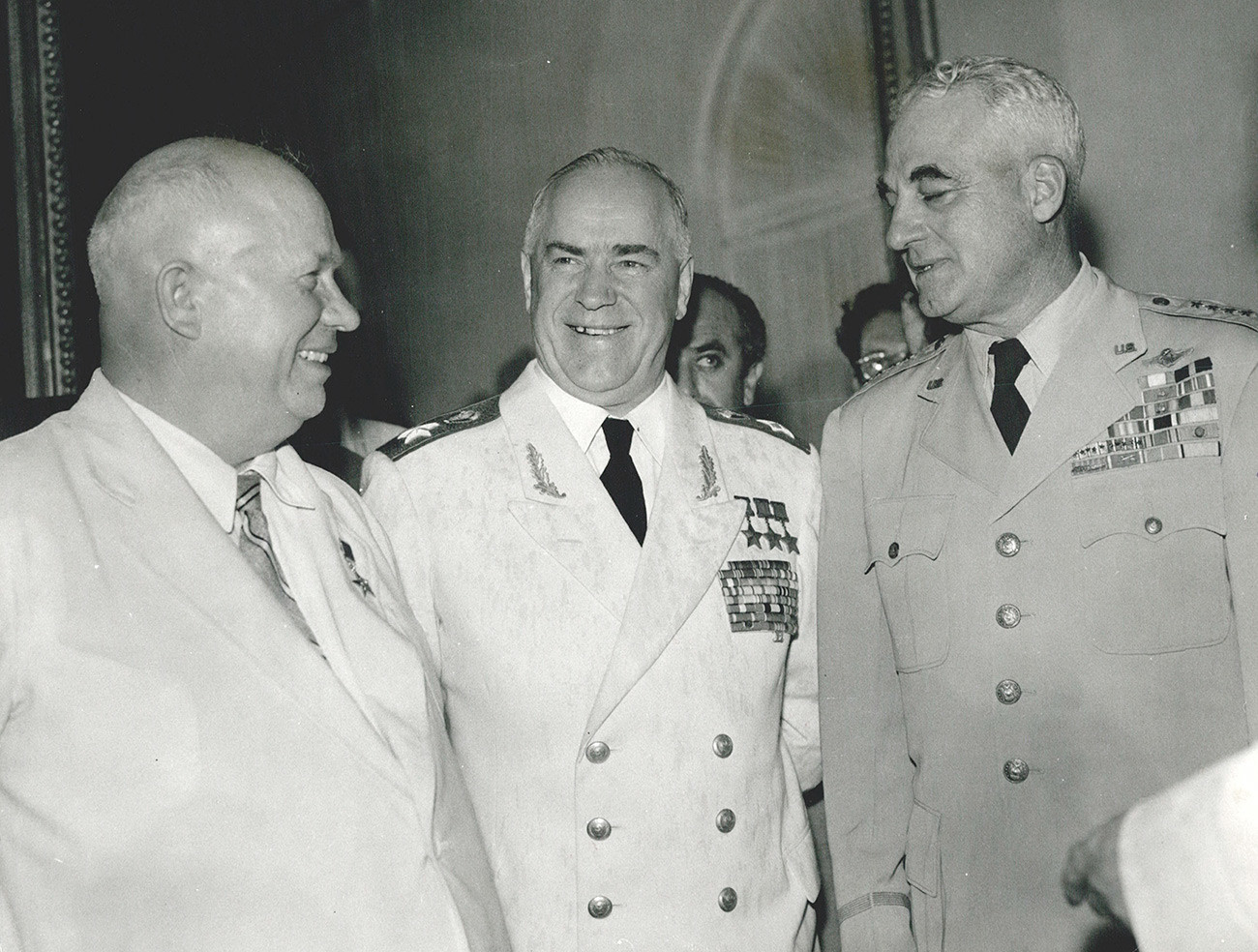
A photo of Khrushchev (left) and Zhukov (centre)
Unlike Beria, Khrushchev possessed neither a personal army nor direct control over the state bureaucracy. What he did have was influence within the Communist Party. Over the spring and summer of 1953, he quietly built support among senior party officials while working to convince Malenkov and others that Beria represented a threat to all of them. Even those who disliked Khrushchev often feared Beria more. The turning point came after the East German uprising of June 1953. As Soviet tanks restored order in East Berlin, concerns about Beria’s growing influence reached a breaking point. Khrushchev, Malenkov and several other senior leaders secretly agreed that he had to be removed. To ensure success, they enlisted the support of Marshal Georgy Zhukov and the Soviet military.
On 26 June 1953, Beria attended a Presidium meeting in the Kremlin believing it would be routine. Instead, Khrushchev and his allies launched a coordinated attack on him, accusing him of abusing his power and betraying the interests of the Soviet state. As the confrontation escalated, Zhukov’s military officers entered the room and placed Beria under arrest. The man who had spent years orchestrating arrests for others now found himself a prisoner. Beria was held in secret confinement while the new leadership consolidated its position. In December 1953, he was tried by a special tribunal on charges including treason, terrorism and counter-revolutionary activity. Found guilty, he was sentenced to death and executed shortly afterwards. His remains were cremated and buried in the woods.
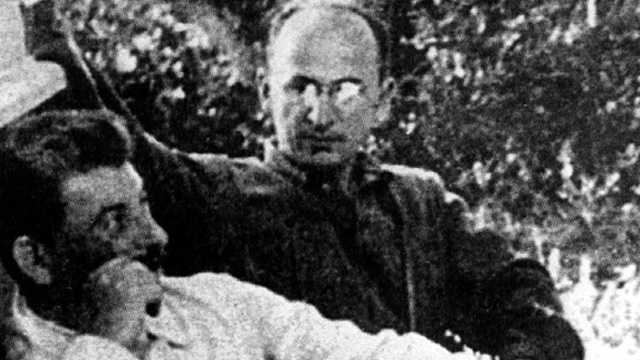
A photo of Beria and Stalin
Beria’s downfall fundamentally altered the balance of power. Although Malenkov remained premier, it was Khrushchev who emerged from the crisis in the strongest position. Over the next three years he steadily outmanoeuvred his remaining rivals, strengthened his influence within the Communist Party and ultimately established himself as the dominant figure in Soviet politics. By 1956, the struggle that began with Stalin’s death had effectively been decided.
With Beria gone, the struggle for power was far from over. Georgy Malenkov remained Chairman of the Council of Ministers and, on paper, appeared to be the most powerful man in the Soviet Union. Yet Khrushchev possessed something equally valuable: control over the Communist Party itself. As First Secretary, he spent the next two years carefully building support among regional party officials, promoting loyal allies and presenting himself as a practical reformer rather than an ambitious revolutionary. While Malenkov argued for greater investment in consumer goods and a reduction in military spending, Khrushchev gradually convinced many within the party that his rival lacked the strength and authority needed to lead the country.
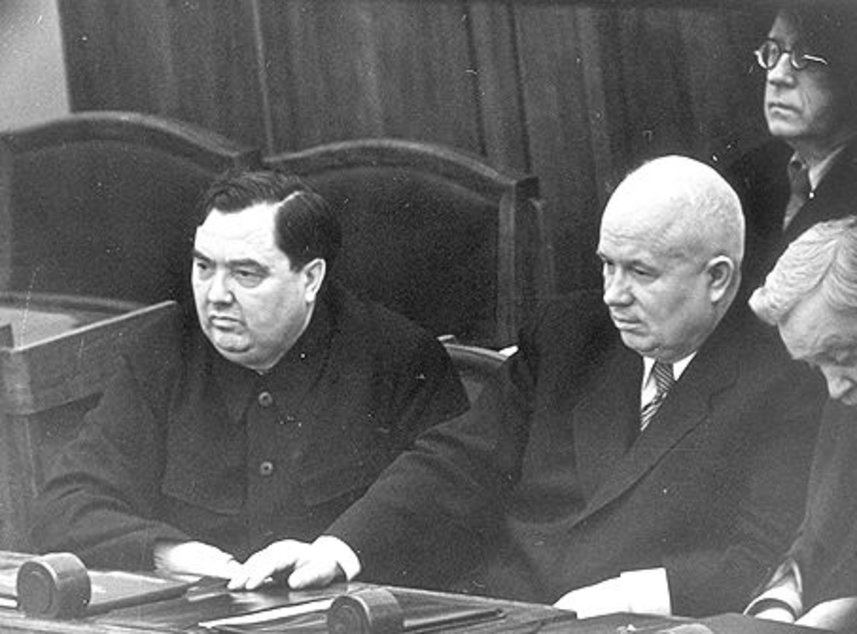
Khrushchev and Malenkov at a meeting of the Radmin
By early 1955, Khrushchev had gathered enough support to force Malenkov from the premiership. Although Malenkov remained in government for a time, his political influence had been shattered. For the first time since Stalin’s death, it was becoming clear who was emerging victorious from the succession struggle. Unlike Beria, who had attempted to seize power through control of the security services, Khrushchev had won through party politics, alliances and patient manoeuvring behind the scenes. Having secured his position, Khrushchev turned his attention to Stalin’s legacy. Many Soviet citizens still viewed Stalin as the great leader who had industrialised the country and led it to victory in the Second World War.
Yet within the party leadership there was growing unease over the scale of the terror that had accompanied his rule. Khrushchev believed that if the Soviet Union was to survive and prosper, it could no longer be governed through constant fear, purges and mass repression. In February 1956, at the Twentieth Congress of the Communist Party, Khrushchev delivered what became known as the Secret Speech. Speaking behind closed doors to party delegates, he launched a devastating attack on Stalin’s cult of personality, accusing the former dictator of abusing his power, ordering unlawful arrests and executions, and betraying the principles of Lenin. For many delegates, who had spent decades praising Stalin as an infallible leader, the speech came as a profound shock
A photo of Khrushchev at the Secret Speech
The consequences were enormous. Across the Soviet Union, statues of Stalin were removed, cities and institutions bearing his name were renamed, and countless political prisoners were released from labour camps. The secret police lost much of the unchecked power they had enjoyed under Stalin, while censorship and political repression were eased, though never abolished entirely. The process became known as De-Stalinisation, and it marked the most significant change in Soviet politics since Stalin himself had come to power. Yet Khrushchev’s reforms were not without limits. He never questioned the Communist Party’s monopoly on power and remained willing to use force when he believed Soviet control was threatened, as demonstrated by the crushing of the Hungarian Uprising in 1956. His vision was not to dismantle the Soviet system, but to reform it. He wanted a Soviet Union that remained communist, but one that was less dependent on terror and less dominated by the memory of a single man.
Stalin’s death marked the end of one of the most brutal chapters in Russian history. For nearly three decades he had dominated the Soviet Union through fear, transforming it into a global superpower while simultaneously overseeing purges, famines, labour camps and political repression on an immense scale. Yet his passing revealed a truth that dictators often try to conceal: no individual is indispensable. Within months, the men who had spent years obeying Stalin were fighting amongst themselves for control of the system he had built. Of all the contenders, Khrushchev emerged victorious. Through a combination of political skill, strategic alliances and careful timing, he defeated both Beria and Malenkov and established himself as the Soviet Union’s new leader. More importantly, he began the difficult process of dismantling the culture of fear that Stalin had created. The Soviet Union that emerged after 1953 was still an authoritarian one-party state, but it was no longer Stalin’s Soviet Union. The struggle that followed his death reshaped the Communist world, altered the course of the Cold War and demonstrated that even the most powerful dictatorship could change once the man at its centre was gone.
In the aftermath of World War 2, many of the war torn countries, such as France and Poland, began to turn to Communism in order to rebuild. Wanting to expand their influence, the Communist USSR, lead by Joseph Stalin, wanted to expand Communism all across Europe. Meanwhile, the United States opposed this, wanting more countries to embrace free market economies, capitalism and democracy. This lead to tensions rising between the two factions who were once allies against the Nazis. This divide between Western Capitalism and Eastern Communism was no clearer than in Greece.
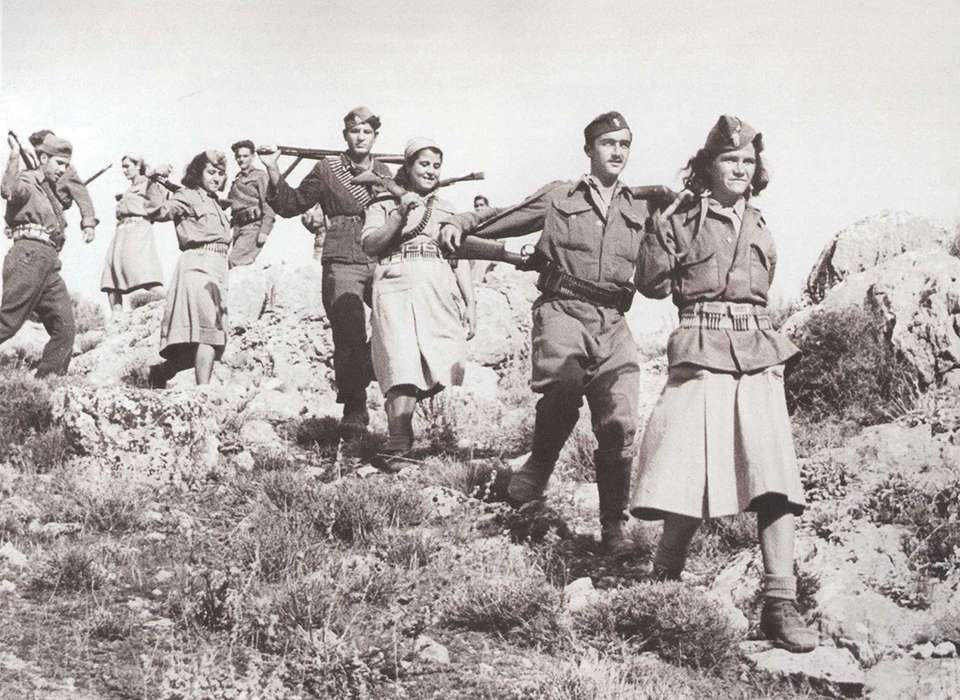
A photo of Greek Nationalist troops
From 1946-1949, Greece was in a civil war, between the Nationalists, backed by the United States, and the Communists. Whilst Harry Truman, President of the United States, feared that the Soviets may back the Greek Communists, Stalin’s focus was more on Turkey, and seeing if they would become a Communist nation, due to their oil production in Iran needing to pass through Turkish waters, requesting a military base in the country and transit rights through the Dardanelles Strait and the Sea of Marmara. Due to the economic impacts of having the water being Soviet Occupied, the United States sought a democracy in Turkey.
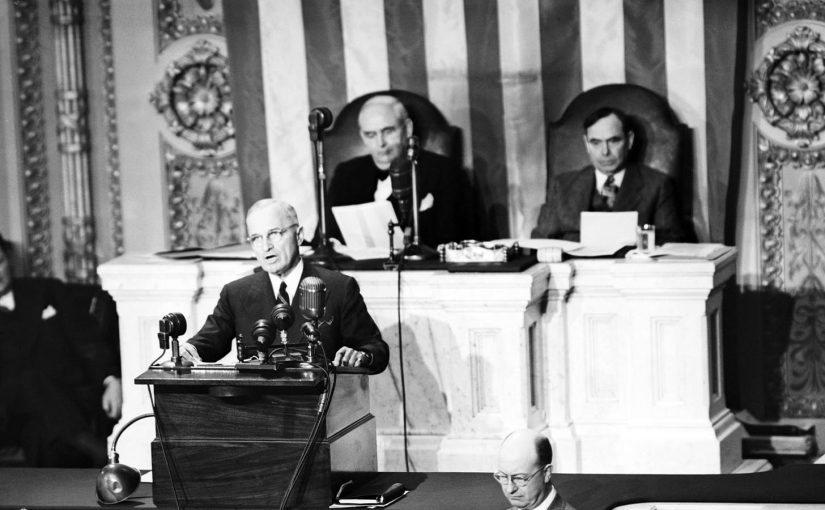
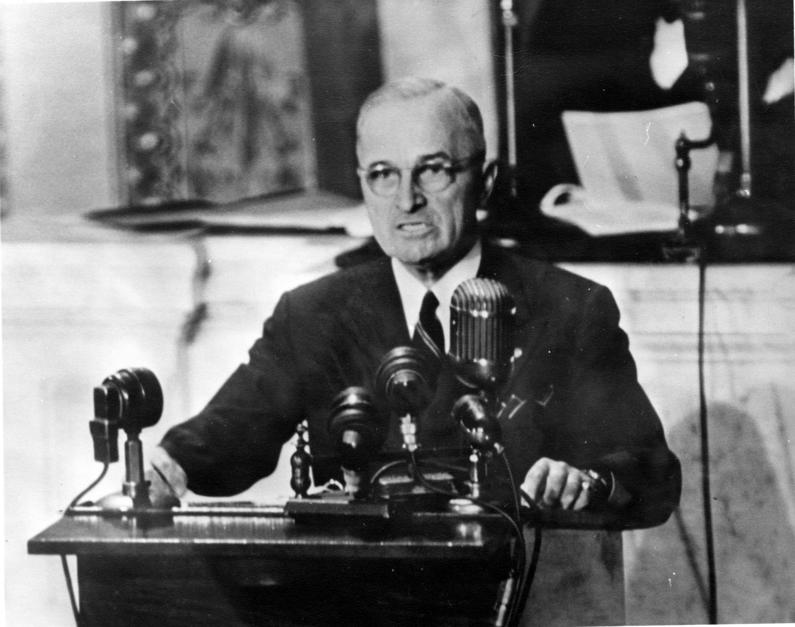
Many people feared that the Soviet Union would have a monopoly over the Mediterranean if Greece and Turkey fell to Communism. Truman chose to take action and addressed Congress with his plan on March 12th, 1947
Truman addressing Congress
One way of life is based upon the will of the majority, and is distinguished by free institutions, representative government, free elections, guarantees of individual liberty, freedom of speech and religion, and freedom from political oppression.
The second way of life is based upon the will of a minority forcibly imposed upon the majority. It relies upon terror and oppression, a controlled press and radio; fixed elections, and the suppression of personal freedoms.
I believe that it must be the policy of the United States to support free peoples who are resisting attempted subjugation by armed minorities or by outside pressures. I believe that we must assist free peoples to work out their own destinies in their own way.
An excerpt from Truman’s speech to Congress
Truman was very careful to not explicitly name Communism or the USSR, but everyone knew what he was talking about. In order to truly combat communism, Truman, with the advise from Senator Arthur Vandenburg, over exaggerated the crisis, to such a degree where it would scare the American people and get them to side against Communism. Many modern historians cite the Truman Doctrine as the declaration of the Cold War.
Donald John Trump was born on June 14th, 1946 to Fred and Mary Anne Trump. His father, Fred, had started off making a successful carpentry business. However, during the Great Depression, this business was on the verge of bankruptcy, until he built one of the largest self serve supermarkets in New York and sold it for a large profit. He used the money to buy up a subsidiary of a bankrupt real estate company for pennies on the dollar, giving them access to a large number of properties that were bordering foreclosure. Fred bought them for a fraction of the price that he sold them at, making his company one of the most profitable and famous real estate companies in the city.
Donald was the fourth child of five. He had three older siblings, Maryanne, Fred Jr and Elizabeth, and had one younger brother, Robert. The Trump House was enormous, with 23 rooms in prime Queens Real Estate and a Chauffeur that drove the children to school every morning.
A photograph of Trump’s childhood home
However, despite this lavish lifestyle, Fred was very tough on his children. Despite his vast wealth, Fred still forced Donald to do his local paper round. Donald became a notorious bully at school and with his younger brother.
I was a very assertive, aggressive kid. In the second grade I actually gave a teacher a black eye—I punched my music teacher because I didn’t think he knew anything about music and I almost got expelled. […] As an adolescent I was mostly interested in creating mischief, because for some reason I liked to stir things up, and I liked to test people. I’d throw water balloons, shoot spitballs, and make a ruckus in the schoolyard and at birthday parties. It wasn’t malicious so much as it was aggressive.
Donald Trump’s writing in “The Art of the Deal”
Due to his unruly behaviour, Donald was sent, by his father, to New York Military Academy. NYMA was notorious for being incredibly tense, with physical and verbal abuse being actively encouraged, often times with hazing new students and physical assaults from teachers. However, Donald quickly learnt discipline and was Captain in his class, whilst being dubbed the Ladies Man of his yearbook. He was very well known in his school as being the baseball champion, often being incredibly successful in first base. Many teachers began to notice that Trump always had to be number one, and would do anything to be so. He then graduated the University of Pennsylvania with a Bachelor of Science in economics.
The Verrazano Narrows Bridge connected Brooklyn to Staten Island and had finished construction in 1964, being the longest suspension bridge in the world at the time. Fred had invited Donald down to the opening and was in the crowd during the ceremony. He later told the New York Times that no-one mentioned the designer of the bridge, not even once.
I realised then and there that if you let people treat you how they want, you’ll be made a fool, […] I don’t want to be anyone’s sucker.
Donald Trump speaking to the New York Times
Due to him being in college, he managed to avoid the Vietnam draft 4 separate times. Once he left college, he was called up once again but it was claimed that he had a problem with his heel bone so could not be called up. It is worth noting however that the doctors who told this to the draft office either lived or worked in Trump Properties.
In 1932, in Cavendish University, J. D. Cockcroft and E. T. S. Walton bombarded lithium with protons from a particle accelerator. The protons caused the lithium atom to split. Many scientists, the most notably of whom were under Nazi governance in Germany, realised that if they continued to split uranium and plutonium atoms, with the protons from one atom splitting another and the process repeating in a process called fission, they could make a new source of energy. However, with this power, the results could also be used for much more sinister means.
August, 1939. About a month before the outbreak of WW2, Albert Einstein, a highly accomplished scientist who discovered the theory of relativity (E=mc2) sent a letter to Franklin D. Roosevelt, then President of the United States, on a highly serious matter. Einstein believed that the Germans were working on a super weapon, a super weapon that would harness the power of Cockcroft and Walton’s work and make a fission bomb, that could wipe cities off the map. Despite being a pacifist, Einstein believed that such a weapon would be better in the hands of the Americans than the Germans. By August of 1942, the development of an atomic weapon was granted by FDR. A group of hundreds of scientists all were called upon by the US government to assist in the development of the technology.
One of the top scientists on the project, who led the scientific research and design of the bomb, was Dr J Robert Oppenheimer. He graduated in chemistry from Harvard and obtained his doctorate in physics from the University of Göttingen in Germany. Whilst abroad in Europe, he learned a lot about quantum physics, a field that was not that expanded in the United States. One of the most notable German physicians was Werner Heisenberg, who thought of the famous Heisenberg Uncertainty Principle. Many believed that Heisenberg was working on the German Nuclear bomb.
A photo of Oppenheimer
Back to Oppenheimer, he joined the faculty of the University of California, Berkley, where he expanded the field of Quantum Physics in the United States, becoming a professor in 1936. He even partially discovered a black hole in 1939. He was considered to be one of the greatest minds in Atomic Research, the kind of man that the US was after. However, he was under observation by the FBI since 1941 due to his ties to communist groups and union activity whilst in California. Most notably, he was a leading figure in the Federation of Architects, Engineers, Chemists, and Technicians (FAECT), a white collar union for technical professions, and met many close friends through the Communist Party of the USA, of which his brother Frank was a member.
His wife, Kitty, was a former member of the Communist Party before leaving in the 1930s before they met. He also had an on and off affair with active Communist Party member, Jean Tatlock, who committed suicide in 1944. However, whether he was actually a member of the party was heavily debated. During his 1954 security clearance hearing, he testified that he agreed with many of the ideas of communism but would not tow a party line. He also openly campaigned and funded the Republicans in the Spanish Civil War, before joining the American Committee for Democracy and Intellectual Freedom, which campaigned against Jewish persecution in Nazi Germany. The group was later branded as communist during the era of McCarthyism. As Chief of Security for the Manhattan Project, Colonel Boris Pash was asked to assess Oppenheimer regarding his alleged communist ties. Whilst stating that he “may still be connected with the Communist Party”, Pash did not believe Oppenheimer to be a spy, believing that “Oppenheimer’s personal honour and concern for his reputation would deter him from such action”. Pash therefore did not recommend his removal from the project, but instead that Oppenheimer be accompanied by counter-intelligence agents.
Oppenheimer, as well as many other notable scientists such as Richard Feynman, Edward Teller and Isidor Isaac Rabi, were gathered in Los Alamos, a remote part of the New Mexican Desert where a small town was built in order for the scientists to do their research and accommodate their families. The bomb, codenamed the Manhattan Project, was worked on for months on end. The first contained chain reaction occurred in a secret lab under a Chicago University football stadium. The theory’s were now fact and the development of the bomb begun. During the time creating the bomb, Italy fell after an allied invasion and a small civil war. The Axis powers were on the ropes and the President, now Harry Truman after the death of FDR on April 12th of 1945, was confident that this bomb would be the final push to end the German War Machine. However, it ended a lot sooner than expected.
A newspaper about the death of Hitler
On the 21st of April 1945, the Soviet forces entered Berlin. Only 9 days later, Hitler fed cyanide to his wife, Eva Braun, and shot himself in his bunker in Berlin. A little over a week later, Germany surrendered. 2 out of the 3 major Axis powers were out of the war as well as the bomb’s target. Truman began to reconsider the target. He had been bombing the Japanese for months on end and he believed that a mainland invasion of Japan would only cost more American lives. With the Soviets beginning to invade Japanese occupied Manchuria, he decided what to do.
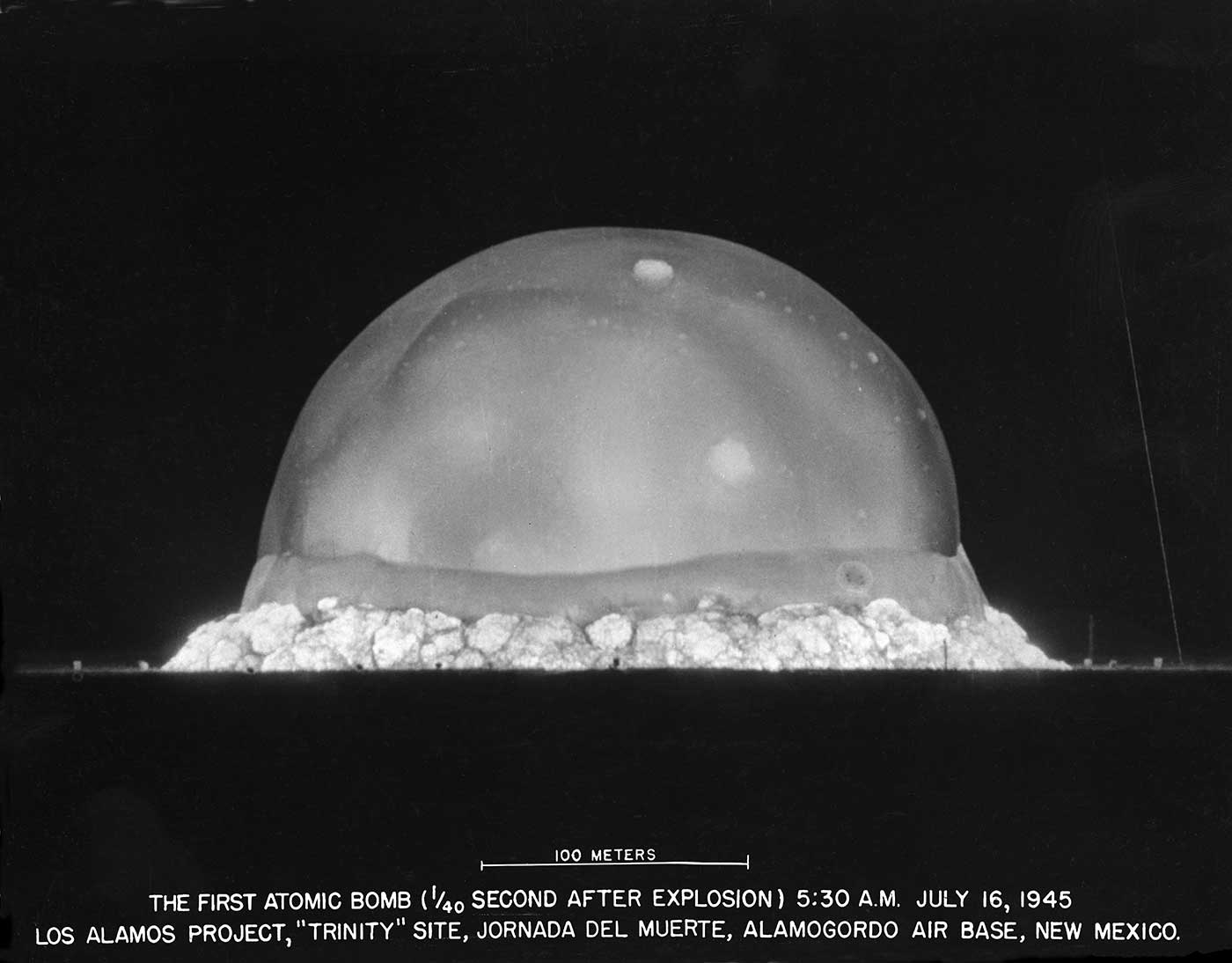
A photo of the bomb test
On July 16th 1945, in the middle of the New Mexican desert, a fireball erupted. The infamous Trinity Test had been conducted. The bomb worked. Around a month later, in the city of Hiroshima, Japan, the first bomb was dropped.
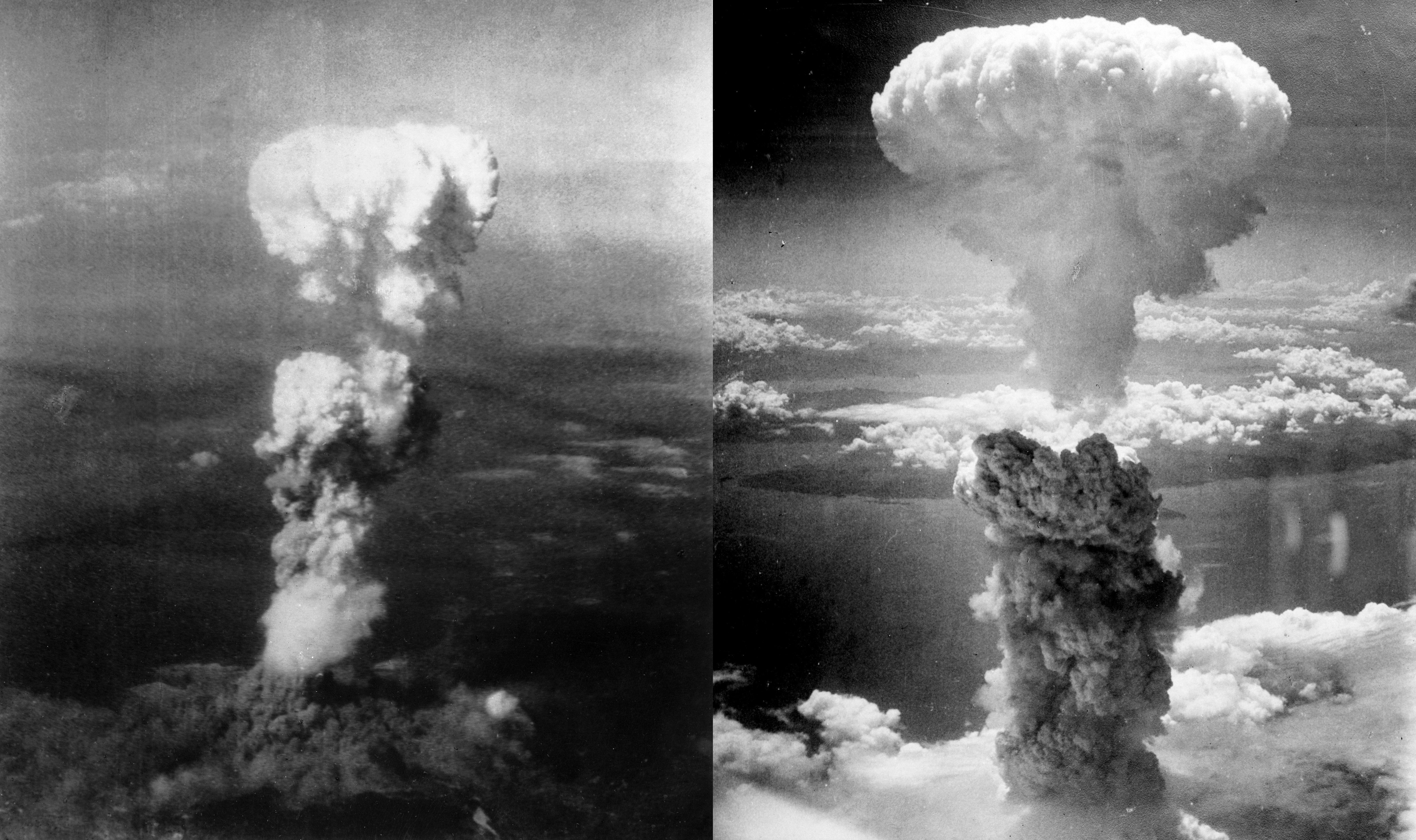
Photos of the bombings (Hiroshima left and Nagasaki right)
Buildings were instantly turned to rubble and people were vaporised on the spot, leaving only their shadows on the pavement. However, some would consider these the lucky ones. Akiko Takakura was at the Bank of Hiroshima when the bomb dropped. Despite being within 300 metres of the hypo-centre, she survived the initial bomb.
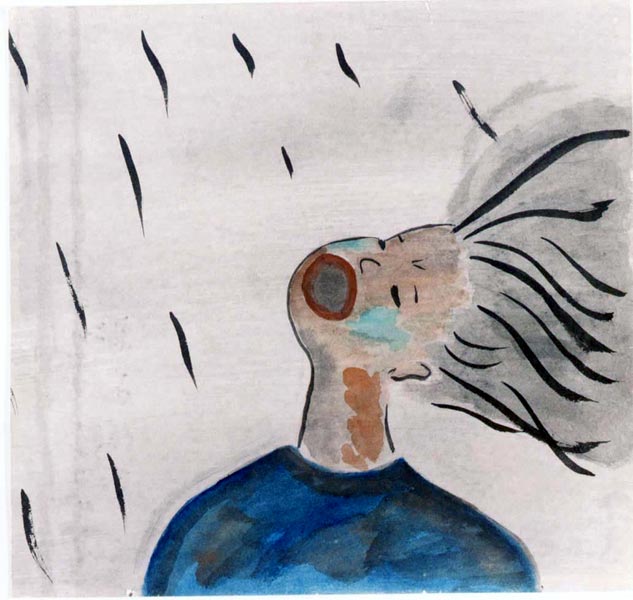
When I regained consciousness, I found myself in the dark. […] After a while, it began to rain. The fire and the smoke made us so thirsty and there was nothing to drink, no water, and the smoke even disturbed our eyes. As it began to rain, people opened their mouths and turned their faces towards the sky and try to drink the rain, but it wasn’t easy to catch the rain drops in our mouths. It was a black rain with big drops. […] We opened our mouths just like this, as wide as possible in an effort to quench our thirst. Everybody did the same thing. But it just wasn’t enough.
Takakura’s account of the aftermath of the bombing
A drawing that Takakura made of her drinking the thick black rain
Takakura’s account is likely due to the bomb vapourising all the exposed water in the surrounding area, hence her dire thirst. The evaporated water had then mixed with the radioactive soot in the atmosphere, producing the thick black rain. Her friend, who also drank the water, succumbed to radiation sickness.
Private Shigeru Shimoyama just stepped into a concrete reinforced warehouse that was only 6 blocks away from the hypo-centre. He was flug against a back wall by the force of the explosion, saving him from falling debris. When he awoke, he found that his arms and shoulders had been impaled on nails protruding from the wall, leaving him hanging about a metre off the ground. Upon freeing himself and leaving the building, he spotted a group of bureucrats carrying a life sized portrait of Hirohito (Emperor Shōwa) throught the rubble. He spied a naval vessel patrolling through the river, full of dead bodies, which paused and the crew bowed to the Emperor.
A photo of Hirohito
He then turned around and saw a peculiar, pinkish white, fleshy horse. It was then that he realised the horse had gone through a phenomenon known as de-gloving, in which the skin of the horse was removed by the force of the blast, but still kept the horse alive. Shigeru, horrified, ran from the scene. Whenever he turned back, the horse continued to follow him.
Another soldier stationed outside the city heard the bomb go off and saw the mushroom cloud arise from the horizon. At the train station he was at, a passenger train rolled through from Hiroshima, all its windows smashed and most of its passengers burnt to a crisp. Those who weren’t stared out the windows with blank expressions on their faces. Every coach was at least smouldering with two coahces entirely engulfed in flames. After bringing a train to a stop, the group of soldiers decided to turn back in an effort to help survivors. On their way back, they encountered lines of people walking along the railway line, who all had their clothes, skin and muscles peeling off. These people were dubbed the Ant Walkers of Hiroshima.
A drawing of the Ant-Walkers by a survivor of the bombing
3 days later, another bomb was dropped, this time on Nagasaki, another nearby city. Anywhere between 150,000 and 246,000 people were killed in the bombings, the majority of which were civilians. The Japanese issued surrender on August 15th, with the surrender taking effect on September 2nd. World War 2 was over, lasting 6 years and 1 day.
The Japanese Minister of Foreign Affairs, Mamoru Shigemitsu, signing the peace proclamation aboard the USS Missouri
In the ensuing Tokyo Trials, seven out of the 28 people on trial were executed for crimes against peace, war crimes or crimes against humanity, including the Japanese Prime Ministers, Kōki Hirota and Hideki Tojo. Other Prime Ministers during this time were not executed, either sentenced to prison, dying before Japanese surrender or simply not being tried. Most notably, Senjūrō Hayashi and Fumimaro Konoe both died before Japanese surrender, from a brain haemorrhage and cyanide ingestion respectively. Kiichirō Hiranuma was sentenced to life at Tokyo before passing away in 1953. Nobuyuki Abe was arrested by the American occupation government but was never tried for any war crimes. The Emperor, however, was not tried on such crimes, despite being complicit in them, as the United States believed that in order to secure Japan for a democratic future, a stable Emperor must help them in their efforts. In addition, no-one on trial ever implicated Hirohito in any of the atrocities they committed in China and the Pacific.
However, the head of Unit 731, the Japanese human experimentation unit, Shirō Ishii, was not indicted for such crimes, as the Americans wanted to exchange their findings for immunity in court. Some of Unit 731’s experiments involved largely biological research. On occasion, they would release the bubonic plague into populated Chinese villages to study the rate of infection. They would give various diseases to prisoners of war and vivisecting them to observe the results on the human body. They would also cut open a person whilst they were still alive to remove organs to observe what impact it would have on the human body, including connecting the guts back up to the throat. This is only the tip of the iceberg of these experiments and the man behind these experiments got off Scott free.
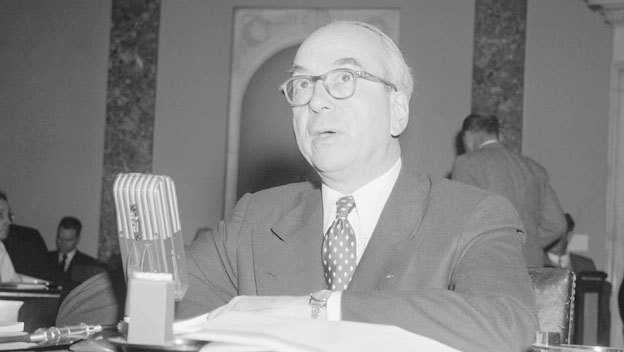
After the bombing, Oppenheimer became and advisor to the United States Atomic Energy Commission (AEC), where he strongly advocated for international control of nuclear power in order to prevent a nuclear arms race with the Soviets. After the testing of the first Soviet nuclear bomb in 1949, Oppenheimer was suspected of allowing Russian spies into Los Alamos due to his communist ties. He had a feud with Lewis Strauss, the commissioner of the AEC, who felt sidelined by Oppenheimer’s contributions to the commission and atomic policy at large. Most notably, Oppenheimer believed that the government should be more open about American nuclear capabilities, whilst Strauss believed that such openness would benefit nobody but Soviet military planners. In 1949, Oppenheimer mocked a suggestion by Strauss in a public hearing regarding the medical use of isotopes. This was something that Strauss found humiliating and would never forget.
A photo of Strauss testifying in the 1950s
Eventually, Strauss began to develop a feud beyond just personal and political disagreements. He eventually began to suspect Oppenheimer of being a Soviet Spy. Strauss requested of J Edgar Hoover that he conduct surveillance on Oppenheimer, who discovered no evidence of disloyalty to the United States. However, Strauss persisted, organising with William L. Borden, former executive director of the United States Congress Joint Committee on Atomic Energy, to revoke Oppenheimer’s security clearance. Borden sent a letter to the FBI, stating that “more probably than not J. Robert Oppenheimer is an agent of the Soviet Union.” The clearance hearing was organised by Strauss, who appointed the board of three men as well as the lawyer to lead the case against Oppenheimer. Most of the evidence used against Oppenheimer was obtained illegally and was not shared with Oppenheimer’s lawyers in advance. Many government officials and scientists at Los Alamos testified at the hearing. Most notably, Lieutenant General Leslie Groves, Military Director of the Manhattan Project, stated the following.
In this case I refer particularly to associations and not to the associations as they exist today but the past record of the associations. I would not clear Dr. Oppenheimer today if I were a member of the Commission on the basis of this interpretation.
Excerpt from Groves’ testimony on Oppenheimer
Oppenheimer’s clearance was revoked in a 2-1 vote. He was shunned from the scientific community and political life for years until Lyndon B. Johnson gave him the Enrico Fermi Award, named after the Italian Physicist who created the first artificial nuclear reactor.
Many scholars today still wonder if the use of nuclear bombs on Japan was necessary. Some say that Japan would’ve surrendered regardless and that the bombing was merely Truman showing the power of the United States. No matter what you may think of the ethics of the bombing may be, the impact of the bombing was undeniable, with many people fearing nuclear annihilation due to rising tensions between nuclear powers, a fear that began in the 40s and is still very prevalent to this day.
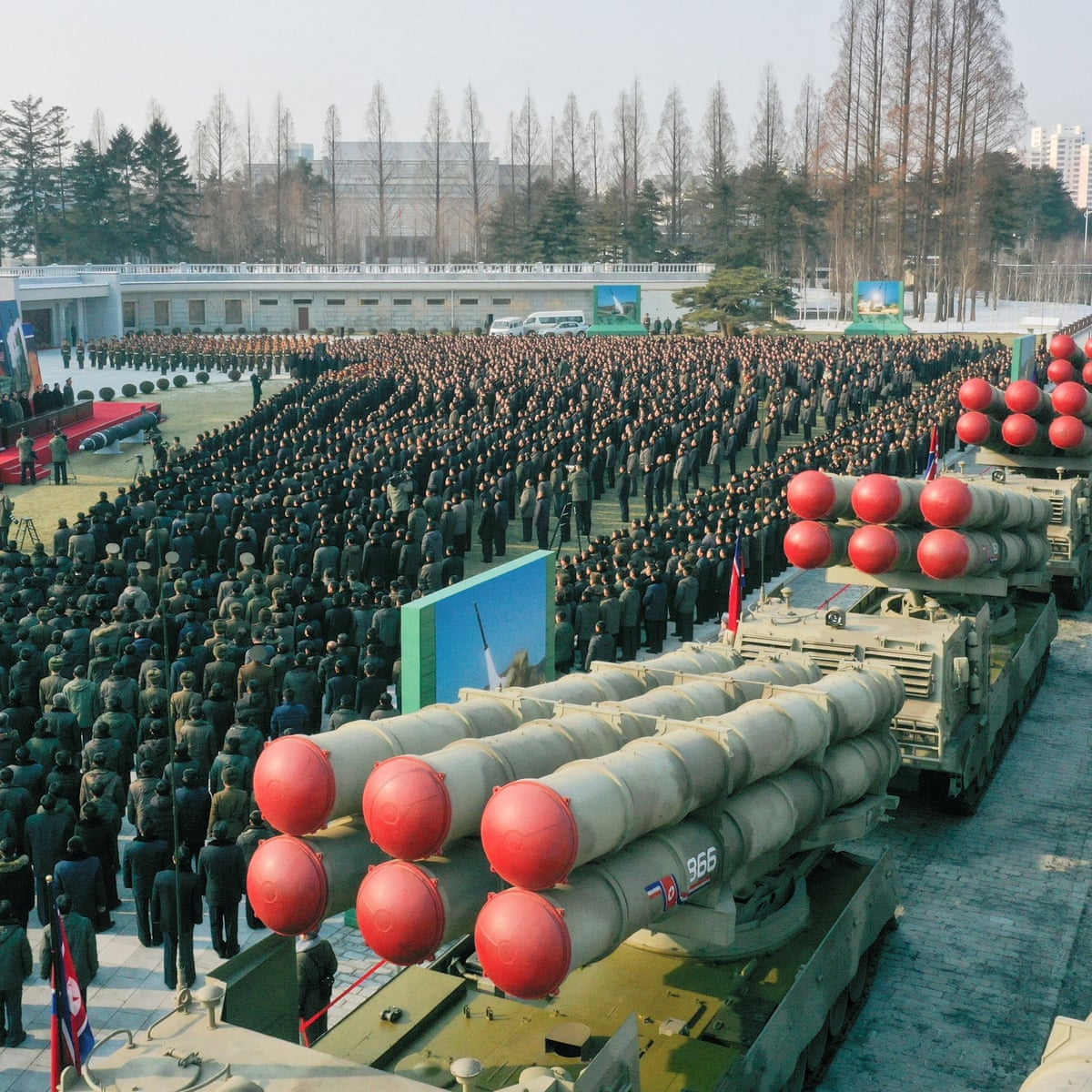
A military parade in North Korea in present day, showing off North Korea’s nuclear warheads
The longer the fighting goes on [in Ukraine], the more lives will be lost and the greater risk of nuclear escalation. Those who fuel escalation must know that in the event of a nuclear war, nobody wins.
Jeremy Corbyn, former UK Labour Party Leader, in an article for ‘Tribune’ magazine
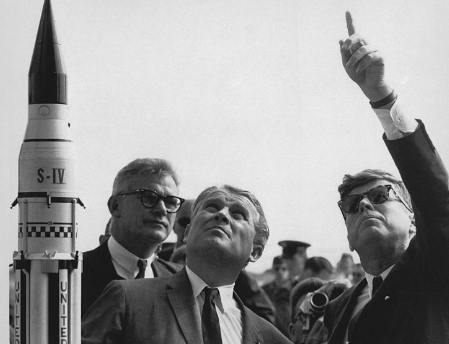
During a briefing at Blockhouse 34 of the Cape Canaveral Missile Test Annex in 1962, three of the most important men in the history of American space exploration were photographed sitting in the front row, President John F. Kennedy, who had promised that man would land on the moon by the end of the 1960s, Vice President Lyndon B. Johnson, who would later serve as President during some of the most important missions to outer space, and Kurt Debus, the first ever Director of the Kennedy Space Centre, who previously served as an Staffelrottenführer in the SS and a key architect in the Nazi V2 Rocket Project, which resulted in the deaths of thousands of people.
A photo of the three men, Johnson, Debus and Kennedy (left to right)
By May 1945, the Third Reich was in pieces. With the Führer dead, many high ranking Nazis and military officers, fearing Allied capture for their part in war crimes, including the Holocaust, either committed suicide or fled to South America. Most notably, Martin Bormann, Nazi Party Minister, Joseph Goebbels, Reichminister of Propaganda and Chancellor, and Reichsführer SS Heinrich Himmler all committed suicide in the final days of the war or in the weeks following, whilst Josef Mengele, a physician and anthropologist, specialising in human experimentation at Auschwitz, and Adolf Eichmann, a high ranking Party Member and Government Official, fled to Argentina, with the latter of the two being captured and executed in 1961 for his role in designing the Holocaust.
However, SS Sturmbannführer Wernher von Braun was less worried than most. In fact, he was bordering on confident, having approached the United States directly with his location, patiently and calmly waiting for their arrival. As a key architect behind the V2 Rocket, Braun was confident that his knowledge would be useful to the United States Government. As predicted, his captors gave him a warm welcome.
Braun (centre, civilian clothes) photographed with Wehrmacht Generals, such as Walter Dornberger, Friedrich Olbricht and Heinz Brandt in March 1941
What was more surprising, however, that this was occurring all across the collapsing Third Reich and during the years of occupation by the Allies. Whilst the Second World War had concluded, the Cold War was beginning to brew, and the Americans were determined on getting the upper hand against the Soviet Union. In all, over 1,500 Nazi Scientists were extracted from Germany between 1945 and 1962, in order to work on the American Space Programme, including Braun and the aforementioned Debus. Whilst Braun had handed himself over to the Americans, other scientists had to be found and extracted. These missing scientists were compiled in a list that, in an unsuccessful effort to dispose of evidence, was flushed down the toilet.
The operation, Operation Paperclip, was named after the paperclips that they would attach to the files, indicating they contained classified information such as Nazi affiliation or suspected war crimes and that all these should be overlooked in the name of advancing American science. For instance, Braun had overseen an SS Operation that involved forced labour at concentration camps.
A group of Rocket Scientists at Fort Bliss, Texas
The United States was not the only one involved in this practice. Whilst the British and French did not have the resources to exfiltrate German scientists without kidnapping or stealing patents, the Soviets used other more brutal methods in order to get the information they needed, such as bribery and forced relocation. The US method was the most controversial, however, offering a clean slate, the willing relocation of entire families and US citizenship.
Naturally, this massive influx of Germans into the United States raised a lot of eyebrows in the media. In response, the government did what every politician learns not to do on day 1 and told the truth. Immediately, there was mass public outcry, from influential figures such as Albert Einstein and Eleanor Roosevelt, as well as from the National Association for the Advancement of Colored People (NAACP).
The first page of a transcription of a protest telegram about Operation Paperclip sent to Harry S. Truman by the Council Against Intolerance In America
Many criticised that the victims of these mens atrocities in the Holocaust struggled greatly to get US Citizenship, ultimately to often get denied whilst the men who perpetrated the Holocaust got a fast track. In addition, there were also those who criticised the fact that former Nazis were now in Government positions, from an aspect of national security. However, as Cold War tensions grew, the argument that these scientists were necessary to combat the Soviet threat grew increasingly stronger.
Braun’s work at NASA involved getting the first American Satellite into orbit after the Soviet Sputnik, as well as the creation of the Saturn V rocket, which helped man land on the Moon. The work of other scientists involved in Paperclip ended up creating the jet engine and advanced pharmaceuticals research, but also developed chemical weapons such as Agent Orange, well known for its use in the Vietnam War.
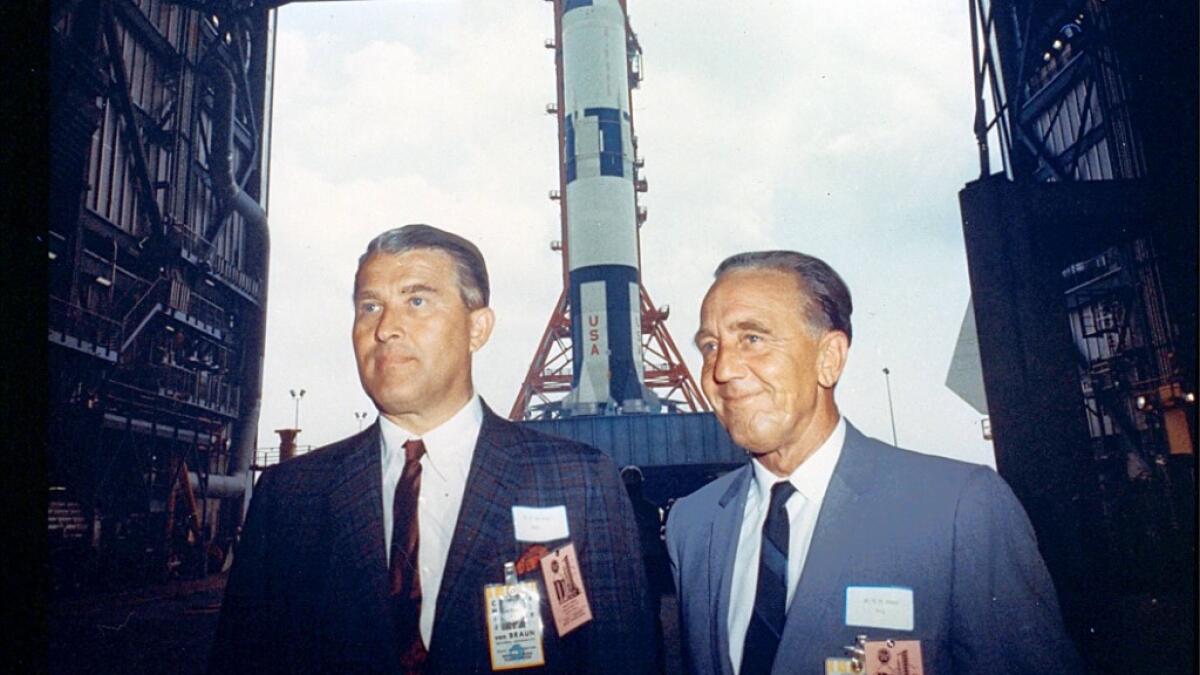
Braun and Debus in front of Saturn 500F
Whilst these advances in science allowed the US Government to brand paperclip as success, hindsight casts doubt on this judgement. Whilst many minds taken to America in Paperclip were seen as geniuses, such as Braun, many were just your average Joe, who, upon contract completion, either returned to Germany or went to normal civilian life, assimilating amongst the populous. The ethical questions about bringing in scientists from such an evil regime to work on projects of national security still do not have full conclusive answers. However, it is undeniable that these men, no matter how abhorrent and evil their past was, changed our understanding of the universe at large.
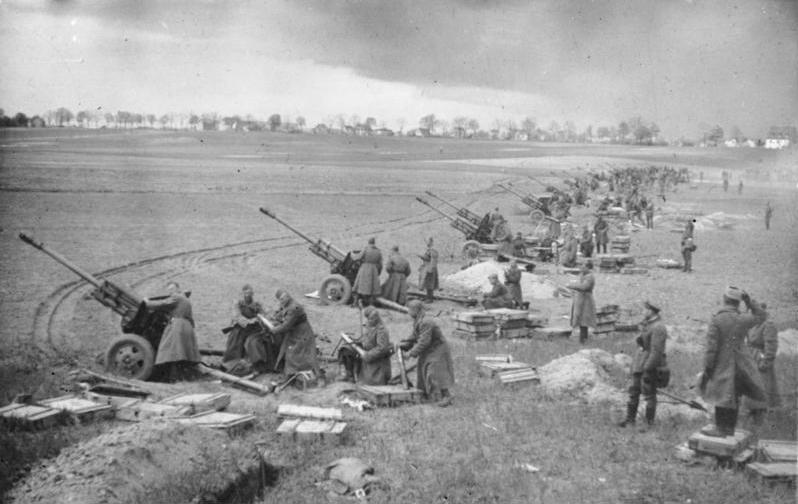
April 20th, 1945. On the Führer’s birthday, Nazi Germany is on its last legs. As the Soviet Artillery begins to hammer the city from the east and the Allied forces closing in on the Rhine from the west, it may have just dawned on Adolf Hitler, who had ruled Germany with an iron fist for the last twelve years, that his thousand year Reich may never come to pass.
Soviet Artillery on the outskirts of Berlin
1944 had been a disaster for the German war effort. Italy had become embroiled in Civil War in the aftermath of the deposition of Mussolini the year prior, with the fascist faction being a puppet of Hitler. The war had turned sour and the Fascist only controlled the North by the end of 1944. In the west, the Allies had made a great achievement with the Normandy Landings on D-Day, and had been liberating France all throughout the year. With mass army encirclements across the Eastern Front, the Red Army was breezily pushing across Eastern Europe, uncovering Nazi war crimes along the way.
Bulgaria and Romania had fallen under Soviet control, with Hungary holding out in Budapest as the last bastion of Fascism in Eastern Europe. Hitler, hoping to secure Hungarian oil fields, had focused the last of his armoured reserves onto relieving the defenders of Budapest. However, this had fallen right into Soviet hands. Considering that Hitler had pushed the armoured corps down to the increasingly pressurised Hungarian front, this meant that the Polish front would, hopefully, be a breeze. In just 11 weeks, the Soviet Army captured Warsaw and arrived on the outskirts of Berlin.
Throughout January of 1945, the outgunned Germans were forced into desperate retreat. General Heinz Guderian insisted to Hitler on the need for more armour in Poland. Whilst Hitler claimed that he would send two SS Panzer Divisions, these only ended up on the Hungarian front, leading to mass surrenders on the Polish Front. Meanwhile, propaganda echoed over the radio, implying the incoming apocalypse, comparing the advancing Soviets to the Mongol horde intent on bringing about the death of civilisation, encouraging thousands of Germans to flee west.
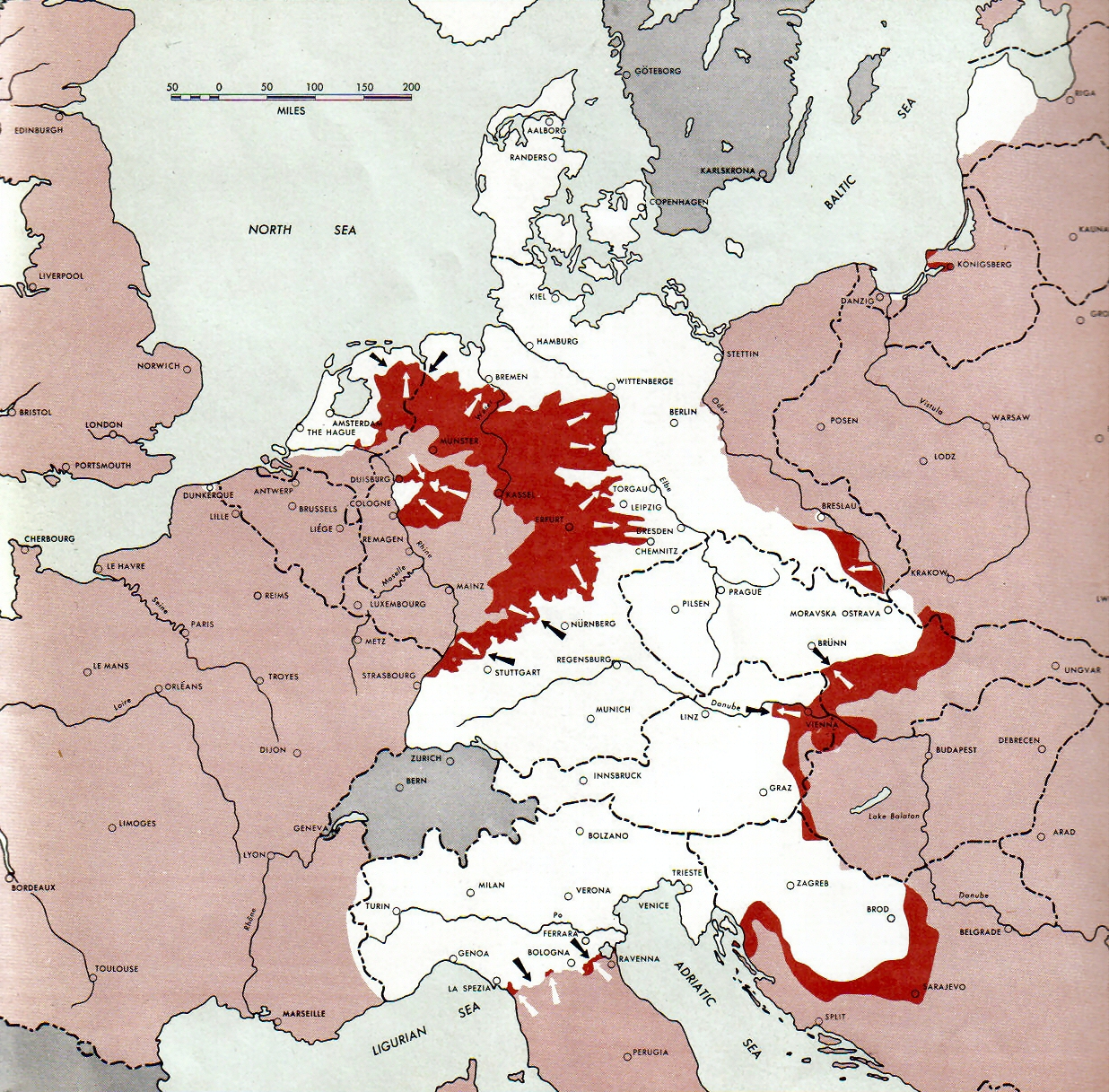
However, the problem with the Soviets speedy advance was that it had left Field Marshal Georgy Zhukov’s flank exposed. He decided not to advance any further onto the capital of the Reich until it was covered. Managing to trap German forces in a northern pocket in Prussia, the new Front line extended from Stettin in the north all the way down to the Czech border.
A map of the front by April 1945
Despite assurance from the Allies that Berlin would fall into Soviet hands after the war, Stalin was quick to rush the capital, devising an encirclement around the city and a force to push towards the Elba river to meet up with the Allies. The 1st Belorussian Front would be the centre of the thrust towards Berlin, whilst the 1st Ukrainian Front would push from the south towards Potsdam and Dresden and the 2nd Belorussian Front would push from the north in order to prevent reinforcement. Used to open fighting in massive spaces, veterans of the Battle of Stalingrad handed out leaflets regarding the ins and outs of urban combat.
Whilst the German Defence force seemed decent enough, totalling around 760,000 men, with additional tanks, artillery and aircraft, it was nothing compared to the sheer numbers of the Red Army, who had a force of 2.3 million men attacking Berlin. In addition, much of the German defences were made of the Volkssturm, a mass conscripted force of any man between 16 and 60. Much of the army was also comprised of Hitler Youth boys, some even as young as 12. Furthermore, having lost the Hungarian oil fields, they could not rely on their Panzer Divisions or the Luftwaffe for much support.
The battle began on April 16th near Seelow Heights, beginning with barrages from Katyusha Rocket launchers, which lit up the night. One Soviet Soldier described it as being as bright as daylight, with them having to cover their ears to stop them from going deaf. However, due to this mass bombardment, the terrain was significantly more difficult to traverse for the Red Army, not just because of the holes in the ground but also the spotlights, intended to blind the enemy, ended up reflecting in all the smoke, confusing the advancing forces.
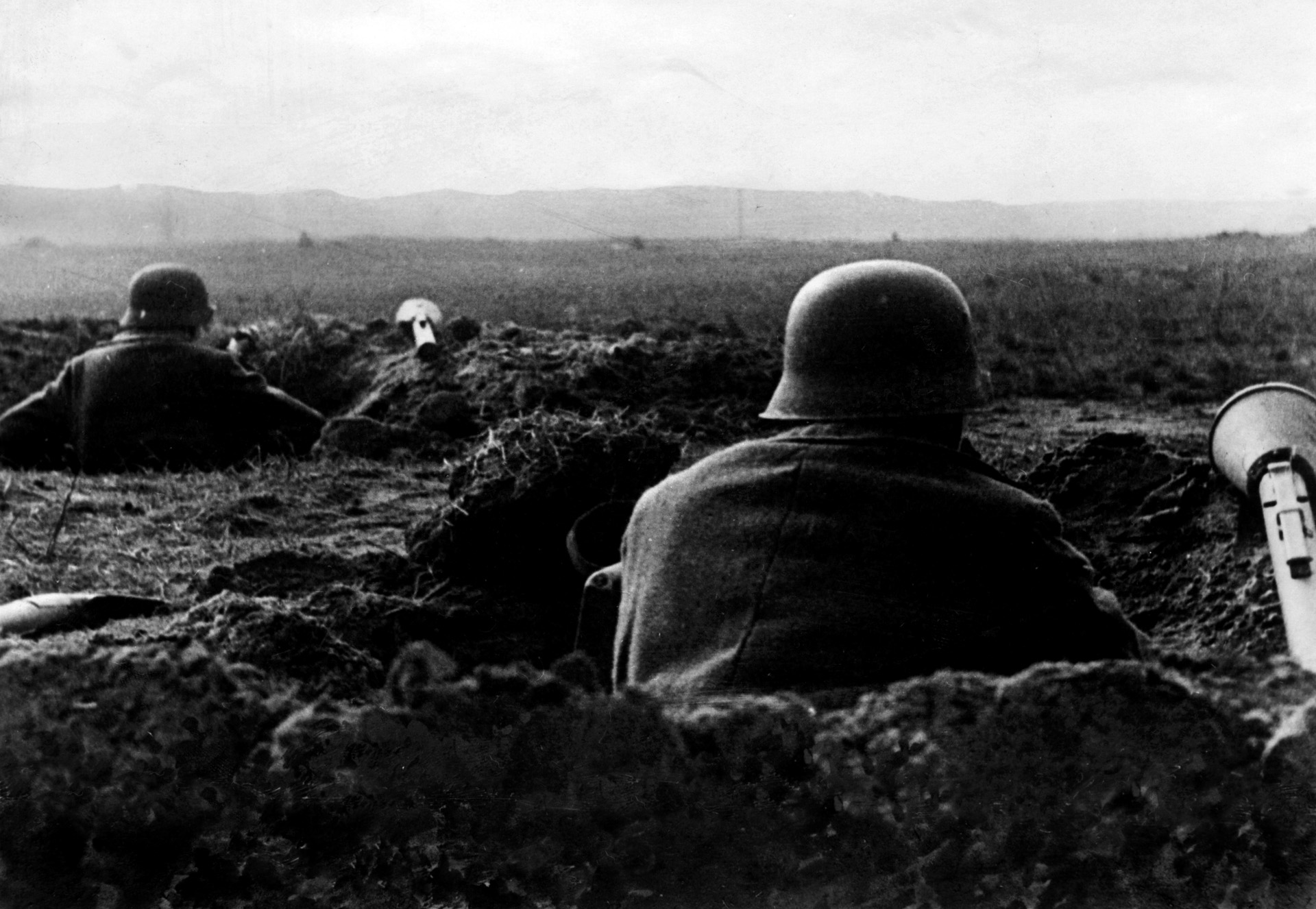
A photo of the Berlin Defence force with Panzerfausts at Seelow Heights
The Oder River was becoming another problem in the Soviet Advance, as many who tried to cross it were cut down by the desperate defence forces. Attempting to force a crossing, Zhukov ordered that both tank armies attack simultaneously, causing enormous traffic jams behind the front lines. Upon reaching the heights, the attackers were once more pushed back by concealed artillery divisions and Panzerfausts. Despite these setbacks, the South had eventually broken, and Soviet forces finally had unlocked the gates to the capital city.
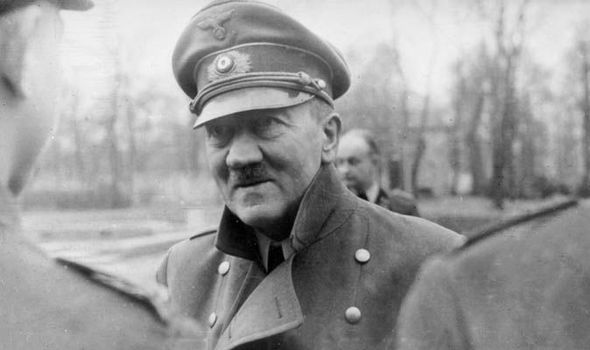
As the initial footmen attacked Berlin, Hitler, a shadow of his former self, cowered in the Führerbunker, a secret underground complex buried deep underneath the Old Reich Chancellery in Berlin. Down underneath the city, he was accompanied by Martin Bormann, Personal Secretary to the Führer and Chief of the Party Chancellery, Joseph Goebbels, Gauleiter of Berlin and Reichsminister of Public Enlightenment and Propaganda, with his family and Eva Braun, the long time lover of Hitler. His last visit to the surface was on his birthday of April 20th, awarding an Iron Cross to a young boy in the Hitler Youth. He was noticeably withered and older, having developed an undiagnosed tick in his right hand.
One of the last photos ever taken of Hitler on April 20th, 1945
Despite this, Bormann and Goebbels remained loyal to the end. Over the next week, he distanced himself from Hermann Göring, former Head of the Luftwaffe, Speaker of the Reichstag and Minister of Prussia, who, upon learning that Hitler had plans of taking his own life, had telegrammed to the Führer requesting leadership of the Third Reich. Viewing this as an act of treason, he expelled him from the party, fired him from all government positions and ordered his arrest. A similar scenario befell Heinrich Himmler, Reichsführer of the SS, Reichminister of the Interior and Chief of the German Police, who had began peace talks with the Allies in an attempt to focus all effort onto the Eastern Front. Learning of this on April 28th, Hitler reacted to this the same way he did with Göring. Hitler’s paranoia and delusion was slowly catching up to him.
On the front, many soldiers, who had considered deserting, were hanged in the streets. By now, all the remaining forces could do was simply delay the inevitable, as forces cut in from the northeast and southwest. However, Hitler was still hopeful of a mass counter attack by General Felix Steiner, an Obergruppenführer in the SS, which would hopefully encircle the Soviet forces in the city, in a similar vein to what the Soviets had done to them at Stalingrad two years prior.
However, this attack never came, due to the lack of manpower and supplies in Steiner’s army. Upon learning this news on April 22nd, Hitler flew into a “tearful rage”. His delusions of a Thousand Year Reich shattered into a thousand pieces as he officially declared that the war was lost, saying that he would remain in Berlin until the end, whereupon he would commit suicide. It was not long after this that he heard of Mussolini’s execution by the Italian Partisans, whereupon his body was hanged upside down from the roof of a service station where it was spat on by the people he oppressed throughout his rule.
A photo of Mussolini’s hanging body along side other fascists
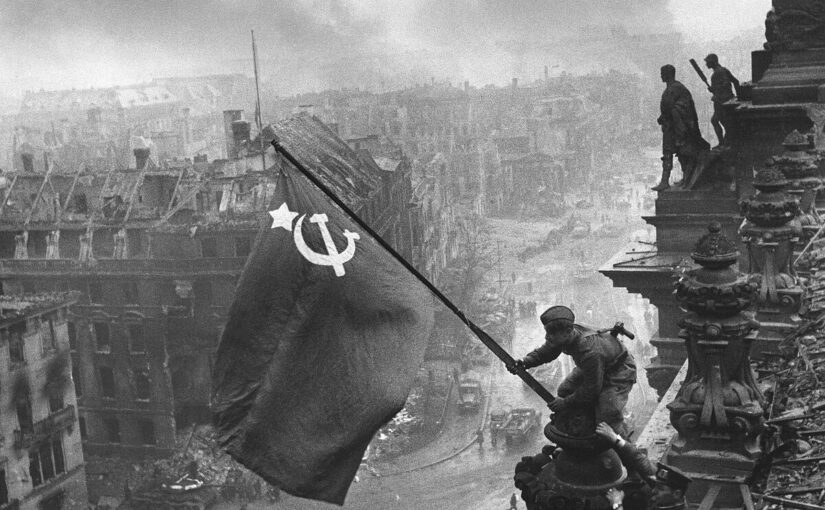
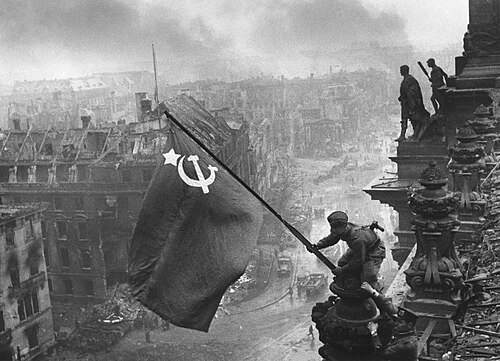
Soon after this, the encirclement was completed, leaving Berlin with around 85,000 men, 40,000 of whom were in the Volkssturm, defending the city. As the Soviets tightened their grip, the last bits of defence were just around the governmental district. Many high ranking Nazis were making plans of escape out of the city before it was too late. In the early morning of April 30th, the Soviet forces managed to capture the Reichstag, the symbolic heart of the German Reich, defended largely by foreign SS legions.
The Soviet flag billowing over the Reichstag
The previous day, Hitler was observed signing his final will and testament by Goebbels and Bormann. It detailed that Hitler would marry Braun as well as all “[he possesses] belongs – in so far as it has any value – to the Party. Should this no longer exist, to the State; should the State also be destroyed, no further decision of [his would be] necessary” except for portraits that he had purchased, which would be given to a gallery in Linz, his home town. It also detailed that he and Braun would soon commit suicide in order to avoid capture.
He detailed that the role of Führer be split into three bodies, the President, which would go to Karl Dönitz, Chief of German Naval High Command, the Chancellor, which would go to Goebbels, and Party Minister of the Nazi Party, which would go to Bormann. He gave an official order, allowing General Helmuth Weidling, who had largely led the defence of the city, to escape Berlin. Hitler then married Braun in a small ceremony, before both were found dead in his study in the Führerbunker in the afternoon of April 30th, Hitler having shot himself with his Walther PPK handgun, and Braun having taken a hydrogen cyanide capsule. Their ashes were cremated in a bomb crater with petrol as the Red Army’s artillery echoed through the streets
Despite this massive loss in morale for the Third Reich, Goebbels rejected Stalins offer for unconditional surrender, reducing the defence to isolated pockets around government buildings. However, eventually seeing the direness of the situation, Goebbels and his wife, Magda, fed cyanide to their six children before they too committed suicide on May 1st just outside the Führerbunker. His body was attempted to be cremated with the petrol left over from Hitler’s cremation, though it only did half a job, leaving the heavily charred body of Goebbels outside the bunker. His body was later taken into Soviet possession. In 1970, the remains were burned, crushed and scattered in the Biederitz River.
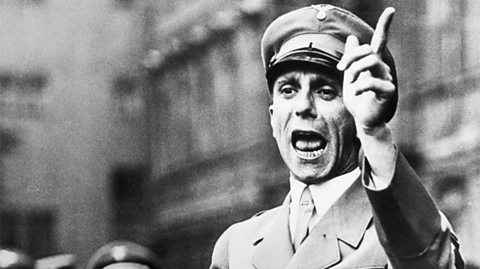
A photo of Goebbels
Weilding eventually began peace talks, ordering all the men to lay down their arms. The city fell and the German Reich was divided down the middle. By the time that Wilhelm Keitel, Chief of the Wehrmacht High Command, signed the unconditional surrender of Germany, only fragments of pre-Nazi German land remained a part of the Reich. Due to the new government never repudiating Nazism, Dönitz was never officially recognised as the President of Germany. Keitel was hanged in a botched execution for war crimes, crimes against peace, crimes against humanity and criminal conspiracy on October 16th, 1946. His head hit the trap door rim and it took him 24 minutes to die.
I call on God Almighty to have mercy on the German people. More than two million German soldiers went to their death for the fatherland before me. I follow now my sons – all for Germany.
The last words of Wilhelm Keitel
Many senior Nazis went into hiding, committed suicide or went on trial for their war crimes. Most notably, Bormann made a bid for freedom on May 2nd, eventually giving up and committing suicide on the grounds of Lehrte Station in Berlin. Unaware of this, the International Military Tribunal tried him in absentia at Nuremberg. His remains were not discovered until 1972 and were conclusively proven as his in 1998. His remains were cremated and his ashes were scattered over the Baltic Sea by his surviving family, in order to prevent a potential grave from becoming a neo-Nazi rallying site. His eldest son, Martin Adolf Bormann, openly denounced his father’s Nazi beliefs and Hitler, his godfather, and became a priest and a theology teacher, working on a mission in the Congo and meeting Holocaust survivors in Israel. He passed away in 2013.
A photo of Bormann
Heinrich Himmler was captured by allied forces. After interrogation, he was subjected to a medical exam on May 23rd, including an oral one. Upon declining to open his mouth, he bit into a potassium cyanide capsule concealed in his mouth and died despite efforts to expel the poison from his system. He was buried in an unmarked grave, the location of which remains unknown to this day. His daughter, Gudrun Berwitz, openly associated with neo-Nazi circles and married an official of the neo-Nazi Homeland Party. She passed away in 2018.
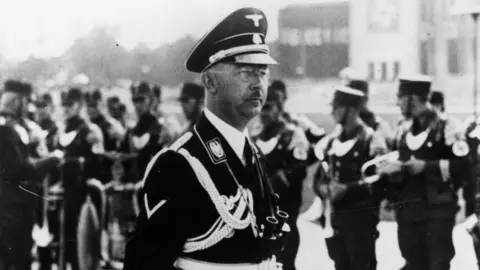
A photo of Himmler
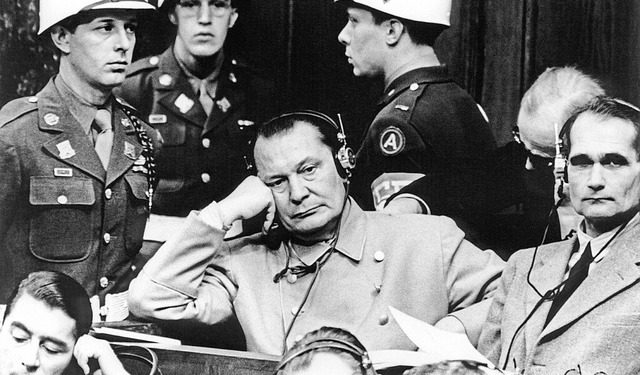
Whilst Göring did end up at the Nuremberg trials for the role he played in the Holocaust and other crimes against humanity, he was not given the punishment assigned to him by the tribunal. Before his execution by hanging, he too ingested cyanide and died. His body was displayed on the execution grounds for witnesses before being cremated and his ashes thrown into the Isar River. Edda, his only child, hardly spoke publicly about her father aside from one interview in 1986, where she recalled him fondly. She passed away in 2018
A photo of Göring on trial (central)
Dönitz was also put on trial at Nuremberg, being found guilty for his crimes against peace. He was sentenced to ten years in prison. Whilst never repenting for his role in Nazi Germany, saying that he “acted at all times out of duty to his nation”, he actively avoided contact with neo-Nazis, even when approached by Manfred Roeder, who still believed him to be the legal leader of Germany, something that Dönitz called ridiculous. Roeder, taking this as a declaration of resignation, declared himself President of Germany and became an active terrorist.
Dönitz died on Christmas Eve 1980 at his home in Aumühle. He was buried without any military honours during a service where no-one was allowed to wear military uniform. Despite this, over 100 people in attendance had earned the Knights Cross in battle during the Second World War. Only Dönitz’s daughter, Ursula, survived the war, who remained very private about her family’s history until her death in 1990.
A photo of Dönitz
Weilding was taken into Soviet Custody, where he was sentenced to 25 years in prison for crimes perpetrated during the German occupation of the East. He died of an apparent heart attack in Vladimir whilst in the custody by the KGB in 1955. He was buried in an unmarked grave in the cemetery of Vladimir Central Prison. It is unknown if he had any children
A photo of Weilding
Other high ranking Nazis, not directly involved in the Battle of Berlin also befell similar fates. Albert Speer, Reichminister of Armaments and Munitions and a chief Nazi Architect, was sentenced to 20 years at Nuremberg, attempting to portray his role in Nazi Germany as less significant than his peers, claims that were disproven after his death in 1981, being revealed that he was involved in multiple slave labour programmes across Nazi Occupied Europe. Adolf Eichmann, an SS Obersturmbannführer and key architect of the Holocaust, and Josef Mengele, an SS Hauptsturmführer and head of human experimentation at Auschwitz, both escaped to South America after the war. Whilst Eichmann was captured by Mossad, the Israeli Intelligence Service, and executed in 1961, Mengele lived out his life in Argentina, Paraguay and Brazil, until drowning after suffering a stroke in 1979.
In their vengeful advance across eastern Europe, thousands of civilian Germans were murdered by the Red Army, including thousands of sexual assaults of women. In all, 40 million people were killed by the Nazis under their regime, 17 million of whom were killed systematically as a part of the Holocaust. The Constitution of the Federal Republic of Germany strictly outlines laws that will prevent a Nazi-like party from ever rising again.
Every person shall have the right freely to express and disseminate his opinions in speech, writing, and pictures and to inform himself without hindrance from generally accessible sources. Freedom of the press and freedom of reporting by means of broadcasts and films shall be guaranteed. There shall be no censorship.
These rights shall find their limits in the provisions of general laws, in provisions for the protection of young persons, and in the right to personal honor.
Art and scholarship, research, and teaching shall be free. The freedom of teaching shall not release any person from allegiance to the constitution.
Article 5 of the German Constitution
Whoever allows content (section 11 (3)) suited to violating the human dignity of others by insulting, maliciously maligning or defaming a group defined by its national, racial, religious or ethnic origin, ideology, disability or sexual orientation or individuals on account of their belonging to one of these groups to come to the attention of another person who belongs to one of the aforementioned groups without having been requested to do so by that person incurs a penalty of a term of imprisonment not exceeding two years or a fine.
Section 192a of the German Criminal Code
One of the first meetings of the democratic Bundestag in West Germany, 1949
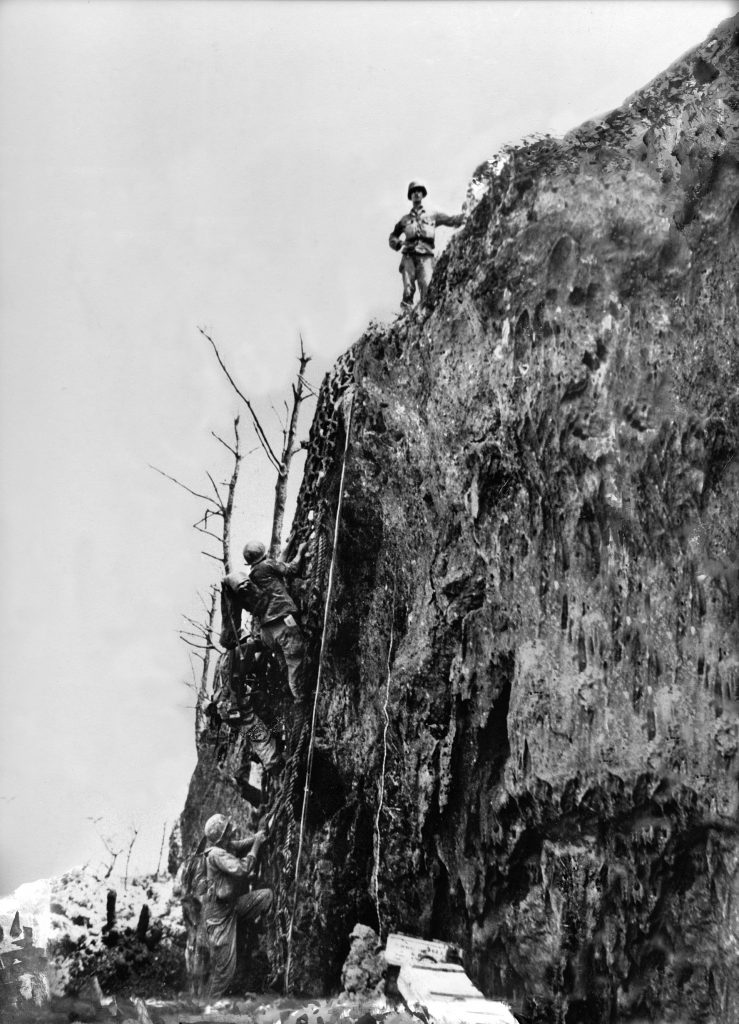
On May 2nd, 1945, the 77th and 307th Infantry Division alongside the remnants of the 96th and 381st looked up at the intimidating Maeda Escarpment on the island of Okinawa, known to the soldiers as Hacksaw Ridge, a 400 foot cliff which was a natural barrier to a series of trenches, tunnels and fortifications set up by the Imperial Japanese Forces. The climb up Hacksaw Ridge would determine the outcome of the Battle of Okinawa.
A photo of Hacksaw Ridge
By April of 1945, the Empire of Japan was on the ropes. With all their allies in the Axis Powers out of the picture, with Mussolini dead at a service station and Hitler cowering in the Führerbunker, the Japanese were the last members of the Axis with their homeland intact. Facing increasing partisan activity from the Chinese, causing massive losses on the front, and the United States having captured almost every island of theirs in the Pacific, including Iwo Jima a month prior, the last obstacle between the Americans and mainland Japan was the small island of Okinawa.
Located just 563km (350 miles) off the coast of Kyushu island, the southern most part of mainland Japan, Okinawa was a 1,207km² island, home to a vast amount of naval and air bases that would be useful in the event of an invasion of mainland Japan by the United States. Despite the fact that the 10th Army, commanded by Lieutenant General Simon Bolivar Buckner Jr, and the 5th Fleet, overseen by Admiral Raymond Spruance, vastly outnumbered the Japanese forces on Okinawa, the Japanese had come prepared.
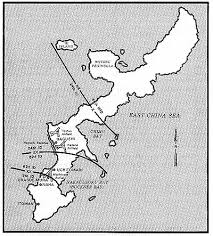
Map of Japanese Army positions on Okinawa
Lieutenant General Mitsuru Ushijima of the Japanese 32nd Army stationed only what was necessary in other parts of the island, focusing the majority of his forces in the south, due to its irregular and hilly terrain, opting to build a vast complex of tunnels, trenches and fortifications. By April, they had constructed 96km (60 miles) of tunnels, enough to accommodate the entire 32nd Army and everything it needed to fight against the Americans. In order to prevent the Americans from getting any supplies of their own, command ordered the massacre of every livestock animal on the island and that the civilians and soldiers live off sweet potatoes instead of the traditional rice.
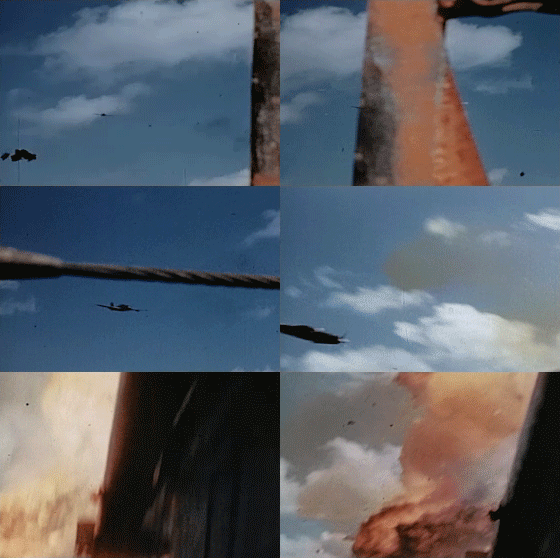
By now, the Japanese fighting doctrine of Fumeiyo Yorimo Shi, or Death Before Dishonour, had really been set in stone, with many Japanese soldiers, airmen and naval vessels doing suicide runs against American forces. With the infantry, “Banzai attacks”, in which mass numbers Japanese infantry would run at American forces with bayonets screaming “Tenno Heika Banzai” meaning “Long live the Emperor” had become common place. Planes would often fly into American naval vessels, in what were dubbed Kamikaze attacks, named after the Japanese term for “divine wind”, which dates back to at least the 13th century.
A GIF of a Kamikaze aircraft crashing into a US Warship in May 1945
On March 25th, 1945, the US Navy began shelling the island in a week long bombardment in order to soften up defences and support mine clearing. The next day, US Marines landed in the archipelago of Kerama Retto, rooting out Japanese forces there over the next five days, with its capture providing a sheltered anchorage for ships attacked by Kamikaze strikes. Eventually, the full battle began on April 1st, known as L-Day. However, the beach head was formed relatively easily, due to the fact that there was literally no Japanese resistance at the beaches that they landed at.
Having eventually secured a decent chunk of the island, with 60,000 US Troops having landed, they eventually encountered opposition in the North and South. Whilst the North was very easily taken care of, the South, where all the fortifications were, was a bloodbath. Americans would often advance into carefully prepared Japanese killing zones where they were slaughtered in their hundreds by concealed machine guns and mortars. Their idea for an offensive would involve mass artillery shelling of Japanese positions before advancing towards the Japanese pillboxes, which often included the use of flamethrowers against Japanese positions. However, this strategy lead to little success, due to the Japanese remaining sheltered in their fortified tunnels, and caused more bloodshed on both sides, as the Japanese would often launch night attacks after Americans had captured positions. Eventually, the battle reached a stalemate on the Shuri Line, a heavily fortified area located near Shuri Castle.
Meanwhile, Operation Ten-Go went ahead, a one way suicide mission by the Japanese, dispatching the Yamato, the largest battleship ever constructed, to counter offensives by the US Navy on Japanese infantry positions. It was spotted before it could reach Okinawa and was sunk, along side 5 of its escort ships and the destruction of 100 Japanese fighters, largely in Kamikaze attacks, by an American carrier force, which only lost 10 fighters in comparison. It demonstrated US air superiority and served as a great anti-climax to the largest battleship to ever be made.
A photo of the Yamato being attacked
Despite the stalemate and consistent bloodshed, Buckner refused to change his tactics, much to the surprise of both US Army high command and the Japanese. Whilst a somewhat successful counter offence was launched by the Japanese after his refusal to change tactics, they still lost 7,000 men in doing so. This allowed Buckner’s forces to gain the upper hand and gain back half a mile of land
During the stalemate on the island, a combat medic known as Desmond Doss served at Hacksaw Ridge, managing to rescue hundreds of men from the rain of fire without being armed with a single weapon due to his Christian beliefs. He was awarded the Medal of Honour, of which Truman said “I’m proud of you. You really deserve this. I consider this a greater honour than being president.” Doss passed away in 2006 due to breathing complications and his memory was immortalised in the 2016 Mel Gibson Film “Hacksaw Ridge”, in which Doss is played by Andrew Garfield.
Desmond Doss receiving the Medal of Honour
Over the next few months, the situation became progressively more dire for the Japanese. Whilst spring rain had slowed the American advance even more than before, Nazi Germany had surrendered and more forces from Europe were now available. In a desperate effort to maintain control over the island, mass Kamikaze strikes were ordered against American Vessels, including the USS Bunker Hill and the USS Enterprise, knocking both vessels out of the war.
Eventually, the Shuri Line became untenable by late May. The Japanese began organising a retreat in stages to the Kiyan Peninsula, the southern most point of the island. Starting on May 24th, the Japanese slowly retreated down the island towards the peninsula. Despite the death of Buckner on the battlefield during an artillery strike, making him the highest ranked US Military officer killed in action during WW2, the entire Japanese garrison was massacred to a man, with a little over 7,000 troops surrendering to the Americans out of the 110,000 stationed on Okinawa before the battle. Out of shame, Ushijima committed Seppuku or more commonly referred to as Harakiri, a traditional Samurai form of suicide via disembowelment, on June 21st. The military garrison on Okinawa had also used much of the civilian population as human shields and convinced many of them to commit suicide or simply killed them, in order to cover up their atrocities perpetrated on the island, saying that the Americans would do worse. The Americans too lost many men in the battle of Okinawa, leading them to question if a mainland invasion of Japan would simply cost more lives, possibly influencing the decision to drop the atomic bombs on Japan 2 months later.
US Marine Corps plane flying over the razed capital city of Okinawa
When we went to Nohra, […] we took a day trip into Buchenwald. […]It was just unbelievable to see. You couldn’t—there was so much of it, you couldn’t grasp at all. We just see these people standing, you see the bodies. You see the ashes. You see the ditches. It’s just—I can’t really describe it to tell you, you know, how horrendous it was to see these people treated like animals. You might see even worse than that.
Andrew Kiniry, 45th Evacuation Hospital, describing when the 3rd Army liberated Buchenwald
As the allies advanced from the West and the Soviets from the east, many expected to see the remnants of training camps or POW camps. What they found was beyond their wildest nightmares.
What they found were thousands upon thousands of men, women and children, all on the brink of starving to death, who had been left abandoned in fences like cattle. Not only were these people but specific groups of people. Some were disabled, some were gay, some were slavs. But the most notable among these groups of people were the Jews. The soldiers thought they had seen the worst of it but they were very wrong.
A group of child prisoners at Auschwitz
They found large gas chambers, in which the prisoners would be put inside, under the pretence of having a shower to cleanse themselves. Then, Zyklon B, a pesticide, would be poured in through the showers. Deaths could take anywhere between 3 minutes to 30. The bodies were then dragged out and burnt in ovens nearby. The specific targeting of Jews was called Germany’s “Final Solution”, which involved the eradication of the Jewish population from Europe. This was known as the Holocaust, but many Jews today prefer to call it the Shoah.
Over 5.7 million Jews were killed in the Holocaust. Others killed included 2-3million Soviet POWs, 1.9 million Poles, 1.5 million Romani, 250,000 disabled people, 170,000 Freemasons, 25,000 Slovenes, 15,000 homosexuals, 5,000 Jehovahs witnesses, 7,000 Spanish Republicans as well as countless others. Around half of the Jewish deaths were attributed to the gas chambers, whilst the rest were due to forced labour in the camps, starvation in the camps and ghettos as well as mass shootings, most notably by the Einsatzgruppen, a death squad that tailed the Wehrmacht in their march east.
Upon discovery of the concentration camps, Dwight D. Eisenhower, the Supreme Commander of the Allied Expeditionary Force, told his men to film the horrors they encountered. The film reels were then compiled into a 1 hour long documentary, shown as evidence at the Nuremberg Trials and the Trial of Adolf Eichmann, an architect of the Holocaust, after his capture in 1961
Get it all on record now – get the films – get the witnesses – because somewhere down the track of history some bastard will get up and say that this never happened
Dwight D. Eisenhower speaking to his men about the Concentration Camps
Eisenhower, Omar Bradley, George Patton and American forces at Ohrdruf concentration camp, a part of the Buchenwald network
The survivors were liberated, many only to find that their homes had been repossessed. Many Jews sought shelter in Palestine whilst others stayed in Europe, where persecution still occurs to this day. To this day, people still deny these events happened, either that the statistics are overestimates or that such things never occurred and is simply a victim complex made by Jews, despite the countless amount of evidence recorded not just by the Allies and Soviets but by the Germans themselves. Many cite the Holocaust as the greatest humanitarian tragedy in history.