In 509BC, the son of the king of Rome raped a noblewoman who then committed suicide. In response, Lucius Junius Brutus staged a coup and overthrew the king, Lucius Tarquinius Superbus. Brutus swore that no single man should hold absolute power, establishing the Roman Republic. Brutus became one of Rome’s First Consuls, a position in the Roman Republic where 2 people would share power to keep the other in check with advise from the Senate compromised of 900 Senators, before dying later that year.

Nearly five centuries later, that principle would be tested. By 44 BC, Rome had been transformed by the rise of Julius Caesar. A highly successful general, Caesar had expanded Rome’s territories through his campaigns in Gaul before defeating his rival, Pompey, in a civil war. In the years that followed, he accumulated unprecedented political power. Caesar introduced a number of reforms, including land redistribution and debt relief, which earned him strong support among the Roman people.
At the same time, he received a growing number of honours from the Senate, with statues were erected in his likeness, and his authority continued to expand. In 44 BC, he was appointed Dictator Perpetuo, or dictator for life, a title that placed him above all other officials. To many senators, this development was deeply alarming. The Republic had been founded in opposition to monarchy, and Caesar’s position appeared to move Rome closer to one-man rule. Whether or not he intended to make himself king, the fear that he might do so was enough to provoke action.
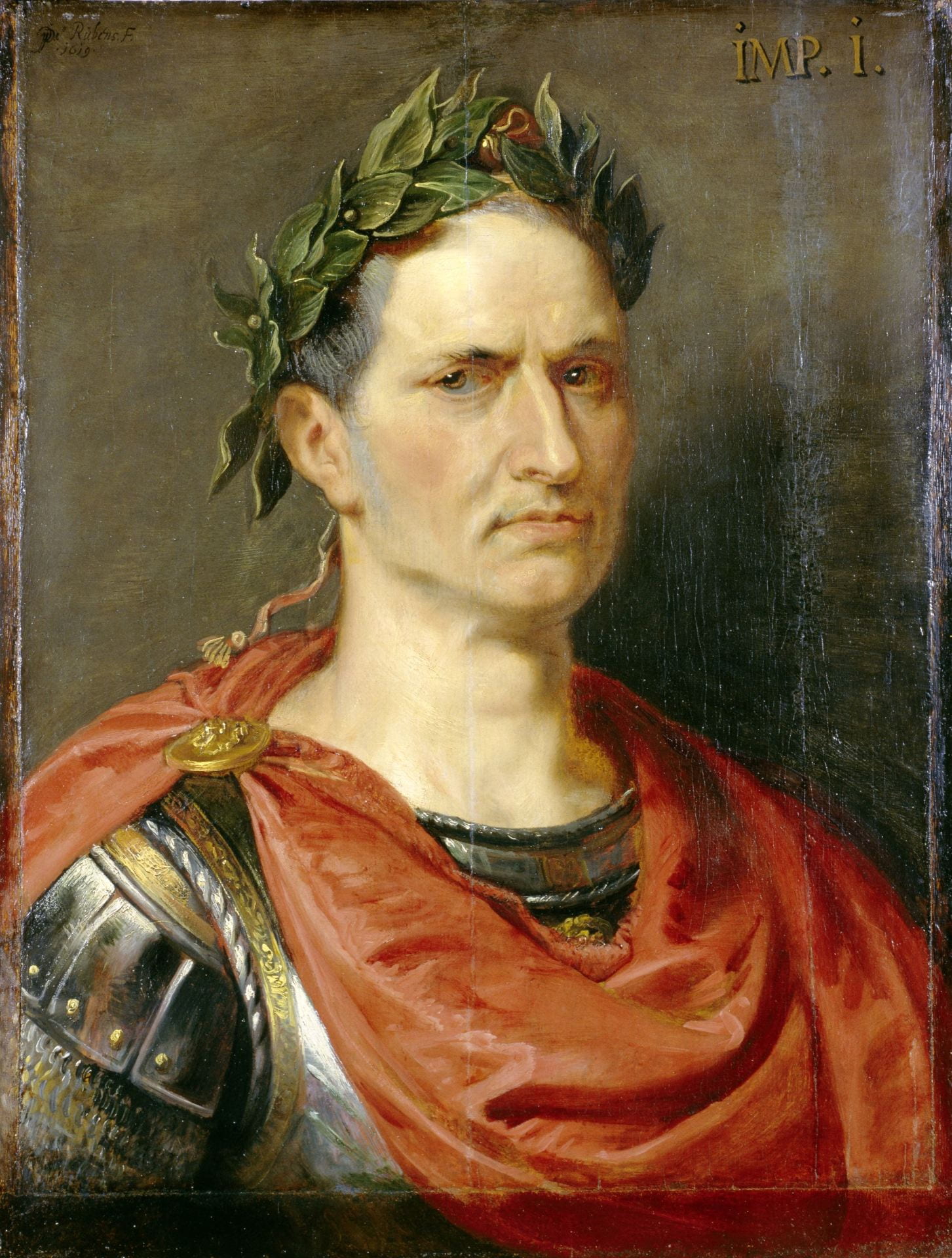
A group of senators, later known as the Liberators, formed a conspiracy to assassinate Caesar. Among their leaders were Gaius Cassius Longinus, Decimus Junius Brutus Albinus, and Marcus Junius Brutus. Cassius had previously fought against Caesar during the civil war before being pardoned. Decimus Brutus had been one of Caesar’s most trusted generals, making his involvement particularly significant. Marcus Brutus, meanwhile, faced a personal and political dilemma. Though he had also opposed Caesar in the past, he had been forgiven and promoted. Caesar treated him with respect, and the two were closely connected. However, Brutus was also influenced by the ideals of the Republic and by his family’s historical role in overthrowing Rome’s last king.
The conspirators were not united by a single motive. Some feared tyranny, others resented Caesar’s dominance, and some were concerned about the loss of the Senate’s authority. In total, around 60 senators joined the plot. The conspirators chose to act during a meeting of the Senate on March 15th, known as the Ides of March. The meeting was to be held at the Theatre of Pompey, due to maintenance on the main Senate building. In the days before the meeting, Caesar is said to have received several warnings. A soothsayer, Spurinna, reportedly advised him to beware the Ides of March. His wife, Calpurnia, experienced troubling dreams of his death and urged him not to attend the Senate.
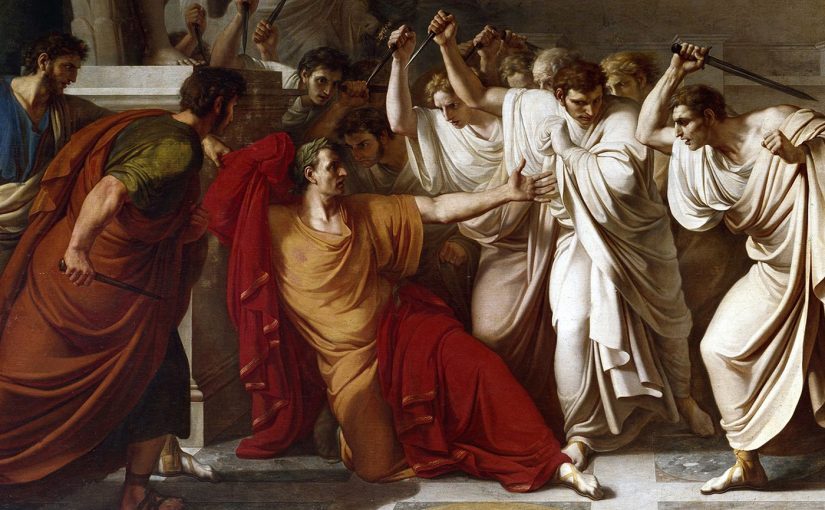
On the morning of the 15th, Caesar initially decided to remain at home. However, Decimus Brutus persuaded him to attend, arguing that it would be inappropriate to dismiss the Senate and that his absence might damage his authority. Caesar eventually agreed and set out for the meeting. When Caesar arrived at the Senate chamber, he was surrounded by the conspirators. At a prearranged signal, one of them approached him with a petition, while others moved into position. The first blow was struck by a senator known as Casca. In the moments that followed, the other conspirators joined in, attacking Caesar from all sides. Overwhelmed by the number of attackers, he was unable to defend himself.

Ancient writers such as Suetonius and Plutarch report that Caesar was stabbed 23 times, though only one of the wounds is believed to have been fatal. The exact sequence of the attack and the identity of those who delivered each blow remain uncertain. According to some accounts, Caesar stopped resisting when he saw Brutus among the attackers. His final words are not known for certain. The famous phrase “Et tu, Brute?” comes from William Shakespeare’s later play and is not confirmed by historical sources. Caesar fell at the base of a statue of Pompey, the former rival he had defeated years earlier.
The conspirators believed that killing Caesar would restore the Republic. Instead, it created instability. Rather than celebrating, many in Rome reacted with shock and anger. Caesar had been popular with the public, and his assassination led to unrest. At his funeral, Mark Antony delivered a speech that turned public opinion against the conspirators. Fearing retaliation, many of them fled Rome. In the years that followed, a series of civil wars broke out. Brutus and Cassius were eventually defeated in 42 BC, after which both men died by suicide. The Republic did not recover. In 27 BC, power was consolidated under Augustus, marking the transition from Republic to Empire.

The assassination of Julius Caesar remains one of the most debated events in history. Some view Marcus Junius Brutus as a defender of liberty, acting to prevent tyranny. Others see him as a traitor who betrayed a friend and helped bring about the end of the Republic. What is clear is that the conspirators failed in their ultimate aim. In attempting to preserve the Republic, they instead accelerated its collapse. The system they sought to protect proved unable to survive the removal of one man who had come to dominate it.