
The Revolution had been fought partly over the principle that governments derived their authority from the people, but the new United States was far from politically settled. The Continental Congress had been deliberately designed to prevent the creation of another powerful central authority, but the resulting government was extremely weak. Under the Articles of Confederation, Congress had difficulty raising taxes, regulating trade or maintaining a strong national military.
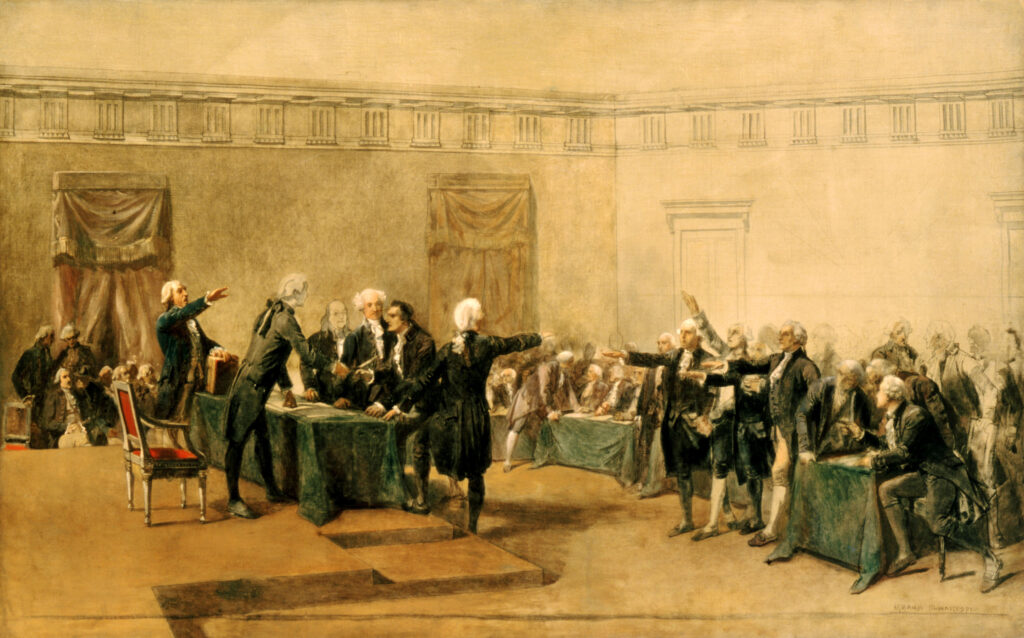
The problems became increasingly obvious after the war. The United States was heavily indebted, states disagreed over trade and taxation, and fears grew that the new republic could collapse into political and economic disorder. In 1787, delegates gathered in Philadelphia to rewrite the country’s system of government. Rather than simply strengthening the Articles of Confederation, they created an entirely new Constitution. It established a federal government divided between three branches: the executive, legislative and judicial.
The presidency was deliberately designed to be powerful enough to govern but constrained by elections, Congress and the courts. There was also an obvious candidate for the first president. George Washington. Washington had become the most respected military figure in the new republic, but he had no desire to become a dictator. In December 1783, he famously resigned his military commission and returned to private life.
With a heart full of love and gratitude, I now take leave of you. I most devoutly wish that your latter days may be as prosperous and happy, as your former ones have been glorious and honourable.
Washington to his officers upon his retirement in 1783
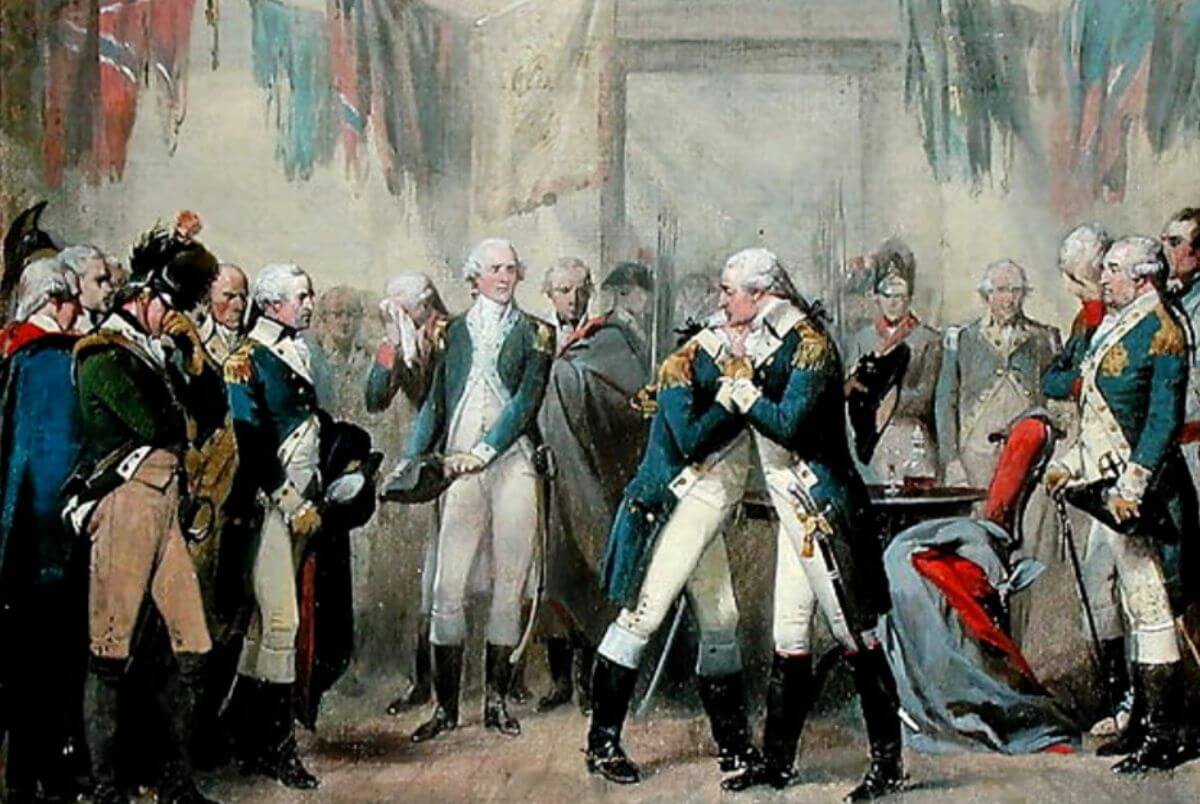
In an age when victorious generals frequently seized political power, Washington’s decision was extraordinary. He had commanded an army for eight years and had the loyalty of thousands of soldiers. Had he chosen to use that popularity to establish himself as a permanent ruler, the new American government might have developed into something entirely different. Instead, Washington voluntarily surrendered his authority.
When the Constitution came into effect in 1789, Washington was unanimously elected as the first President of the United States. He established many of the conventions that would define the office, including appointing a cabinet of advisers and delivering an annual message to Congress. Washington did not attempt to turn the presidency into a monarchy. Nor did he attempt to remain in power indefinitely. After serving two four-year terms, he retired in 1797. His decision established an important precedent: the presidency was an office that a person could willingly leave.

The American victory also had profound consequences outside America. France had played a decisive role in defeating Britain, but supporting the Americans had come at an enormous financial cost. The French government had accumulated huge debts while already struggling with an inefficient taxation system and an increasingly dissatisfied population. The irony was that France had helped create an independent republic partly to weaken its British rival, but the expense of doing so contributed to the financial crisis that eventually helped destabilise the French monarchy.
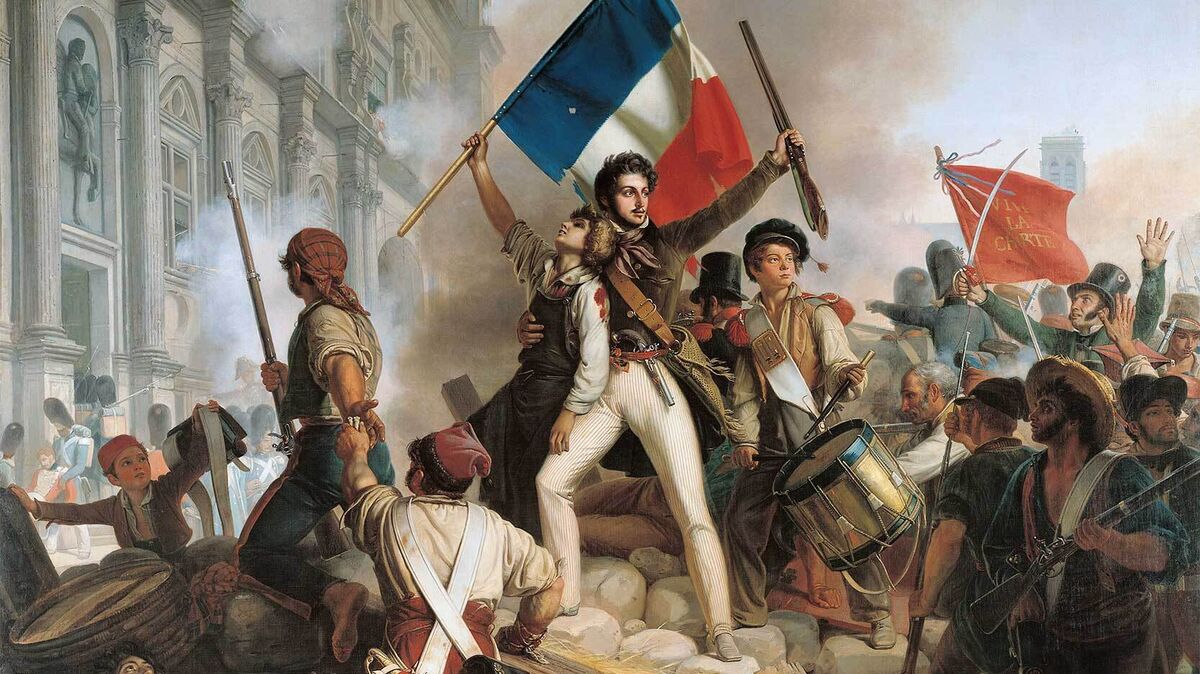
Within a few years, France itself would experience a revolution. The American Revolution therefore became an important source of inspiration for French revolutionaries. Ideas about popular sovereignty, constitutional government and the rights of citizens crossed the Atlantic. The American example demonstrated that an established monarchy could be challenged and that a new republic could be created in its place. The two revolutions were nevertheless very different. The American Revolution was primarily a war for independence from a foreign government, whereas the French Revolution became a much broader struggle over the structure of French society and government.
The American Revolution permanently changed the political landscape of the Western world. The United States became the first large-scale modern republic created from a successful colonial independence movement, demonstrating that a European imperial power could be defeated by its own subjects. Its declaration that governments derive their legitimacy from the consent of the governed became enormously influential, even though the revolutionary United States did not initially extend those principles to everyone. Slavery remained legal, women were excluded from political participation and Native American peoples faced increasing displacement as the new nation expanded westward. The Revolution was therefore both a radical transformation and an incomplete one.
Nevertheless, its ideas travelled far beyond North America. The language of liberty, constitutional government and popular sovereignty influenced political movements across Europe and the Atlantic world. The French Revolution would soon demonstrate how powerful those ideas could become. The war had begun with a dispute over taxation and political representation. It ended with the creation of a new country and a challenge to one of the fundamental assumptions of eighteenth-century politics: that monarchy and empire were the natural forms of government. The United States had won its independence. Now it had to prove that its experiment in republican government could survive.