By the summer of 1793, the French Revolution had entered its most violent phase. France was fighting almost every major European power. The Republic faced rebellions in the Vendée and elsewhere, the economy was struggling, and political divisions in Paris had become increasingly vicious. The execution of Louis XVI had destroyed the possibility of an easy restoration of the monarchy, while the murder of Jean-Paul Marat demonstrated how political violence could be directed at even the most prominent revolutionaries. The revolutionary government responded by increasingly treating political opposition as a matter of national survival. At the centre of this transformation was Maximilien Robespierre.

Robespierre and his allies believed that the Republic was surrounded by enemies. Some were foreign monarchies attempting to destroy the Revolution. Others were royalists, counter-revolutionaries and refractory priests. But the definition of an enemy could become increasingly broad. The Committee of Public Safety became the central instrument of revolutionary government. The Revolutionary Tribunal, established earlier in 1793, was strengthened, allowing suspected enemies of the Revolution to be tried and condemned with extraordinary speed. The revolutionary government increasingly argued that extraordinary circumstances required extraordinary measures. The result became known as the Reign of Terror.
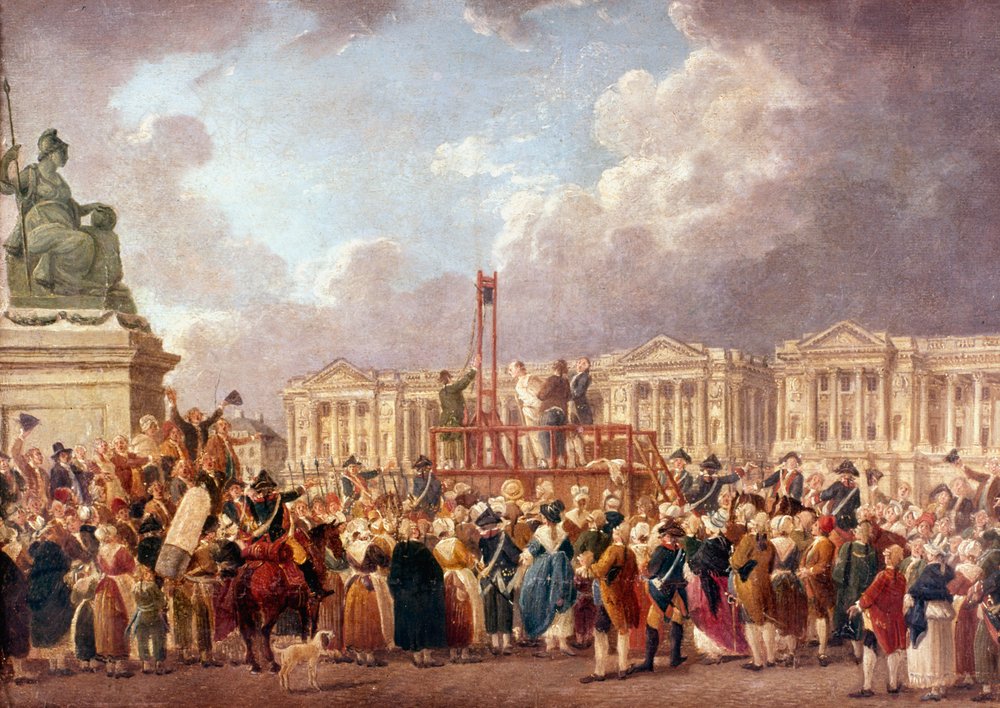
The Law of Suspects allowed revolutionary authorities to arrest people considered potential enemies of liberty. In June 1794, the Law of 22 Prairial further restricted the rights of defendants before the Revolutionary Tribunal and accelerated the process of condemnation. The guillotine became the most recognisable symbol of this period. Thousands were executed during the Terror, alongside thousands more who died through imprisonment, civil war and other forms of revolutionary repression. Estimates vary, but roughly 16,000 people were officially sentenced to death by revolutionary tribunals, while the total number killed through the wider Terror and associated repression was considerably higher.
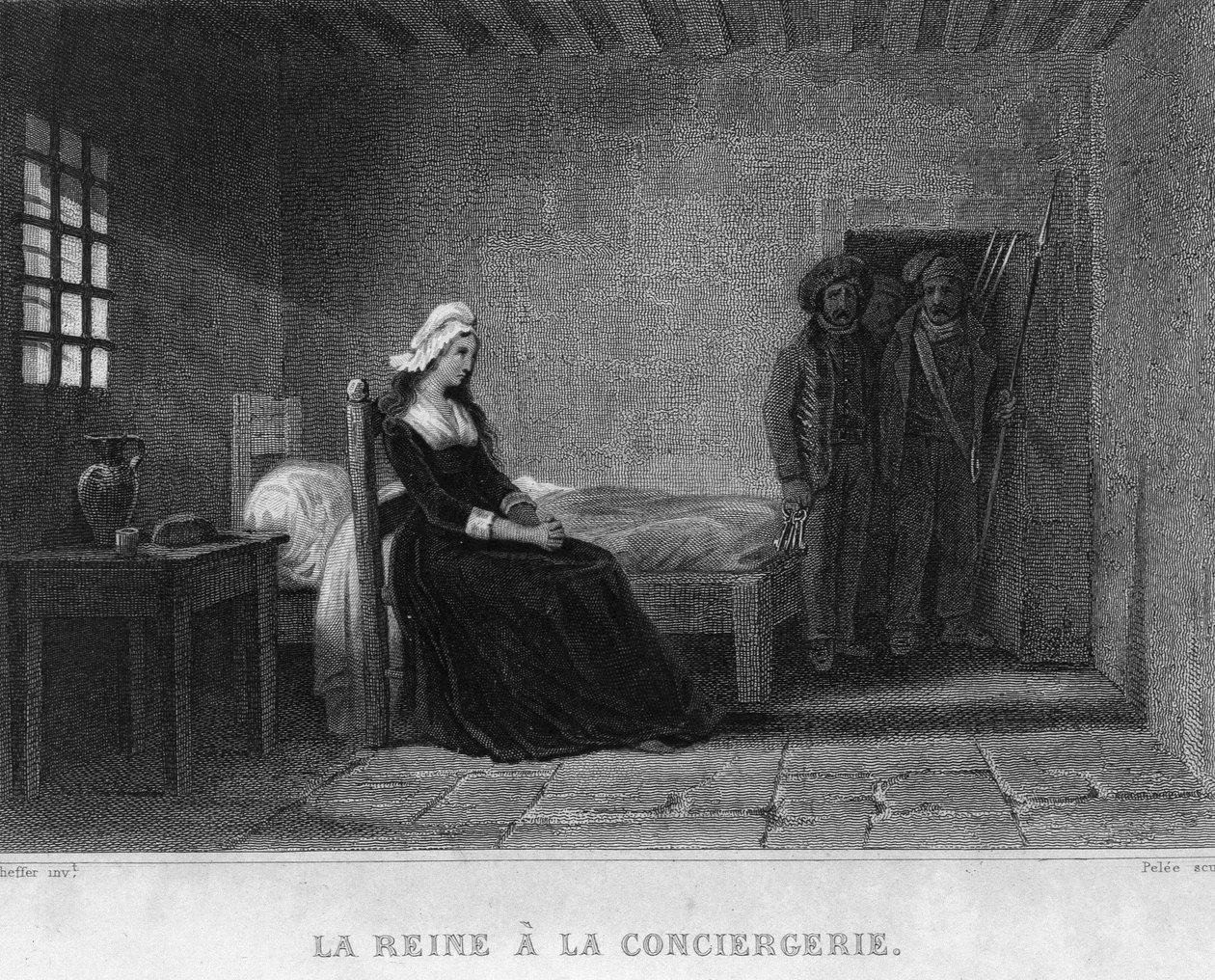
Among those awaiting their fate was the woman who had once been the Queen of France: Marie Antoinette. Marie Antoinette had already endured extraordinary personal tragedy: her husband had been executed in January; her children had been separated from her; her daughter, Marie-Thérèse, remained imprisoned. Her young son, Louis-Charles, had been removed from his mother’s care and placed under the supervision of revolutionary authorities. The former Queen herself had initially been held in the Temple with her family before being transferred to the Conciergerie in August 1793.
The conditions were harsh. She was no longer treated as a queen. She was a prisoner of the Republic. For years, Marie Antoinette had been one of the most hated figures in revolutionary propaganda. She had been portrayed as extravagant, immoral and sympathetic to France’s enemies. The infamous phrase supposedly attributed to her – “Let them eat cake” – had become one of the most enduring pieces of anti-royalist propaganda, despite there being no reliable evidence that she ever said it. More damaging were the genuine political accusations against her. She had opposed aspects of the Revolution, maintained contacts with foreign courts and attempted to influence French and foreign political affairs. Revolutionary leaders increasingly portrayed her as an enemy of the nation rather than simply a former queen. Her trial would therefore be about more than her personal conduct. It would be about what she represented.
On October 14th 1793, Marie Antoinette was brought before the Revolutionary Tribunal. The prosecution accused her of conspiring against the security of the state and maintaining relationships with France’s enemies. The trial was heavily political. The prosecution portrayed Marie Antoinette as an enemy of the Revolution who had used her position to undermine France. Some of the accusations were based upon her genuine political correspondence and activities; others were sensational or poorly supported. One particularly notorious allegation concerned sexual abuse involving her young son. The accusation shocked even Marie Antoinette. She initially remained silent. Then a woman in the public gallery reportedly shouted an accusation against her. Marie Antoinette responded by appealing to the mothers present in the courtroom. She asked whether a mother could really be capable of such an act. The courtroom reportedly reacted with sympathy. Even her opponents could recognise the extraordinary cruelty of the accusation. But sympathy would not save her.
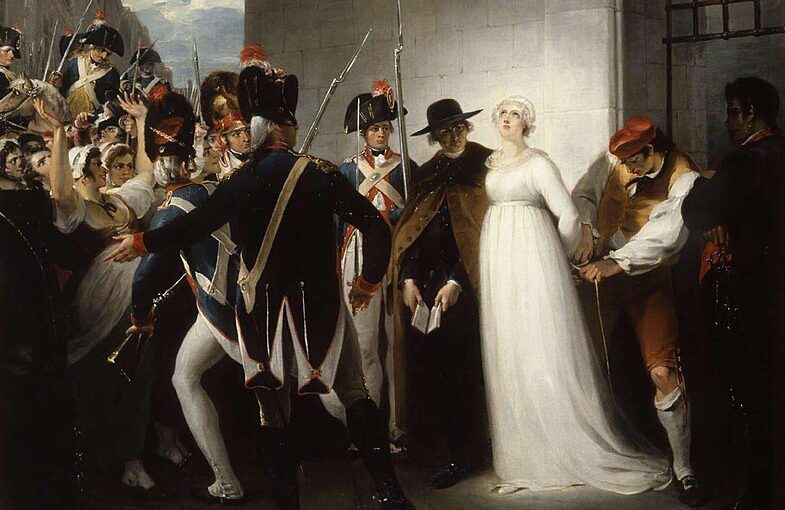
The Revolutionary Tribunal found Marie Antoinette guilty. She was sentenced to death. The former Queen of France would be executed the following day. Marie Antoinette spent her final hours in prison. Unlike her husband, she would not receive a royal carriage. There would be no ceremony appropriate to a queen. She was taken from the Conciergerie and placed onto a simple open wooden cart used to transport ordinary prisoners to the scaffold. The transformation was deliberate. The Revolution was not merely executing Marie Antoinette. It was stripping away every remaining symbol of her former status. She was dressed in white, her hair was cut short in preparation for the guillotine, and her hands were tied behind her back. Then the cart began its journey through Paris.
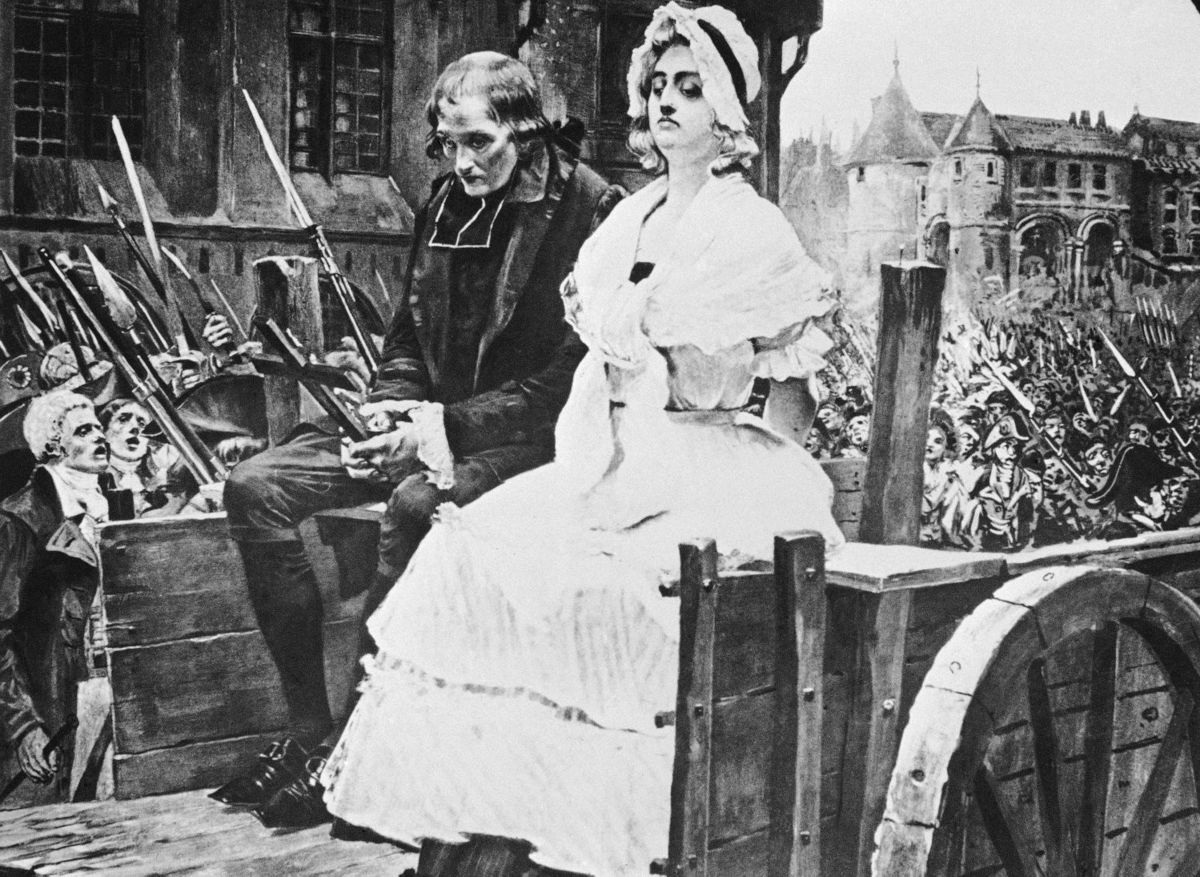
The route to the Place de la Révolution took her through streets crowded with spectators. Some jeered. Others watched in silence. The woman who had once arrived in France as a teenage Austrian archduchess, married the heir to the French throne and eventually become Queen was now being transported through Paris as an ordinary condemned prisoner. Marie Antoinette reached the Place de la Révolution shortly after noon. She climbed the scaffold. The executioner, Charles-Henri Sanson, prepared her for the guillotine. Then, as she approached the blade, she accidentally stepped on his foot. She immediately apologised.
Monsieur, I beg your pardon. I did not do it on purpose.
The last words of Marie Antoinette
It was an almost absurdly ordinary thing to say at such a moment. A woman who had once been among the most powerful people in Europe was apologising for accidentally stepping on another person’s foot. Seconds later, the blade fell. Marie Antoinette was dead. It was approximately 12:15 pm on October 16th 1793. She was thirty-seven years old.
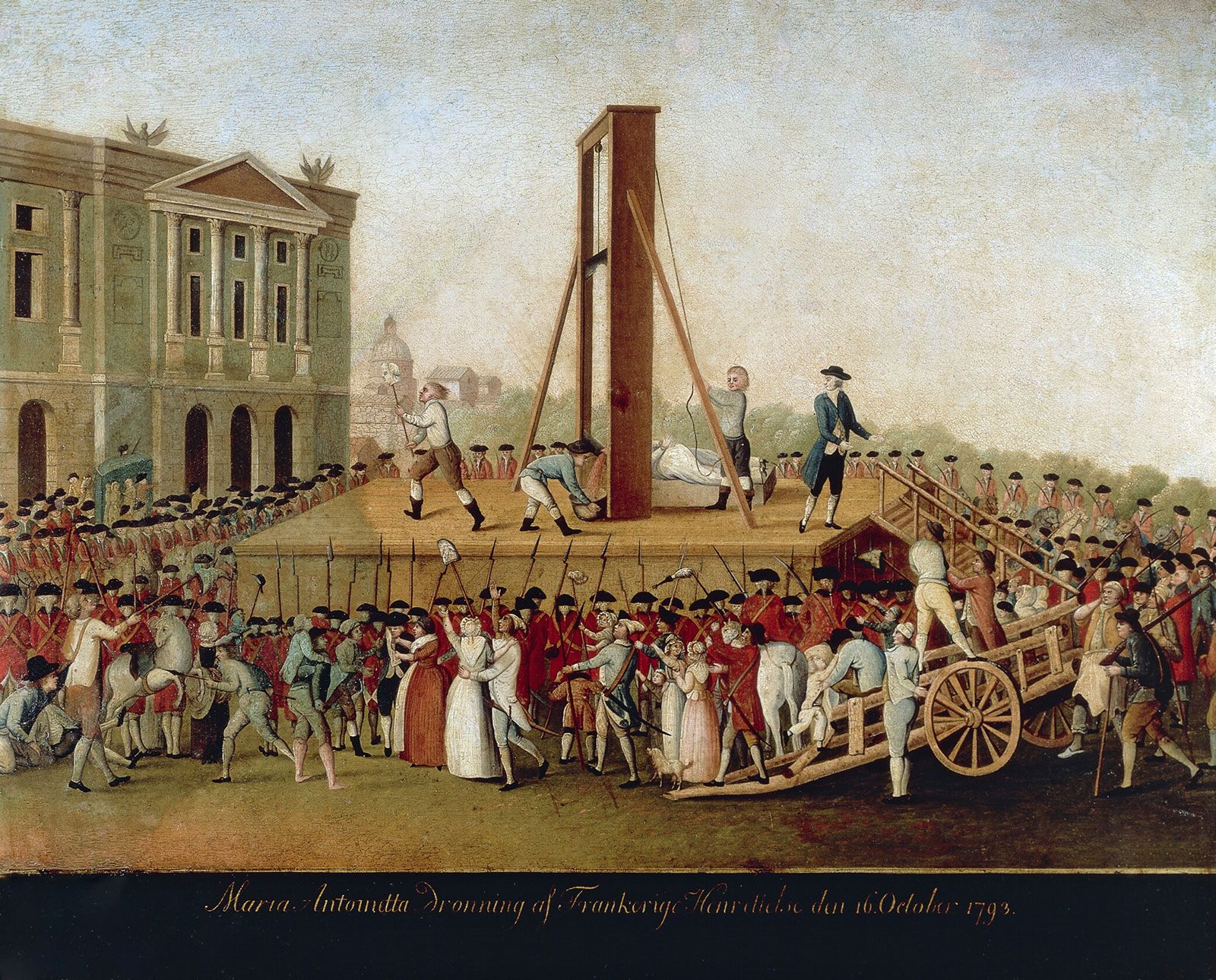
Marie Antoinette’s execution represented the final destruction of the French royal family as a political institution. Louis XVI was already dead. Marie Antoinette was now dead. Their son, Louis-Charles, remained imprisoned and would die in captivity in 1795 at the age of ten. Their daughter, Marie-Thérèse, would eventually survive the Revolution and leave France. The monarchy had been reduced from one of Europe’s oldest institutions to a memory. But Marie Antoinette’s death also demonstrated something darker about the Revolution. The revolutionaries had originally demanded equality before the law. Now the former Queen had been deliberately stripped of every privilege associated with her birth and status before being executed as a citizen of the Republic.
To her enemies, this was justice. To her supporters, it was regicide and martyrdom. To later generations, her death became one of the defining images of the French Revolution. The white dress. The wooden cart. The jeering crowd. The guillotine. And the final apology to her executioner. The Queen who had once lived at Versailles had been reduced to a prisoner travelling through the streets of Paris towards her death. Yet there was an irony in the attempt to erase her. The Revolution wanted Marie Antoinette to become simply another enemy of the Republic. Instead, her execution helped transform her into one of the Revolution’s most enduring symbols. The woman who had once been portrayed as the embodiment of royal excess became, in death, the tragic face of the old regime. And the Revolution continued.
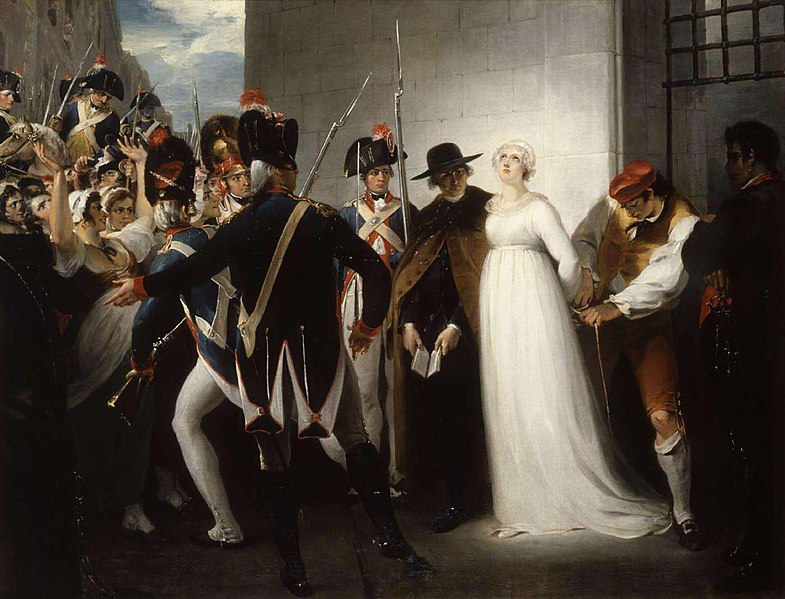
The guillotine would claim thousands more lives before the Terror itself finally turned upon its architects. Eventually, even Robespierre would discover that the machine of revolutionary justice could not distinguish between the enemies he wanted to destroy and the revolutionaries who operated it. But on 16 October 1793, it was Marie Antoinette who stood beneath the blade. The Queen was dead. The Republic lived on.