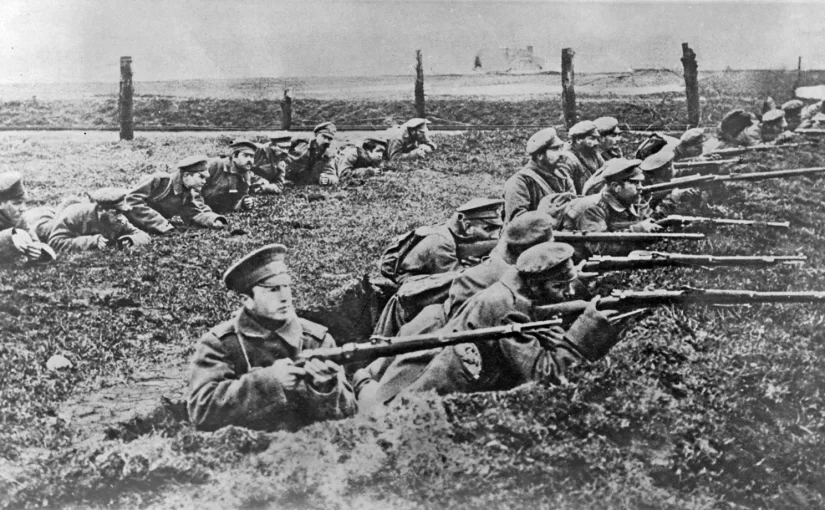
While the German advance in France ground to a halt on the Western Front, events in the east were unfolding much faster than Berlin had anticipated. German planners had assumed that Russia, with its enormous territory and comparatively underdeveloped railway network, would require at least six weeks to mobilise its vast army. Instead, Russian mobilisation progressed far more rapidly than expected. Although it was still incomplete, two Russian armies crossed the border into the German province of East Prussia before Germany had defeated France, forcing Berlin to divert troops away from the west far earlier than planned.
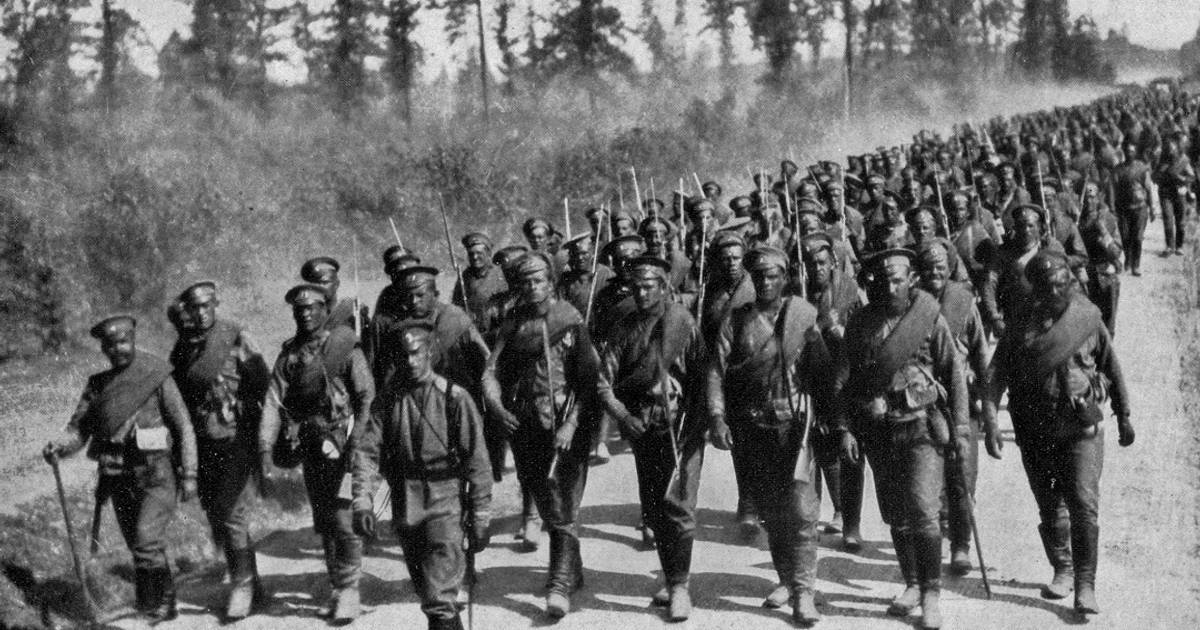
The invasion was led by Generals Paul von Rennenkampf and Alexander Samsonov, who commanded the Russian First and Second Armies respectively. Their objective was straightforward: overrun East Prussia, force Germany to defend its homeland, and relieve pressure on France before the war in the west could be decided. Initially, the strategy appeared to be working. German commanders feared losing East Prussia altogether, and panic spread among the civilian population as thousands fled westward.
The situation changed dramatically with the appointment of Paul von Hindenburg and his chief of staff Erich Ludendorff to command the German Eighth Army. Making use of intercepted Russian radio messages – which, astonishingly, had often been transmitted without encryption – and Germany’s excellent railway network, the Germans realised that the two Russian armies had become dangerously separated. Rather than retreat, they decided to destroy them one at a time.

Between 26 and 30 August 1914, the Germans surrounded Samsonov’s Second Army near the town of Tannenberg. The battle became one of the most decisive victories of the entire war. Nearly 100,000 Russian soldiers were captured, tens of thousands more were killed or wounded, and the Second Army effectively ceased to exist. Unable to bear responsibility for the catastrophe, General Samsonov reportedly walked into a nearby forest and took his own life.
With Samsonov defeated, Hindenburg and Ludendorff turned their attention to Rennenkampf’s First Army. A few weeks later, during the First Battle of the Masurian Lakes, the Russians were driven out of East Prussia altogether. Although much of the Russian Army remained intact, the immediate threat to German territory had been eliminated, transforming Hindenburg and Ludendorff into national heroes almost overnight.

Further south, Germany’s ally Austria-Hungary was faring far less successfully. Vienna had expected a swift victory over Serbia following the assassination of Archduke Franz Ferdinand, but Serbian forces proved far more resilient than anticipated. In August 1914, the Austro-Hungarian Army suffered a humiliating defeat at the Battle of Cer, marking the first Allied victory of the war. At the same time, Russian armies surged into the Austro-Hungarian province of Galicia, inflicting a series of defeats and forcing the Habsburg armies into a chaotic retreat. By September, the strategically important fortress of Przemyśl had been surrounded, beginning one of the longest sieges of the First World War.
Germany was now forced to support its struggling ally. Throughout the autumn of 1914, German and Russian forces fought a series of major engagements across modern-day Poland, including the Battle of Łódź. Although neither side achieved a decisive breakthrough, the fighting prevented the Russians from exploiting their earlier successes against Austria-Hungary and helped stabilise the Central Powers’ eastern front.
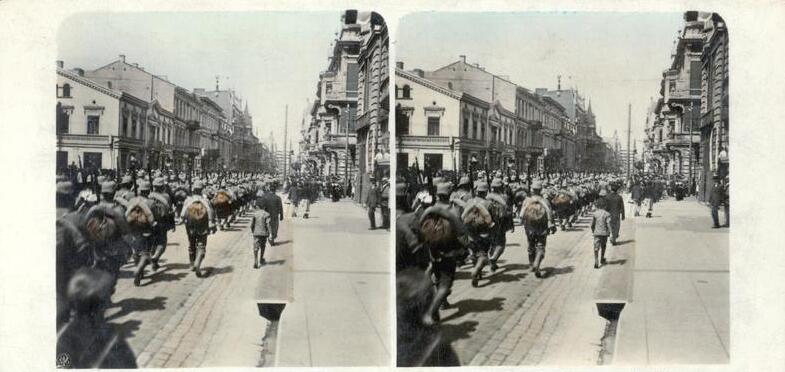
The conflict expanded still further in late October 1914 when the Ottoman Empire entered the war on the side of Germany and Austria-Hungary. Once one of the world’s greatest empires, Ottoman territory still stretched across much of the Middle East, including modern-day Turkey, Syria, Iraq, Jordan, Lebanon and Palestine. German military advisers had spent years modernising the Ottoman Army, and its government increasingly viewed Russia as its principal rival. On 29 October, Ottoman warships launched surprise attacks against the Russian ports of Odessa, Sevastopol and several other Black Sea harbours. Russia declared war soon afterwards, followed within days by Britain and France. A new front had opened in the Caucasus Mountains, while the Middle East itself would soon become another major theatre of the war.
Unlike the Western Front, however, the Eastern Front never became dominated by an unbroken network of trenches stretching from one end of the battlefield to the other. The distances involved were simply too vast. From the Baltic Sea to the Black Sea stretched a front of well over a thousand miles, much of it crossing forests, marshes and open plains. Neither side possessed enough men to fortify every mile of the line, meaning battles remained far more mobile. Armies frequently advanced or retreated by hundreds of miles, and sweeping manoeuvres, encirclements and rapid offensives remained common throughout much of the war.