
By December 1776, the American Revolution appeared to be on the verge of collapse. Washington’s Continental Army had suffered a series of devastating defeats around New York and had been driven across New Jersey into Pennsylvania. Thousands of soldiers had been killed, wounded or captured, while many more had simply deserted. The enlistments of many remaining soldiers were also due to expire at the end of the year. If Washington could not achieve a victory soon, his army might effectively disappear.
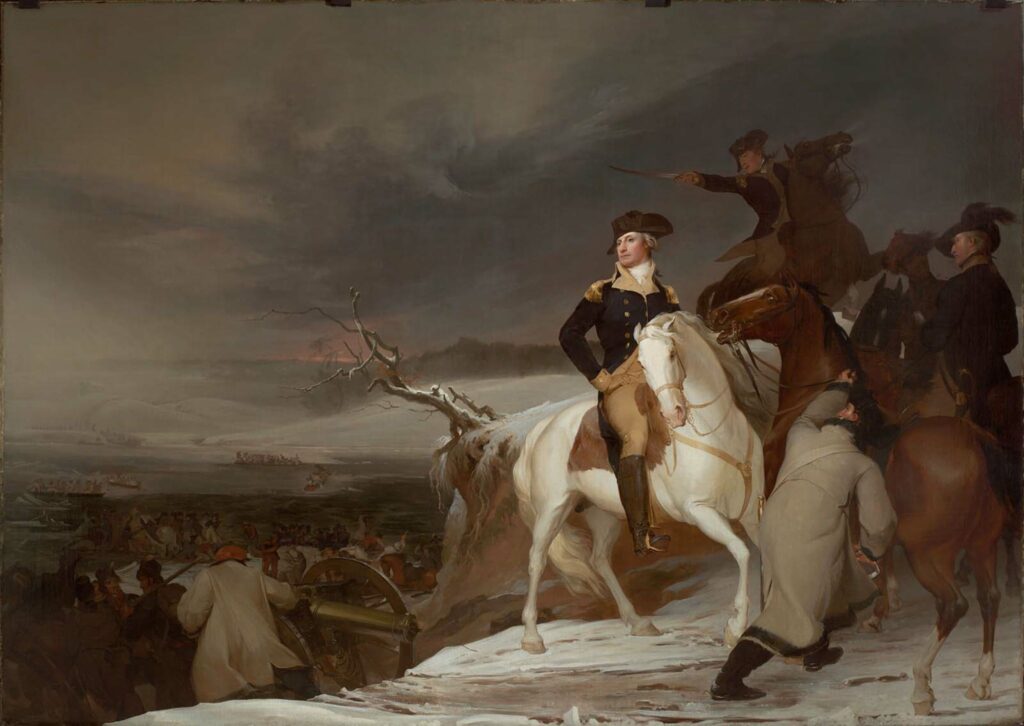
The British, meanwhile, believed that the American rebellion was nearing its end. British and Hessian (German speaking auxiliary) forces had occupied much of New Jersey, establishing a series of scattered garrisons throughout the region. One of the most important was at Trenton, where around 1,400 Hessian soldiers were stationed under Colonel Johann Rall. The Hessians were German troops hired by Britain to fight alongside its army. Although they were experienced soldiers, they were spread across a number of defensive positions and had become increasingly confident that the Americans were incapable of mounting another major attack. Washington desperately needed to prove them wrong.
With Christmas approaching, Washington devised an extremely risky plan. He would cross the Delaware River during the night, attack the Hessian garrison at Trenton and then withdraw before the British could bring their larger forces against him. The operation depended upon secrecy and timing. If the army were detected while crossing the river, Washington’s already weakened force could potentially be destroyed. On the evening of December 25th, 1776, Washington’s soldiers began gathering along the Pennsylvania side of the Delaware. The conditions were terrible. The river was filled with floating ice, while strong winds and freezing temperatures made the crossing extremely dangerous. The original plan involved several separate crossings, but worsening conditions prevented some of them from taking place. Nevertheless, Washington continued with the operation.

The importance of getting his entire force across the river was so great that Washington reportedly ordered everyone to carry weapons, including musicians and other non-combat personnel. The soldiers struggled to move artillery and supplies across the icy water while maintaining silence and discipline. The crossing took far longer than expected. Washington’s army did not finish crossing until the early hours of December 26th. Despite the difficulties, the operation had succeeded: the Hessians at Trenton had not been warned that an American attack was coming. Washington now marched his exhausted soldiers towards the town.
At approximately 8 a.m. on December 26th, the Continental Army attacked Trenton from several directions. The Hessians were caught by surprise and attempted to organise a defence, but the Americans quickly seized key positions and brought artillery into the town. Colonel Rall attempted to rally his men and launch a counterattack, but he was mortally wounded during the fighting. Within roughly an hour, the Hessian resistance collapsed. Around 900 Hessian soldiers were captured, while only a small number of Americans were killed or wounded. Washington had achieved something that had seemed almost impossible only days earlier: a major American victory.
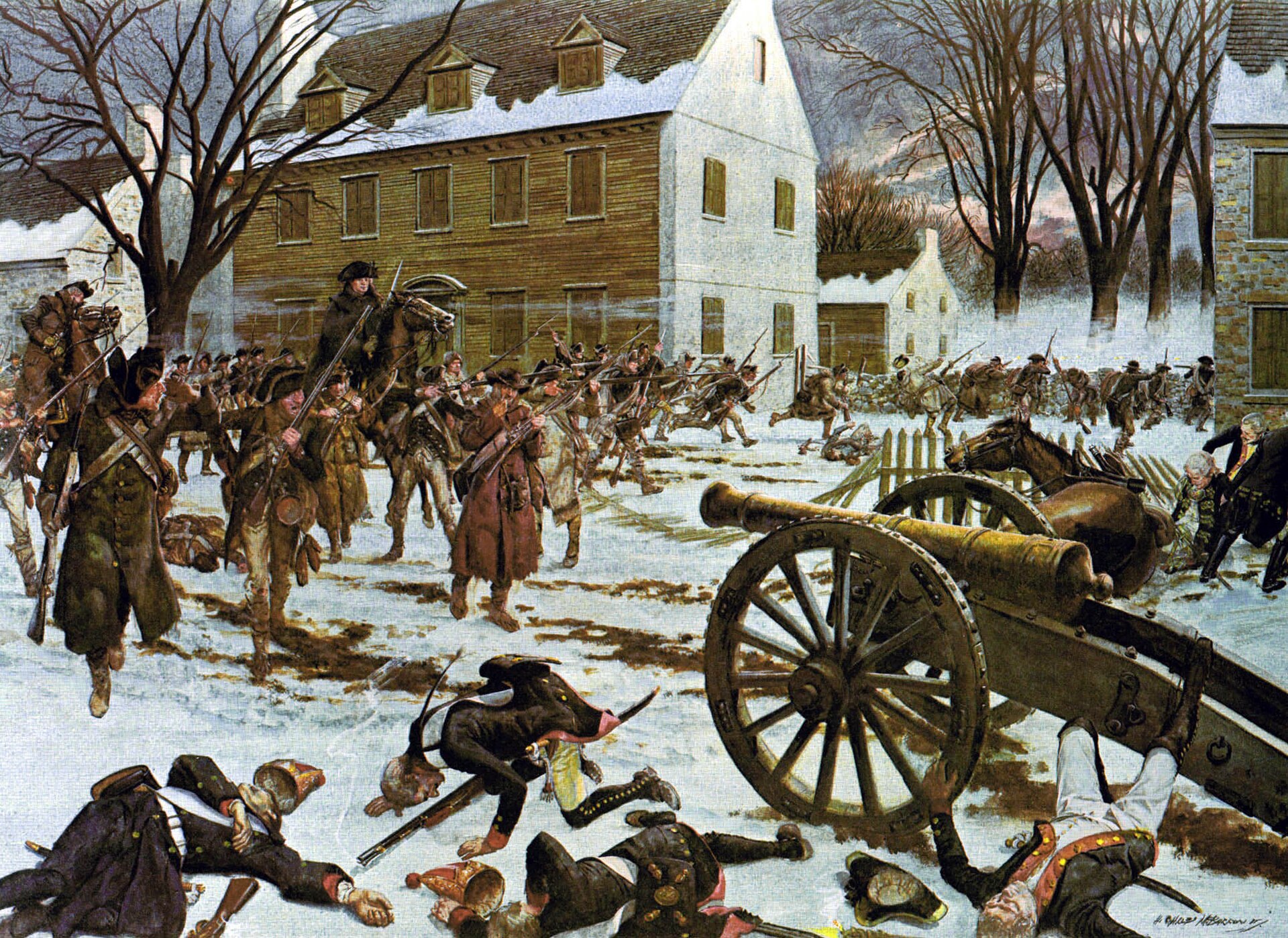
The victory at Trenton was militarily modest compared with the enormous battles that had already taken place around New York. Its psychological importance, however, was enormous. The Continental Army had demonstrated that it could still defeat experienced British troops and their allies. More importantly, soldiers who had been considering desertion were given a reason to remain in the army. Washington did not stop there. After crossing back into Pennsylvania, he returned to New Jersey and established a position around Trenton. When British commander Lord Cornwallis moved against him with a much larger force, Washington managed to evade the British during the night and march around their army. He then attacked the British garrison at Princeton on January 3rd, 1777, winning another important victory.
The victories at Trenton and Princeton did not end the American Revolution, but they transformed its momentum. The British still controlled New York and possessed vastly superior military resources, while the Continental Army remained poorly equipped. Yet Washington had shown that the rebellion could survive. The crossing of the Delaware therefore became more than a daring military operation. It was the moment when the American Revolution, which had seemed close to defeat, was given a new lease of life. Washington had kept his army alive – and, in doing so, kept the revolution alive with it.