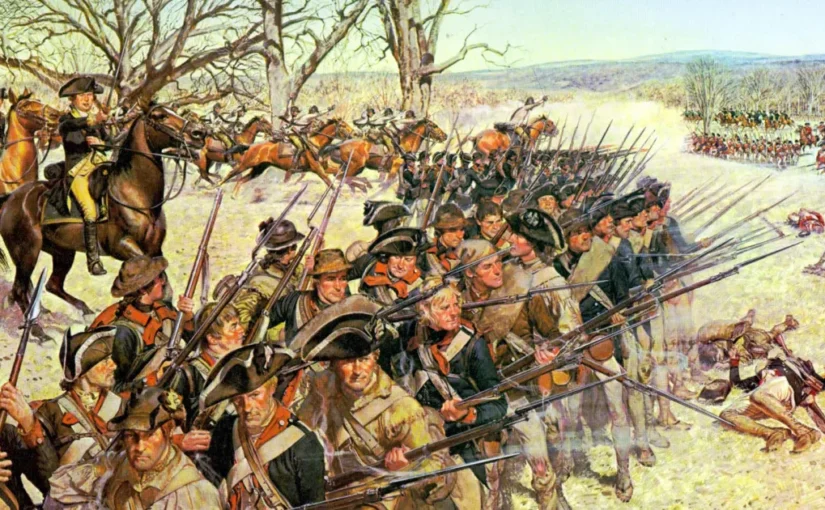
By 1780, the American Revolutionary War had entered a frustrating stalemate. British forces still held several important positions, particularly in New York, but their attempts to destroy Washington’s main army had repeatedly failed. The British government therefore began looking for a new strategy. Rather than continuing to fight for territory in the northern colonies, British commanders increasingly turned their attention towards the South. The decision was based on a simple assumption: the Southern colonies contained far more Loyalist support than New England. British commanders believed that large numbers of Americans in Georgia, South Carolina and North Carolina remained loyal to the Crown and would rise up once British forces arrived. If Britain could capture the Southern colonies and raise Loyalist militias, it could gradually isolate the rebellious northern states and restore royal authority.
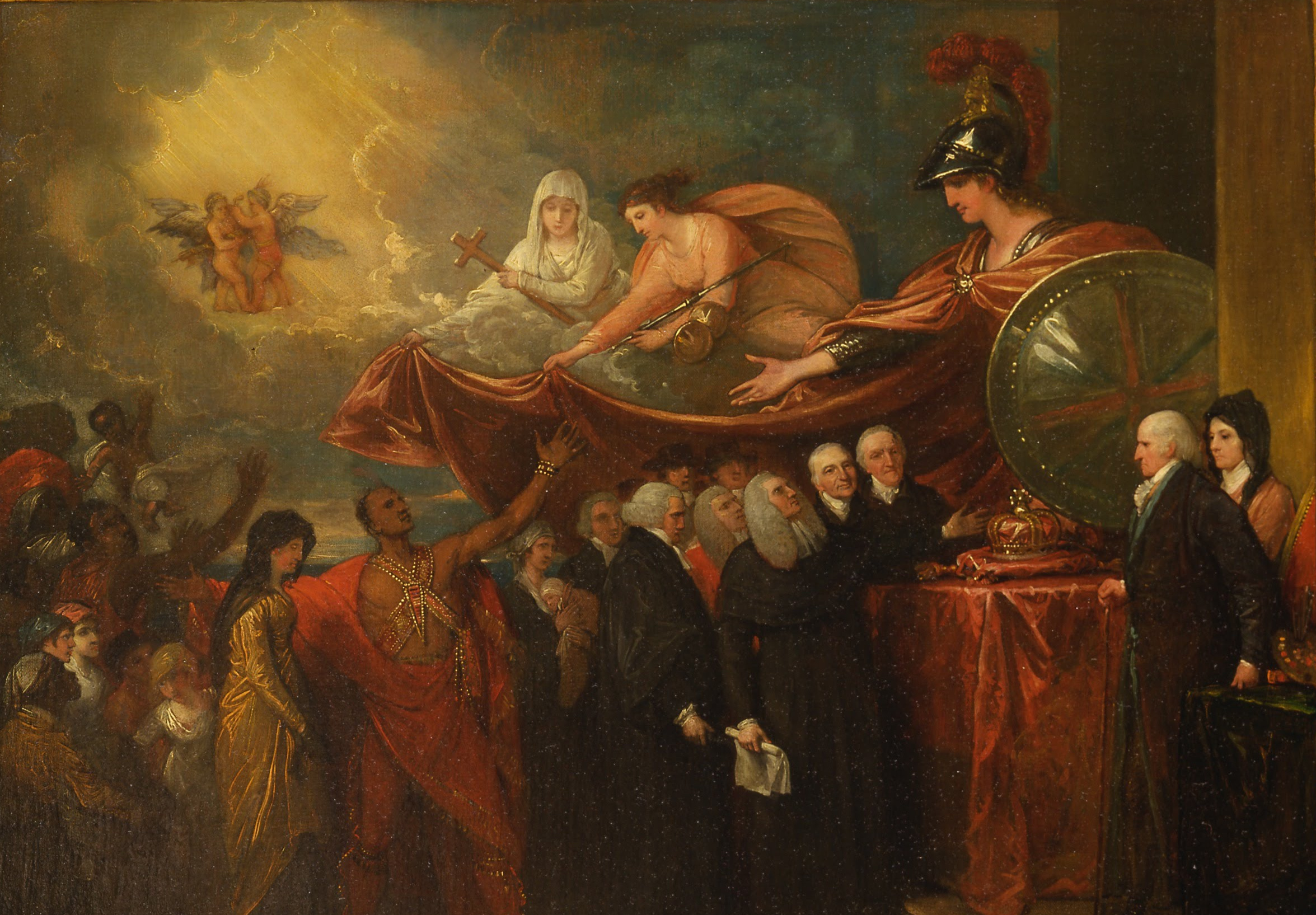
The strategy initially appeared to work. In December 1778, British forces captured Savannah, the capital of Georgia. A combined American and French attempt to retake the city in 1779 ended in failure, with the Allies suffering heavy casualties during the unsuccessful Siege of Savannah. The British subsequently strengthened their position in Georgia and expanded their control into the surrounding countryside. The next major target was Charleston, South Carolina. Charleston was one of the most important American ports in the South and the centre of the Southern war effort. In 1780, a large British army under General Henry Clinton surrounded the city. After a prolonged siege, American forces inside Charleston surrendered on May 12th, resulting in the capture of more than 5,000 Continental soldiers. It was one of the largest American defeats of the entire war.
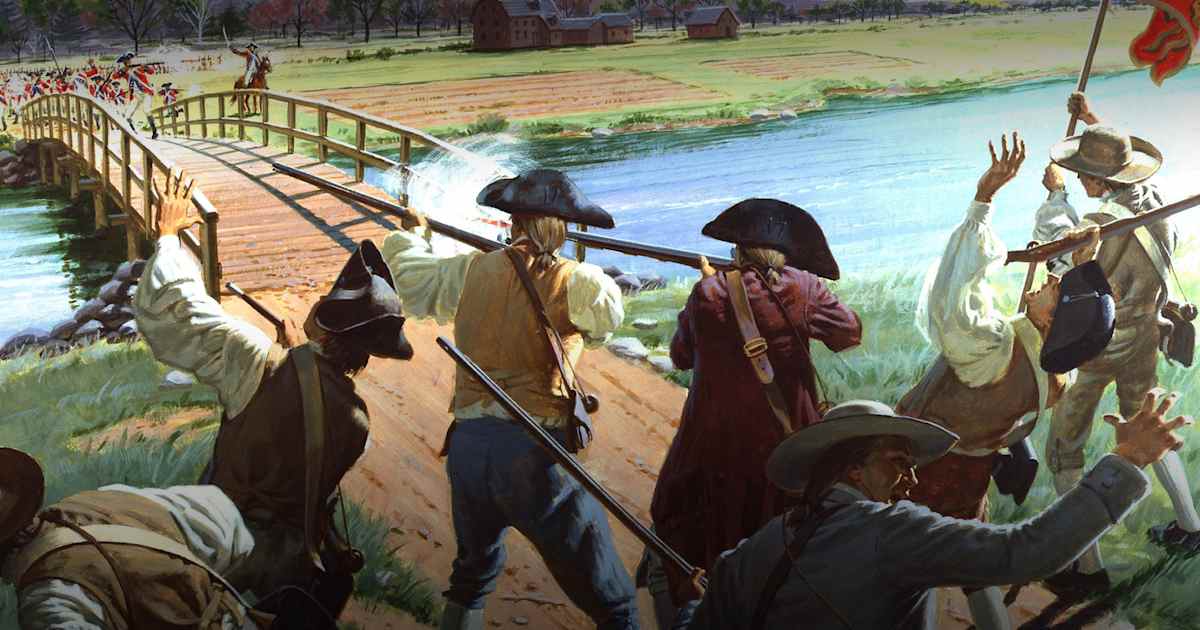
With Charleston captured, the British appeared to have achieved exactly what they had wanted. Much of Georgia and South Carolina fell under British control, while thousands of American soldiers had been taken prisoner. Yet the British soon discovered a serious problem with their strategy. Winning territory was not the same as controlling it. The Southern colonies descended into a brutal civil war between Patriots and Loyalists. Local militias fought one another, ambushed British patrols and attacked supply lines. British commanders could capture towns, but maintaining control over the countryside proved considerably more difficult. Instead of producing a united Loyalist population, British occupation frequently encouraged further resistance.
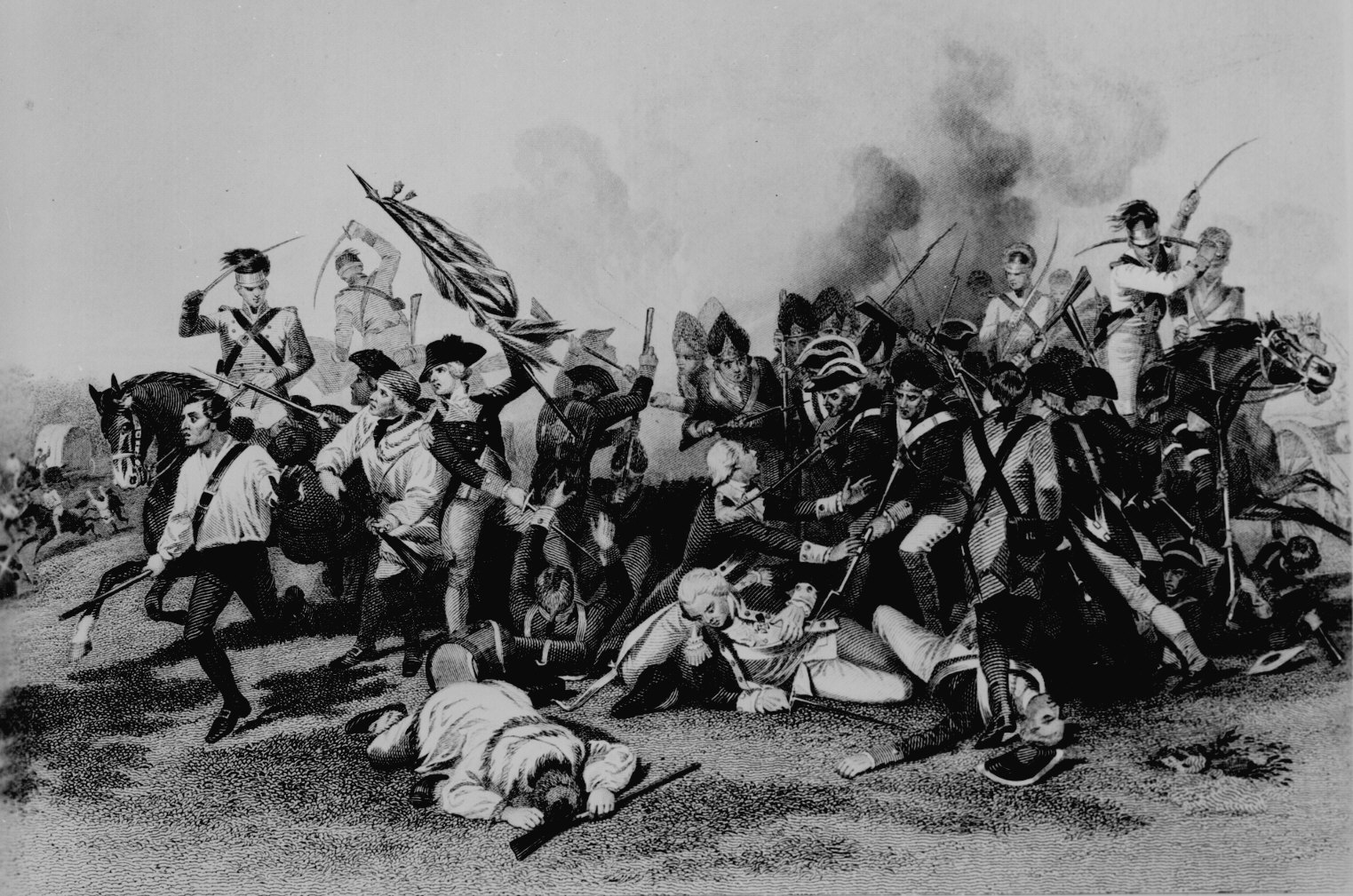
The British attempted to exploit the collapse of the Continental Army in the region by recruiting Loyalist militias. One of the most infamous Loyalist victories came at the Battle of Waxhaws in May 1780, where Lieutenant Colonel Banastre Tarleton’s troops defeated a force of American cavalry and infantry. Reports that American soldiers had been killed after attempting to surrender helped create the notorious reputation of “Tarleton’s Quarter.” The violence of the Southern campaign increasingly turned the conflict into a war between neighbours. Communities were divided between those supporting independence and those remaining loyal to Britain, while neither side could be certain who controlled the countryside.
Meanwhile, the American military leadership attempted to rebuild its forces. Congress initially turned to Horatio Gates, the celebrated victor of Saratoga, believing that his previous success made him the obvious choice to command the Southern army. Gates marched into South Carolina with the intention of confronting the British before they could consolidate their gains. His decision proved disastrous. On August 16th, 1780, Gates confronted a British army commanded by General Charles Cornwallis at the Battle of Camden. The American army collapsed almost immediately. Many of the militia troops fled without seriously engaging the British, while the Continental soldiers who remained were overwhelmed. Gates himself was forced to retreat from the battlefield, eventually travelling hundreds of miles away from his shattered army.
The defeat effectively destroyed Gates’ reputation as a military commander. The man celebrated for Saratoga had now presided over one of the most humiliating American defeats of the war. George Washington therefore selected a new commander: Nathaniel Greene. Greene understood that the Americans could not defeat Cornwallis by simply confronting the larger British army in a conventional battle. Instead, he adopted a strategy of attrition and manoeuvre. His objective was not necessarily to destroy the British in a single decisive engagement, but to force them to constantly march, fight and consume supplies while American forces remained capable of returning to the battlefield.
Greene famously divided his army, sending part of it under Daniel Morgan into western South Carolina. Cornwallis responded by sending Lieutenant Colonel Banastre Tarleton to destroy Morgan’s force. Instead, Morgan turned the tables. On January 17th, 1781, Morgan defeated Tarleton at the Battle of Cowpens. The American victory inflicted severe casualties on the British and forced Cornwallis to pursue Greene’s army into North Carolina. What followed became known as the Race to the Dan.
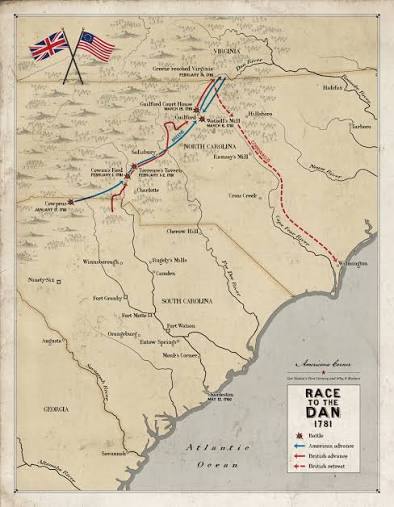
Greene deliberately retreated northwards, forcing Cornwallis to chase him across increasingly difficult terrain. The British army was constantly forced to march in pursuit of an enemy that repeatedly escaped them. By the time Cornwallis reached the Dan River, Greene had successfully crossed into Virginia and escaped. The retreat had achieved its purpose. Greene had preserved his army while forcing Cornwallis to exhaust his men and supplies. Greene then returned to North Carolina with reinforcements and prepared to confront Cornwallis once again.
On March 15th, 1781, the two armies met at the Battle of Guilford Courthouse. The Americans were eventually forced from the battlefield, giving Cornwallis a tactical victory. But it was a devastating one. British casualties were so severe that Cornwallis could no longer afford to pursue Greene’s army into the countryside. The Americans had lost the battle, but strategically, Greene had achieved much of what he wanted. Cornwallis had been forced to fight his way through North Carolina while suffering heavy casualties and struggling to maintain his supply lines. Greene’s army, meanwhile, remained intact.
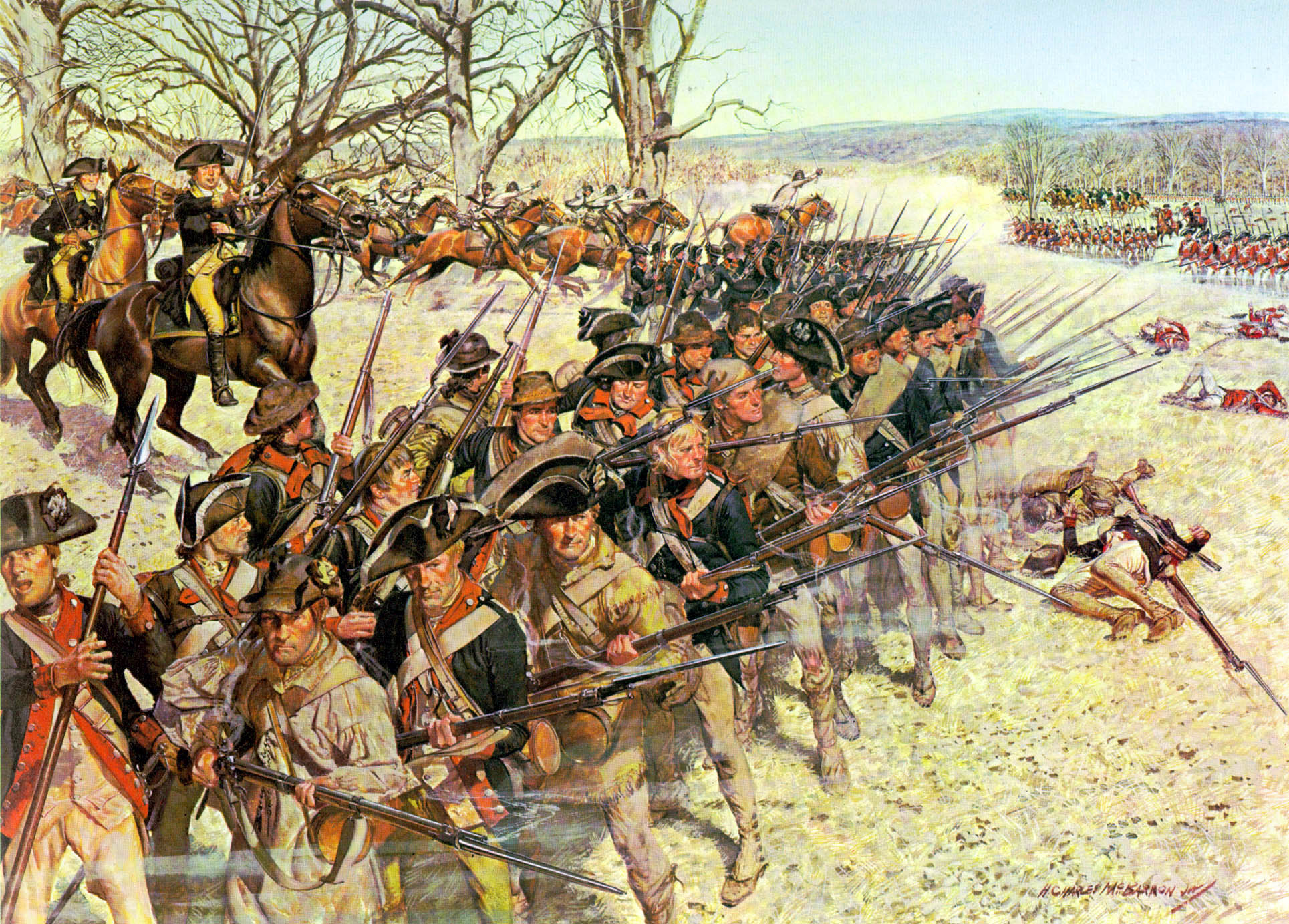
The Southern Campaign therefore demonstrated one of the central problems facing the British war effort. Britain could still win individual battles and capture major cities, but it was becoming increasingly difficult to translate those victories into lasting control. The Americans did not need to destroy the British army outright. They simply needed to survive longer than Britain was willing to continue fighting.
Greene continued campaigning throughout the Carolinas, gradually forcing British forces to abandon much of the territory they had captured. Cornwallis eventually decided to move his army north into Virginia, where he hoped to establish a new British base and coordinate with reinforcements. Instead, he would find himself marching towards the decisive confrontation of the entire war.
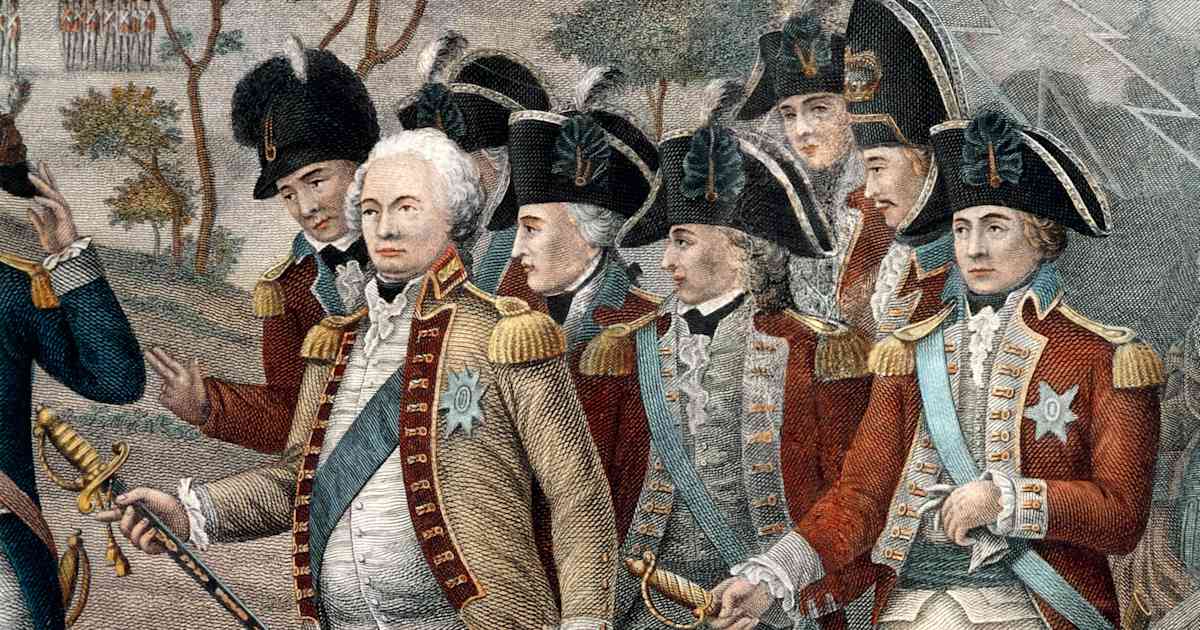
The British Southern strategy had begun with the capture of Savannah and Charleston and the belief that Loyalist support would restore the colonies to the Crown. By 1781, however, the countryside was consumed by partisan warfare, British supply lines were overstretched and American armies remained in the field. The war in the South had not been won by the Americans through one spectacular victory. Instead, Greene and his commanders had gradually worn down the British position, demonstrating that an army capable of winning battles could still lose a war.