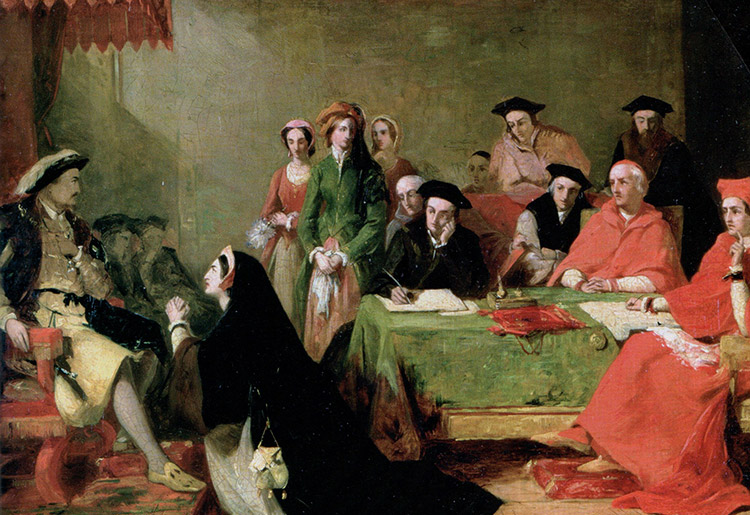
On November 5th 1605, the entire English government was nearly brought down by 2,500 kg of explosives. Whilst nowadays the date is now remembered as a day of fireworks, bonfires and apple dipping, there were complex political moves and sectarian wars that created that annual tradition. Since the separation of the England from the Roman Catholic Church under King Henry VIII, tensions between Catholics and Protestants had been mounting. During the Reformation, Henry VIII transformed England’s relationship with the Roman Catholic Church. His original dispute with Rome was largely political and dynastic rather than a straightforward attempt to introduce Protestantism. After Pope Clement VII refused to annul Henry’s marriage to Catherine of Aragon, Henry increasingly challenged papal authority over England. Parliament passed a series of laws transferring ecclesiastical authority from Rome to the English Crown, culminating in the Act of Supremacy of 1534, which declared Henry the “Supreme Head” of the Church of England. Henry subsequently ordered the Dissolution of the Monasteries between 1536 and 1540, closing religious houses and transferring their lands, buildings and wealth to the Crown and, in many cases, to private purchasers. The policy strengthened royal authority and generated enormous revenues, although Henry’s religious reforms did not immediately turn England into a Protestant country. Many traditional Catholic beliefs and practices remained during his reign, even as England became institutionally separated from Rome.
Henry’s religious settlement was reversed after his death. His son, Edward VI, pushed England further towards Protestantism, but when Edward died in 1553, his Catholic half-sister Mary I became queen. Mary repealed much of the Protestant legislation introduced by Edward and restored England’s communion with Rome. She also revived medieval heresy laws that allowed people convicted of certain forms of religious heresy to be executed.
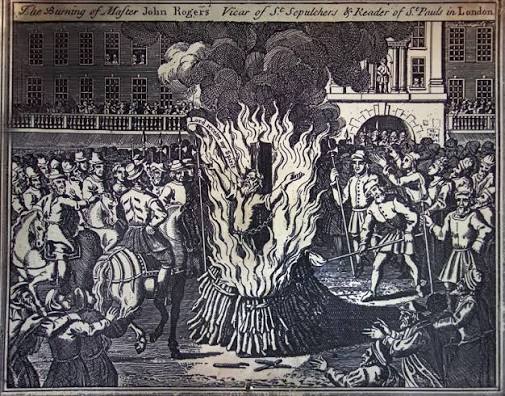
Between 1555 and 1558, approximately 280 Protestants were burned at the stake for heresy, including prominent figures such as Thomas Cranmer, Hugh Latimer and Nicholas Ridley. The executions were intended to suppress Protestantism and restore Catholic religious conformity, but instead generated widespread hostility towards Mary’s government and helped give her reign its enduring reputation as the period of “Bloody Mary.” At the same time, hundreds of Protestant exiles fled England for continental Europe, where some encountered more radical forms of Reformed Christianity.
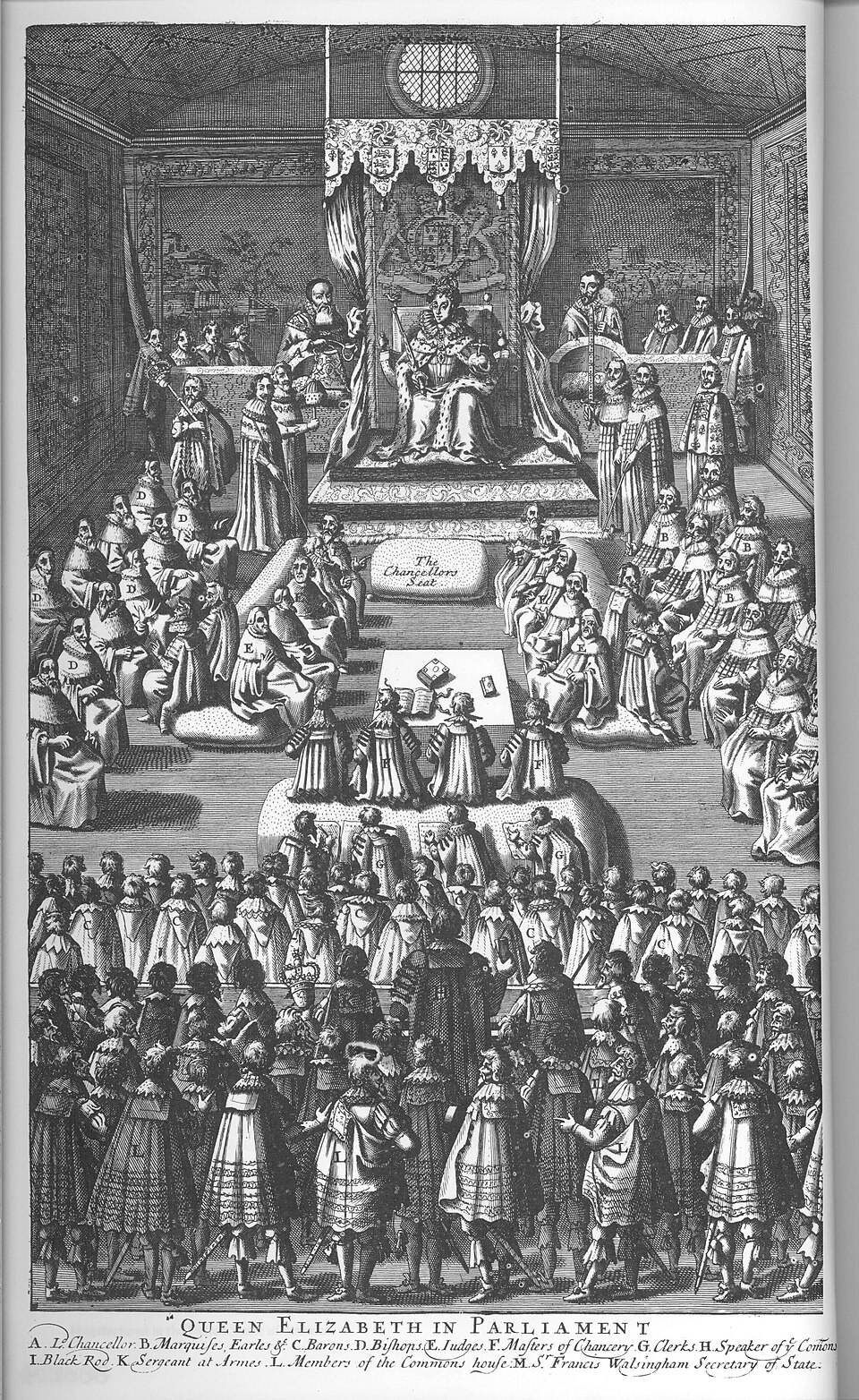
When Mary died without children in 1558, her Protestant half-sister Elizabeth I succeeded her. Elizabeth restored the break with Rome through the Act of Supremacy of 1559, although she adopted the more cautious title of Supreme Governor of the Church of England rather than Supreme Head. A new Act of Uniformity also required attendance at Church of England services, creating a religious settlement that attempted to impose Protestant worship while retaining some elements of traditional Catholic practice.
Catholics who refused to conform became known as recusants and were increasingly subjected to fines and other penalties. The government initially distinguished between Catholic belief and political disloyalty, but this distinction became increasingly difficult to maintain as Elizabeth’s reign progressed. The arrival of Catholic missionary priests, the papal excommunication of Elizabeth in 1570, the Northern Rebellion and a series of Catholic-backed plots against the Queen convinced the government that some Catholics represented a potential threat to national security. By the 1580s and 1590s, Parliament had introduced increasingly severe measures against Catholic worship, recusancy and missionary priests, with priests who entered England to minister to Catholics eventually facing execution for treason.
Upon the death of Elizabeth in 1603, James VI of Scotland became James I of England. Whilst James personally was a Protestant, Catholics believed that what they viewed as a martyrdom of his mother by Elizabeth I – Mary, Queen of Scots, was executed in 1587 for plotting to kill her cousin and claim the English throne – that James would too convert to Catholicism. His policy regarding Catholics certainly softened. In contrast with his predecessor, he was much more moderate, rejecting capital punishment for Catholics and favouring exile, stating that: “I would be glad to have both their heads and their bodies separated from this whole island and transported beyond seas.” He also negotiated a ceasefire with Spain, as they were warring under Elizabeth’s reign.
However, his lack of action on the continent became an increasing source of contention. The religious conflict in England was part of a much wider struggle across Europe. During the French Wars of Religion, France was torn apart by conflicts between Catholics and Protestants. In 1589, King Henry III was assassinated by Jacques Clément, a Catholic League sympathiser who believed that the King had betrayed the Catholic cause. The assassination became an important example in the increasingly controversial European debate over whether a ruler could legitimately be killed if he became a tyrant. A decade later, the Spanish Jesuit scholar Juan de Mariana published De Rege et Regis Institutione (On Kings and the Education of Kings) in 1599. Mariana argued that, under certain extreme circumstances, a tyrannical ruler could legitimately be removed and even killed. His argument was considerably more qualified than the simple idea that anyone could assassinate a monarch they disliked, but the book nevertheless became notorious in Protestant Europe for its discussion of tyrannicide.

One of these men who began thinking about such ideas was Guy Fawkes. An English Catholic soldier, Fawkes joined the Spanish Army of Flanders and fought against the Dutch Republic, whose Protestant revolt against Spanish rule had become one of Europe’s defining religious and political conflicts. During his time in the army, he had gained a great deal of knowledge regarding handling explosives and, by 1604, was in Flanders. In Flanders, he met Thomas Winter, who had been dispatched by Robert Catesby to the continent. Catesby was a key organiser of a plot to murder James I and instate his Catholic daughter, Princess Elizabeth, on the throne in his stead. He had been involved in the rebellion by the Earl of Essex in 1601 against Elizabeth I, which he believed would instate a Catholic monarch in England. However, the rebellion collapsed, Catesby was wounded and imprisoned, being forced to pay a fine of 4,000 Marks, almost £700,000 in today’s money.
Catesby had initially hoped that James would ease the persecution of English Catholics. Instead, after a brief period of relative toleration, James reinstated recusancy fines and ordered Catholic priests to leave the country. For Catesby, this was proof that peaceful appeals to the Crown had failed. He increasingly concluded that the only way to secure a Catholic future for England was to remove the King by force. He later stated that the plan was to blow up “the Parliament House with Gunpowder […] in that place have they done us all the mischief, and perchance God hath designed that place for their punishment.” Catesby already had Fawkes’ name down as “a confidant gentleman” who could possibly join their ranks. Fawkes was eventually recruited into the conspiracy.
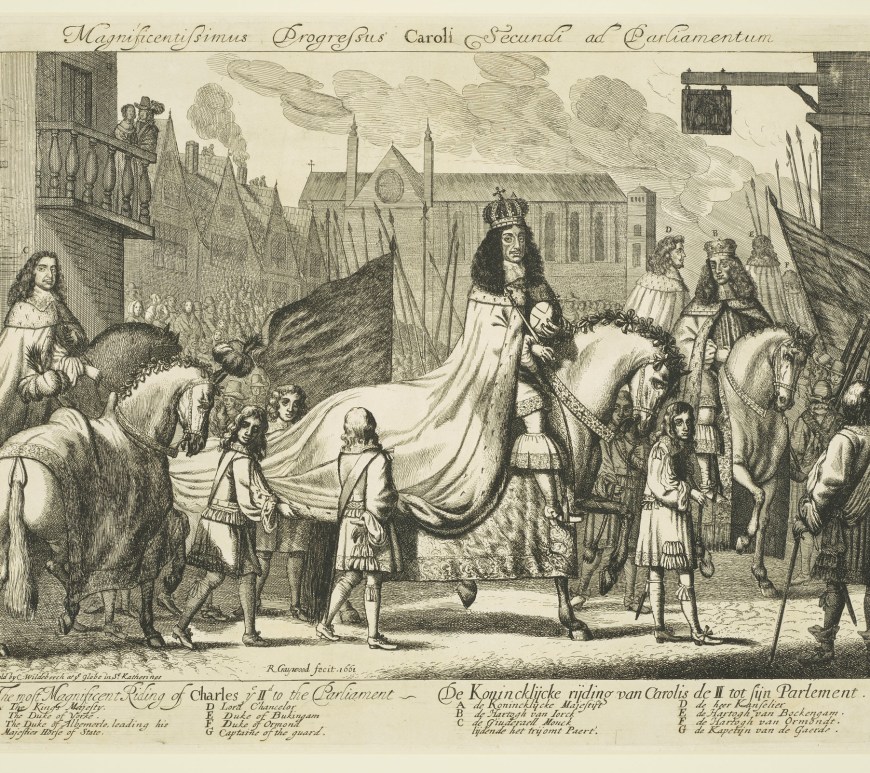
Their plan was a simple one. The king had planned to recall Parliament to sit sometime in February 1605. As a part of the ceremony, the Lord Chancellor would read out a declaration explaining why the king had recalled Parliament before James himself would read out a speech written by themselves often directly demanding funds, explaining royal foreign policies and warning MPs against meddling in state affairs and the divine right of God to appoint the monarch as ruler. In addition to the monarch and the Lord Chancellor, every member of Parliament – Commons and Lords – the king’s family, the Privy council and many senior government advisors would also be present for the State Opening of Parliament. This was not an emergency recall as was sometimes common but had been planned long in advance. This allowed the men, now 13 strong, to plan.
The conspirators therefore needed a royal survivor around whom they could build a new regime. Their target was the King’s nine-year-old daughter, Princess Elizabeth. Once James and the other members of the government had been killed, they intended to seize Elizabeth and proclaim her queen, governing in her name until she reached adulthood. They began by establishing a network in the Midlands. They thought that they could organise a plot to kidnap the then nine-year-old Princess Elizabeth upon hearing of the explosion and instate her as the next heir to the throne. They set up weapons caches in Warwickshire, Staffordshire and Worcestershire, while Catesby organised Sir Everard Digby to stage a hunting party that would march onto Coombe Abbey from an inn at Dunchurch and kidnap the princess.
The conspirators initially attempted to dig a tunnel beneath Parliament to place the gunpowder, but abandoned the idea when they obtained access to a room beneath the House of Lords. In stark contrast with the airport-esque security apparatus in Parliament today, the Palace of Westminster was a constant struggle between different tenants, landlords and businesses. As a result, the security was incredibly lax. When the old widow who was using the undercroft as storage began moving out, Thomas Percy, another one of the conspirators, rented the room for himself, allowing Fawkes to place the gunpowder down there.
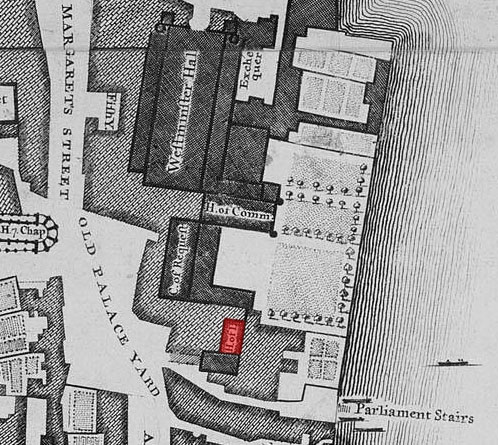
By this time, fear of a plague outbreak had delayed the opening twice – initially to October 3rd and then to November 5th. Despite the setbacks, the plan was set to go ahead and everything was in place. Upon lighting the fuse, Fawkes would cross the Thames and the rebellion in the Midlands would help to ensure the capture of the King’s daughter. Fawkes would then leave for the continent, to explain events in England to the European Catholic powers. The King would die on November 5th 1605. If it wasn’t for one letter.
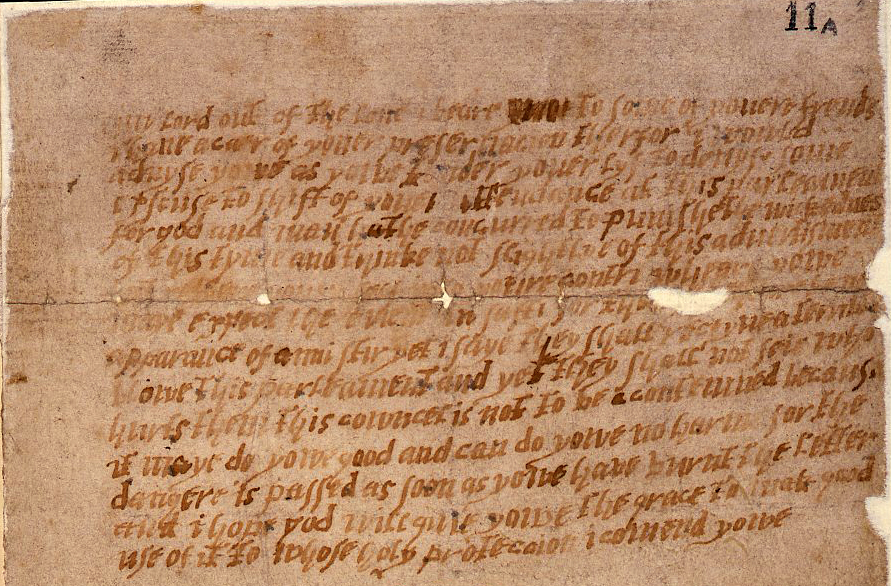
On October 26th, Lord Monteagle received the following anonymous letter from a servant at his house in Hoxton
My Lord, out of the love I bear to some of your friends, I have a care of your preservation. Therefore I would advise you, as you tender your life, to devise some excuse to shift your attendance at this parliament; for God and man hath concurred to punish the wickedness of this time. And think not slightly of this advertisement, but retire yourself into your country where you may expect the event in safety. For though there be no appearance of any stir, yet I say they shall receive a terrible blow this Parliament; and yet they shall not see who hurts them. This counsel is not to be condemned because it may do you good and can do you no harm; for the danger is passed as soon as you have burnt the letter. And I hope God will give you the grace to make good use of it, to whose holy protection I commend you.
Anonymous letter sent to Lord Monteagle on October 26th, 1605
At the time, James was hunting in Cambridgeshire, so the letter was initially kept from him. In the meantime, it was passed between several officials in Whitehall. The Earl of Salisbury deliberately kept the investigation discreet. Rather than immediately confronting the conspirators, he allowed them to believe that their preparations had gone unnoticed while the authorities gathered more information. When the King returned, he fixated on the word “blow” and felt that it hinted at “some strategem of fire and powder.” On November 3rd, a search was ordered of the grounds “both above and below” of the Houses of Parliament, which was carried out in the afternoon of November 4th
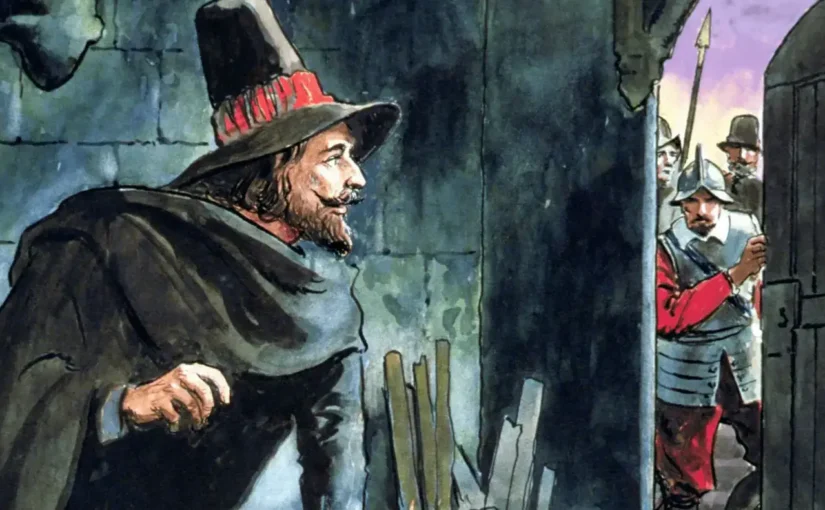
During their search, they discovered a large pile of firewood in the undercroft beneath the House of Lords, accompanied by what they presumed to be a serving man, who told them that the firewood belonged to his master, Thomas Percy. However, the mention of Percy’s name aroused suspicions, as he was already known as a Catholic agitator. Furthermore, the servants answers were considered somewhat suspicious by the men. In addition, James personally believed that the large quantity of wood was concealing something. The King ordered another, more thorough search, where they again found the man at around midnight, this time dressed in a cloak and hat, and wearing boots and spurs. He was arrested, whereupon he gave his name as John Johnson. He was carrying a lantern and a search of his person revealed a pocket watch, several slow matches and touchwood. Thirty-six barrels of gunpowder were discovered hidden under piles of coal. He was taken to the King early on the morning of November 5th.
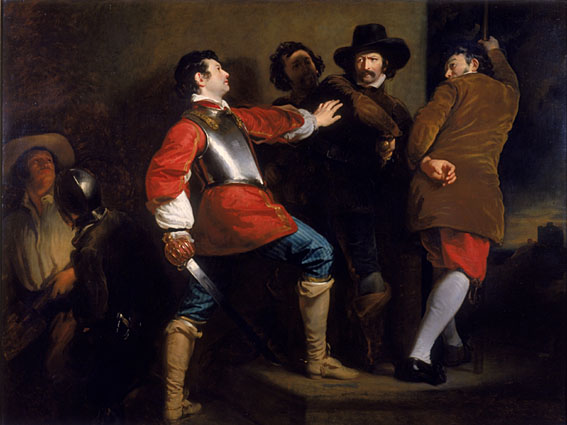
Johnson insisted on his initial story upon questioning, despite the guards knowing multiple names involved in the conspiracy such as Catesby, Winter and others. It was eventually decided that Johnson and his gunpowder should be moved to the Tower of London. Johnson was tortured, a practice that was only permitted by the King. James authorised the use of torture in order to extract information from the prisoner, although the surviving records suggest that the authorities initially questioned him without torture. Johnson remained remarkably defiant, refusing to reveal his real name or identify his accomplices. Only after several days of interrogation and torture did he finally begin providing information about the conspiracy, including his real name: Guy Fawkes
The authorities initially used relatively mild forms of torture before escalating their methods. Fawkes was eventually subjected to the rack, where the victim’s limbs were stretched by ropes and pulleys until the pain became unbearable. The King’s instructions reportedly stated that the torture should increase gradually, beginning with the “gentler tortures” and progressing to more severe measures if Fawkes continued to refuse to speak. His signature on his final confession changed dramatically from the confident “Guido Fawkes” he had initially used to a barely legible signature, demonstrating the physical condition he was in after the interrogation.
By then, however, several of the conspirators had already fled London. Catesby had received word that the plot had failed and attempted to rally his supporters in the Midlands. The conspirators travelled towards Holbeche House in Staffordshire, hoping to gather Catholic supporters and begin the wider uprising they had planned. Almost nobody joined them. The news of the failed attack had spread quickly, and the rebellion that Catesby had imagined simply did not materialise. The conspirators were now fugitives. They attempted to obtain weapons and supplies from several Catholic households, but their cause attracted little support. Some of their own former allies refused to help them, while others alerted the authorities. The group eventually reached Holbeche House, where they decided to make their last stand against the pursuing government forces.

On November 8th, government troops arrived. Catesby and Thomas Percy stood together and fired upon the soldiers. During the ensuing confrontation, both men were shot and killed. Their bodies were subsequently exhumed and beheaded, with their heads displayed publicly as a warning to anyone contemplating rebellion against the Crown. The deaths of Catesby and Percy effectively ended the armed element of the conspiracy. Others were captured and brought to trial. Winter, one of Catesby’s closest associates and one of the original conspirators, was among those arrested. Unlike Fawkes, Winter had survived the confrontation at Holbeche House and was eventually interrogated and tortured. He eventually confessed to his involvement, although he attempted to minimise his own responsibility. Several other conspirators, including Thomas Bates, Robert Wintour and John Grant, were also captured.
The surviving conspirators were tried in Westminster Hall in January 1606. They were found guilty of high treason and sentenced to one of the most brutal punishments available under English law: hanging, drawing and quartering. The sentence required the condemned men to be hanged until nearly dead, cut down while still alive, disembowelled and emasculated, and finally beheaded and divided into quarters. Their remains were then displayed in different parts of the country as a warning to potential traitors. Fawkes was among the first group executed on January 31 1606. He was taken to the Old Palace Yard at Westminster and climbed the scaffold. According to the traditional account, Fawkes jumped from the scaffold himself, breaking his neck and dying instantly, thereby avoiding the full horror of the punishment. His body was nevertheless quartered and his remains were sent to different parts of the kingdom. No-one has been identified conclusively as the author of the letter to Lord Monteagle. The Gunpowder Plot was over. But its consequences were only beginning.
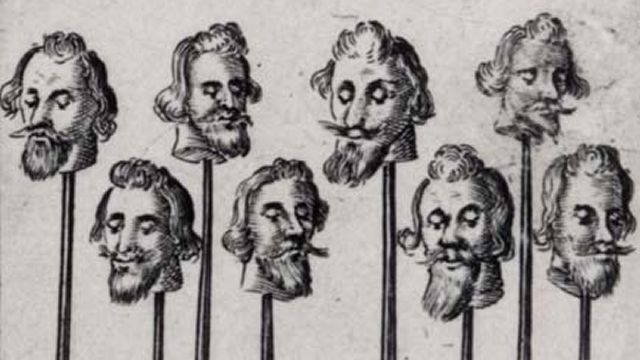
The government used the failed conspiracy to reinforce the argument that Catholicism represented a potential threat to the security of the state. Parliament passed the Popish Recusants Act 1605, imposing additional restrictions on Catholics and strengthening penalties against those who refused to attend Church of England services. Catholics were prevented from voting, holding certain public offices and practising law, while recusants faced increasingly heavy financial penalties. The government’s response was not simply about punishing the conspirators. The Gunpowder Plot became a powerful piece of political propaganda. Fawkes and Catesby were portrayed as representatives of a wider Catholic conspiracy to destroy the Protestant kingdom and murder the King. The fact that the plot had been directed against Parliament itself made the story particularly powerful: the conspirators had not merely attempted to assassinate James, but to destroy the country’s political establishment in one enormous explosion.
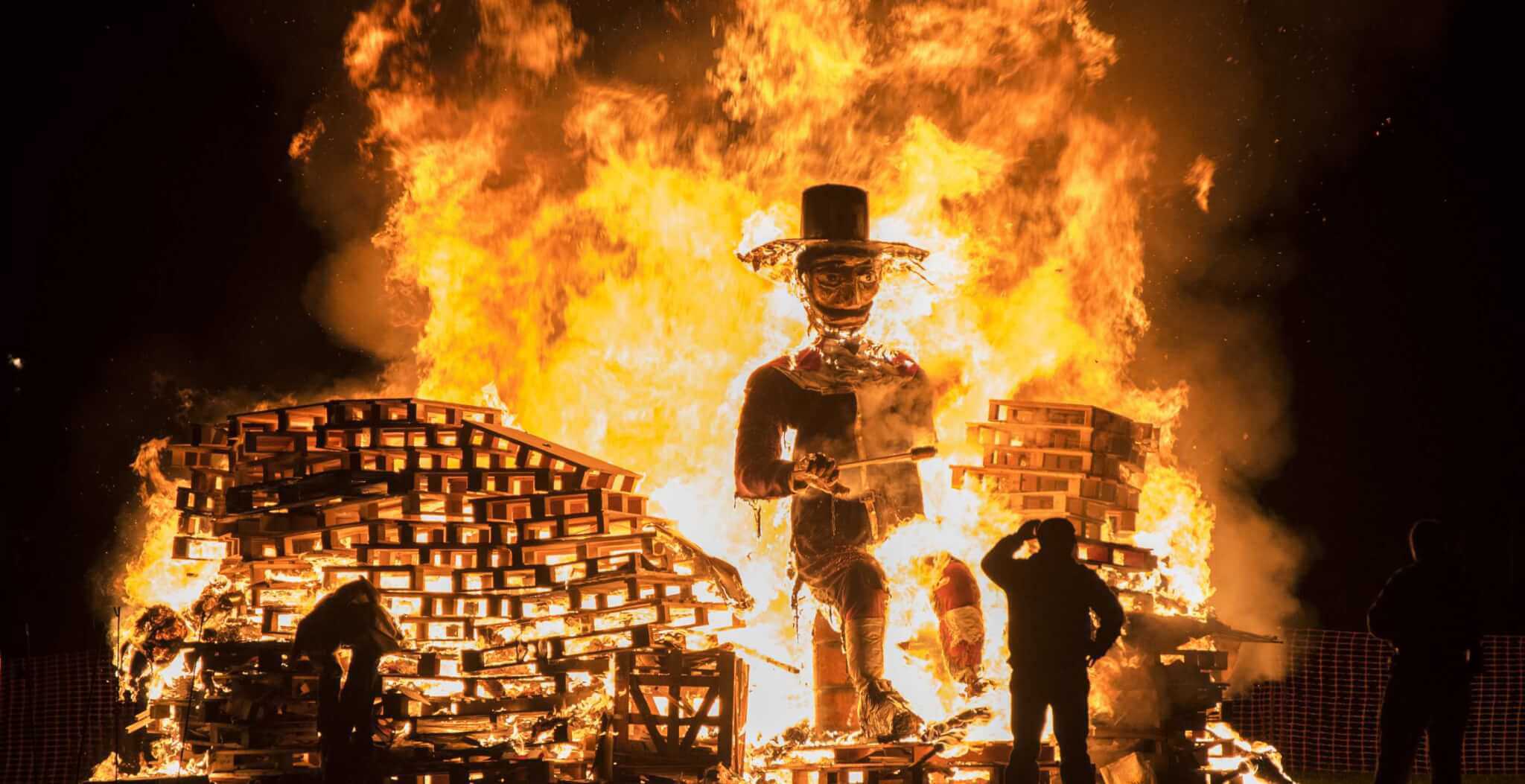
Parliament subsequently established November 5th as an annual day of thanksgiving. The Observance of 5th November Act required churches to hold services commemorating the King’s survival. For centuries, bells were rung, sermons were preached and bonfires were lit to celebrate the failure of the plot. Over time, the religious character of the commemoration diminished. Guy Fawkes Night, or Bonfire Night, became a popular tradition involving fireworks, bonfires and the burning of effigies of Guy Fawkes. Although the original purpose was to celebrate the survival of James I and the Protestant state, the event gradually became a largely secular British tradition.
The plot also left a lasting mark on the way Parliament is physically protected. Although the modern security system bears little resemblance to the arrangements of 1605, the memory of Fawkes hiding explosives beneath the House of Lords became embedded in parliamentary tradition. Even today, the Yeomen of the Guard ceremonially search the cellars of the Palace of Westminster before the State Opening of Parliament, a ritual traditionally understood as a continuation of the searches conducted before the opening of Parliament in 1605. The search is now entirely ceremonial rather than a genuine security measure.
The Gunpowder Plot also produced one of the most enduring phrases in the English language. Fawkes’s attempt to destroy Parliament has ensured that his name became synonymous with rebellion and political subversion. Centuries later, the image of Guy Fawkes was revived by popular culture, most famously through the Alan Moore graphic novel and it’s subsequent movie adaptation V for Vendetta, in which Fawkes became a symbol of resistance against authoritarian government. The stylised Guy Fawkes mask subsequently became associated with protest movements around the world.
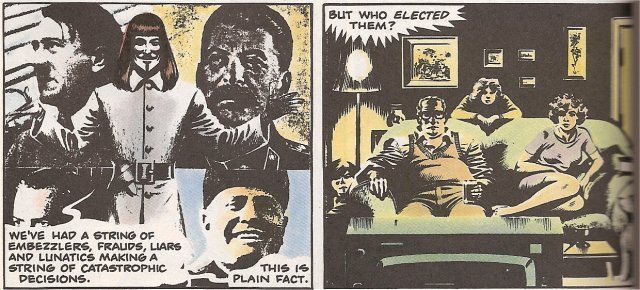
Yet the historical Fawkes was considerably more complicated than the revolutionary icon that emerged centuries later. He was not attempting to establish democracy, overthrow a dictatorship or give political power to ordinary people. He was a committed Catholic militant who participated in a conspiracy to assassinate the King, destroy Parliament and install a new regime centred around a Catholic monarch. The conspirators’ failure nevertheless transformed Fawkes into something far beyond the man he had been in life.
More than four centuries later, November 5th remains one of Britain’s most recognisable traditions. Every year, fireworks illuminate the sky and effigies of Guy Fawkes are burned on bonfires across the country. What began as a failed attempt to destroy the British political establishment has instead become a celebration deeply embedded within British culture. The Gunpowder Plot failed spectacularly – but its legacy has proved remarkably difficult to extinguish.