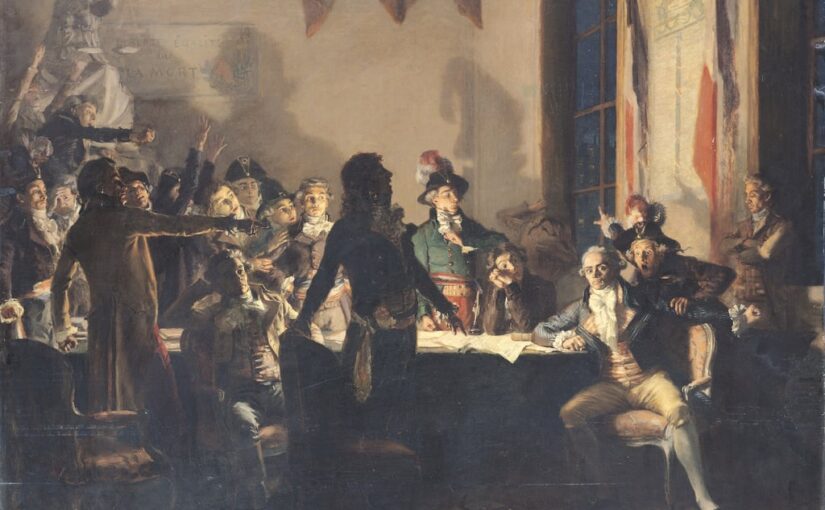
By 1794, Maximilien Robespierre appeared to have achieved what the revolutionary government had spent the previous year trying to accomplish. France had survived. The foreign armies that had threatened the Republic had been pushed back. The Vendée had been largely crushed, although at enormous cost. The government had imposed economic controls and the worst of the food crisis had begun to ease. The revolutionary armies were becoming increasingly successful. Yet this created a problem for Robespierre. The policies that had helped him survive the crisis were becoming harder to justify now that the crisis was beginning to recede. The Terror had been introduced as an emergency measure. What happened when the emergency appeared to be ending?
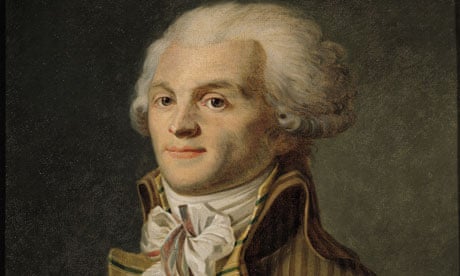
The revolutionary government had always presented its violence as necessary. France was fighting foreign monarchies. Royalists were conspiring against the Republic. Rebellions were threatening the country from within. Food shortages were causing unrest. Generals had defected to the enemy. In this environment, Robespierre and his allies argued that extraordinary measures were necessary to save the Revolution. The Committee of Public Safety became the centre of this system.
The result was devastating. Thousands of people were executed during the Terror, while many more died in prison or in the civil wars and repression taking place across France. The revolutionary government had created a political system in which suspicion itself could become grounds for arrest. But by the beginning of 1794, the situation was changing. French armies were achieving major victories. The Republic was no longer on the verge of immediate military destruction. For many politicians, this raised an uncomfortable question: If France was winning, why did the Terror need to continue?
One of the first major revolutionary leaders to openly challenge the continuation of the Terror was Georges Danton. Danton had been one of the most important figures of the Revolution from its earliest radical phase. He had helped establish the Cordeliers Club, served as Minister of Justice and played a crucial role during the overthrow of the monarchy. He had also been one of Robespierre’s political allies. But by 1794, Danton had become increasingly critical of revolutionary violence. Together with journalists and politicians sometimes described as the Indulgents, Danton called for a reduction in the executions and a return towards normal government. He also wanted France to move towards peace. To Danton, the Revolution had survived its most dangerous period. It was time to stop treating every political disagreement as treason.
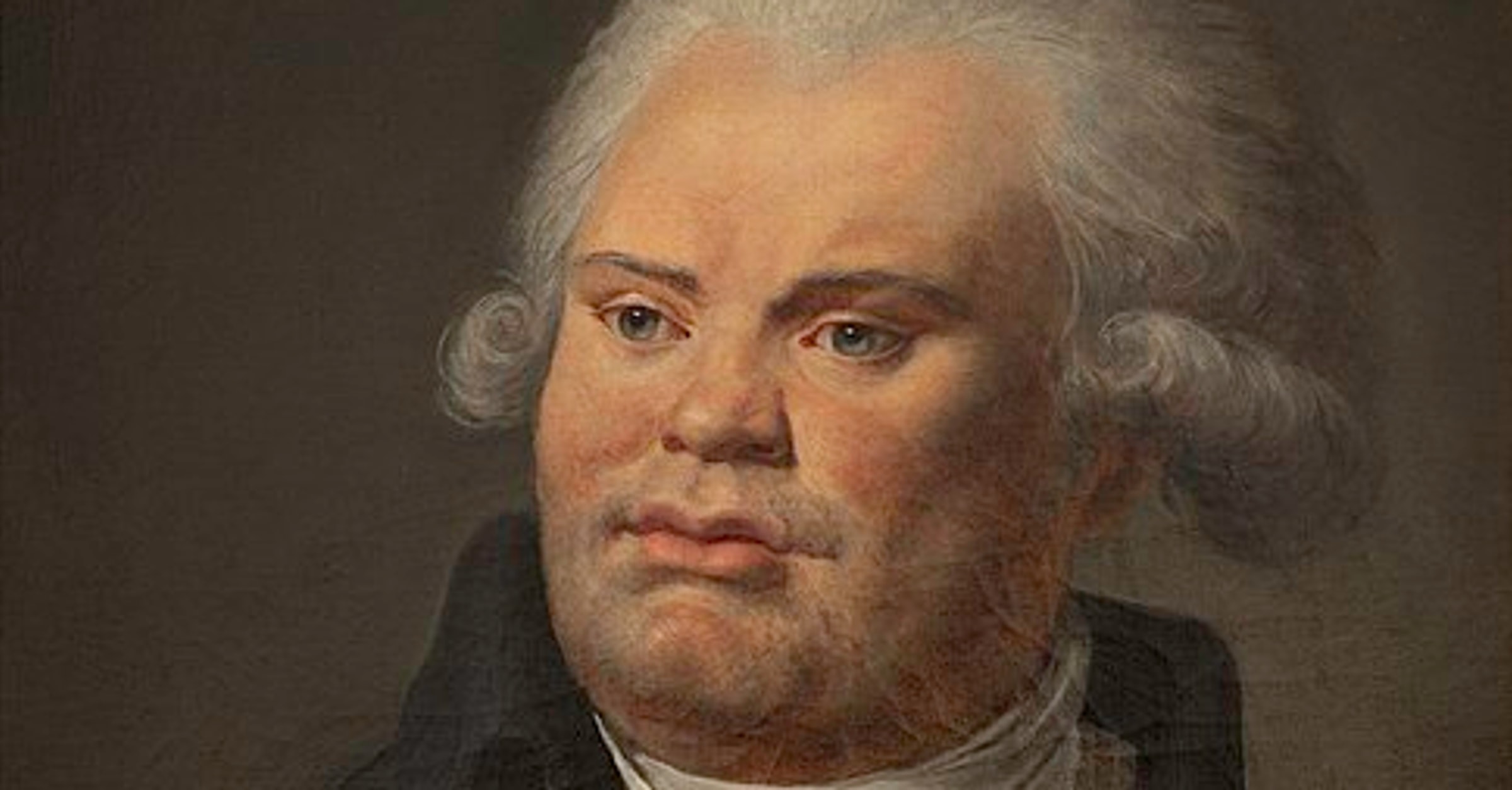
Robespierre disagreed. The two men had once stood on the same side of the Revolution. Now they represented two increasingly different visions of its future. Danton wanted the Revolution to survive by becoming more moderate. Robespierre believed that abandoning revolutionary virtue and vigilance too soon could allow its enemies to return. The Committee of Public Safety therefore turned against Danton. In March 1794, Danton and his allies were arrested. They were accused of corruption and conspiracy against the Republic.
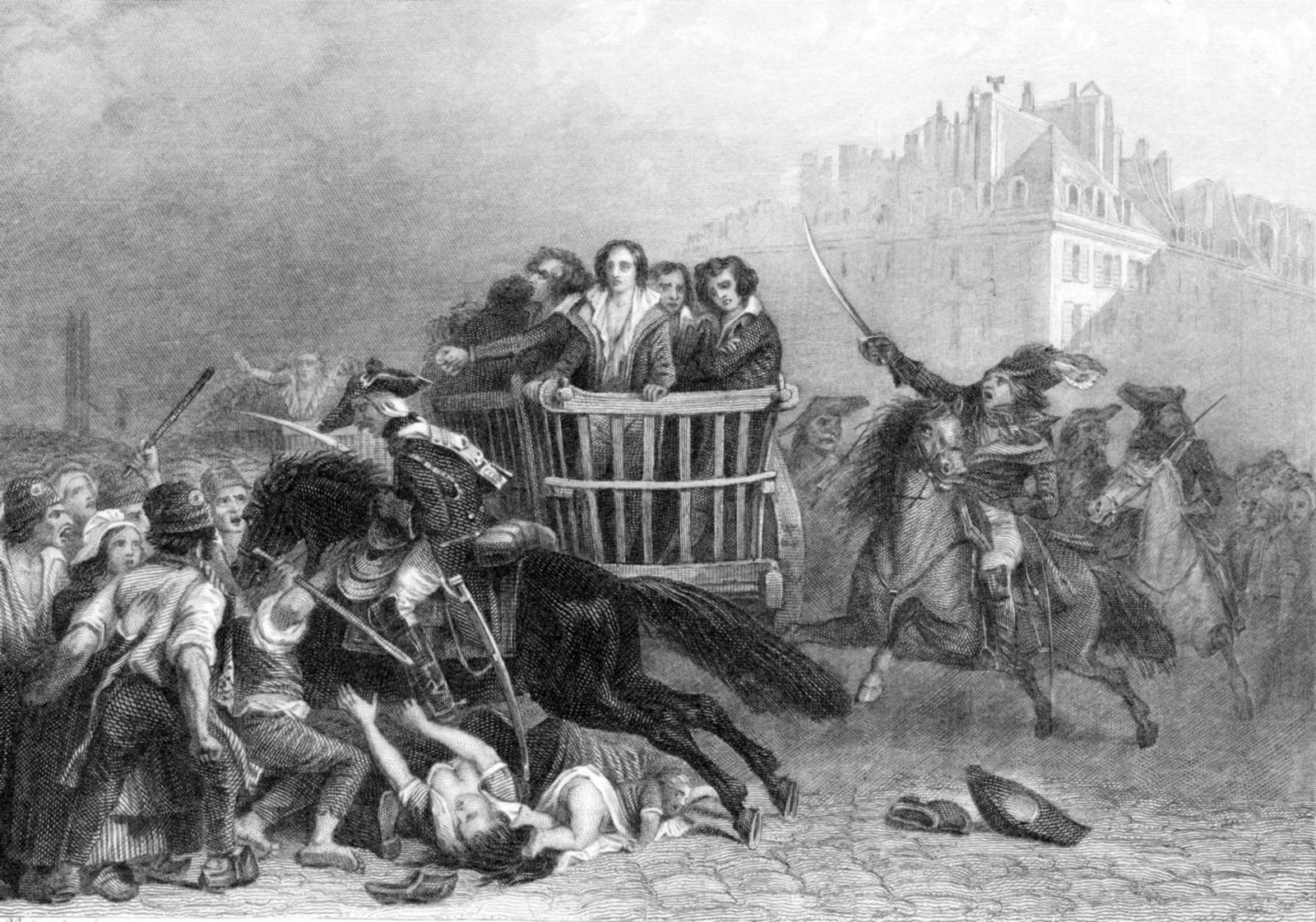
On April 5th, Danton was taken to the guillotine. His execution shocked even some of the revolutionaries who had supported the Terror. One of the Revolution’s most famous leaders had been destroyed by the same machinery of political justice that he had helped create. Robespierre had eliminated a potential rival. But he had also sent a warning to everyone else. Nobody was safe.
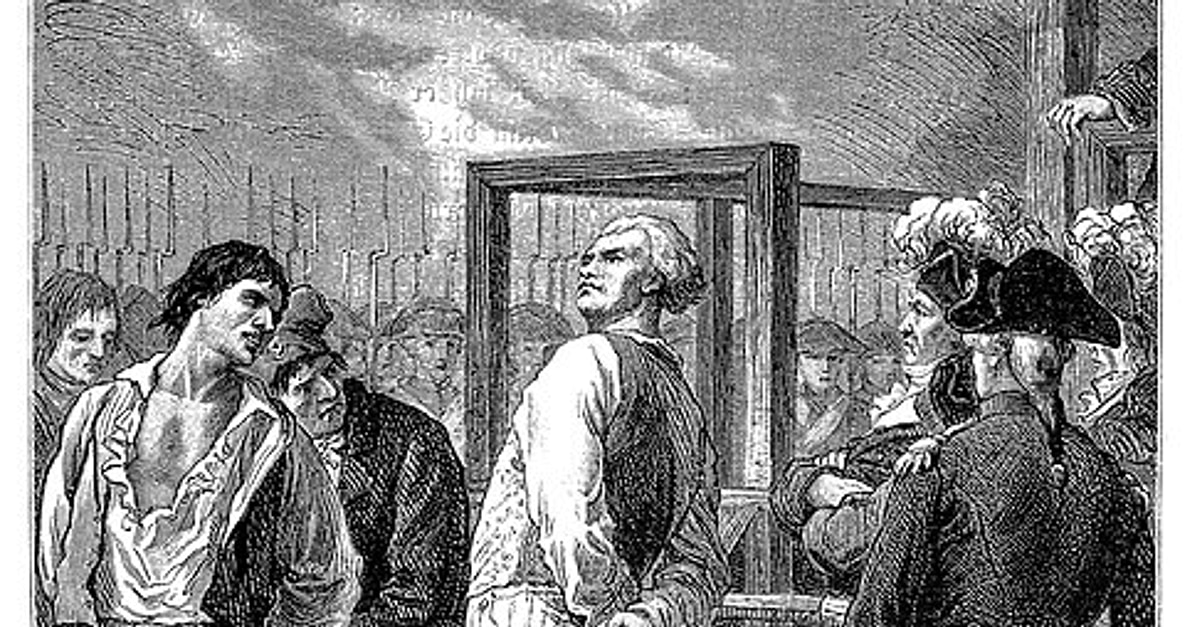
Danton’s execution was followed by further purges. Robespierre’s government increasingly attacked factions on both sides of the political spectrum. The Hébertists, representing a more radical and militant revolutionary current, had already been executed in March. The Indulgents, associated with Danton, followed them. The message was becoming increasingly clear. There was apparently no acceptable position between radicalism and counter-revolution. The Revolution was consuming its own children. This atmosphere of suspicion was intensified by the Law of 22 Prairial, passed in June 1794. The law dramatically weakened the protections available to defendants before the Revolutionary Tribunal. It restricted conventional legal procedures and made convictions easier to obtain.
The Terror accelerated. In Paris, executions reached their highest levels during what became known as the Great Terror. And this time, the justification was becoming increasingly difficult to explain. France was winning the war. The foreign armies were being pushed back. The revolutionary government was becoming stronger. Yet more people were being sent to the guillotine. The Terror was no longer simply defending the Republic from an obvious military emergency. It was increasingly becoming a mechanism for political control.
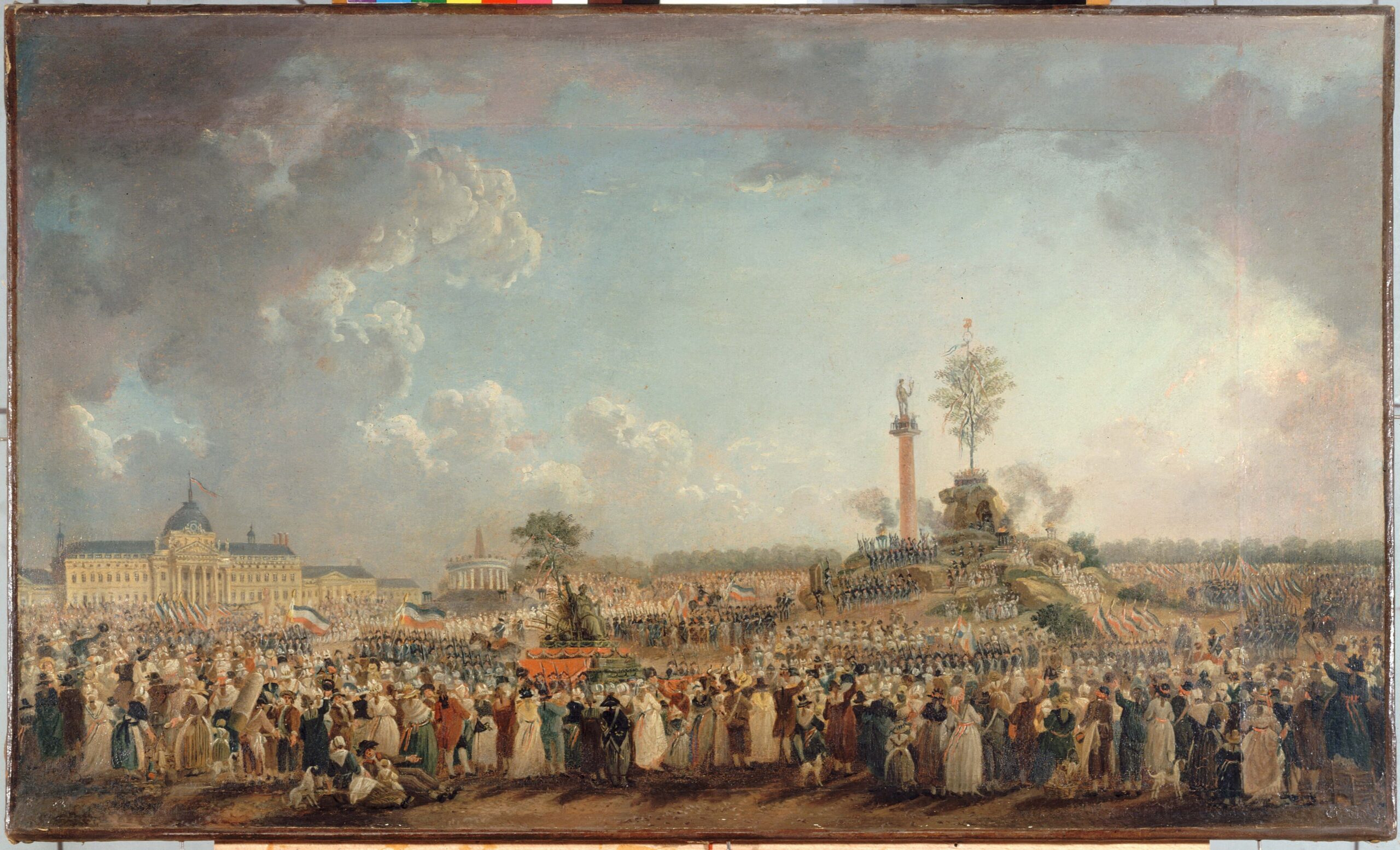
At the same time, Robespierre was attempting to define what kind of society the Revolution was supposed to create. The radical revolutionaries had launched a campaign of dechristianisation, attacking the Catholic Church and replacing traditional religious practices with revolutionary alternatives. Robespierre did not entirely support this approach. He was a deist and believed that religion could serve a moral and social purpose. He therefore promoted the idea of the Cult of the Supreme Being. The Supreme Being was not supposed to be Robespierre himself. It was a deistic conception of God, intended to provide the Republic with a moral foundation while rejecting the authority of the Catholic Church.
On June 8th 1794, the revolutionary government held the Festival of the Supreme Being in Paris. Robespierre personally presided over the ceremony. He dressed in a sky-blue coat and carried flowers, walking at the head of the procession. To his enemies, the spectacle was deeply unsettling. Robespierre appeared to be placing himself at the centre of a new revolutionary civic religion. His growing prominence led some contemporaries to accuse him of seeking personal power. The ceremony reinforced the impression that he wanted to become the moral authority of the Republic. His political opponents began to fear what he might do next.
The most important factor in Robespierre’s downfall was not simply that he was unpopular. It was that his colleagues had begun to fear that they might be next. The Terror had already destroyed the Girondins, the Hébertists and the Dantonists. The Law of 22 Prairial made it easier to condemn people before the Revolutionary Tribunal. Robespierre himself increasingly withdrew from ordinary political activity and became suspicious of those around him. He believed that corruption and conspiracy were still widespread. But the more enemies he identified, the more potential enemies his colleagues saw in him. The question inside the Convention was no longer: “Who is Robespierre going to execute?” It was: “Will I be next?” This was the fatal weakness of revolutionary terror. Once nobody could be certain that they were safe, even politicians who had previously supported the Terror had an incentive to unite against its principal architect.
On July 26th 1794, Robespierre returned to the National Convention and delivered a speech warning of conspiracies within the government. But he refused to name the people he believed were responsible. This frightened his opponents even further. If Robespierre had a list of traitors but would not reveal their names, almost anyone could imagine themselves appearing on it. The following day, 9 Thermidor Year II in the revolutionary calendar, the Convention turned against him. Robespierre attempted to speak but was repeatedly interrupted. His supporters were increasingly isolated. Eventually, the Convention ordered his arrest. Robespierre and several of his allies were taken into custody. But the crisis was not yet over.
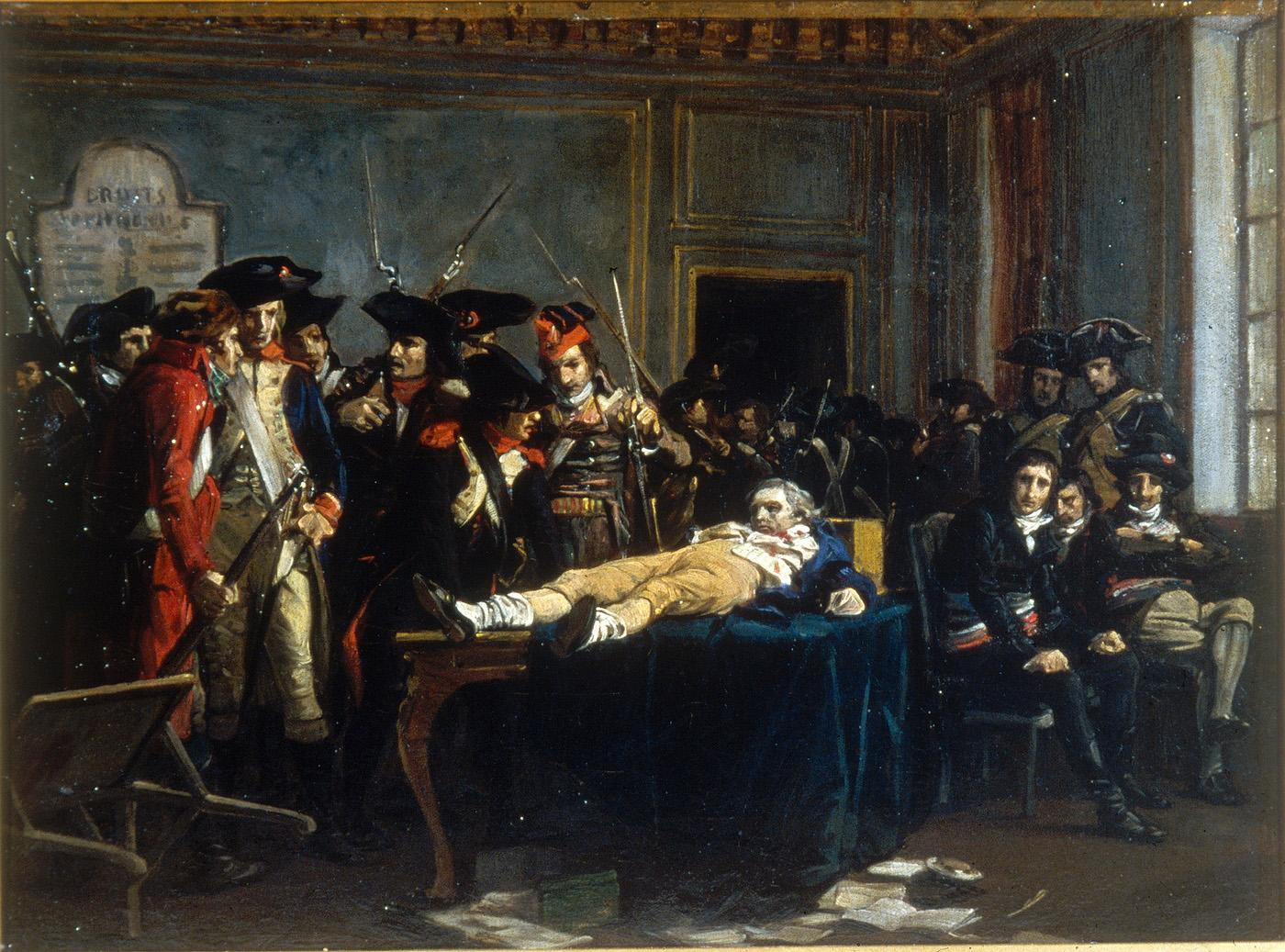
Robespierre was freed by supporters and taken to the Hôtel de Ville, where some of his remaining allies gathered. For several hours, it appeared that another Parisian insurrection might take place. But Robespierre hesitated. The exact reasons remain debated, but he did not successfully organise his supporters into a decisive counter-attack. The Convention declared Robespierre and his allies outlaws. Government troops eventually stormed the Hôtel de Ville. Robespierre was captured. During the confrontation, he suffered a severe gunshot wound to the jaw. Whether he attempted suicide or was shot by a gendarme remains disputed. Either way, the man who had dominated revolutionary France was now a prisoner.
On July 28th 1794, Robespierre was taken to the guillotine. There would be no elaborate trial. The Convention had already declared him an outlaw, allowing his execution without the normal judicial process. He was placed on the same machine that had claimed so many of his political enemies. The executioner removed the bandage covering his injured jaw. Robespierre screamed in pain. Then the blade fell. He was dead. Twenty-one of his closest supporters were executed alongside him that day, followed by dozens more in the days that followed. The man who had become the principal symbol of the Terror had been destroyed by the very system he had helped create.
Robespierre’s death did not end the Revolution. It ended one particular phase of it. The Thermidorian Reaction began almost immediately. The Committee of Public Safety was weakened. The machinery of the Terror was dismantled. Political prisoners were released, and the influence of the Jacobins declined. France began moving away from the radical political culture of 1793–94. The Revolution had survived. But it had changed. The Terror had been justified as a temporary necessity: a way of protecting the Republic until its enemies were defeated.

By the summer of 1794, France’s military position had dramatically improved. The paradox was that this success helped destroy Robespierre. The emergency that had justified extraordinary government was disappearing, while the extraordinary government itself remained. Robespierre had helped create a system in which political enemies could be imprisoned and executed in the name of revolutionary virtue. Eventually, his fellow politicians realised that they could not know whether they would be classified as enemies tomorrow. So they acted first. The Revolution had begun by overthrowing a king. It had executed the king. It had executed the queen. It had executed moderates, radicals, royalists, priests and revolutionaries. And now it had executed the man who had become its most famous defender. Robespierre had spent months arguing that terror was necessary to preserve the Republic. In the end, the Republic preserved itself by destroying him.