The Initial Eastern Offensive

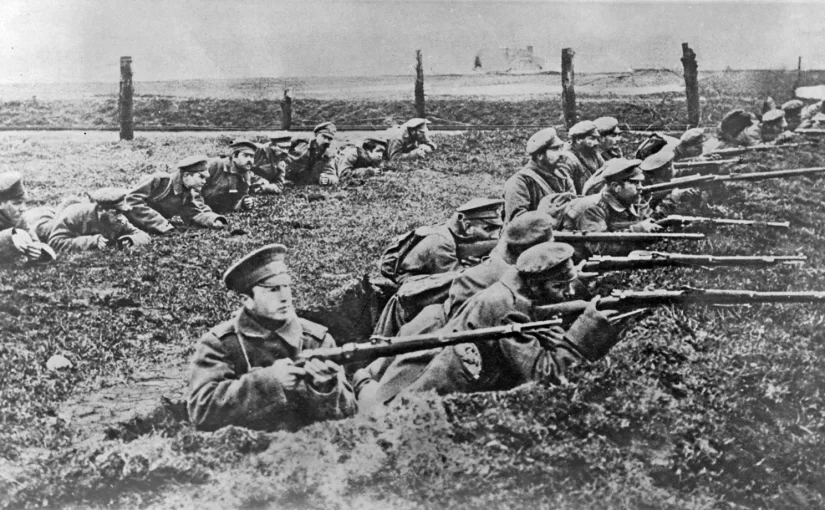
While the German advance in France ground to a halt on the Western Front, events in the east were unfolding much faster than Berlin had anticipated. German planners had assumed that Russia, with its enormous territory and comparatively underdeveloped railway network, would require at least six weeks to mobilise its vast army. Instead, Russian mobilisation progressed far more rapidly than expected. Although it was still incomplete, two Russian armies crossed the border into the German province of East Prussia before Germany had defeated France, forcing Berlin to divert troops away from the west far earlier than planned.
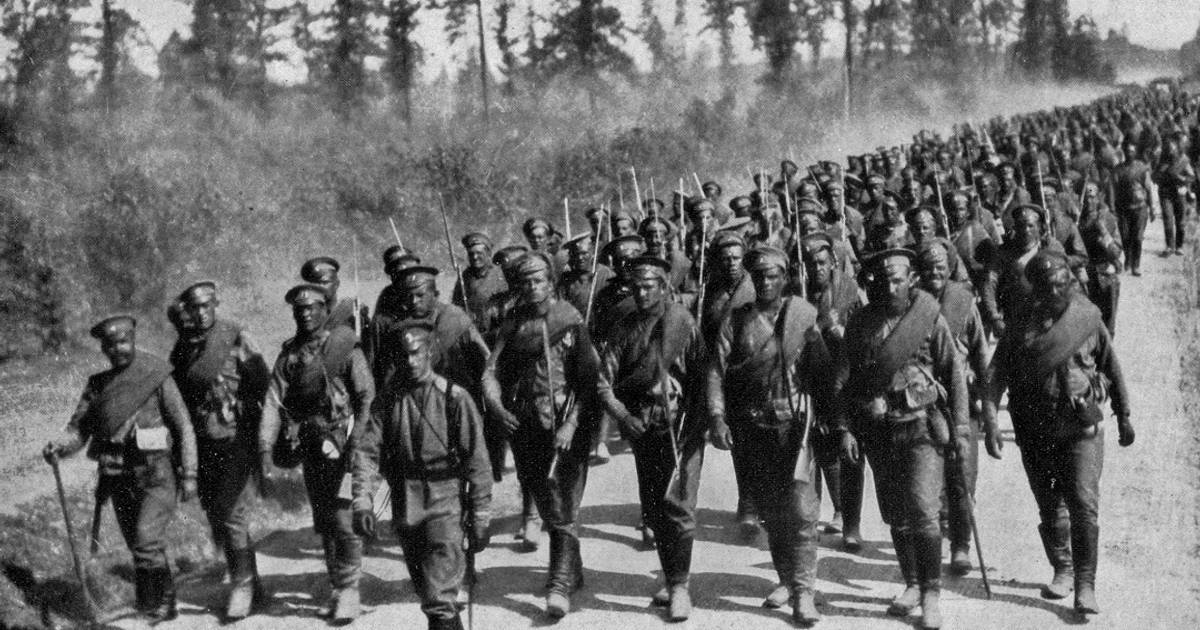
A photo of Russian soldiers marching on the Eastern Front

The invasion was led by Generals Paul von Rennenkampf and Alexander Samsonov, who commanded the Russian First and Second Armies respectively. Their objective was straightforward: overrun East Prussia, force Germany to defend its homeland, and relieve pressure on France before the war in the west could be decided. Initially, the strategy appeared to be working. German commanders feared losing East Prussia altogether, and panic spread among the civilian population as thousands fled westward.

The situation changed dramatically with the appointment of Paul von Hindenburg and his chief of staff Erich Ludendorff to command the German Eighth Army. Making use of intercepted Russian radio messages – which, astonishingly, had often been transmitted without encryption – and Germany’s excellent railway network, the Germans realised that the two Russian armies had become dangerously separated. Rather than retreat, they decided to destroy them one at a time.

A painting of Hindenburg (right) and Ludendorff discussing battle strategy

Between 26 and 30 August 1914, the Germans surrounded Samsonov’s Second Army near the town of Tannenberg. The battle became one of the most decisive victories of the entire war. Nearly 100,000 Russian soldiers were captured, tens of thousands more were killed or wounded, and the Second Army effectively ceased to exist. Unable to bear responsibility for the catastrophe, General Samsonov reportedly walked into a nearby forest and took his own life.

With Samsonov defeated, Hindenburg and Ludendorff turned their attention to Rennenkampf’s First Army. A few weeks later, during the First Battle of the Masurian Lakes, the Russians were driven out of East Prussia altogether. Although much of the Russian Army remained intact, the immediate threat to German territory had been eliminated, transforming Hindenburg and Ludendorff into national heroes almost overnight.

A phot of the General staff of the German 8th Army during the battle

Further south, Germany’s ally Austria-Hungary was faring far less successfully. Vienna had expected a swift victory over Serbia following the assassination of Archduke Franz Ferdinand, but Serbian forces proved far more resilient than anticipated. In August 1914, the Austro-Hungarian Army suffered a humiliating defeat at the Battle of Cer, marking the first Allied victory of the war. At the same time, Russian armies surged into the Austro-Hungarian province of Galicia, inflicting a series of defeats and forcing the Habsburg armies into a chaotic retreat. By September, the strategically important fortress of Przemyśl had been surrounded, beginning one of the longest sieges of the First World War.

Germany was now forced to support its struggling ally. Throughout the autumn of 1914, German and Russian forces fought a series of major engagements across modern-day Poland, including the Battle of Łódź. Although neither side achieved a decisive breakthrough, the fighting prevented the Russians from exploiting their earlier successes against Austria-Hungary and helped stabilise the Central Powers’ eastern front.
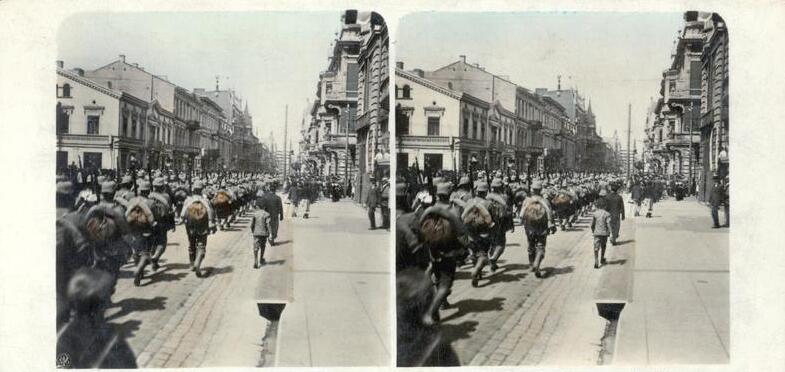
A photo of the German army entering Łódź

The conflict expanded still further in late October 1914 when the Ottoman Empire entered the war on the side of Germany and Austria-Hungary. Once one of the world’s greatest empires, Ottoman territory still stretched across much of the Middle East, including modern-day Turkey, Syria, Iraq, Jordan, Lebanon and Palestine. German military advisers had spent years modernising the Ottoman Army, and its government increasingly viewed Russia as its principal rival. On 29 October, Ottoman warships launched surprise attacks against the Russian ports of Odessa, Sevastopol and several other Black Sea harbours. Russia declared war soon afterwards, followed within days by Britain and France. A new front had opened in the Caucasus Mountains, while the Middle East itself would soon become another major theatre of the war.

Unlike the Western Front, however, the Eastern Front never became dominated by an unbroken network of trenches stretching from one end of the battlefield to the other. The distances involved were simply too vast. From the Baltic Sea to the Black Sea stretched a front of well over a thousand miles, much of it crossing forests, marshes and open plains. Neither side possessed enough men to fortify every mile of the line, meaning battles remained far more mobile. Armies frequently advanced or retreated by hundreds of miles, and sweeping manoeuvres, encirclements and rapid offensives remained common throughout much of the war.

Napoleon’s Expedition to Egypt

Napoleon returned to Paris from his campaign in Italy and was lauded as a hero. His campaign was so successful that the French Government believed that Napoleon was capable of an invasion of mainland Britain. However, as the War of the Second Coalition broke out, Napoleon soon realised that the French Navy was nowhere near powerful enough to take on the powerful Royal Navy. Instead, he decided to take out Britain’s supply line to India by taking control of Ottoman Controlled Egypt, whilst also securing the Sultan of the Indian Mysore Kingdom as a potential ally.

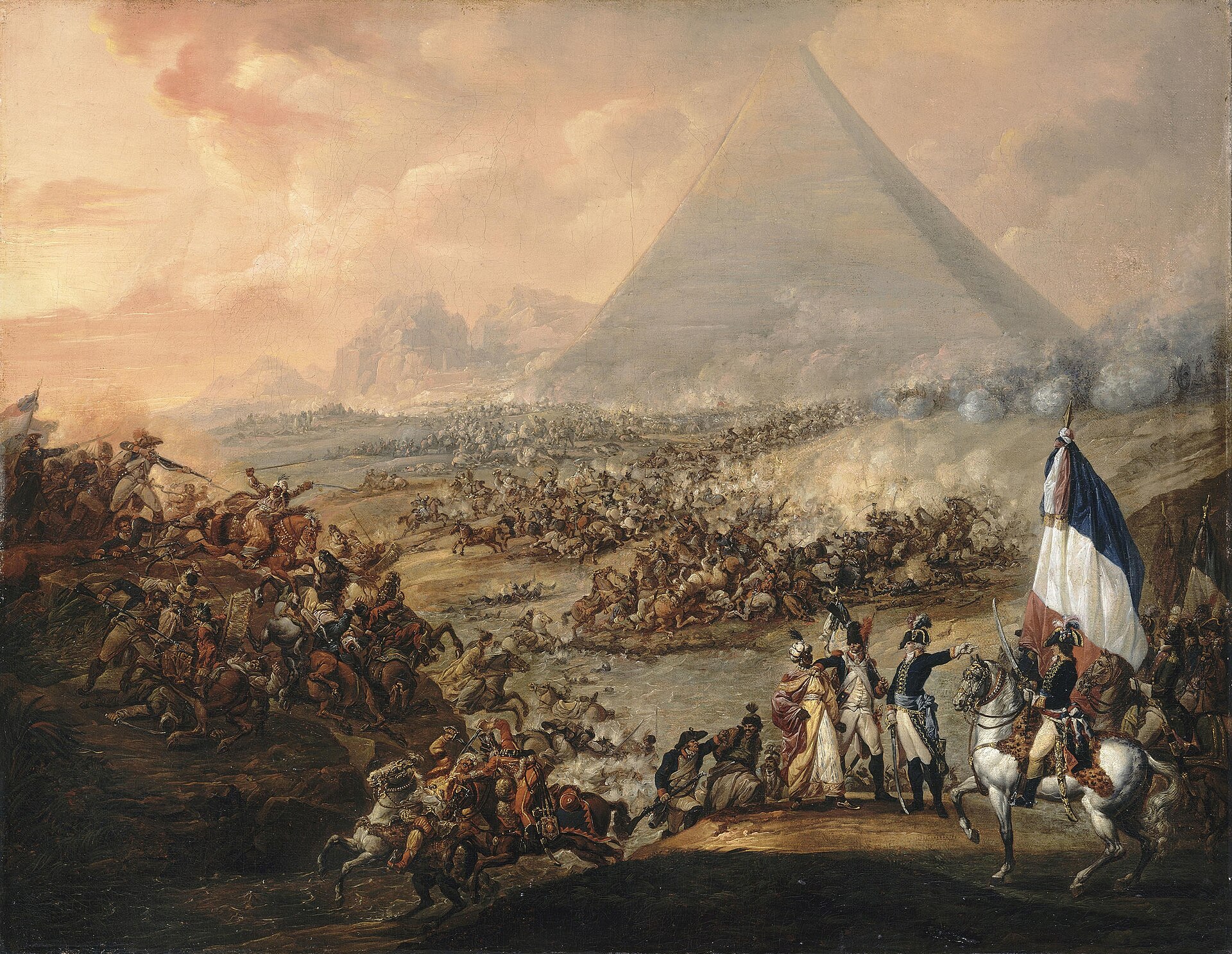
By 1798, Napoleon was elected to the French Academy of Sciences, after which he went to Egypt with 40,000 soldiers, and a collection of 167 scientists, mathematicians, naturalists, chemists and geodesists. However, on the way there, he managed to capture Malta, then under the control of The Order of St John of Jerusalem. They put up little fight and Napoleon only lost 3 men. On July 1st of 1798, Napoleon’s forces landed in Alexandria. They combatted the Ottomans on multiple occasions, most notably at the Battle of the Pyramids, which was located approximately 24km (15 miles) from the Great Pyramids of Giza. In the battle, there was less than 30 French casualties compared to the nearly 2,000 they inflicted.

A painting of the Battle of the Pyramids (July 21st, 1798)

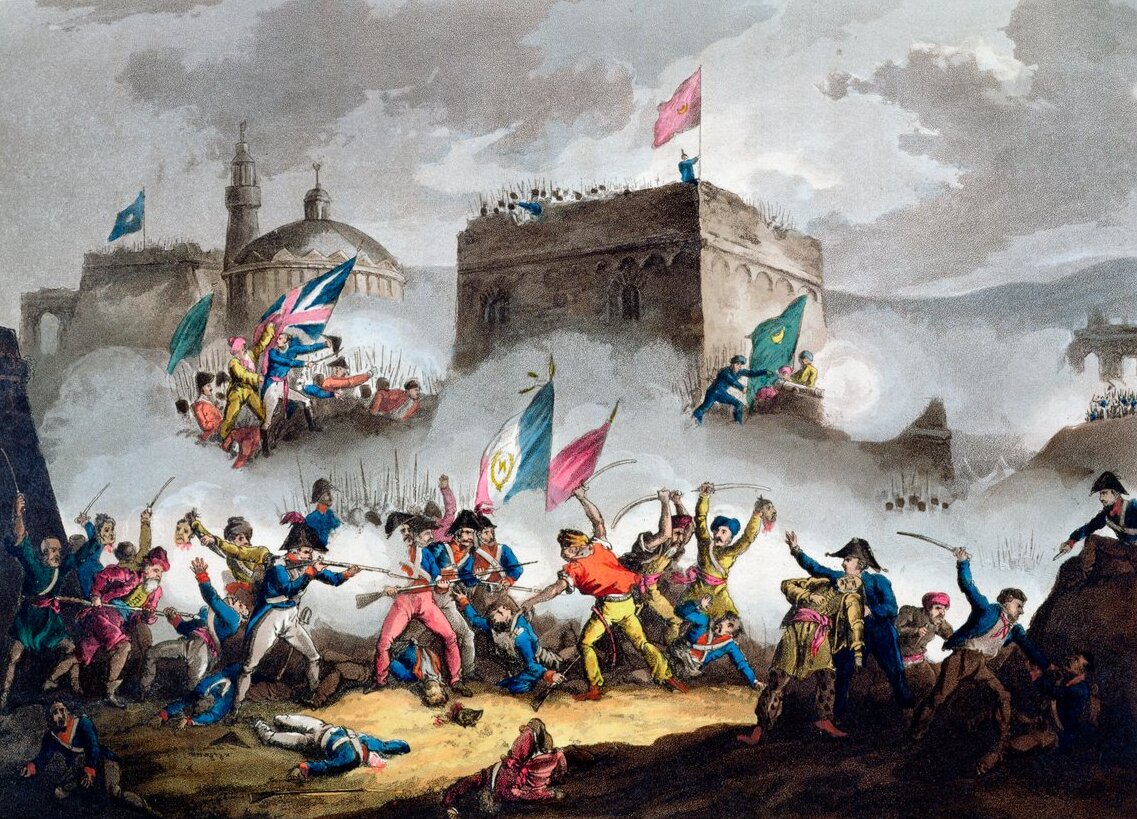
Despite this increase to French morale, disaster struck when Admiral Horatio Nelson destroyed or captured all but 2 out of 17 French Ships in the Battle of the Nile. After this decisive loss in the Mediterranean Campaign, Napoleon travelled north to Damascus with 13,000 men, capturing the port towns of Gaza, Arish, Haifa and Jaffa. Most notably, Napoleon noticed that, when he attacked Jaffa, the defenders were largely made of Albanian prisoners of war on parole. As a result, when he conquered the town, he ordered the garrison to be executed by bayonet and drowning. Then, all the men, women and children were pillaged, murdered or raped for 2 days and nights.

Napoleon’s army eventually reached the city of Acre. Believing it to be an easy victory, Napoleon decided to only use infantry to attack the city, believing that they would capitulate easily. He believed it would only take two weeks to capture the city before he would then march on Jerusalem. However, after one and a half months, the city stood firm. Many believe this was in part due to the large Albanian population of the city, fearing that they may share the same fate as Jaffa if they fell. Not only that but the British came in to assist, supplying the city’s defences with fresh sailors and marines, and sunk multiple French siege artillery ships. Once the French forces had finally managed to make a break through the wall of the city they discovered that the defenders had built a much deeper wall within. A cold, hungry and plague ridden French Army eventually retreated on May 21st, 1799, after a two month long siege.

A painting of the Siege of Acre (March 20th – May 21st 1799)

Napoleon returned to Egypt, having lost over 5,000 men in the siege, 2,000 of whom had succumbed to the bubonic plague. After this humiliating defeat, Napoleon decided to return to France without his army, fearing that the French Republic may soon collapse. Or was it perhaps him taking advantage of an opportunity?

The Battle of Thermopylae

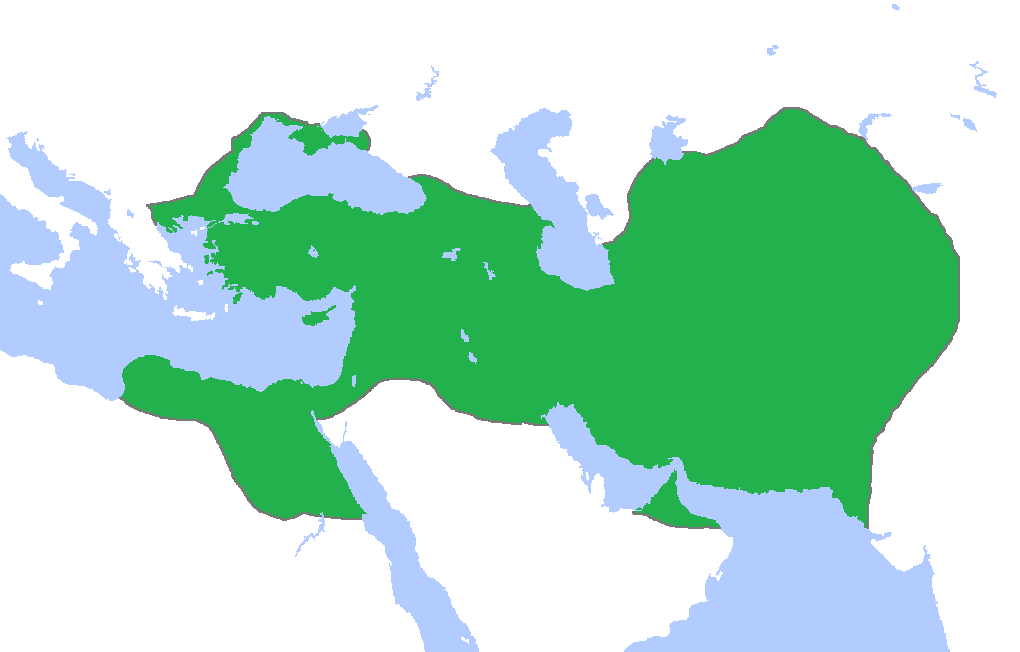
By 480BC, the Persian Empire was the largest on Earth. Persia, modern day Iran, was a shockingly progressive society for the time. Instead of being great conquerors, they were often seen as great liberators. The founder of the empire, Cyrus, famously freed the Jews from the city of Babylon, a city in modern day Iraq. There were no slaves and all labourers were paid a fair wage given their skill and contribution to a structure.

A map of the Persian Empire

19 years earlier, pro-democracy uprisings in Ionia were backed by Athens, another democratic state. In response, King Darius invaded Greece but was shockingly defeated at the famous Battle of Marathon by the much smaller Athenian Army.

A painting of the Battle of Marathon

Swearing revenge, the task of invading Greece was passed down from Darius to his son Xerxes, who soon began marching on Greece, with the largest army at the time of over 360,000 men

Leading the Greek defence was King Leonidas of the Greek City State of Sparta. Sparta is one of the most extreme societies in human history, being a eugenics based warrior state. When children were born, elders would inspect if the child was fit to fight. If not they were thrown off a mountain to die. Boys went off to school to be drilled into becoming soldiers. Men always became soldiers and lived in barracks 24/7; academics often lived in Athens rather than Sparta and all manual labour was done by the slaves called Helots. However, despite their brutal upbringing Sparta had one of if not the greatest infantry armies in the ancient world. Athenian leaders decided to stage a battle at Thermopylae to fend off the Persian Army whilst they prevented naval landings. 7,000 men opposed Xerxes massive army, lead by the famous 300 Spartans.

A map of the area

When the two sides met at the narrow strip of land, one side being a cliff and the other half being an ocean, the Persians immediately fired their arrows, making zero progress against the advanced armour of the Greeks. Eventually, Xerxes ordered his men to melee attack. Due to the hot weather, they were only able to fight in minute long bursts before tiring out. The weak Persian shields stood no chance against the longer Spartan Spears and the type of combat the Persians were used to in their conquest of the vast and open Middle East could not be applied in the narrow passage of Thermopylae.

However, their weak number soon dawned on the Greeks who turned and began to flee. Believing a victory, the Persians charged at the Spartans, breaking formation, before the Greeks turned around massacring the unorganised Persians. Some of Persia’s finest lie dead in the passage. However, a whisper came to Xerxes of another way to attack the Greeks.

An unorganised group of soldiers watched a narrow passage in the mountain. Without a Spartan officer, they had broken ranks after 2 days of nothing. Eventually, they are attacked by the elite Persian Royal Guard and run to the rest of the men. The Greeks are now trapped, the ocean to the north, the cliff face to the south, the large Persian Infantry to the West and the Persian Royal Guard to the East. Leonidas makes a very brave decision. He decides to let the rest of his men leave before the Eastern Guard can form up, whilst keeping behind the 300 Spartans to fend off the Persians, allowing them to escape.

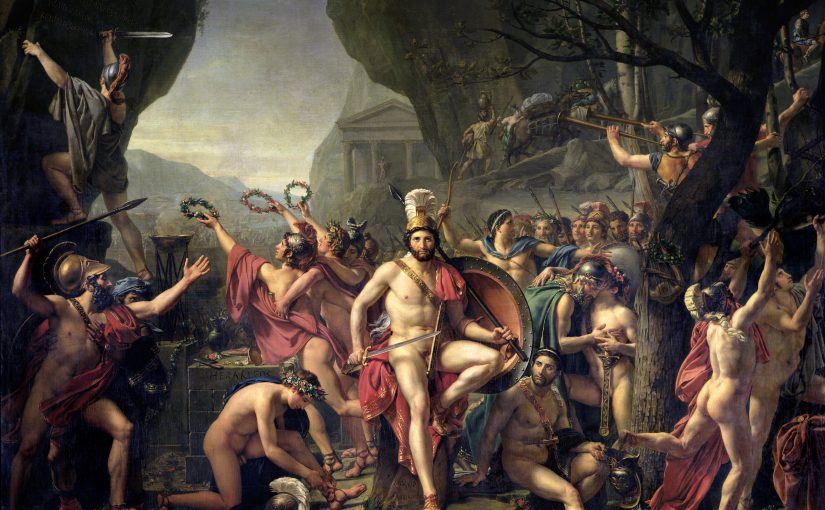
In a last stand of gallantry, the 300 Spartans charge head on at the Persians. They fought until their spears broke and they fought with swords until they were blunt, fighting with bear hands and teeth. However, all of them were eventually wiped out including Leonidas, and Xerxes marched on. This last stand allowed the Athenians to deliver a strong naval victory and, fearing that the crossing into Greece may soon be attacked by Athenian Naval Forces, Xerxes returned home, whereupon his forces were defeated at Plataea by the Spartans.

Herodotus wrote about the battle as well as the rest of the war, in one of the first true history books that was not simply the art of myth making but actual fact. His rousing story birthed the Greek identity, portraying the Greeks as a civilised people and the Persians as evil enslaving monsters. The impact of Thermopylae impacted many wars and civilisation for centuries afterwards.