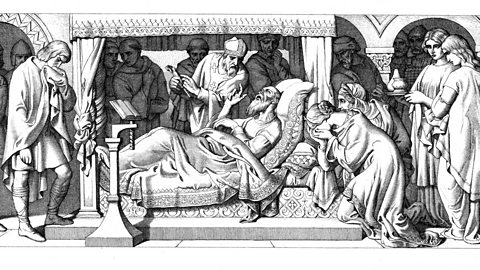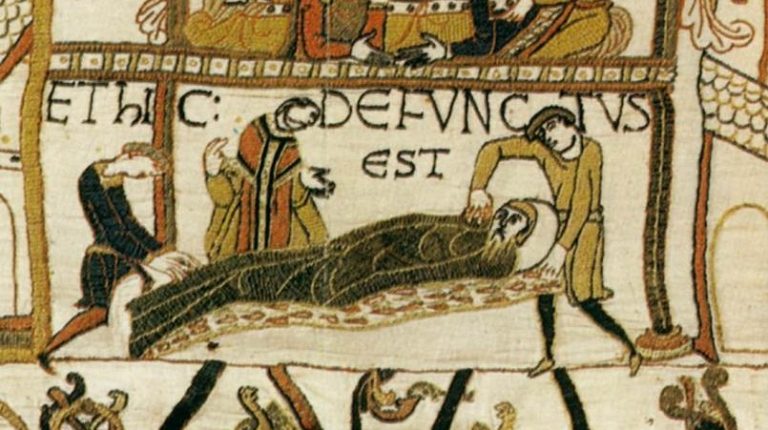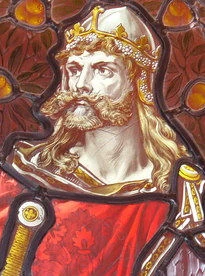
In the summer of 1066, England stood on the brink of invasion. Following the death of Edward the Confessor, Harold Godwinson had been crowned king, but his claim was disputed by rivals both at home and abroad. Expecting an invasion from William, Duke of Normandy, Harold stationed his army along England’s southern coastline. Day after day, however, the invasion never came. Unfavourable southernly winds trapped William’s fleet in Normandy, preventing him from crossing the English Channel.

By early September, Harold faced a different problem. England’s fyrd – a militia made up largely of farmers – could not remain under arms forever. Harvest season had arrived, food supplies were running low, and many men needed to return home to gather their crops before winter. Reluctantly, Harold dismissed much of his army and navy, believing that the threat of invasion had passed for the year. It was at precisely this moment that disaster struck.
While the winds held William in France, they carried Harald Hardrada, King of Norway, across the North Sea. Accompanied by around 300 longships and perhaps 10,000 warriors, Harald was joined by Tostig Godwinson, Harold’s exiled younger brother. Tostig had once been Earl of Northumbria before being driven into exile after a rebellion. Bitter towards his brother for refusing to restore him to power, he now sought revenge by helping Hardrada seize the English throne. The Norwegian fleet landed on the Yorkshire coast before sailing up the Humber and River Ouse. As they advanced inland, villages were plundered for food and supplies, while terrified communities fled before the Viking army. Their objective was not simply to raid but to conquer. The ancient city of York, England’s second-largest city, stood directly in their path.

To stop the invasion, the defence of northern England fell to two powerful earls: Edwin, Earl of Mercia, and Morcar, Earl of Northumbria. Together they assembled the regional fyrd and marched south from York to intercept the invaders before they could reach the city. On September 20th 1066, the two armies met just outside York near the village of Fulford. The battlefield heavily favoured the defenders – or so it first appeared. The English army formed a shield wall on a strip of firm ground between the River Ouse to one side and a stretch of marshland crossed by the Cock Beck on the other. This narrow front prevented the Norwegians from bringing their superior numbers to bear all at once. If the English line held, the Vikings would be forced into a costly frontal assault. Harald Hardrada nevertheless accepted battle.
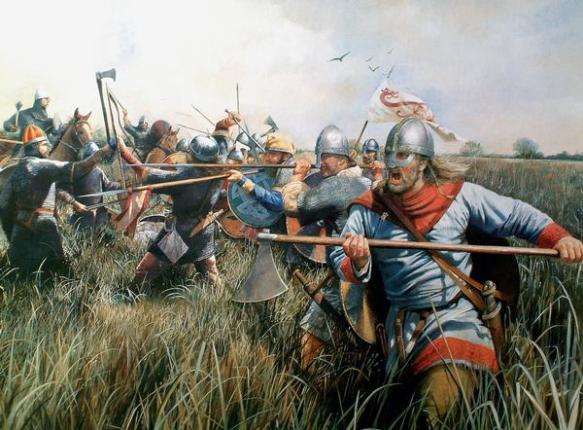
The fighting began with both armies crashing together in a brutal contest of shields, spears and axes. Contemporary accounts and later Norse sagas describe desperate hand-to-hand combat lasting for hours. Morcar is said to have fought fiercely at the front of the English line, encouraging his men as they resisted repeated Norwegian assaults. The narrow battlefield initially prevented either side from gaining a decisive advantage. Gradually, however, the tide began to turn. As the marshland was flooded by the incoming tide, parts of the English line became compressed against the higher ground, creating confusion among the defenders. Hardrada recognised the opportunity. Rather than continuing a simple frontal attack, he committed fresh troops that had been held in reserve, extending his line around the weakened English flank. Once the English formation began to buckle, the Norwegian warriors poured through the gap.
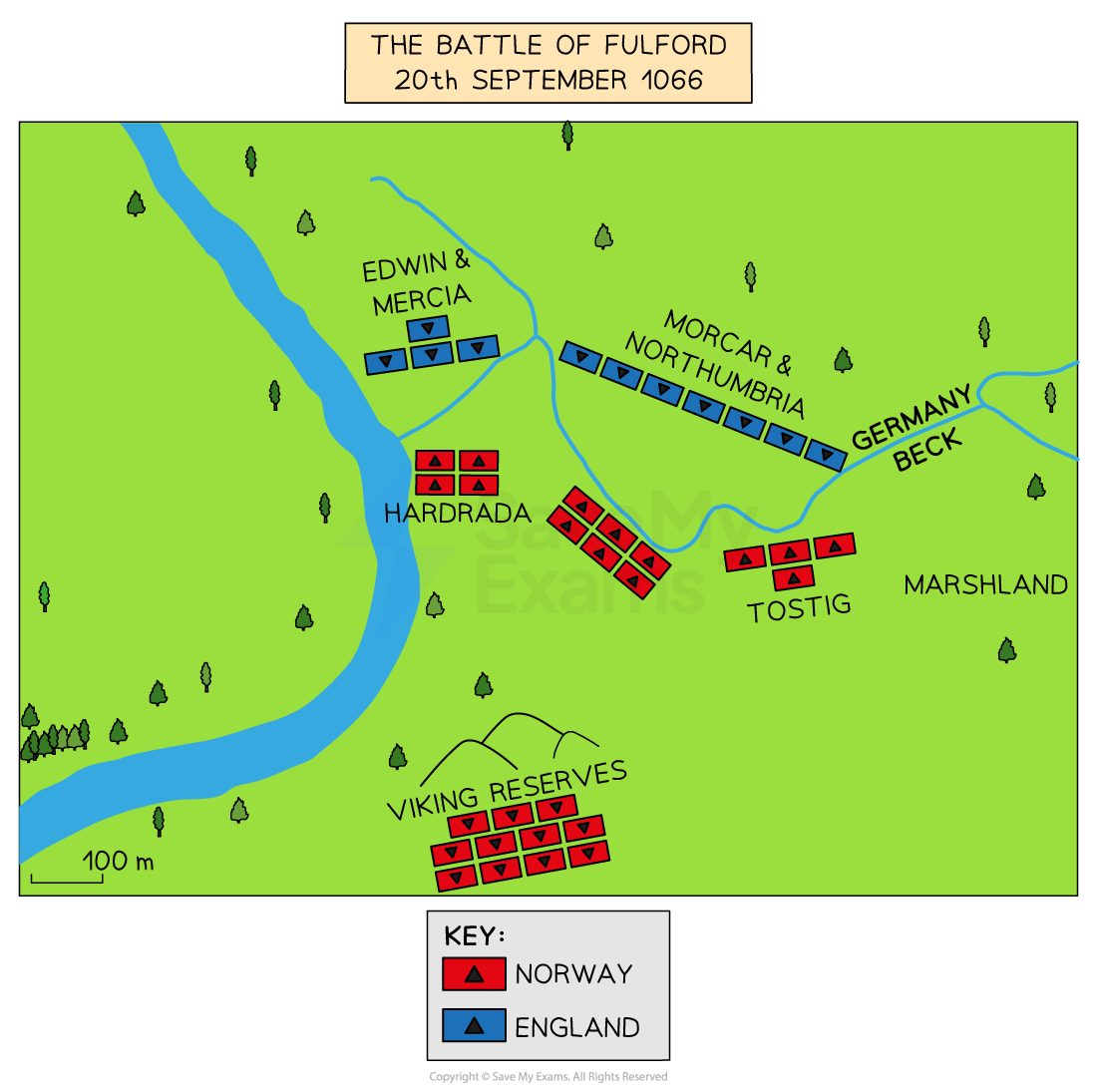
The battle quickly became a rout. Many English soldiers attempting to retreat were trapped between the marshes and the River Ouse, where countless men were cut down or drowned trying to escape. Others fled back towards York pursued by the victorious Vikings. The defeat was devastating for northern England. Morcar and Edwin survived, but their army had been shattered. With no force left capable of defending the city, York negotiated its surrender to Hardrada only a day later. The Norwegian king appeared to be on the verge of fulfilling his claim to the English crown. Yet victory at Fulford would prove to be short-lived. When news of the invasion reached Harold in London, he reacted with astonishing speed. Gathering his household troops and every available soldier he could muster along the way, he marched nearly 190 miles in just four days – one of the most remarkable forced marches in medieval military history. Rather than waiting for Hardrada to consolidate his position in the north, Harold intended to strike immediately. Only five days after the Battle of Fulford, the two kings would meet at Stamford Bridge, in one of the bloodiest and most decisive battles ever fought on English soil.