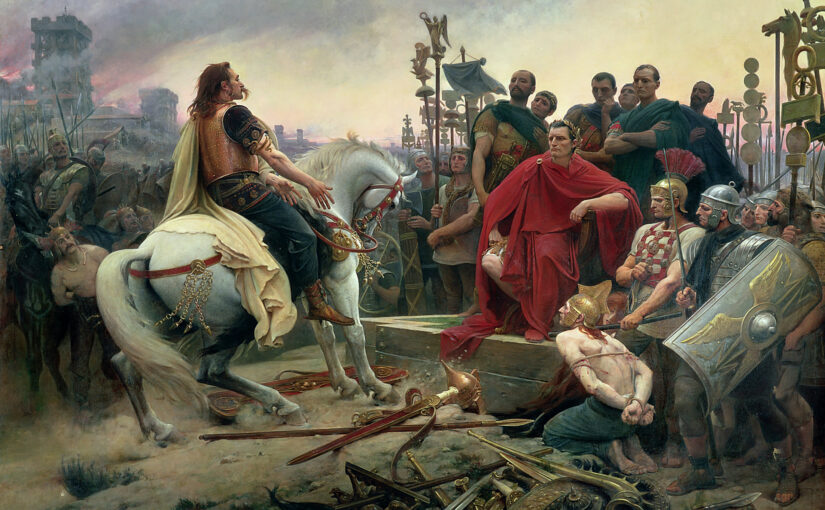
The year was 52 BC. For six years, Rome’s armies had fought a relentless campaign to conquer Gaul, defeating one tribe after another and extending Roman power ever deeper into Western Europe. Now, that long struggle was approaching its decisive moment at the fortified hill town of Alesia, in what is now the Burgundy region of France. The settlement, capital of the small Mandubii tribe, was one of the largest strongholds in Gaul, with an estimated population of between 80,000 and 170,000 people once the surrounding refugees arrived during the siege. The previous year’s campaigns had been among the bloodiest of the Gallic Wars, convincing many tribal leaders that Roman conquest threatened not only their political independence but their entire way of life. Although Julius Caesar had originally governed only the Roman provinces of Cisalpine Gaul, Illyricum and Gallia Narbonensis, his victories increasingly made it clear that he intended to bring the rest of Gaul under permanent Roman control. Roman armies occupied Gallic territory, demanded tribute, took hostages and intervened in local politics. Many Gauls also feared what Roman domination could mean for their traditional customs and religious institutions. Amid growing resentment, a young Arvernian noble named Vercingetorix succeeded where countless leaders before him had failed. Setting aside centuries of rivalry, he forged an unprecedented alliance between dozens of Gallic tribes, united by a single goal: to drive the Romans out of Gaul once and for all.

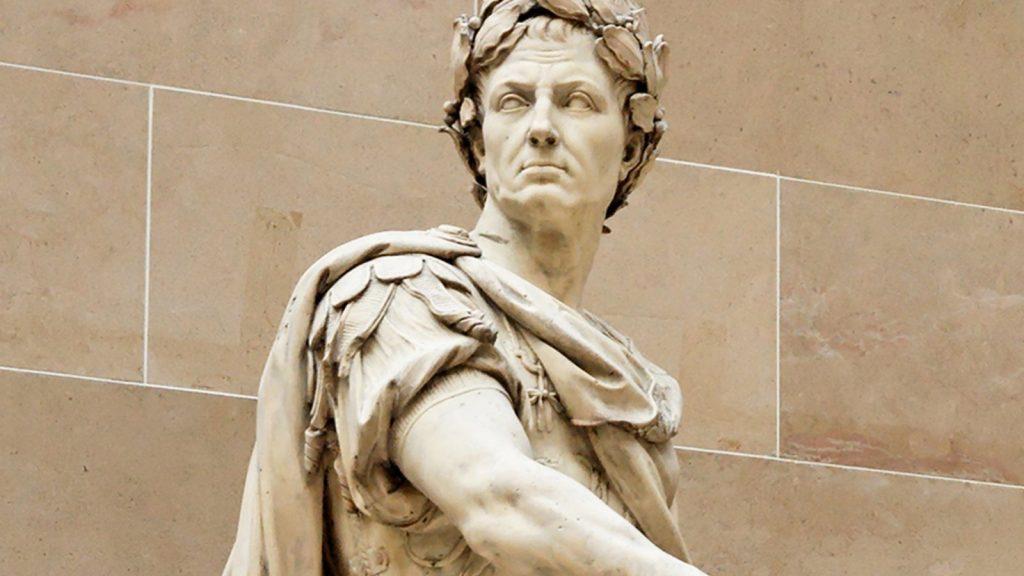
On Caesar, he had been a great political and military force in Rome for a long time. After serving as consul in 59 BC, Caesar secured an unprecedented five-year command as governor of the prior mentioned territories through his alliance with Gnaeus Pompeius Magnus, more commonly known as Pompey, and the immensely wealthy Marcus Licinius Crassus through an informal political partnership later known as the First Triumvirate. The command granted him four veteran legions and, more importantly, an opportunity. Burdened by enormous debts and surrounded by political rivals in Rome, Caesar needed military victories to enrich himself, reward his soldiers and build the prestige necessary to dominate Roman politics. Over the next six years, his campaigns transformed him into one of the Republic’s greatest generals, but they also made him powerful enough to alarm many members of the Senate.
By 52 BC, everything Caesar had built was at stake. A united Gallic revolt under Vercingetorix threatened to undo six years of campaigning and destroy the reputation that his political future depended upon. Victory at Alesia would not simply secure the conquest of Gaul; it would provide Caesar with the wealth, glory and military prestige that could ultimately bring a rise to absolute power. Defeat, by contrast, would likely have ended both his military career and his political ambitions.
Vercingetorix knew that he could not defeat the Roman legions in a conventional pitched battle. Caesar’s army was among the most disciplined and experienced fighting forces in the ancient world. Instead, the Gallic leader adopted a ‘scorched-earth’ strategy, ordering tribes to burn their own villages, crops and food stores before the Romans could seize them. His hope was simple: if Caesar’s army could not feed itself, it would be forced to retreat. The strategy was proving effective until the wealthy city of Avaricum pleaded to be spared. Reluctantly, Vercingetorix agreed. Caesar immediately besieged the city and, after capturing it, his starving troops massacred much of its population and replenished their supplies. Although Vercingetorix soon recovered with a significant victory over Caesar at Gergovia, proving that the Romans were not invincible, he refused to risk another major engagement in open ground. Instead, after a series of cavalry clashes, he withdrew with roughly 80,000 warriors into the heavily fortified hill settlement of Alesia, believing its formidable natural defences would force Caesar to abandon the pursuit. Instead, Caesar made one of the boldest decisions of his military career: rather than retreat, he resolved to besiege the city itself.
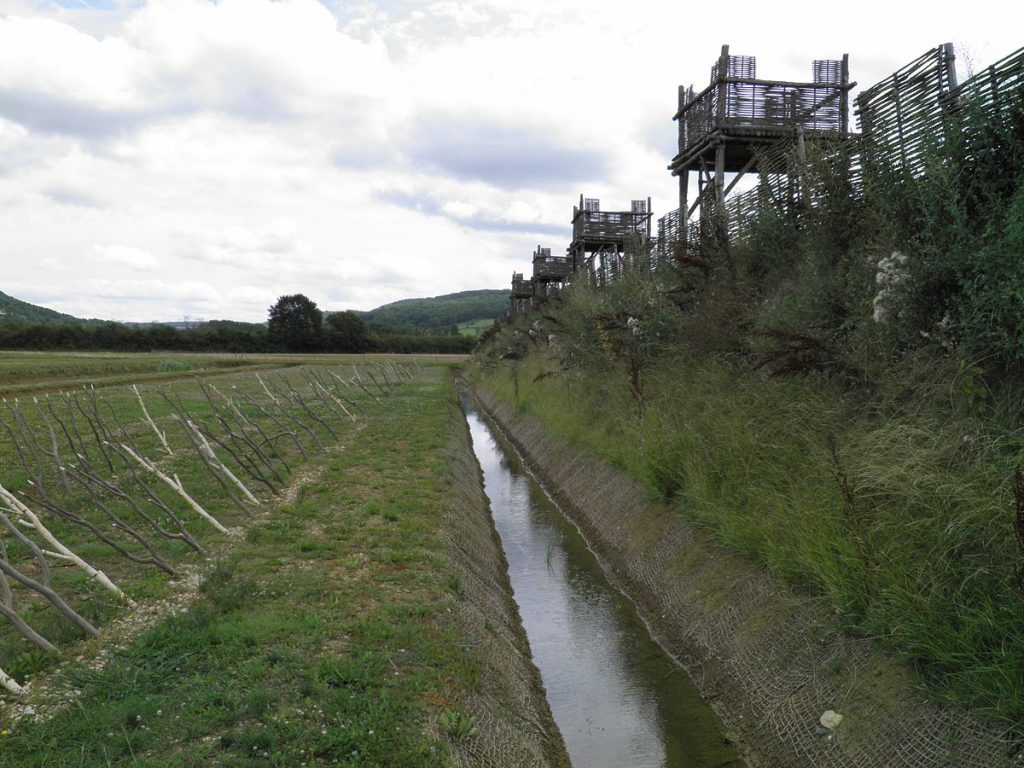
This decision to besiege the city did not initially concern Vercingetorix, as he believed that he could effectively perform a pincer manoeuvre on the Roman army. What he did not expect, however, was the intensity of the siege. The Romans wasted no time. Within hours, thousands of legionaries had begun digging trenches and marking out what would become one of the greatest siege systems ever constructed. Over the next few weeks, Caesar encircled the entire town with a ten mile long wall which reached 12ft high. This wall, called the Circumvallation, was not without its defences. If the Gauls wanted to assault the wall, they would first have to cross a 20ft wide trench, before they would encounter two more trenches, both 15ft deep and one filled with water from the nearby rivers. This defence was littered with countless hidden defensive traps. If they did reach the wall, sharpened stakes projected from the earth would tear apart anyone attempting to climb the defences.
The construction did not come without opposition. Caesar wrote that, during the construction of the siege fortifications, a cavalry battle took place in the three mile stretch of land between the wall and the town. The fight initially leaned in favour of the Gauls, before Caesar sent forth his infamous Germanic cavalry, who launched a devastating charge with such vigour and terror that it sent them running back to their encampment. As the men attempted to claw their way back through the city gates, some even attempting to climb the wall, Vercingetorix, fearing the Romans would exploit the confusion and force their way into the town, opted to close the gates, leaving countless terrified soldiers to be massacred at the gates of Alesia.
As construction of the fortifications continued, Vercingetorix concocted a plan to relieve his men. Under the cover of night, he ordered his cavalry to sneak past Roman lines and gather as many reinforcements as they could from across the Gallic lands to crush the Roman siege and bring a swift end to the war. According to Caesar, the relief force eventually numbered over 240,000 warriors, although modern historians generally believe the true figure was considerably smaller. Caesar, who learnt of this from captives and Gallic deserters, took a bold measure. In an effort to repel any would be attackers, he built a second wall around the first, effectively trapping his own army between two vast defensive lines. The second wall, called the Contravallation, had many of the same fortifications the Circumvallation did but instead faced outwards from Alesia, pushing the Roman army in between the two walls.
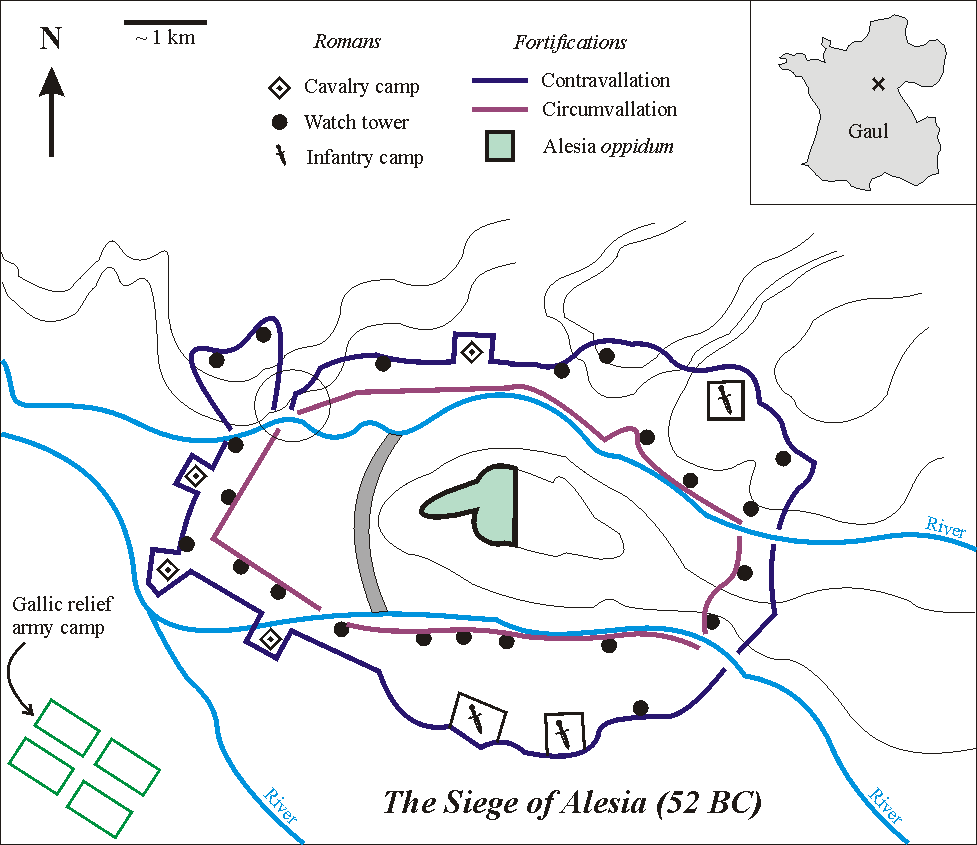
By now, the conditions within the city had grown grim. Their food supplies had begun dwindling and Vercingetorix not only had to feed his own army but the citizens of Alesia as well as countless refugees who had fled there following the Roman conquest. He offered a solution that would allow the citizens safe passage and food: allowing all people who couldn’t fight into the ‘no-mans land,’ hoping they would be allowed to pass through the Roman defences or feed them himself. Whilst partially an act of mercy, it was also a logistical decision to allow him to prioritise supplies for his own men. However, upon their reaching of the wall, Caesar denied the group, largely consisting of women and children, passage through his line. Vercingetorix also refused to readmit them, knowing that every extra mouth consumed precious food that his warriors needed if they were to survive until the relief army arrived. For days, the abandoned civilians wandered the narrow strip of land between the Roman and Gallic defences, begging both sides for food. Neither relented. Many eventually died where they stood, victims of a siege in which starvation had become another weapon of war.
Hoping to overwhelm the Romans, the Gallic relief army launched a major assault under the cover of darkness while Vercingetorix ordered simultaneous attacks from inside Alesia. Making use of ladders and wicker hurdles to bypass trenches and hooks to destroy the spikes, some of the Gallic army managed to begin to scale the wall, while arrows and other projectiles kept the Romans at bay. However, they were met by disciplined Roman legionaries, who fought from behind the ramparts and cut them down as they attempted to crest the peak of the wall. The onslaught lasted until dawn, with the morning light of day revealing the scale of the carnage. Both side suffered losses but the Romans held the line. The wall was still standing.

Meanwhile, Commius, one of the commanders of the reinforcements, recognised that one section of Caesar’s outer line, built across steep and uneven ground, was less formidable than the rest. On high ground now commonly identified as Mount Réa, some of his scouts had identified a weak point where the Romans had failed to construct adequate fortifications due to hilly terrain. Commius deduced that if Caesar could be distracted by a more direct assault that a force, led led by Vercassivellaunus – a cousin of Vercingetorix according to Caesar, could breach the Roman line and liberate the town.
The attack went ahead at daybreak, with both the inner and outer wall under assault simultaneously. Caesar, notified of the assault near Mount Réa, took decisive action, going into the field of battle himself to confront the assault, Donning his distinctive scarlet commander’s cloak so his men could see him, Caesar rode to the threatened sector and ordered his cavalry to break from the fortifications and flank the force at Mount Réa from behind. Their final chance at repelling Rome dwindled in a second as the cavalry cut down the men behind them. The Gauls panicked, broke rank and were massacred in what had now quickly turned into a slaughter. The scene of them being trampled and cut to death caused the rest of the army to flee. They lost the battle. The next day, Vercingetorix surrendered to Caesar. Later Roman writers claimed he rode from the city in full armour before laying his weapons at Caesar’s feet, although whether the surrender unfolded exactly this way remains uncertain. The Gallic wars were over and Caesar was triumphant.
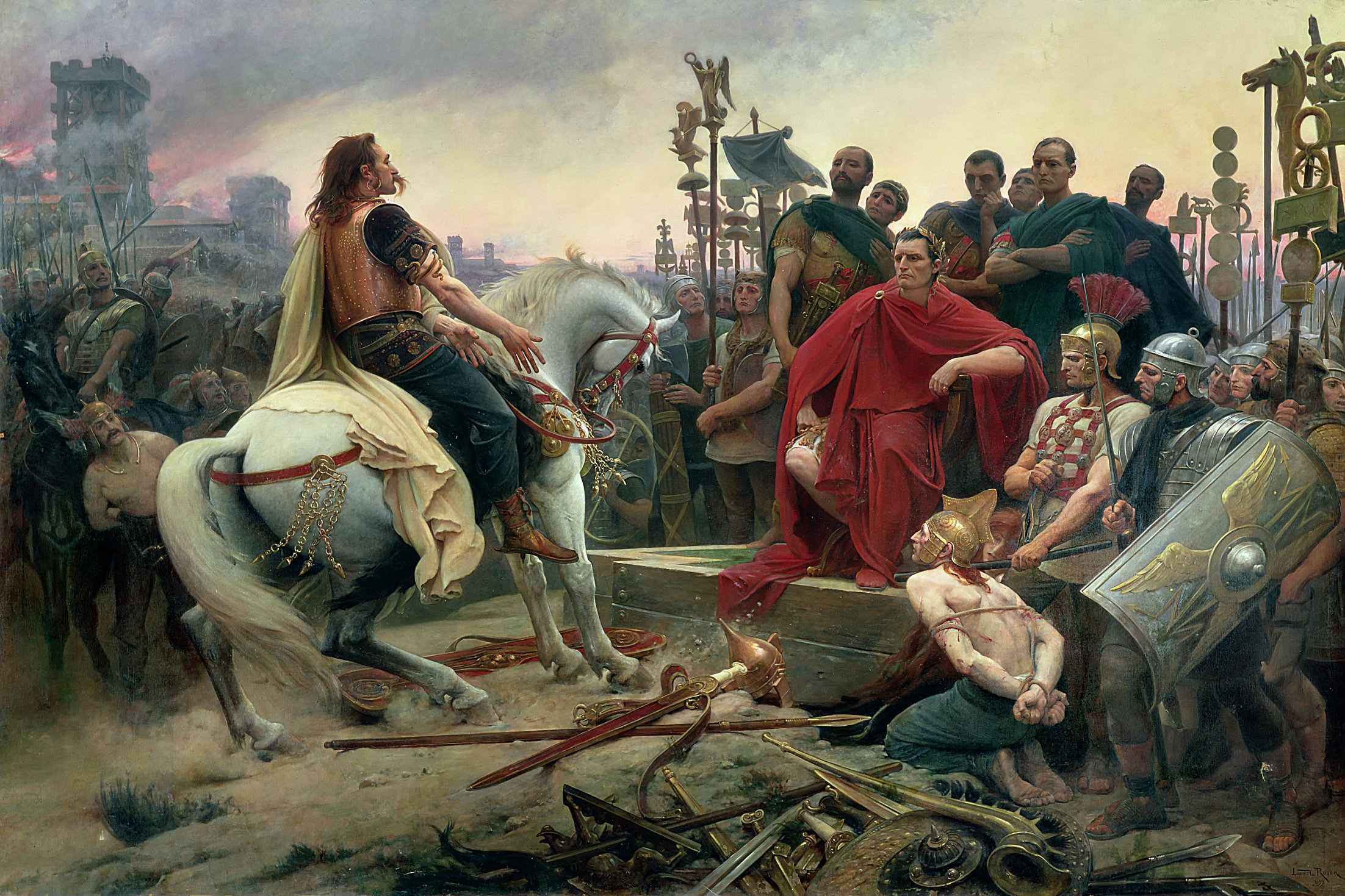
Vercingetorix remained a prisoner for six years before being displayed in Caesar’s triumph through Rome in 46 BC. Once the celebrations ended, he was executed by strangulation in the Tullianum prison. His defeat marked the effective end of organised Gallic resistance and brought almost all of Gaul under Roman rule. For Caesar, Alesia was the crowning achievement of the Gallic Wars. The conquest made him unimaginably wealthy, won him the unwavering loyalty of his veteran legions and transformed him into the Republic’s most celebrated general. Yet his growing prestige alarmed many senators back in Rome. In many ways, the siege of Alesia did not simply decide the fate of Gaul; it set Rome itself on the path from republic to empire.