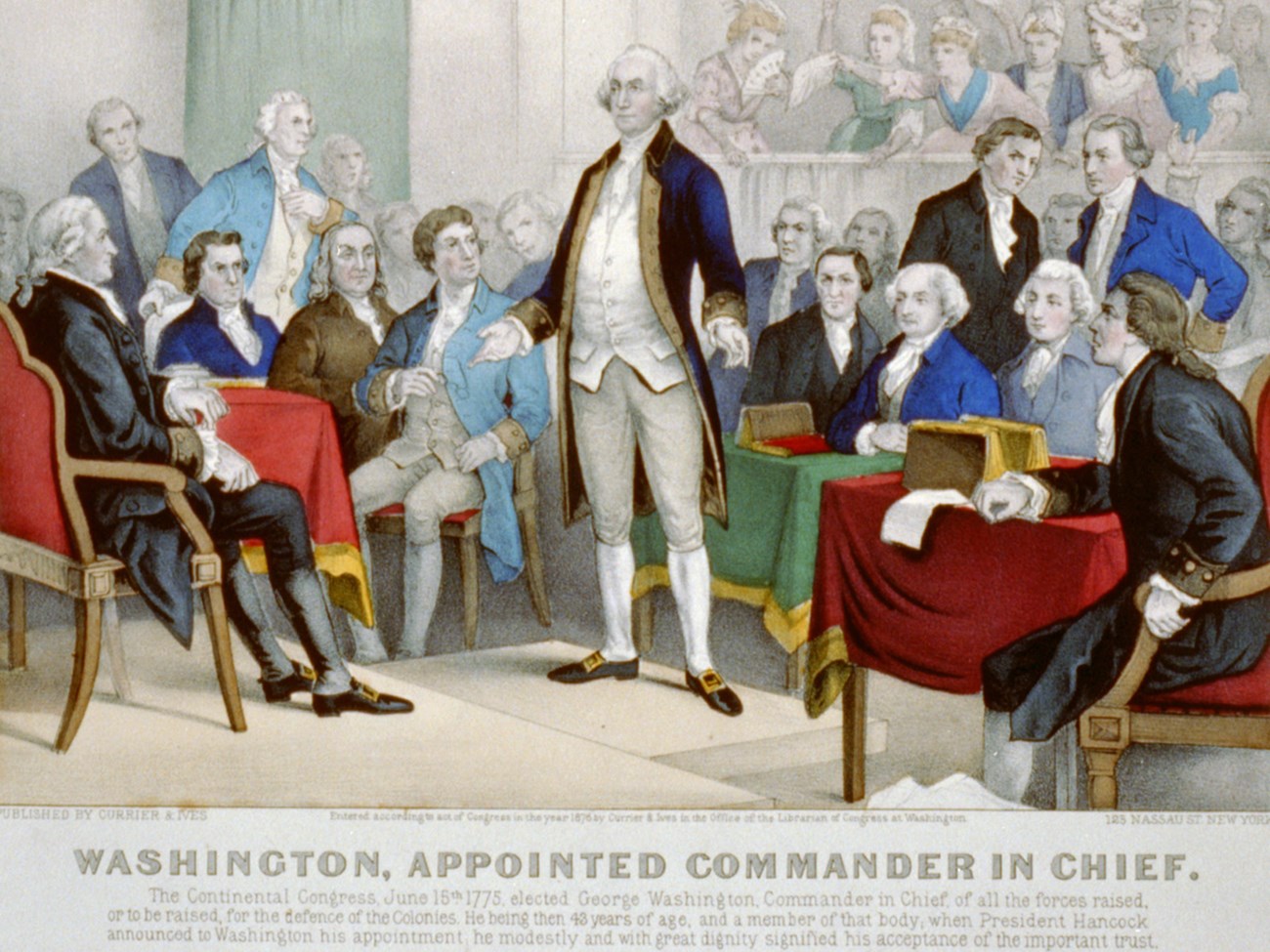
By June 1775, it had become clear that the colonial militias surrounding Boston could not defeat the British Army without becoming a more organised fighting force. The Continental Congress therefore created the Continental Army and appointed George Washington, a respected veteran of the French and Indian War, as its commander-in-chief. Washington travelled north from Philadelphia to take command, while the British forces in Boston prepared to break out of the city and seize the high ground overlooking the surrounding area.
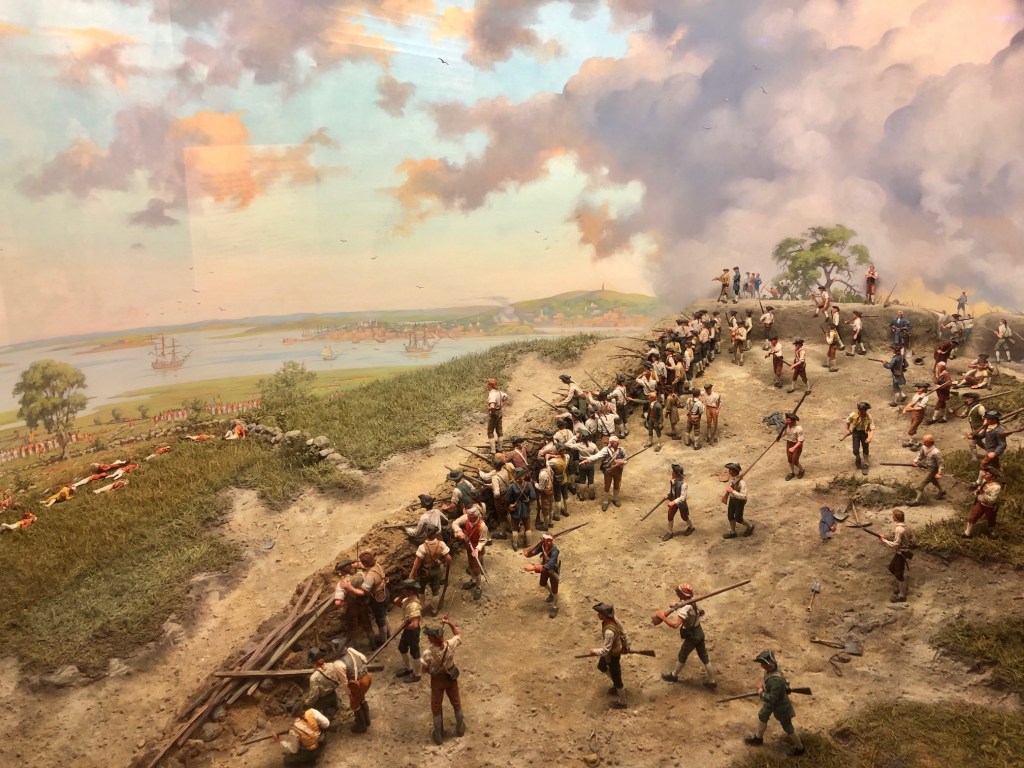
British General Thomas Gage planned to capture the Charlestown peninsula, particularly Bunker Hill, which would give his army an important strategic position overlooking Boston. However, colonial spies discovered the plan. On the night of June 16th, around 1,200 American troops under Colonel William Prescott secretly occupied the peninsula and constructed fortifications on Breed’s Hill, which was actually closer to Boston than Bunker Hill itself.
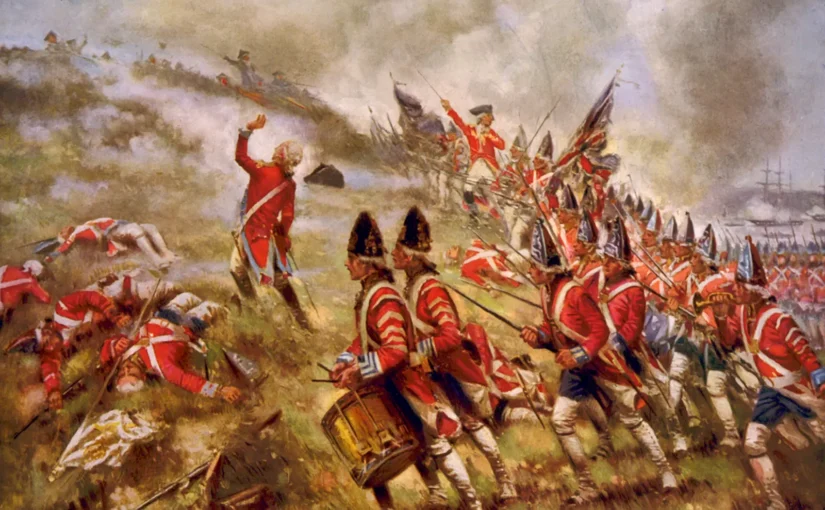
When the British launched their assault on June 17th, they were faced with a heavily fortified American position. British commanders initially believed that the inexperienced colonial troops would collapse when confronted by disciplined regulars. Their first two assaults were repulsed with devastating casualties. American defenders were famously instructed not to fire until they could “see the whites of their eyes”, conserving their limited ammunition until the British were within close range.
The British eventually launched a third assault after bringing up additional troops and artillery. By this point, however, the Americans had almost completely exhausted their ammunition. The British stormed the fortifications and forced the defenders to retreat across the Charlestown peninsula. The battle was therefore a British victory, but it came at an extraordinary cost. Around 1,000 British soldiers were killed or wounded, compared with roughly 450 American casualties. The British had captured the position, but the battle demonstrated that colonial forces could stand against some of the most experienced soldiers in the world and inflict enormous losses upon them.
The Battle of Bunker Hill also exposed a growing problem for both sides: neither knew exactly what the conflict was going to become. Many colonists still did not want independence from Britain. Their grievances had originally centred on taxation, representation and the increasing authority of Parliament, and some hoped that the dispute could still be settled while maintaining the colonies’ place within the British Empire.

The Continental Congress therefore sent the Olive Branch Petition to King George III in July 1775. It declared the colonists’ loyalty to the Crown while asking the King to help resolve their grievances and restore peace. George III refused to recognise the petition, instead declaring that the colonies were in rebellion. To many Americans, this appeared to confirm that reconciliation with Britain was no longer possible.
The conflict subsequently became increasingly destructive. British forces and loyalist troops attacked colonial settlements, while American forces targeted British and loyalist property. In October 1775, the British burned Falmouth in Massachusetts, and in January 1776 they destroyed much of Norfolk, Virginia. American propagandists used the destruction of these towns to portray Britain as deliberately waging war against its own subjects.
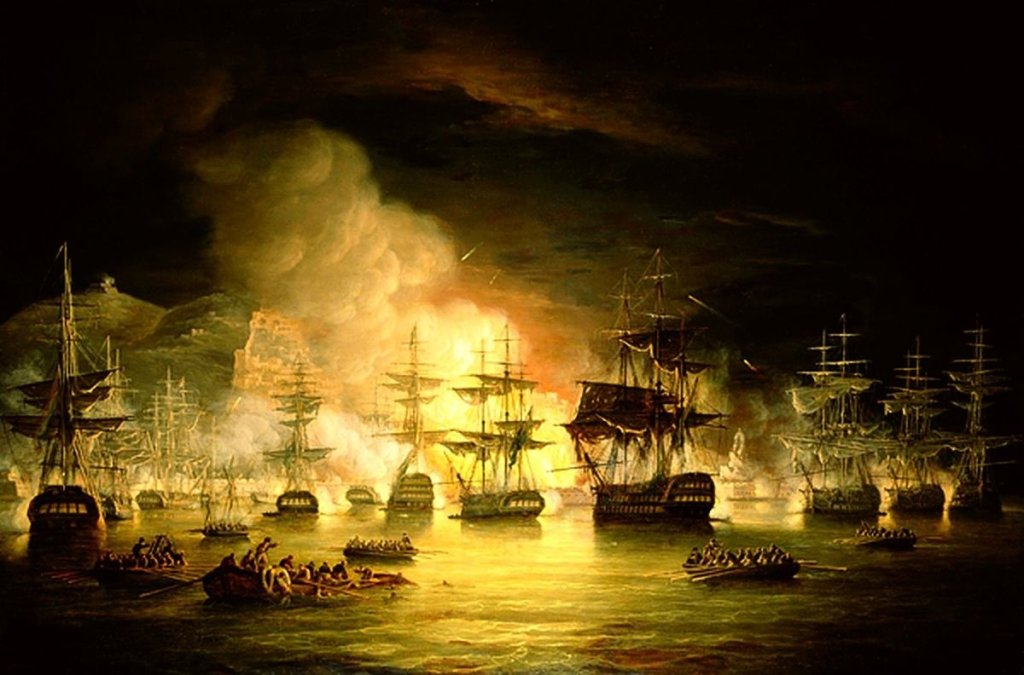
The rebellion was also beginning to attract international attention. Britain’s traditional enemies, particularly France and Spain, saw an opportunity to weaken the British Empire. Although neither initially entered the war openly, both provided the American rebels with weapons, ammunition, money and other supplies. France in particular would eventually become one of the most important American allies.
The failure of the Olive Branch Petition marked an important turning point. The conflict was no longer simply a dispute over taxation and political representation. Britain regarded the colonists as rebels, while an increasing number of Americans were beginning to question whether reconciliation was possible at all. Within months, the demand for reform would become a demand for independence.