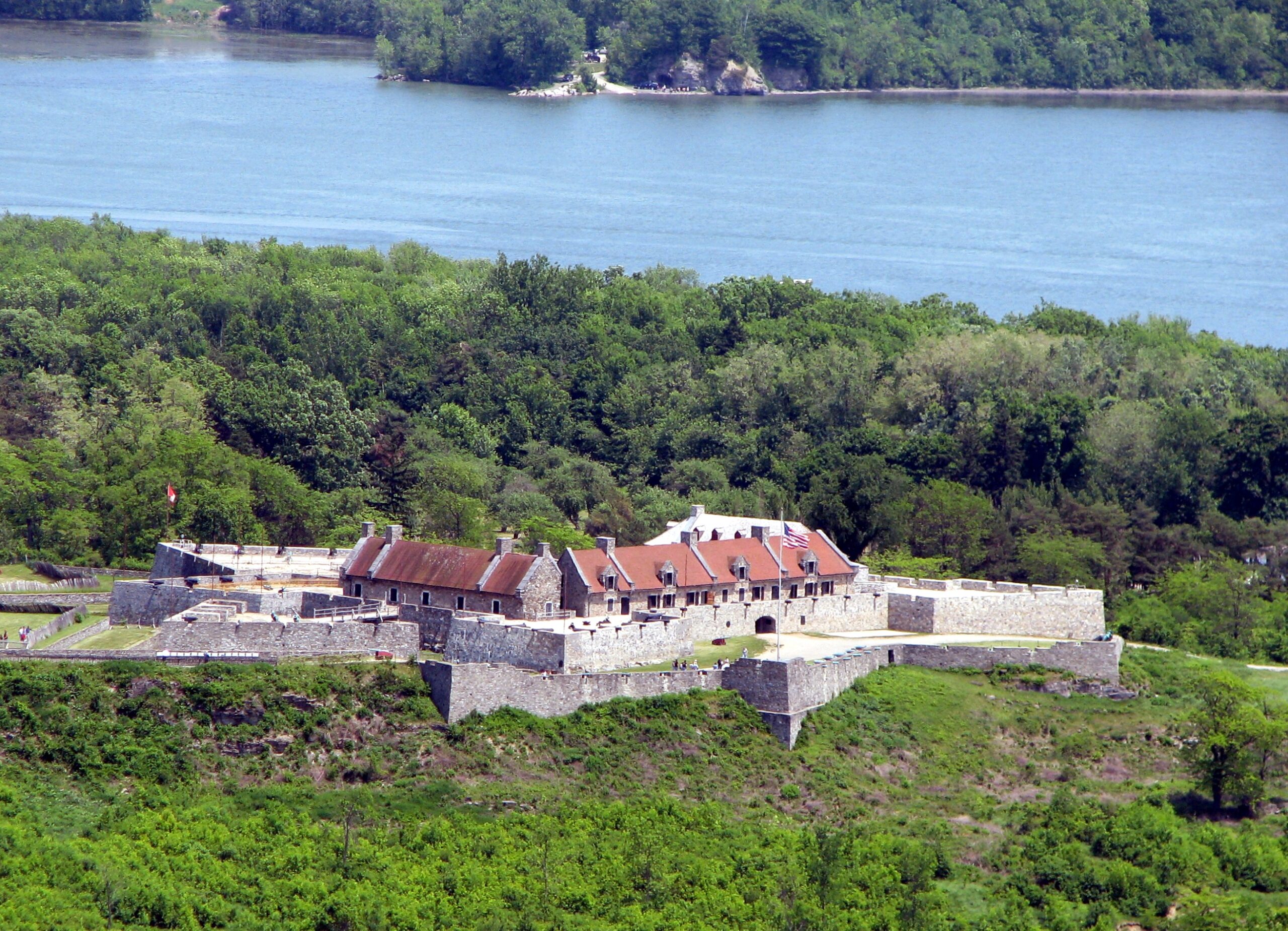
While the British Army remained trapped in Boston, the newly formed Continental Army desperately needed weapons and ammunition. Most of the colonial militia had arrived with whatever firearms they already owned, leaving Washington with an army that was large enough to surround Boston but poorly equipped for a prolonged war. An opportunity to solve this problem appeared hundreds of miles to the north at Fort Ticonderoga, a British fortification overlooking the strategically important route between Lake Champlain and Lake George.
One of the men who recognised the opportunity was Benedict Arnold, a talented but increasingly controversial Connecticut militia officer. Arnold proposed capturing the fort and seizing its large stores of artillery and ammunition before the British could reinforce it. He began marching towards Ticonderoga, hoping to gather militia along the way. However, he soon discovered that another group had already formed the same plan. Ethan Allen, leader of the Green Mountain Boys of Vermont, was marching towards the fort with his own force.
The two men immediately argued over who should command the expedition. Allen eventually took overall command, while Arnold remained involved in the operation. In the early hours of May 10th, 1775, the Americans crossed Lake Champlain and entered Fort Ticonderoga while most of its small British garrison was still asleep. The defenders were caught almost completely by surprise and surrendered after only token resistance. The Americans had captured the fort and, more importantly, its stockpile of British weapons and ammunition.
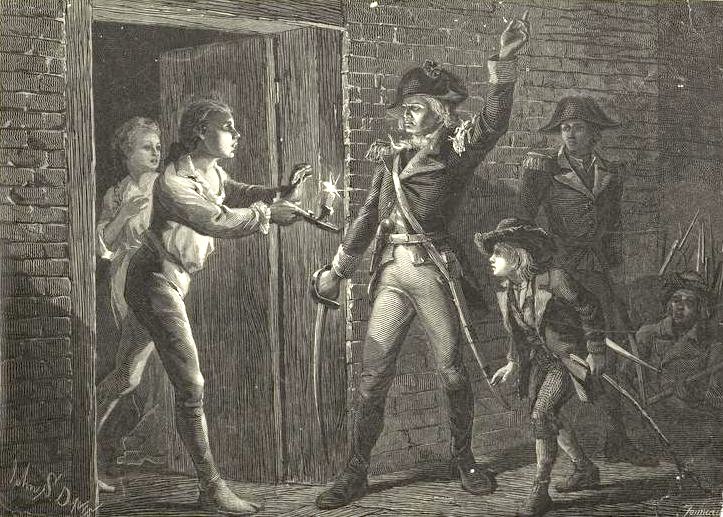
The victory was strategically important, but it also created an early rivalry between Arnold and Allen. Allen became celebrated as the hero of the capture, while Arnold felt that his own contribution had been deliberately ignored. Their dispute would become an early indication of the difficult relationships and political rivalries that would later plague the Continental Army.
The Americans soon attempted to use their position at Ticonderoga to expand the war into Canada. American forces captured Montreal but were eventually defeated at Quebec and forced to retreat southwards. Although the Canadian campaign had failed, the Americans still controlled Ticonderoga and had gained access to a valuable collection of British artillery. Washington now needed to get those guns to Boston.
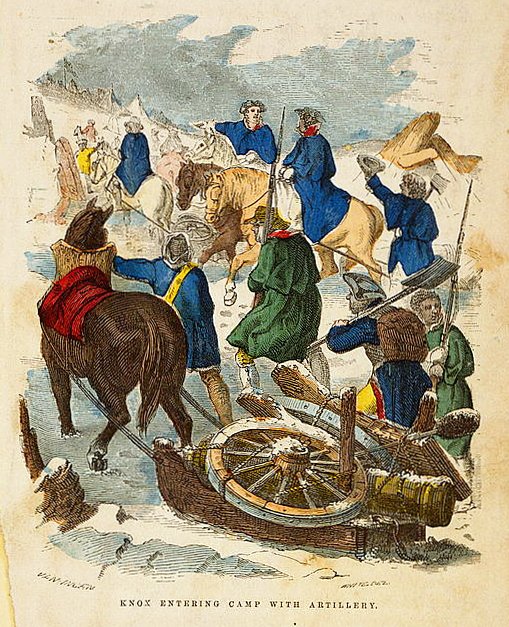
The man given the task was Henry Knox, a young bookseller from Boston who had taught himself military engineering. Knox proposed transporting the captured artillery more than 300 miles from Ticonderoga to the American army outside Boston. During the winter of 1775–76, Knox and his men dragged dozens of heavy cannons through the frozen wilderness using sledges pulled by horses and oxen. The journey was extraordinarily difficult, but by January the artillery had reached the outskirts of Boston. Washington now possessed something he had desperately lacked: heavy guns capable of threatening the British position.
The British commander, General William Howe, had also recognised the importance of the high ground surrounding Boston. His army occupied Boston itself while the Americans controlled the surrounding countryside. Washington believed that an assault might be necessary to end the siege, but his officers warned him that attacking the heavily fortified British positions directly could result in enormous casualties. Instead, they proposed using the newly arrived artillery to force the British out. The opportunity came in March 1776. American troops secretly occupied Dorchester Heights, a series of hills overlooking Boston and its harbour. During the night, they constructed fortifications and positioned Knox’s artillery at the top of the heights. When morning came, the British were confronted with an unexpected problem. American cannons now commanded both the city and the harbour, while British ships were vulnerable to fire from above.
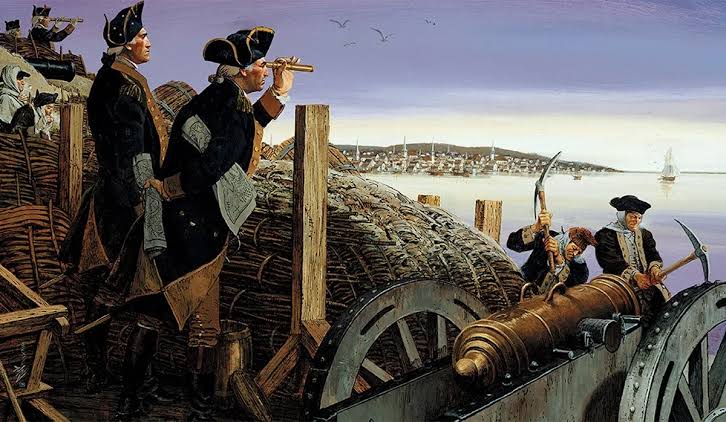
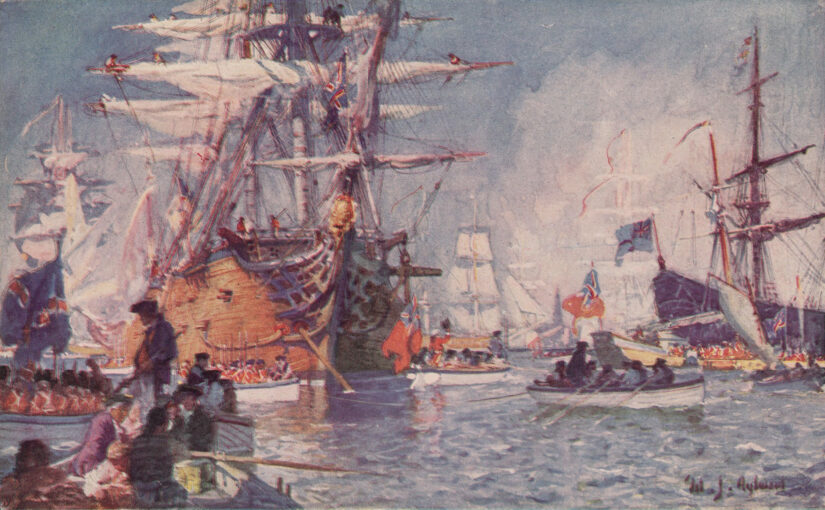
Howe realised that attacking the heights would be extremely costly. Remaining in Boston was equally dangerous, as the Americans could now bombard the city and threaten the British fleet. With no realistic way to hold the position, Howe ordered the evacuation of Boston. Beginning on March 17th, 1776, approximately 11,000 British troops, along with thousands of Loyalist civilians, evacuated the city aboard a fleet of ships. They sailed for Halifax, Nova Scotia, leaving Boston entirely in American hands.
For Washington, it was his first major victory as commander of the Continental Army. The British had occupied Boston for years, but in less than a year of open warfare they had been forced to abandon it. More importantly, the victory demonstrated the growing effectiveness of the Continental Army. The weapons captured at Ticonderoga had been transported across hundreds of miles of frozen wilderness and used to force one of the world’s most powerful armies from an important colonial city. Yet the victory also revealed the changing nature of the war. The British had not been defeated; they had simply withdrawn. Their main army would soon return with overwhelming reinforcements, and the next British target would be New York. The Siege of Boston had ended, but the American War of Independence was only beginning.