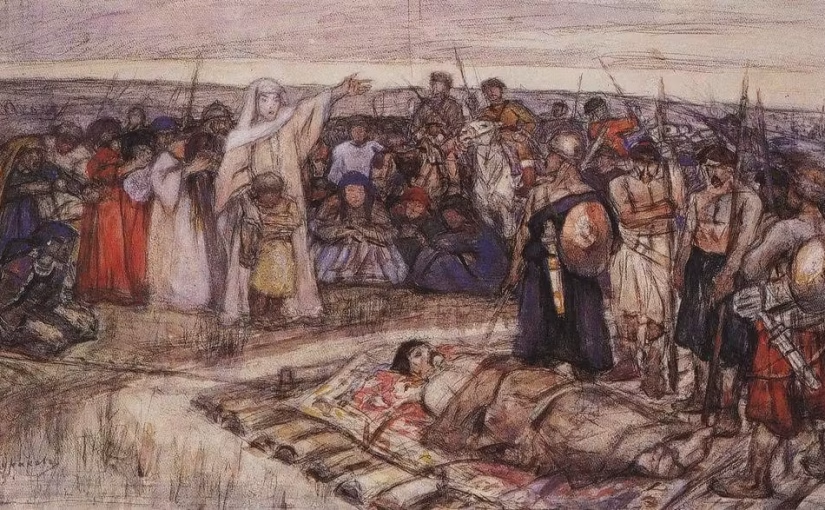
In the 10th Century, the Eastern European land of Rus was a collection of tribes who co-operated with one another for the primary purpose of trade. However, the tribes would often feud with one another, such as in the 9th Century when Slavic and Finnic tribes in Rus waged war on one another. In pursuit of peace, both the Slavs and Fins sought peace by both being governed by the Viking Ruler, Riurik. Riurik’s clan, the Varagians, had been “drove […] back beyond the sea” by the very same Slavic and Finnic tribes in an effort to establish self determination. Across the next few decades, the Varagians extended their rule over the lands of Rus all the way down to the now Ukrainian city of Kiev.
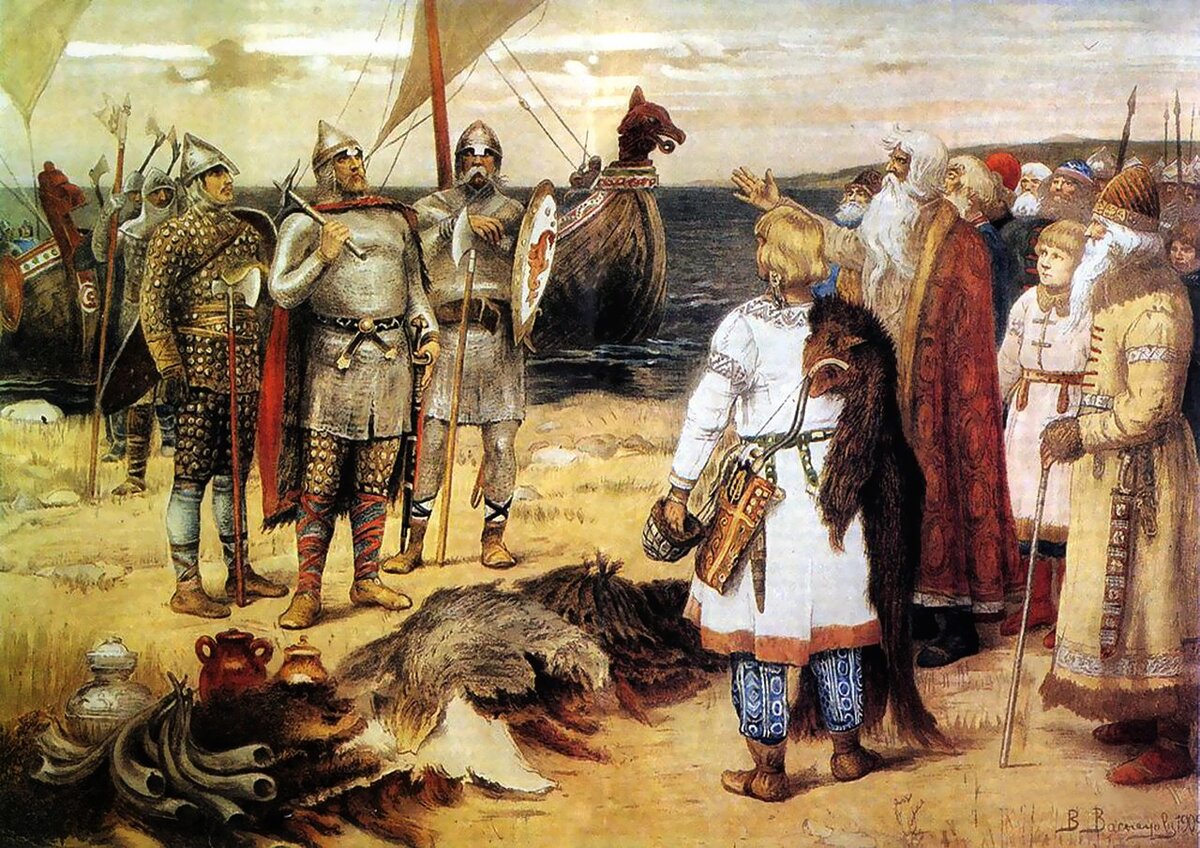
Oleg, the warrior who had conquered Kiev following Riurik’s death in 879, had a daughter who he named Olga. She married Igor, the son of Riurik and the pair soon became one of the most powerful and most loving marriages in Eastern Europe. They had one son, Syvatoslov. Upon the death of Oleg, Igor came to become Prince of Kiev and was considered a greedy, aggressive and unsuccessful ruler. In his two military expeditions to the Byzantine Empire, his fleets were destroyed by Greek Fire, although the peace settlement eventually led to a trade agreement. He extended Kiev’s authority over the neighbouring East Slavic tribes and the Pechenegs
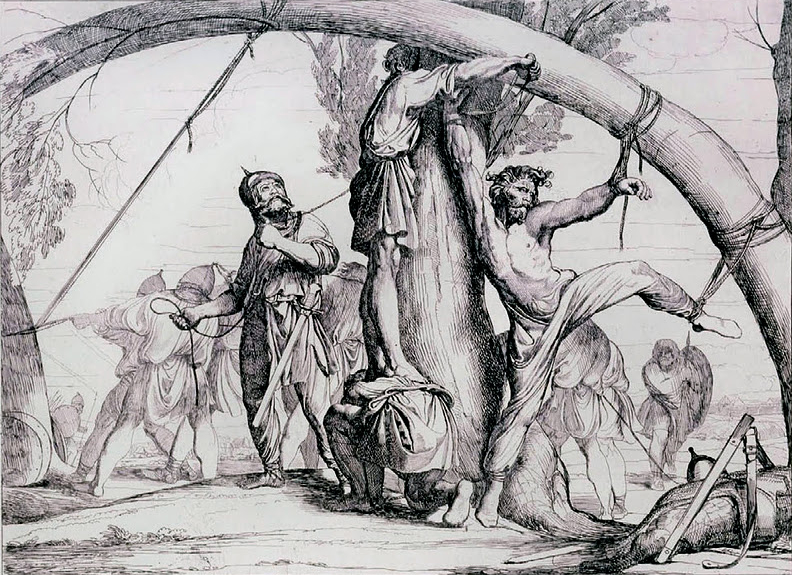
Upon Igor’s ascension to the throne, a rival tribe, known as the Drevlians, stopped paying tribute to Kiev in 912. By 945, Igor went with his army to the Drevlian capital of Iskorosten. Intimidated by the sight, the Drevlians seceded and began paying the tribute once more. However, Igor returned for more tribute payments than he was due. In response, the Drevlians decided to brutally murder him.
They had bent down two birch trees to the prince’s feet and tied them to his legs; then they let the trees straighten again, thus tearing the prince’s body apart.
Leo the Deacon, a Byzantine historian and chronicler
Following the death of Igor, the crown of Kiev fell to his infant son, Syvatoslov. However, due to the young age of the boy, his mother, Olga, claimed the regency until the boy was of age. Whilst many regents are often passive and are largely there to secure the position of the crown until the successor comes of age, Olga had much different ideas. Upon hearing of her husband’s brutal murder, she swore vengeance on the Drevlians and vowed to bring their tribe to a brutal end.
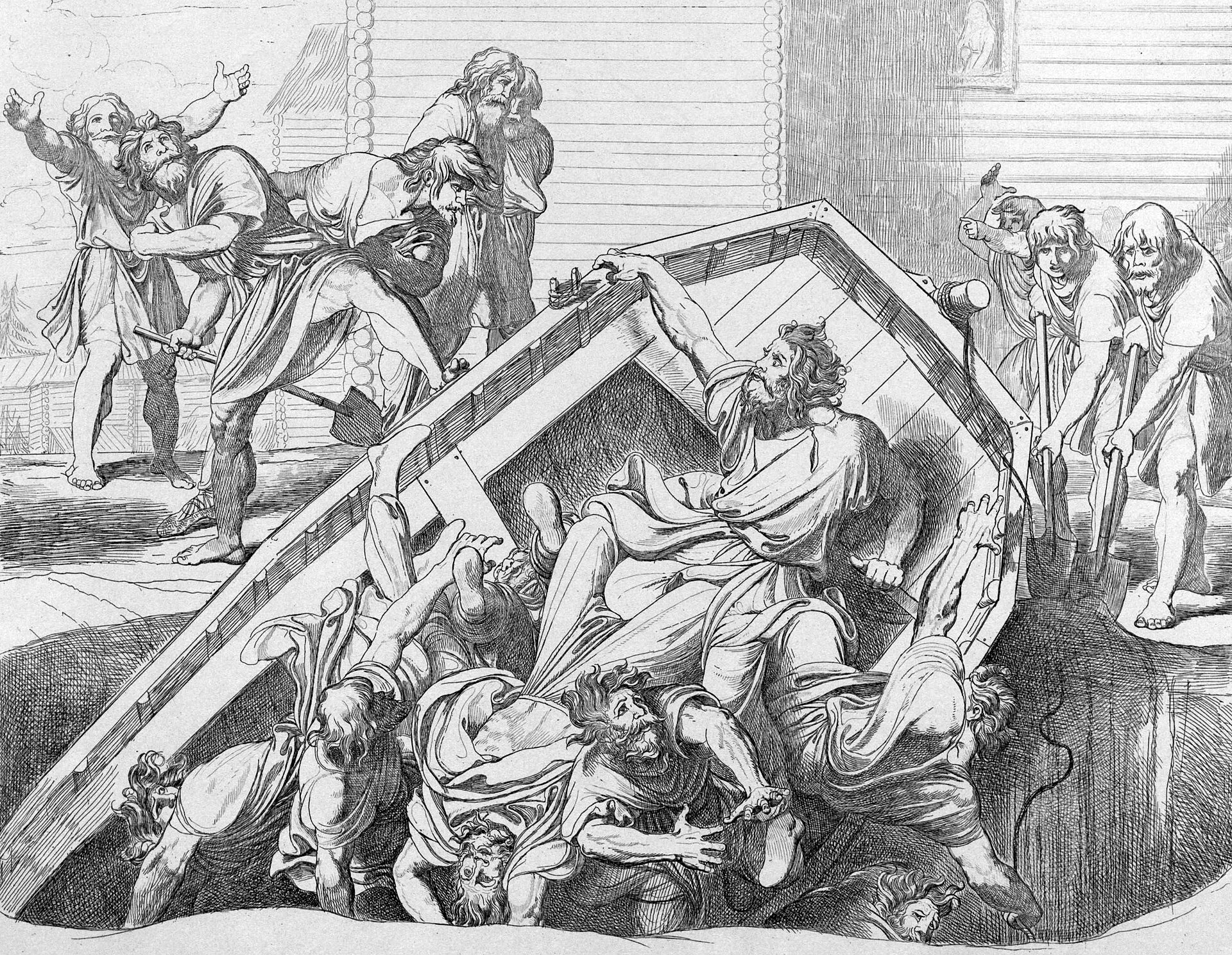
Her vengeance began when the Drevlians proposed that the recently widowed Olga marry the Drevlian Prince Mal. In response, Olga told the Drevlian emissaries to come back the next day while she considered the offer. Taking this as a good sign, the Drevlians left by boat and returned the next morning, where a group of Kievans picked up the boat and carried it across town. The ambassadors initially saw this as a sign of gratitude and welcoming, before the boat, with them inside, was thrown into a ditch that Olga had ordered to be dug the night before. The emissaries were subsequently buried alive. As they were buried, Olga allegedly kneeled next to the ditch and “inquired whether they found the honour to their taste.”
Immediately after the first diplomatic party was buried alive, Olga sent a message to the Drevlians, requesting a second group of ambassadors. Unaware of the fate of the first group, a second group of men arrived, where they were offered a cleaning at a nearby bathhouse. Once the Drevlians were inside, Olga set fire to the bathhouse, beginning at the door, leaving the men trapped inside to burn to death. Olga offered another “olive branch” to the Drevlians, asking to gather as much mead as they could in Iskorosten, the city where her husband was killed, claiming to intending to “weep over his grave and hold a funeral feast for him.”
As Olga and her delegation arrived, they did as they promised: they wept over his grave and held a feast for him just outside of the city of Iskorosten. However, as the Drevlians drank and partied, the Kievan delegation abstained. Once the Drevlians were sufficiently drunk, Olga ordered her men to massacre the entire gathering, herself allegedly murdering some of the men personally. Whilst 5,000 Drevlians were murdered at the feast, Olga’s revenge was not yet complete.
After the massacre, she led her army to the city and began to lay siege. For years, however, it remained unsuccessful. That was, until, Olga devised a plan. She first sent a message to the Drevlians.
Why do you persist in holding out? All your cities have surrendered to me and submitted to tribute, so that the inhabitants now cultivate their fields and their lands in peace. But you had rather die of hunger, without submitting to tribute.
Olga’s message to the Drevlian forces at Iskorosten
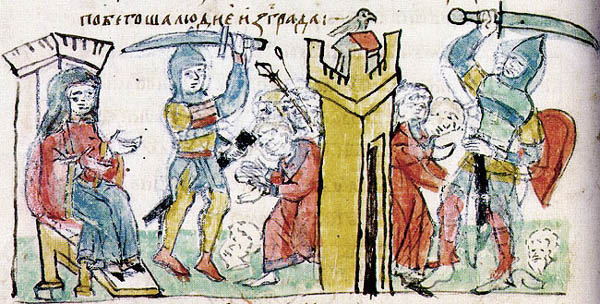
The Drevlians responded, claiming that they feared she still sought vengeance against them for the murder of Igor, something that Olga vehemently denied, claiming that the events of the feast and the diplomatic party murders had been enough for her. She instead asked for “three pigeons … and three sparrows from each house.” The Drevlians, rejoicing at the thought of the siege ending, gave her what she asked for. Upon receiving the birds, she ordered her army to tie a piece of sulphur bound by cloth to them. Then, once night fell, she ordered her men to set the sulphur aflame and release the birds. Once they returned to their nests in the houses of Iskorosten, they lit the highly flammable houses ablaze. Those who tried to escape were either massacred or taken as slaves. The survivors of the fire were forced to pay tribute.
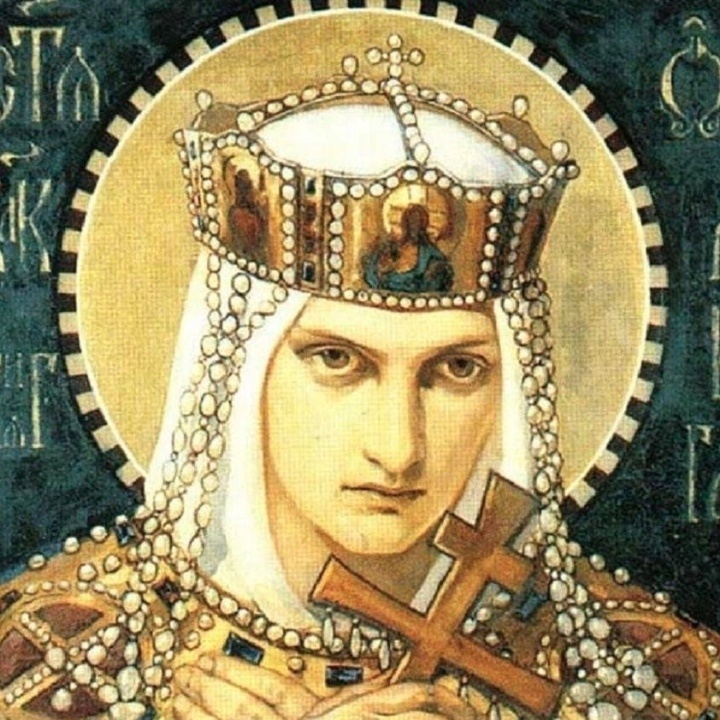
Following her vengeance against the Drevlians, she was proposed marriage multiple more times, including by Constantine VII of the Byzantine Empire. She rejected every single one. Once her son rose to power, he allowed his mother to continue domestic affairs while he combatted foreign wars, during which time she created one of the first modern tax systems in Eastern Europe. She converted to Orthodox Christianity 957, taking the name Helena, before dying in 969. In 1547, she was canonised by the Russian Orthodox Church for being the first ruler of Kiev to convert to Christianity which laid foundational groundwork for the religion in the region.