The Battle of Stamford Bridge

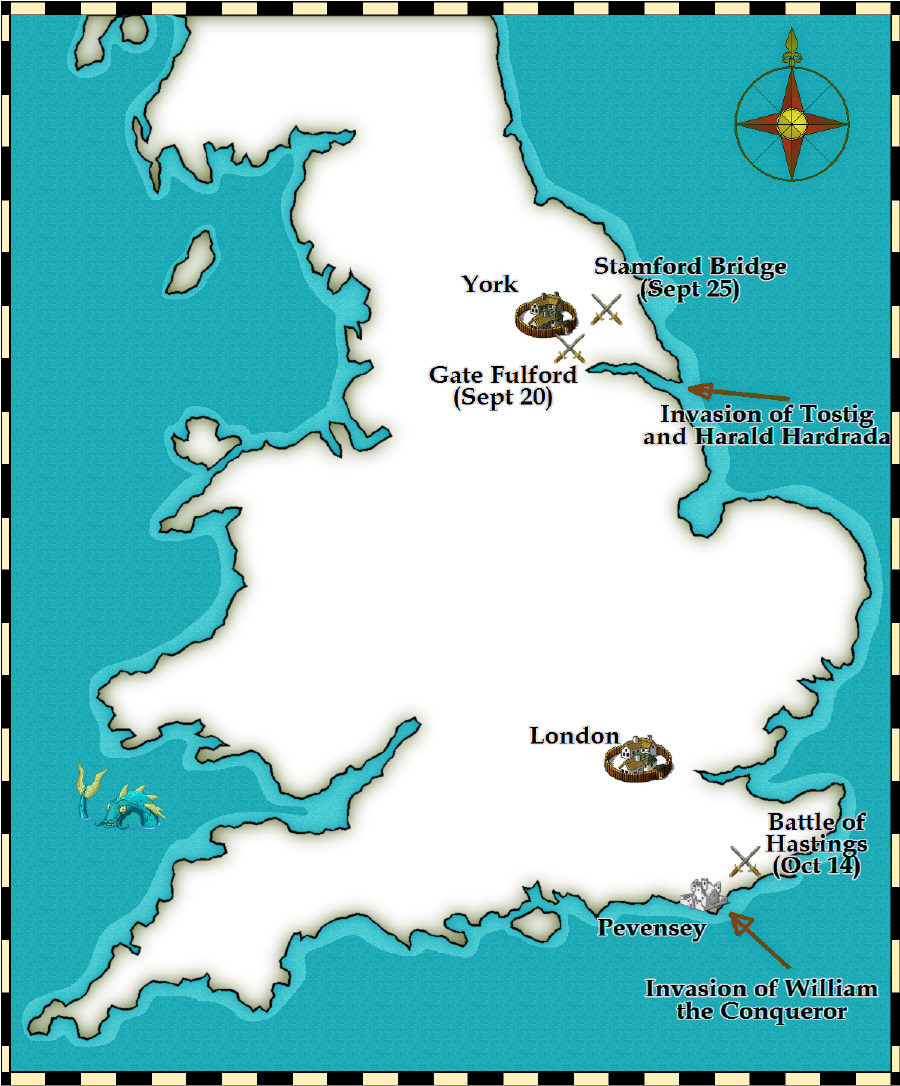
Just five days after suffering defeat at the Battle of Fulford, England’s fortunes changed dramatically. King Harold Godwinson, having learned of Harald Hardrada’s victory in northern England, acted with astonishing speed. Rather than waiting for reinforcements, Harold gathered his household troops—the elite housecarls—and every available soldier he could muster before marching nearly 190 miles (305 km) from London to Yorkshire in just four days. It was one of the fastest military marches recorded in medieval Europe.

A map of England, demonstrating the distance between London and York

Meanwhile, Harald Hardrada believed his campaign was progressing exactly as planned. Following his victory at Fulford, the city of York had agreed to submit to the Norwegian king. The city’s leaders promised to formally surrender and hand over hostages a few days later at Stamford Bridge, a small crossing over the River Derwent around eight miles east of York. Confident that the English king was still hundreds of miles away in the south, Hardrada marched to the meeting place with only part of his army. Many of his warriors left their armour behind aboard the fleet anchored at Riccall, believing they were travelling to a peaceful exchange rather than a battle. Although they still carried weapons, the absence of mail coats and helmets would soon prove disastrous.

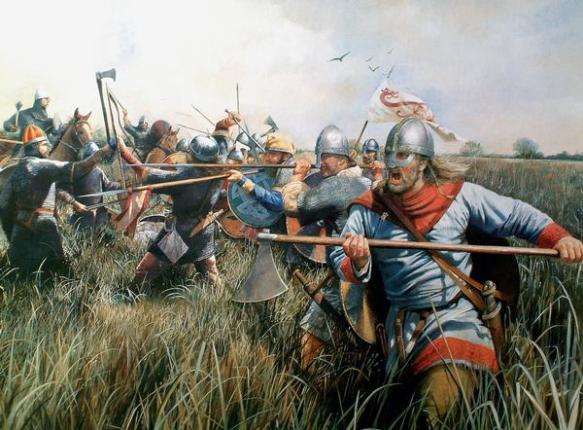
On the morning of September 25th 1066, the Norwegians received an unpleasant surprise. Emerging over the surrounding hills was the banner of King Harold Godwinson and the full English army. Realising they had been caught completely off guard, Harald Hardrada hurriedly organised his men into a shield wall while messengers raced back towards Riccall to summon the rest of the Norwegian army under Eystein Orre. Every minute they could delay the English advance increased the chances that reinforcements would arrive. According to later Norse tradition, that delay came from a single extraordinary warrior. As the English army approached Stamford Bridge, one enormous Viking is said to have taken up position on the narrow wooden crossing. Wielding a massive Dane axe, he allegedly held off dozens of English soldiers by himself, cutting down anyone who attempted to cross. The story claims that the lone warrior was finally killed only when an English soldier floated beneath the bridge in a barrel and thrust a spear upwards through the gaps in the planks.

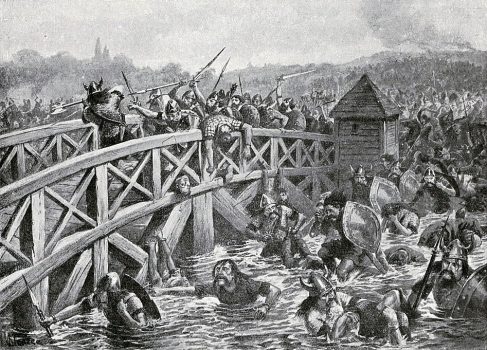
An illustration of the lone Viking fending off the English Army

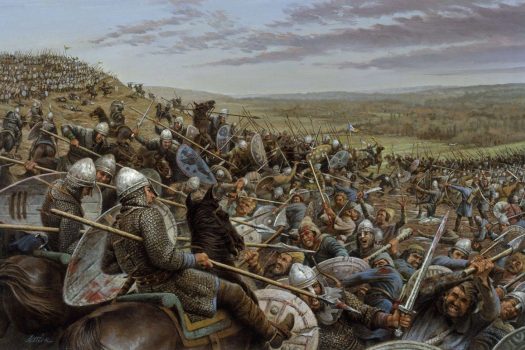
Whether this duel actually happened is impossible to know. The story first appears in later Norse sagas rather than contemporary English accounts, and many historians regard it as legendary. Nevertheless, it remains one of the most famous tales of the Viking Age and illustrates the fierce reputation of Norse warriors. Whatever delayed Harold’s advance, it gave Hardrada enough time to form his army into a defensive position. The battle began with the English advancing against the Norwegian shield wall. Harold’s experienced housecarls, armed with heavy two-handed axes, clashed with Viking warriors in brutal hand-to-hand combat. For a time the Norwegians held firm, and the fighting was fierce across the line. In the thick of the battle, Harald Hardrada himself fought at the front of his army. According to the Icelandic historian Snorri Sturluson, the sixty-year-old king wore no armour, believing speed and mobility were more valuable than protection. Towering over many of his men, Hardrada reportedly fought with characteristic ferocity until an English arrow struck him in the throat, killing him almost instantly.

The death of their king sent shockwaves through the Norwegian army. Command then passed to Tostig Godwinson, Harold’s estranged brother. According to several medieval sources, Harold paused the fighting and offered Tostig his old earldom back if he abandoned the invasion. Tostig refused, instead asking what Harald Hardrada would receive. Harold reportedly replied that, because the Norwegian king was so tall, he would grant him “seven feet of English ground – or perhaps a little more.” Whether these words were actually spoken is uncertain, but they became one of the most famous exchanges in medieval history.

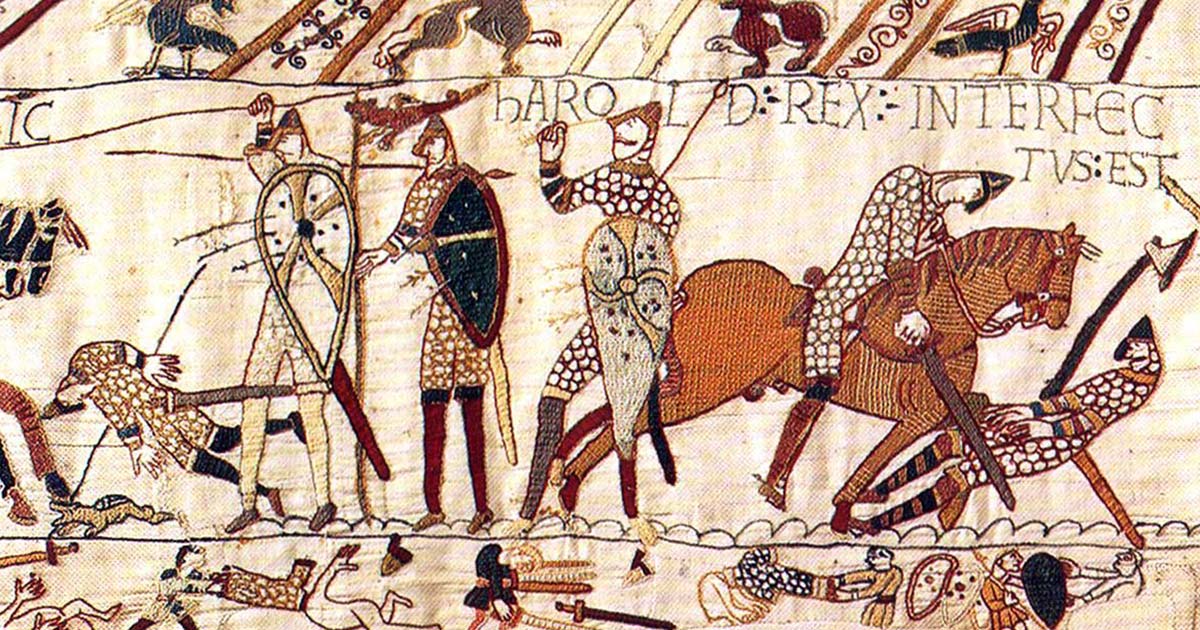
A painting of Hardrada being slain

Soon afterwards, Eystein Orre finally arrived from Riccall with the remaining Norwegian troops after running several miles in full armour under the late September sun. Exhausted before they even reached the battlefield, they nevertheless launched a desperate counterattack, remembered in Norse tradition as Orre’s Storm. The assault briefly checked the English advance but quickly lost momentum as fatigue overwhelmed the reinforcements. By late afternoon, the Norwegian army collapsed. Thousands of Viking warriors were killed, including Harald Hardrada, Tostig Godwinson and many of Norway’s leading nobles. So devastating were the losses that, according to the Anglo-Saxon Chronicle, only 24 of the approximately 300 ships that had carried the invasion force to England were needed to transport the survivors home.

The Battle of Stamford Bridge is often regarded as marking the end of the Viking Age in England. Although Scandinavian influence would remain strong around the North Sea, no Viking king would ever again mount such a serious attempt to conquer the English throne. Yet Harold Godwinson had little time to celebrate. Just three days after his victory, news arrived that the winds in the English Channel had finally changed. William, Duke of Normandy, had landed on the south coast with his invasion army. Harold immediately turned his exhausted troops around and began another forced march – this time nearly 250 miles back towards London. Less than three weeks after Stamford Bridge, England’s fate would be decided once more on the battlefield, at Hastings. There, Harold’s greatest triumph would be followed by his greatest defeat, and the course of English history would change forever.

The Battle of Fulford

In the summer of 1066, England stood on the brink of invasion. Following the death of Edward the Confessor, Harold Godwinson had been crowned king, but his claim was disputed by rivals both at home and abroad. Expecting an invasion from William, Duke of Normandy, Harold stationed his army along England’s southern coastline. Day after day, however, the invasion never came. Unfavourable southernly winds trapped William’s fleet in Normandy, preventing him from crossing the English Channel.

The Bayeux tapestry depicting the Norman men preparing their supplies

By early September, Harold faced a different problem. England’s fyrd – a militia made up largely of farmers – could not remain under arms forever. Harvest season had arrived, food supplies were running low, and many men needed to return home to gather their crops before winter. Reluctantly, Harold dismissed much of his army and navy, believing that the threat of invasion had passed for the year. It was at precisely this moment that disaster struck.

While the winds held William in France, they carried Harald Hardrada, King of Norway, across the North Sea. Accompanied by around 300 longships and perhaps 10,000 warriors, Harald was joined by Tostig Godwinson, Harold’s exiled younger brother. Tostig had once been Earl of Northumbria before being driven into exile after a rebellion. Bitter towards his brother for refusing to restore him to power, he now sought revenge by helping Hardrada seize the English throne. The Norwegian fleet landed on the Yorkshire coast before sailing up the Humber and River Ouse. As they advanced inland, villages were plundered for food and supplies, while terrified communities fled before the Viking army. Their objective was not simply to raid but to conquer. The ancient city of York, England’s second-largest city, stood directly in their path.

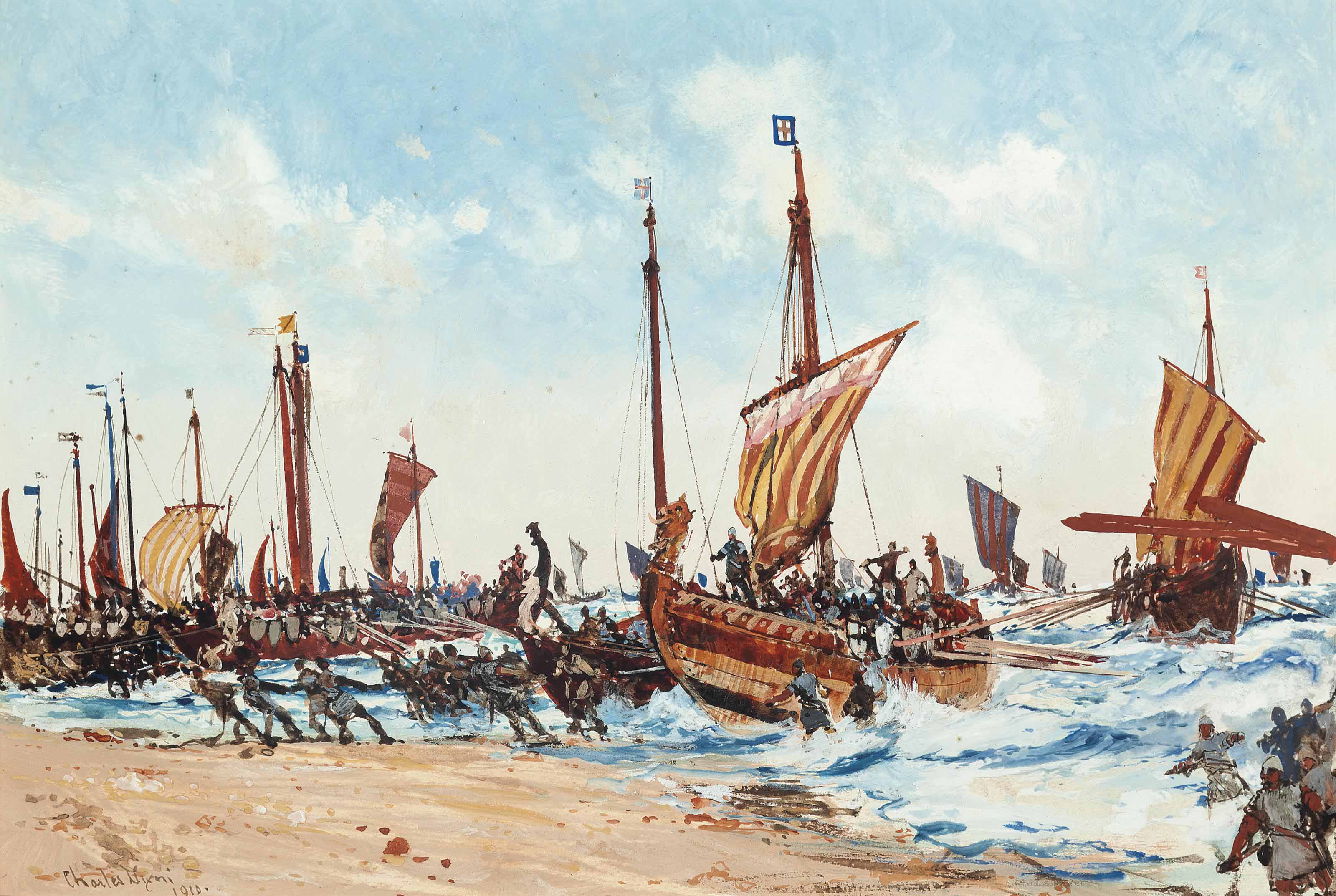
A depiction of the Viking landing in York

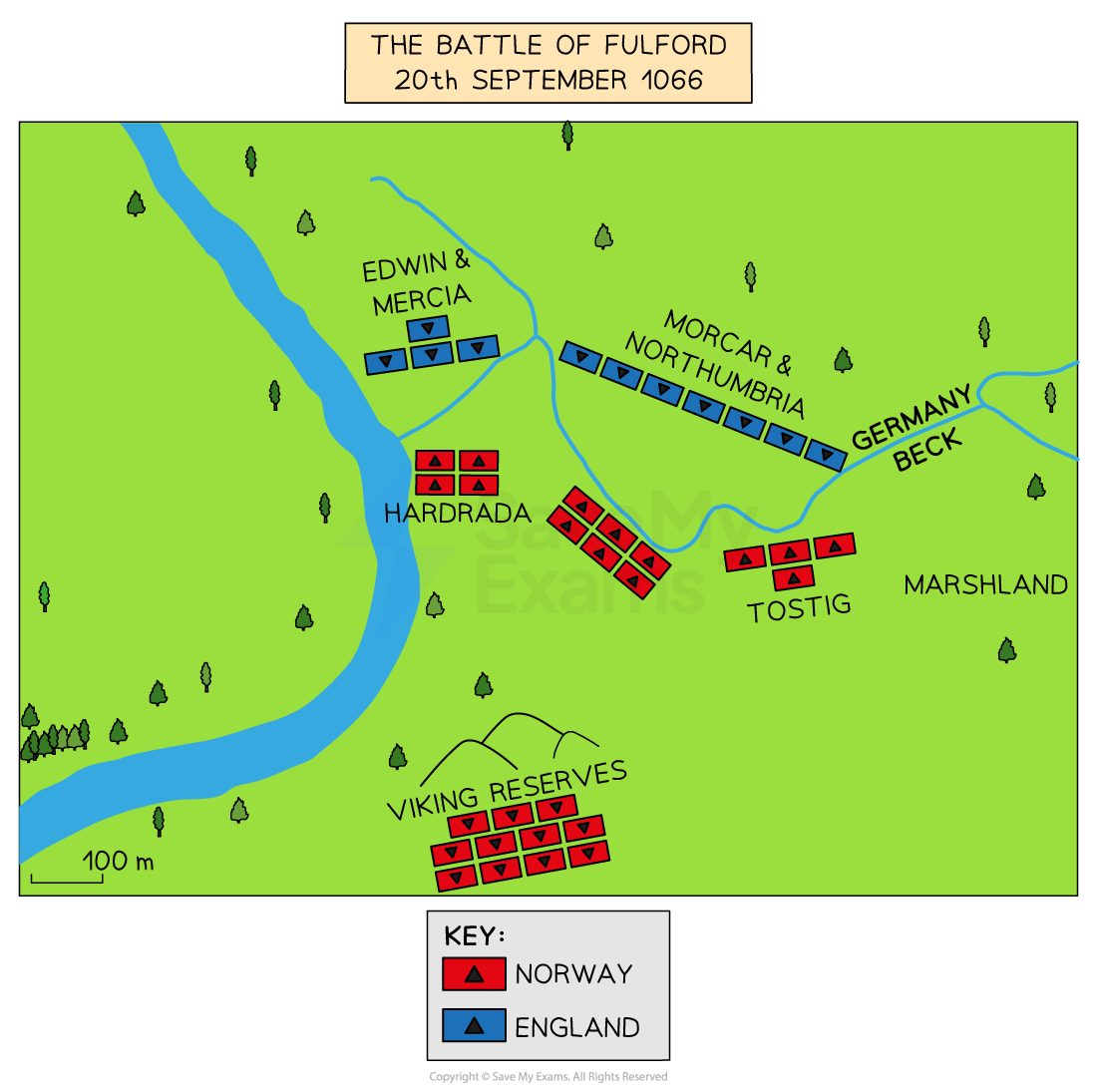
To stop the invasion, the defence of northern England fell to two powerful earls: Edwin, Earl of Mercia, and Morcar, Earl of Northumbria. Together they assembled the regional fyrd and marched south from York to intercept the invaders before they could reach the city. On September 20th 1066, the two armies met just outside York near the village of Fulford. The battlefield heavily favoured the defenders – or so it first appeared. The English army formed a shield wall on a strip of firm ground between the River Ouse to one side and a stretch of marshland crossed by the Cock Beck on the other. This narrow front prevented the Norwegians from bringing their superior numbers to bear all at once. If the English line held, the Vikings would be forced into a costly frontal assault. Harald Hardrada nevertheless accepted battle.

The fighting began with both armies crashing together in a brutal contest of shields, spears and axes. Contemporary accounts and later Norse sagas describe desperate hand-to-hand combat lasting for hours. Morcar is said to have fought fiercely at the front of the English line, encouraging his men as they resisted repeated Norwegian assaults. The narrow battlefield initially prevented either side from gaining a decisive advantage. Gradually, however, the tide began to turn. As the marshland was flooded by the incoming tide, parts of the English line became compressed against the higher ground, creating confusion among the defenders. Hardrada recognised the opportunity. Rather than continuing a simple frontal attack, he committed fresh troops that had been held in reserve, extending his line around the weakened English flank. Once the English formation began to buckle, the Norwegian warriors poured through the gap.

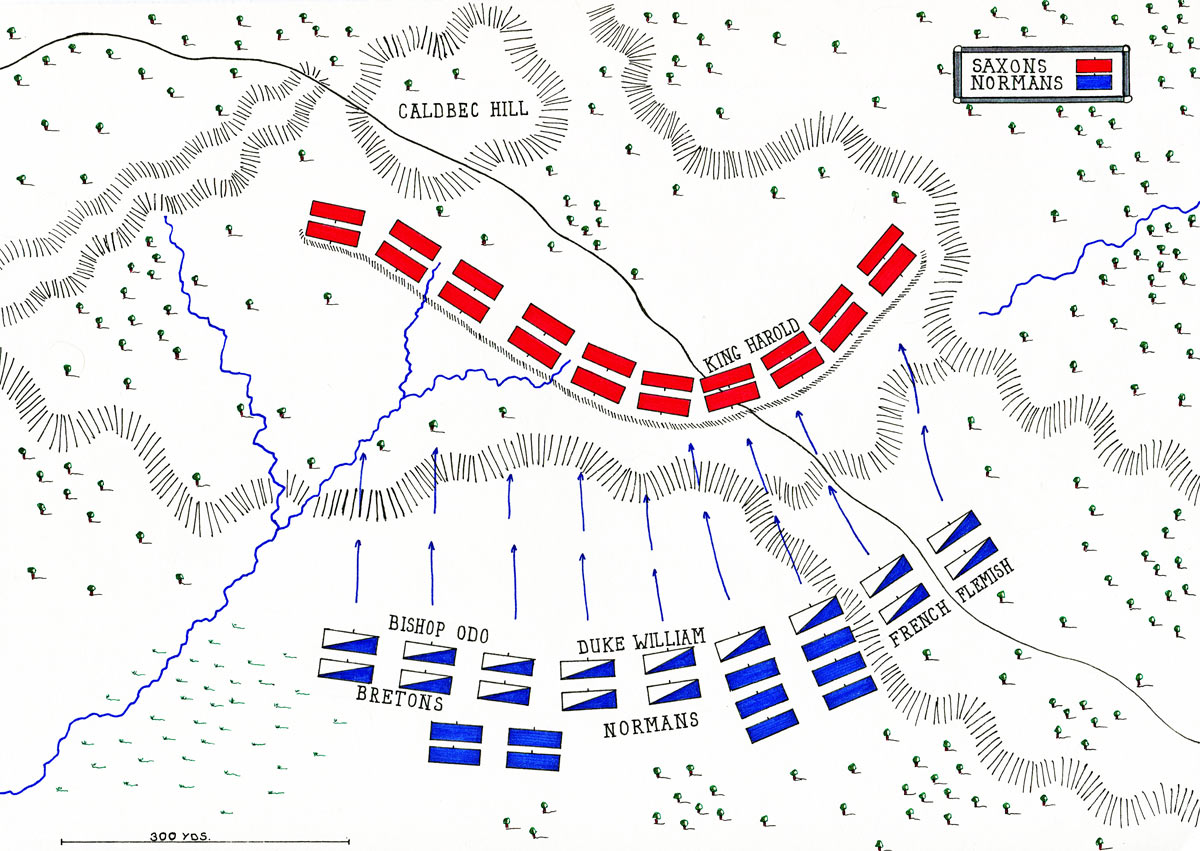
A modern map of the battle

The battle quickly became a rout. Many English soldiers attempting to retreat were trapped between the marshes and the River Ouse, where countless men were cut down or drowned trying to escape. Others fled back towards York pursued by the victorious Vikings. The defeat was devastating for northern England. Morcar and Edwin survived, but their army had been shattered. With no force left capable of defending the city, York negotiated its surrender to Hardrada only a day later. The Norwegian king appeared to be on the verge of fulfilling his claim to the English crown. Yet victory at Fulford would prove to be short-lived. When news of the invasion reached Harold in London, he reacted with astonishing speed. Gathering his household troops and every available soldier he could muster along the way, he marched nearly 190 miles in just four days – one of the most remarkable forced marches in medieval military history. Rather than waiting for Hardrada to consolidate his position in the north, Harold intended to strike immediately. Only five days after the Battle of Fulford, the two kings would meet at Stamford Bridge, in one of the bloodiest and most decisive battles ever fought on English soil.

Claimants to the English Crown

When Edward the Confessor died on January 5th 1066, he left behind one enormous problem: he had no children to inherit the throne. Unlike today, there was no fixed law stating that the eldest child automatically became monarch. Instead, the succession often depended on blood ties, promises made by previous kings, military strength and, crucially, the support of England’s leading nobles. Within days of Edward’s death, four men emerged as serious claimants to the English crown.

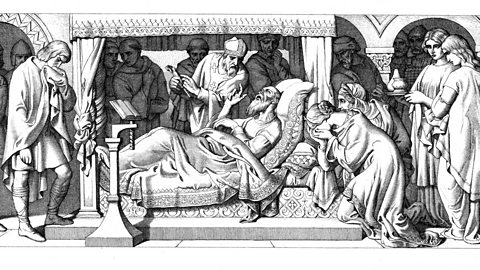
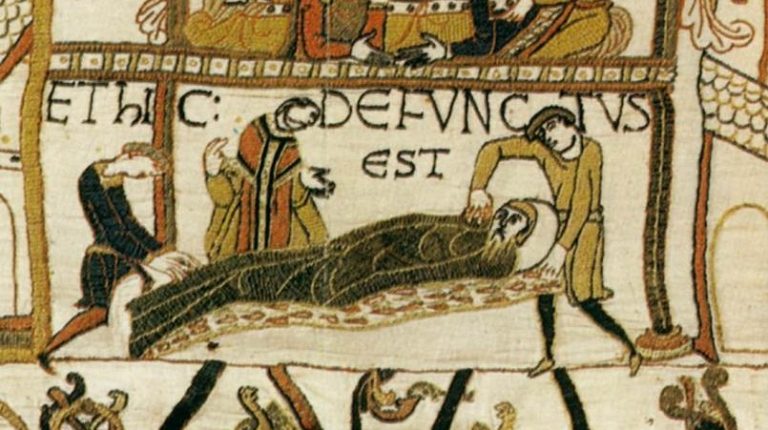
A tapestry of Edward the Confessor’s death

The strongest hereditary claim belonged to Edgar Ætheling. Edgar was Edward’s great-nephew and the last surviving male descendant of the ancient royal House of Wessex that had ruled England before the Danish invasions. By blood alone, many believed he should inherit the throne. However, Edgar was only around fourteen or fifteen years old and had little political or military experience. With England facing the threat of foreign invasion, many nobles doubted that a teenage king could defend the kingdom.

Another claimant was Harald Hardrada, the formidable King of Norway. Before becoming king, Harald had spent decades fighting across Europe and the Byzantine Empire as a mercenary commander, earning a reputation as one of the greatest warriors of his age. His claim dated back to an agreement made a generation earlier. King Magnus of Norway and King Harthacnut of Denmark and England had agreed that if either died without an heir, the survivor would inherit both kingdoms. Harthacnut died childless in 1042, but instead of a Norwegian king taking the English throne, the English nobles invited Edward the Confessor to become king. Harald, who later succeeded Magnus as King of Norway, believed that this agreement meant the English crown now rightfully belonged to him.

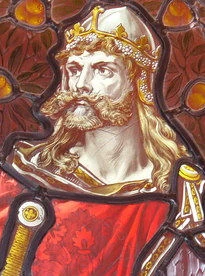
A glass window portrait of Hardrada

The most powerful English noble was Harold Godwinson, Earl of Wessex. Harold came from the immensely influential Godwin family. His father, Earl Godwin, had once been implicated in the death of Edward’s younger brother, Alfred Ætheling, who had been captured, blinded and later died after attempting to return to England during the reign of the Danish king Harold Harefoot. Although this created lasting tension between Edward and the Godwins, the two sides eventually reconciled. Edward married Harold’s sister, Edith, making Harold the king’s brother-in-law. Over the following years Harold became England’s leading military commander, Edward’s closest adviser and, in practice, the most powerful man in the kingdom after the king himself.

A portrait of Godwinson

The final claimant was William, Duke of Normandy. Edward’s mother, Emma of Normandy, was a Norman princess, and Edward himself had spent nearly three decades living in Normandy while England was ruled by the Danish kings Sweyn Forkbeard, Cnut and their sons. During this exile, Edward formed close ties with the Norman nobility, including William. William later claimed that Edward had promised him the English throne. To strengthen this claim further, William also argued that Harold Godwinson had sworn a sacred oath over holy relics while visiting Normandy, promising to support William’s succession. Harold would later insist that this oath had been made under duress and was therefore invalid.

A painting of William, Duke of Normandy

Edward died with Harold Godwinson at his bedside. According to Harold, the dying king entrusted him with the defence of England and named him as his successor. Whether Edward actually intended this remains one of the great historical debates, but the Witenagemot – the council of England’s leading nobles and churchmen – accepted Harold’s claim. He was crowned King Harold II in Westminster Abbey on January 6th 1066, just one day after Edward’s death. Yet while Harold now wore the crown, three other men believed it belonged to them. Before the year was over, their competing claims would plunge England into one of the most famous succession crises in European history, culminating in three great battles that changed the country forever.

The Revenge of Olga of Kiev

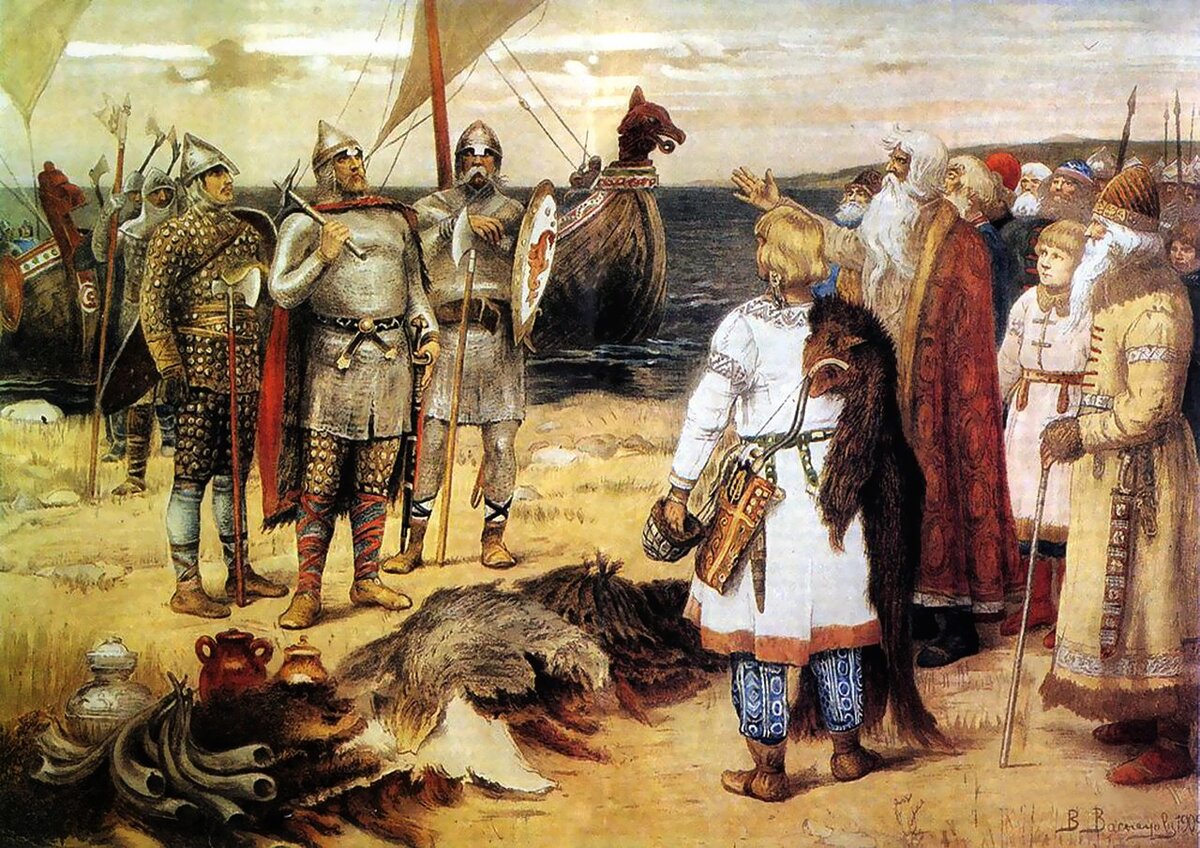
In the 10th Century, the Eastern European land of Rus was a collection of tribes who co-operated with one another for the primary purpose of trade. However, the tribes would often feud with one another, such as in the 9th Century when Slavic and Finnic tribes in Rus waged war on one another. In pursuit of peace, both the Slavs and Fins sought peace by both being governed by the Viking Ruler, Riurik. Riurik’s clan, the Varagians, had been “drove […] back beyond the sea” by the very same Slavic and Finnic tribes in an effort to establish self determination. Across the next few decades, the Varagians extended their rule over the lands of Rus all the way down to the now Ukrainian city of Kiev.

A painting Riurik and his two brothers coming to reestablish the peace

Oleg, the warrior who had conquered Kiev following Riurik’s death in 879, had a daughter who he named Olga. She married Igor, the son of Riurik and the pair soon became one of the most powerful and most loving marriages in Eastern Europe. They had one son, Syvatoslov. Upon the death of Oleg, Igor came to become Prince of Kiev and was considered a greedy, aggressive and unsuccessful ruler. In his two military expeditions to the Byzantine Empire, his fleets were destroyed by Greek Fire, although the peace settlement eventually led to a trade agreement. He extended Kiev’s authority over the neighbouring East Slavic tribes and the Pechenegs

Upon Igor’s ascension to the throne, a rival tribe, known as the Drevlians, stopped paying tribute to Kiev in 912. By 945, Igor went with his army to the Drevlian capital of Iskorosten. Intimidated by the sight, the Drevlians seceded and began paying the tribute once more. However, Igor returned for more tribute payments than he was due. In response, the Drevlians decided to brutally murder him.

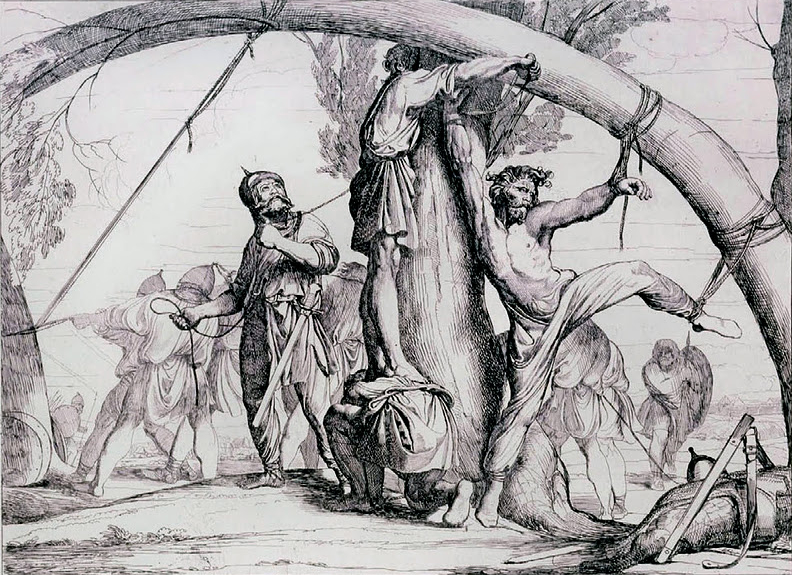
They had bent down two birch trees to the prince’s feet and tied them to his legs; then they let the trees straighten again, thus tearing the prince’s body apart.

Leo the Deacon, a Byzantine historian and chronicler
An illustration of the murder of Igor of Kiev

Following the death of Igor, the crown of Kiev fell to his infant son, Syvatoslov. However, due to the young age of the boy, his mother, Olga, claimed the regency until the boy was of age. Whilst many regents are often passive and are largely there to secure the position of the crown until the successor comes of age, Olga had much different ideas. Upon hearing of her husband’s brutal murder, she swore vengeance on the Drevlians and vowed to bring their tribe to a brutal end.

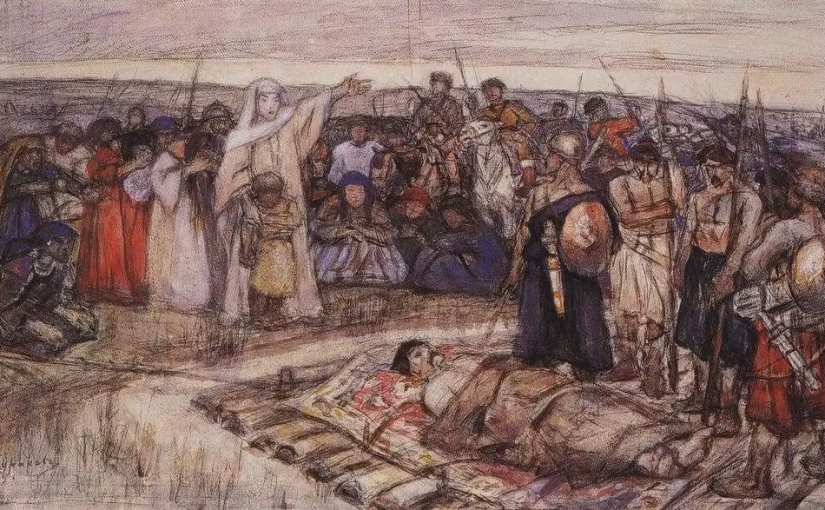
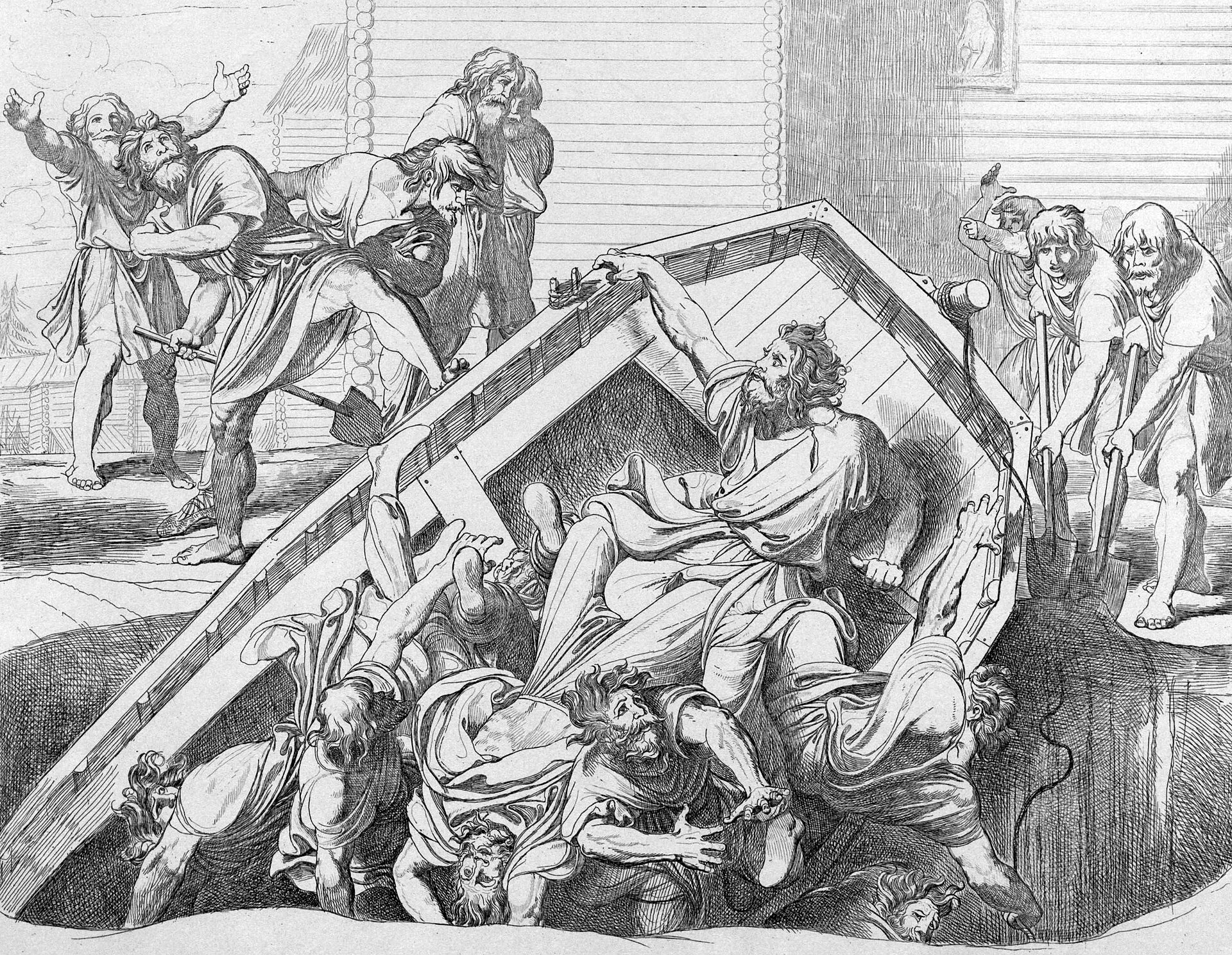
Her vengeance began when the Drevlians proposed that the recently widowed Olga marry the Drevlian Prince Mal. In response, Olga told the Drevlian emissaries to come back the next day while she considered the offer. Taking this as a good sign, the Drevlians left by boat and returned the next morning, where a group of Kievans picked up the boat and carried it across town. The ambassadors initially saw this as a sign of gratitude and welcoming, before the boat, with them inside, was thrown into a ditch that Olga had ordered to be dug the night before. The emissaries were subsequently buried alive. As they were buried, Olga allegedly kneeled next to the ditch and “inquired whether they found the honour to their taste.”

An illustration of the burial of the Drevlian Emissaries

Immediately after the first diplomatic party was buried alive, Olga sent a message to the Drevlians, requesting a second group of ambassadors. Unaware of the fate of the first group, a second group of men arrived, where they were offered a cleaning at a nearby bathhouse. Once the Drevlians were inside, Olga set fire to the bathhouse, beginning at the door, leaving the men trapped inside to burn to death. Olga offered another “olive branch” to the Drevlians, asking to gather as much mead as they could in Iskorosten, the city where her husband was killed, claiming to intending to “weep over his grave and hold a funeral feast for him.”

As Olga and her delegation arrived, they did as they promised: they wept over his grave and held a feast for him just outside of the city of Iskorosten. However, as the Drevlians drank and partied, the Kievan delegation abstained. Once the Drevlians were sufficiently drunk, Olga ordered her men to massacre the entire gathering, herself allegedly murdering some of the men personally. Whilst 5,000 Drevlians were murdered at the feast, Olga’s revenge was not yet complete.

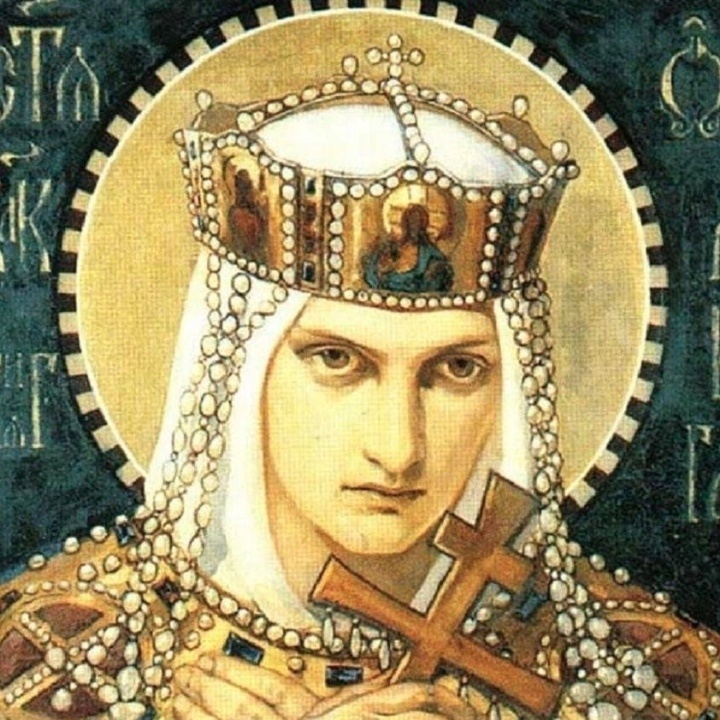
A painting of Olga

After the massacre, she led her army to the city and began to lay siege. For years, however, it remained unsuccessful. That was, until, Olga devised a plan. She first sent a message to the Drevlians.

Why do you persist in holding out? All your cities have surrendered to me and submitted to tribute, so that the inhabitants now cultivate their fields and their lands in peace. But you had rather die of hunger, without submitting to tribute.

Olga’s message to the Drevlian forces at Iskorosten

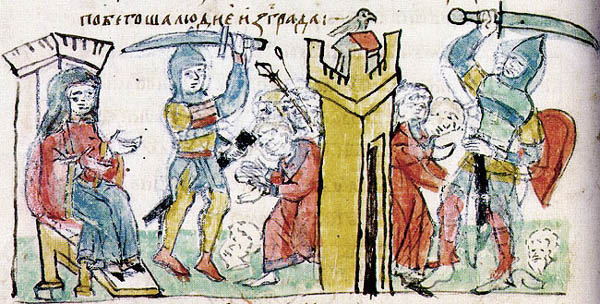
The Drevlians responded, claiming that they feared she still sought vengeance against them for the murder of Igor, something that Olga vehemently denied, claiming that the events of the feast and the diplomatic party murders had been enough for her. She instead asked for “three pigeons … and three sparrows from each house.” The Drevlians, rejoicing at the thought of the siege ending, gave her what she asked for. Upon receiving the birds, she ordered her army to tie a piece of sulphur bound by cloth to them. Then, once night fell, she ordered her men to set the sulphur aflame and release the birds. Once they returned to their nests in the houses of Iskorosten, they lit the highly flammable houses ablaze. Those who tried to escape were either massacred or taken as slaves. The survivors of the fire were forced to pay tribute.

An illustration of the burning of Iskorosten

Following her vengeance against the Drevlians, she was proposed marriage multiple more times, including by Constantine VII of the Byzantine Empire. She rejected every single one. Once her son rose to power, he allowed his mother to continue domestic affairs while he combatted foreign wars, during which time she created one of the first modern tax systems in Eastern Europe. She converted to Orthodox Christianity 957, taking the name Helena, before dying in 969. In 1547, she was canonised by the Russian Orthodox Church for being the first ruler of Kiev to convert to Christianity which laid foundational groundwork for the religion in the region.

The Assassination of Julius Caesar

In 509BC, the son of the king of Rome raped a noblewoman who then committed suicide. In response, Lucius Junius Brutus staged a coup and overthrew the king, Lucius Tarquinius Superbus. Brutus swore that no single man should hold absolute power, establishing the Roman Republic. Brutus became one of Rome’s First Consuls, a position in the Roman Republic where 2 people would share power to keep the other in check with advise from the Senate compromised of 900 Senators, before dying later that year.

A painting of Brutus swearing the oath that no one man should rule Rome, next to the body of the raped noblewoman

Nearly five centuries later, that principle would be tested. By 44 BC, Rome had been transformed by the rise of Julius Caesar. A highly successful general, Caesar had expanded Rome’s territories through his campaigns in Gaul before defeating his rival, Pompey, in a civil war. In the years that followed, he accumulated unprecedented political power. Caesar introduced a number of reforms, including land redistribution and debt relief, which earned him strong support among the Roman people.

At the same time, he received a growing number of honours from the Senate, with statues were erected in his likeness, and his authority continued to expand. In 44 BC, he was appointed Dictator Perpetuo, or dictator for life, a title that placed him above all other officials. To many senators, this development was deeply alarming. The Republic had been founded in opposition to monarchy, and Caesar’s position appeared to move Rome closer to one-man rule. Whether or not he intended to make himself king, the fear that he might do so was enough to provoke action.

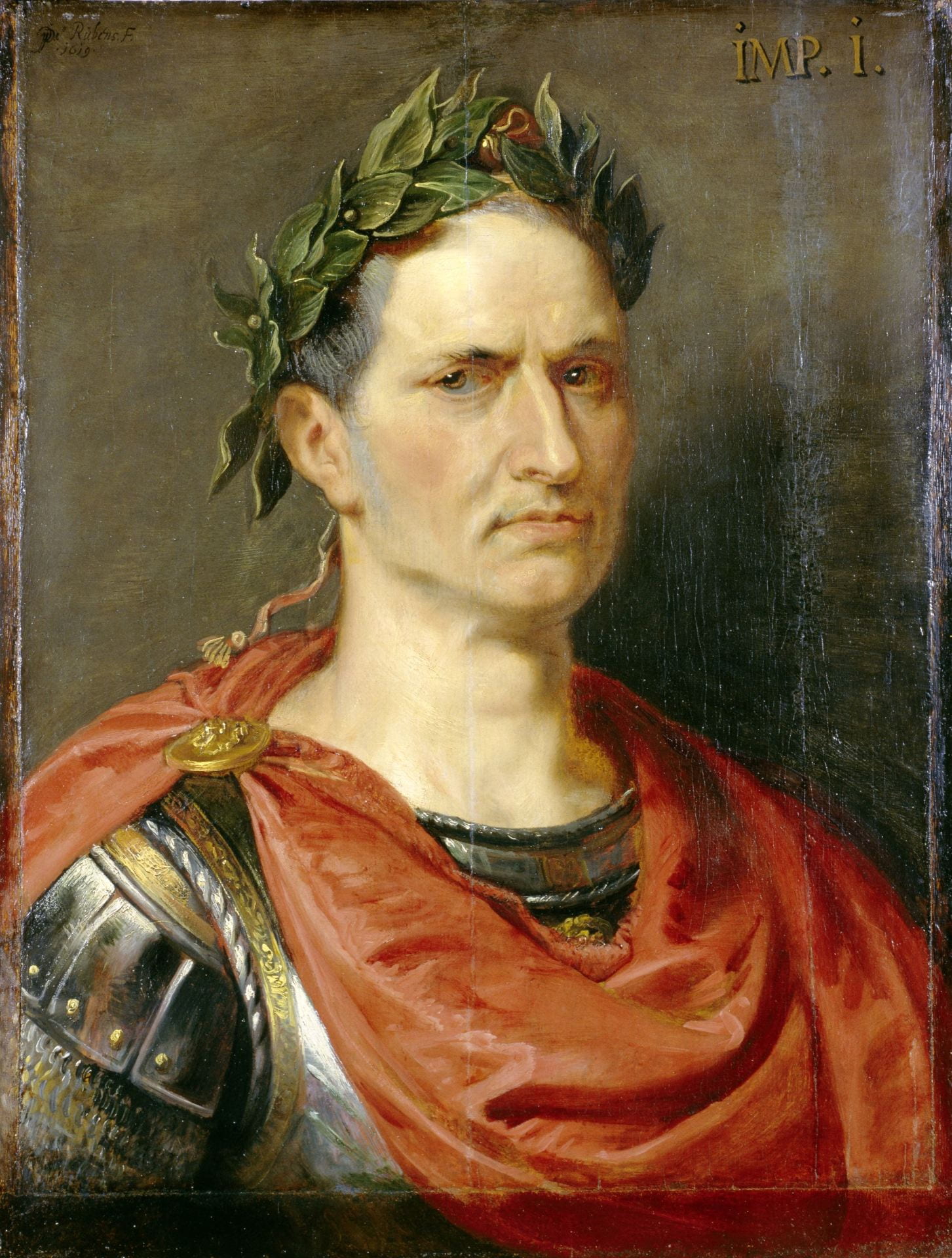
A painting of Caesar

A group of senators, later known as the Liberators, formed a conspiracy to assassinate Caesar. Among their leaders were Gaius Cassius Longinus, Decimus Junius Brutus Albinus, and Marcus Junius Brutus. Cassius had previously fought against Caesar during the civil war before being pardoned. Decimus Brutus had been one of Caesar’s most trusted generals, making his involvement particularly significant. Marcus Brutus, meanwhile, faced a personal and political dilemma. Though he had also opposed Caesar in the past, he had been forgiven and promoted. Caesar treated him with respect, and the two were closely connected. However, Brutus was also influenced by the ideals of the Republic and by his family’s historical role in overthrowing Rome’s last king.

The conspirators were not united by a single motive. Some feared tyranny, others resented Caesar’s dominance, and some were concerned about the loss of the Senate’s authority. In total, around 60 senators joined the plot. The conspirators chose to act during a meeting of the Senate on March 15th, known as the Ides of March. The meeting was to be held at the Theatre of Pompey, due to maintenance on the main Senate building. In the days before the meeting, Caesar is said to have received several warnings. A soothsayer, Spurinna, reportedly advised him to beware the Ides of March. His wife, Calpurnia, experienced troubling dreams of his death and urged him not to attend the Senate.

On the morning of the 15th, Caesar initially decided to remain at home. However, Decimus Brutus persuaded him to attend, arguing that it would be inappropriate to dismiss the Senate and that his absence might damage his authority. Caesar eventually agreed and set out for the meeting. When Caesar arrived at the Senate chamber, he was surrounded by the conspirators. At a prearranged signal, one of them approached him with a petition, while others moved into position. The first blow was struck by a senator known as Casca. In the moments that followed, the other conspirators joined in, attacking Caesar from all sides. Overwhelmed by the number of attackers, he was unable to defend himself.

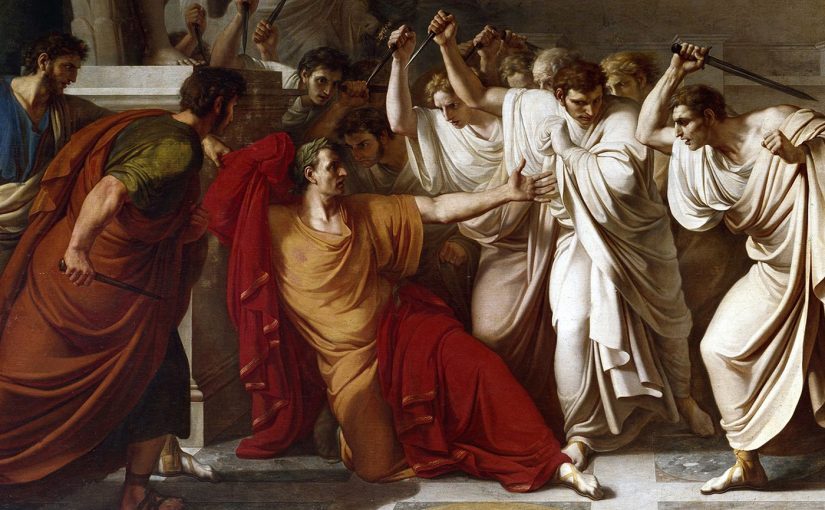
A painting of the assassination. Julius is depicted on one knee in the orange and red toga

Ancient writers such as Suetonius and Plutarch report that Caesar was stabbed 23 times, though only one of the wounds is believed to have been fatal. The exact sequence of the attack and the identity of those who delivered each blow remain uncertain. According to some accounts, Caesar stopped resisting when he saw Brutus among the attackers. His final words are not known for certain. The famous phrase “Et tu, Brute?” comes from William Shakespeare’s later play and is not confirmed by historical sources. Caesar fell at the base of a statue of Pompey, the former rival he had defeated years earlier.

The conspirators believed that killing Caesar would restore the Republic. Instead, it created instability. Rather than celebrating, many in Rome reacted with shock and anger. Caesar had been popular with the public, and his assassination led to unrest. At his funeral, Mark Antony delivered a speech that turned public opinion against the conspirators. Fearing retaliation, many of them fled Rome. In the years that followed, a series of civil wars broke out. Brutus and Cassius were eventually defeated in 42 BC, after which both men died by suicide. The Republic did not recover. In 27 BC, power was consolidated under Augustus, marking the transition from Republic to Empire.

A painting of the body of Brutus

The assassination of Julius Caesar remains one of the most debated events in history. Some view Marcus Junius Brutus as a defender of liberty, acting to prevent tyranny. Others see him as a traitor who betrayed a friend and helped bring about the end of the Republic. What is clear is that the conspirators failed in their ultimate aim. In attempting to preserve the Republic, they instead accelerated its collapse. The system they sought to protect proved unable to survive the removal of one man who had come to dominate it.

The Crossing of the Rubicon

By 50BC, Julius Caesar had cemented himself as one of the most powerful, most wealthy and most influential men in Rome. Following his success in conquering Gaul, he had amassed vast quantities of personal wealth. Prior to his conquest, he had formed an informal political alliance with Pompey, Rome’s most famous general, and Marcus Licinius Crassus, the richest man in Rome, which allowed Caesar to govern the territories of Cisalpine Gaul, Illyricum and Gallia Narbonensis.

A painting of Caesar accepting the surrender of Gallic leader, Vercingetorix

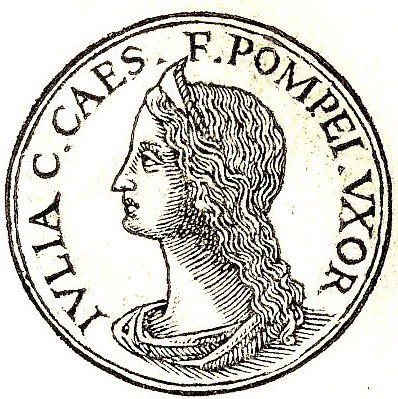
Historians call this arrangement the First Triumvirate. Although it had no legal basis, together the three men dominated Roman politics. Caesar gained the consulship in 59BC before securing an unprecedented five-year command in Gaul, while Pompey and Crassus used their influence in Rome to protect his interests. To strengthen the alliance further, Caesar married his daughter Julia to Pompey. By all accounts the marriage was a happy one, and for several years it helped maintain a genuine friendship between the two men. But the Triumvirate was built more on mutual advantage than mutual trust. Once that advantage disappeared, so too did the alliance.

The first blow came in 54BC when Julia died during childbirth. Pompey was devastated by her death, but politically it also removed the personal bond that had tied him to Caesar. A year later, Crassus invaded the Parthian Empire in search of military glory, only to be killed alongside much of his army at the disastrous Battle of Carrhae. With Crassus dead and Julia gone, the Triumvirate effectively ceased to exist. Rome’s two remaining strongmen were now left to compete against one another.

A depiction of Julia, daughter of Caesar

While Caesar continued winning spectacular victories in Gaul, Pompey remained in Rome. Increasingly, the Roman Senate viewed Pompey as the man best placed to defend the Republic against Caesar’s growing popularity. Many senators, particularly the conservative faction known as the Optimates, feared that Caesar’s immense wealth, battle-hardened army and popularity with the people would allow him to seize absolute power. They rallied behind Pompey, appointing him sole consul in 52BC during a period of political violence and unrest. Although Pompey still claimed to support the Republic, he was now closely aligned with many of Caesar’s fiercest political enemies.

As Caesar’s governorship of Gaul neared its end, the conflict came to a head. Under Roman law, a governor enjoyed legal immunity while commanding an army. The moment Caesar entered Italy as a private citizen, however, he could be prosecuted for alleged crimes committed during his consulship years earlier. His political opponents had made little secret of their intentions. Caesar believed that surrendering his command would almost certainly mean exile, political ruin, or even death.

An illustration of Senators urging Pompey to become sole consul

Caesar proposed a compromise. Both he and Pompey would simultaneously lay down their military commands, allowing neither man to possess an army while elections took place. Pompey showed some willingness to negotiate, but many senators refused to accept the proposal. Instead, they demanded that Caesar alone dismiss his legions and return to Rome unarmed. When he hesitated, the Senate passed the Senatus Consultum Ultimum – the “Final Decree of the Senate” – granting Pompey extraordinary powers to defend the Republic against what they declared to be a threat from Caesar.

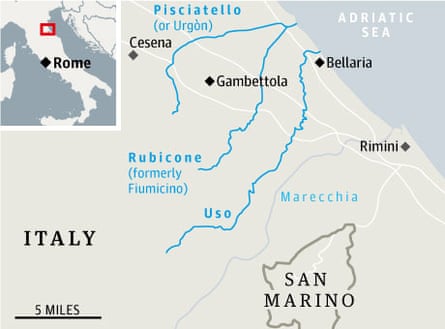
To Caesar, the message was unmistakable. The Senate had chosen Pompey over him. If he obeyed, he would stand trial at the mercy of his political enemies. If he disobeyed, he would become an outlaw. After years of political manoeuvring, there appeared to be no peaceful solution left. The fate of the Roman Republic would now depend upon a single river separating Caesar’s province from Italy itself: the Rubicon.

A map of the Rubicon river

For centuries, the Rubicon had been little more than a modest river in northern Italy. It was neither particularly wide nor especially deep. Yet politically, it was one of the most important rivers in the ancient world. The Rubicon marked the southern boundary of Caesar’s province of Cisalpine Gaul and, beyond it, lay Italy itself. Under Roman law, no governor was permitted to lead an army across this frontier. The Republic had imposed this rule centuries earlier to prevent ambitious generals from marching on Rome and seizing power by force. A governor crossing the Rubicon with his legions was effectively declaring war against the Senate and the Roman state. There was no legal defence, no compromise and no turning back.

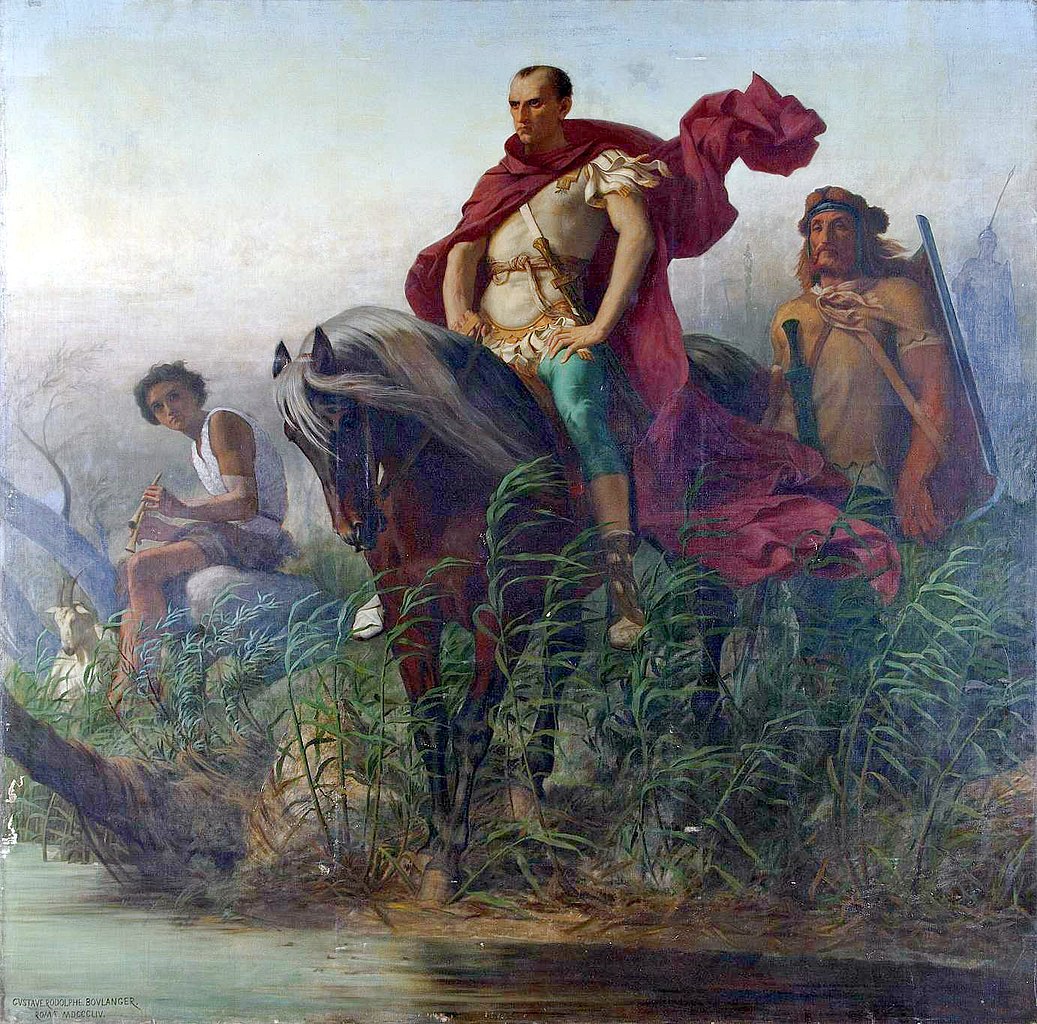
For several days in early January 49BC, Caesar lingered near the river, weighing his options. To obey the Senate meant dismissing the army that had loyally followed him through nearly a decade of campaigning in Gaul. Without its protection, he would enter Rome as a private citizen and almost certainly face prosecution at the hands of his political enemies. To cross the Rubicon, however, meant becoming an outlaw and plunging the Republic into civil war. It was a decision that would determine not only his own fate, but that of Rome itself.

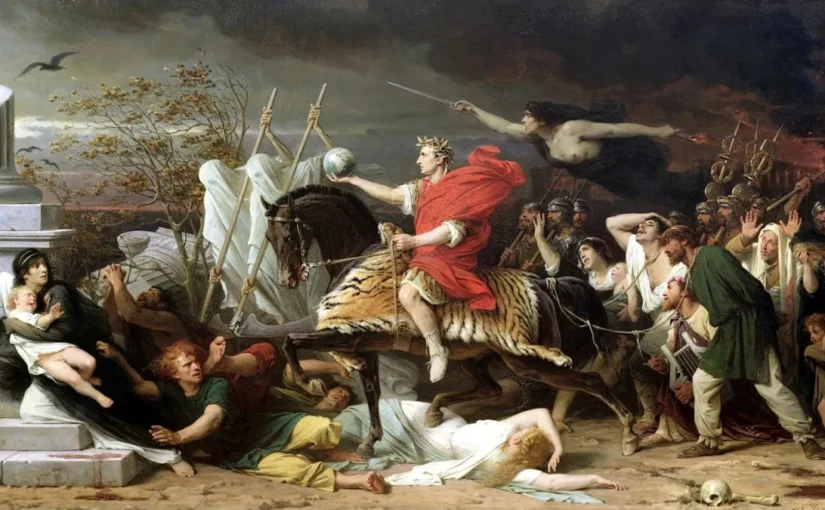
Caesar at the bank of the Rubicon

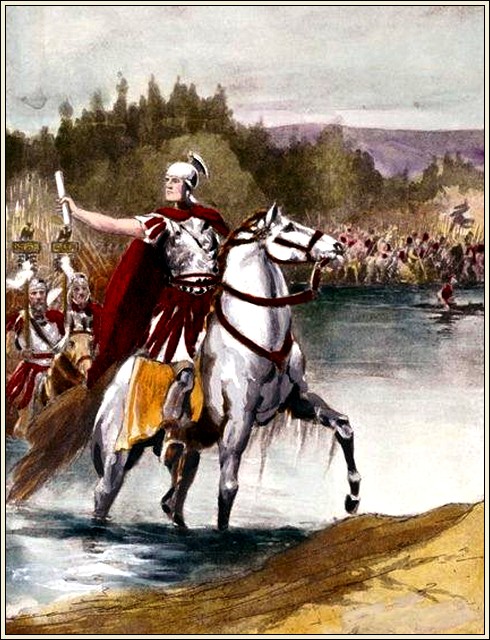
On the night of January 10th 49BC according to the modern calendar (January 11th in the Roman calendar then in use), Caesar finally made his choice. Accompanied by the veteran soldiers of the Thirteenth Legion, he rode to the banks of the Rubicon. Ancient writers describe him pausing one final time before ordering his men across the river. According to both Suetonius and Plutarch, Caesar then uttered the words that would echo through history:

Alea iacta est.
[The die is cast.]

Caesar’s famous words before crossing the Rubicon

With that, the legion crossed the river. In military terms, it was a relatively small movement of troops. Politically, it was revolutionary. Caesar had deliberately broken one of the Republic’s oldest constitutional laws and openly defied the authority of the Senate. News of the crossing spread rapidly through Italy, causing panic in Rome. Pompey and many senators, believing they lacked the forces to stop Caesar’s battle-hardened veterans, abandoned the capital and fled south before eventually escaping across the Adriatic Sea to Greece.

An illustration of Caesar crossing the Rubicon

The Roman Civil War had begun. Within a generation, it would destroy the Roman Republic that had governed the Mediterranean for nearly five centuries and pave the way for the rise of the Roman Empire under Caesar’s adopted heir, Augustus. Even today, the phrase “crossing the Rubicon” survives as an expression meaning to pass a point of no return – a decision so momentous that its consequences cannot be undone.

The Battle of Alesia

The year was 52 BC. For six years, Rome’s armies had fought a relentless campaign to conquer Gaul, defeating one tribe after another and extending Roman power ever deeper into Western Europe. Now, that long struggle was approaching its decisive moment at the fortified hill town of Alesia, in what is now the Burgundy region of France. The settlement, capital of the small Mandubii tribe, was one of the largest strongholds in Gaul, with an estimated population of between 80,000 and 170,000 people once the surrounding refugees arrived during the siege. The previous year’s campaigns had been among the bloodiest of the Gallic Wars, convincing many tribal leaders that Roman conquest threatened not only their political independence but their entire way of life. Although Julius Caesar had originally governed only the Roman provinces of Cisalpine Gaul, Illyricum and Gallia Narbonensis, his victories increasingly made it clear that he intended to bring the rest of Gaul under permanent Roman control. Roman armies occupied Gallic territory, demanded tribute, took hostages and intervened in local politics. Many Gauls also feared what Roman domination could mean for their traditional customs and religious institutions. Amid growing resentment, a young Arvernian noble named Vercingetorix succeeded where countless leaders before him had failed. Setting aside centuries of rivalry, he forged an unprecedented alliance between dozens of Gallic tribes, united by a single goal: to drive the Romans out of Gaul once and for all.

A statue of Vercingetorix near the village of Alise-Sainte-Reine, France

On Caesar, he had been a great political and military force in Rome for a long time. After serving as consul in 59 BC, Caesar secured an unprecedented five-year command as governor of the prior mentioned territories through his alliance with Gnaeus Pompeius Magnus, more commonly known as Pompey, and the immensely wealthy Marcus Licinius Crassus through an informal political partnership later known as the First Triumvirate. The command granted him four veteran legions and, more importantly, an opportunity. Burdened by enormous debts and surrounded by political rivals in Rome, Caesar needed military victories to enrich himself, reward his soldiers and build the prestige necessary to dominate Roman politics. Over the next six years, his campaigns transformed him into one of the Republic’s greatest generals, but they also made him powerful enough to alarm many members of the Senate.

By 52 BC, everything Caesar had built was at stake. A united Gallic revolt under Vercingetorix threatened to undo six years of campaigning and destroy the reputation that his political future depended upon. Victory at Alesia would not simply secure the conquest of Gaul; it would provide Caesar with the wealth, glory and military prestige that could ultimately bring a rise to absolute power. Defeat, by contrast, would likely have ended both his military career and his political ambitions.

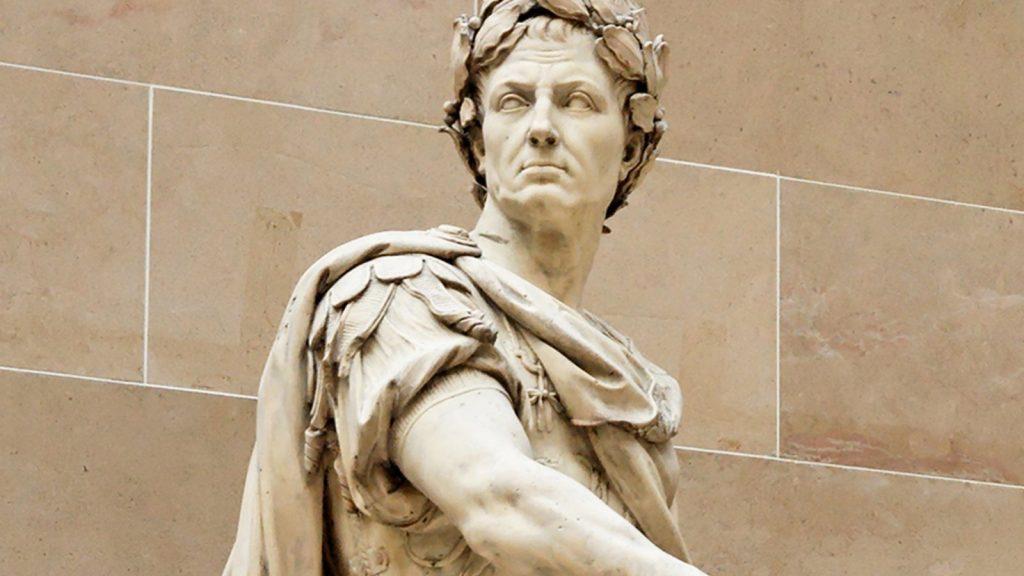
A statue of Julius Caesar in the Louvre in Paris, France

Vercingetorix knew that he could not defeat the Roman legions in a conventional pitched battle. Caesar’s army was among the most disciplined and experienced fighting forces in the ancient world. Instead, the Gallic leader adopted a ‘scorched-earth’ strategy, ordering tribes to burn their own villages, crops and food stores before the Romans could seize them. His hope was simple: if Caesar’s army could not feed itself, it would be forced to retreat. The strategy was proving effective until the wealthy city of Avaricum pleaded to be spared. Reluctantly, Vercingetorix agreed. Caesar immediately besieged the city and, after capturing it, his starving troops massacred much of its population and replenished their supplies. Although Vercingetorix soon recovered with a significant victory over Caesar at Gergovia, proving that the Romans were not invincible, he refused to risk another major engagement in open ground. Instead, after a series of cavalry clashes, he withdrew with roughly 80,000 warriors into the heavily fortified hill settlement of Alesia, believing its formidable natural defences would force Caesar to abandon the pursuit. Instead, Caesar made one of the boldest decisions of his military career: rather than retreat, he resolved to besiege the city itself.

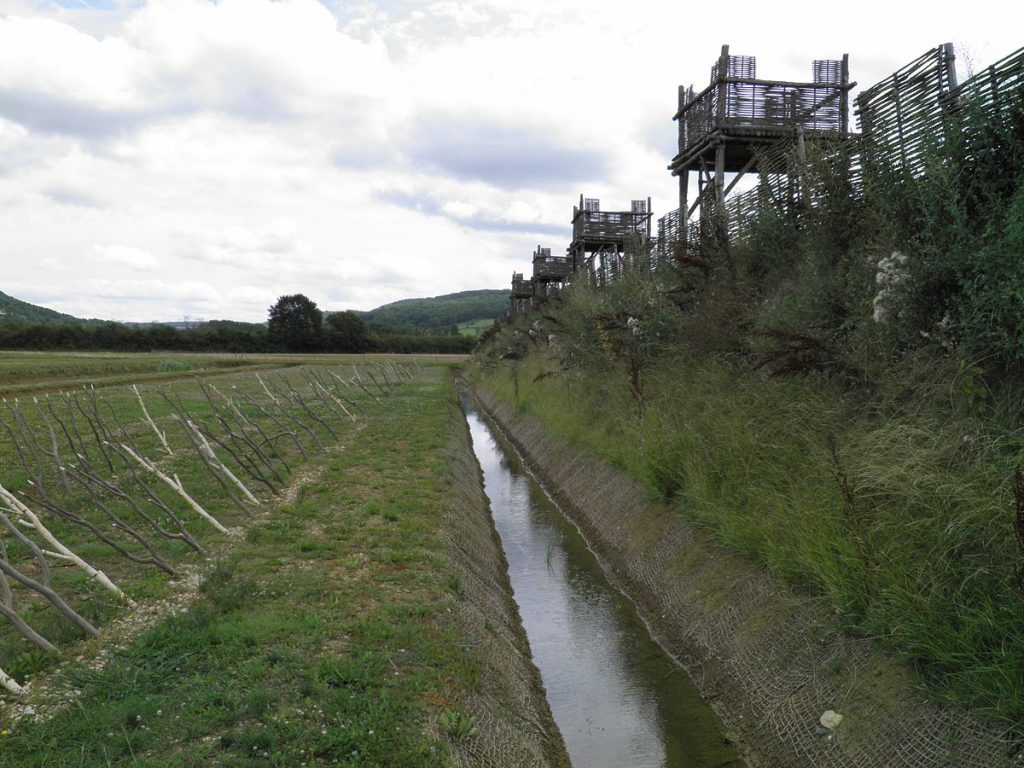
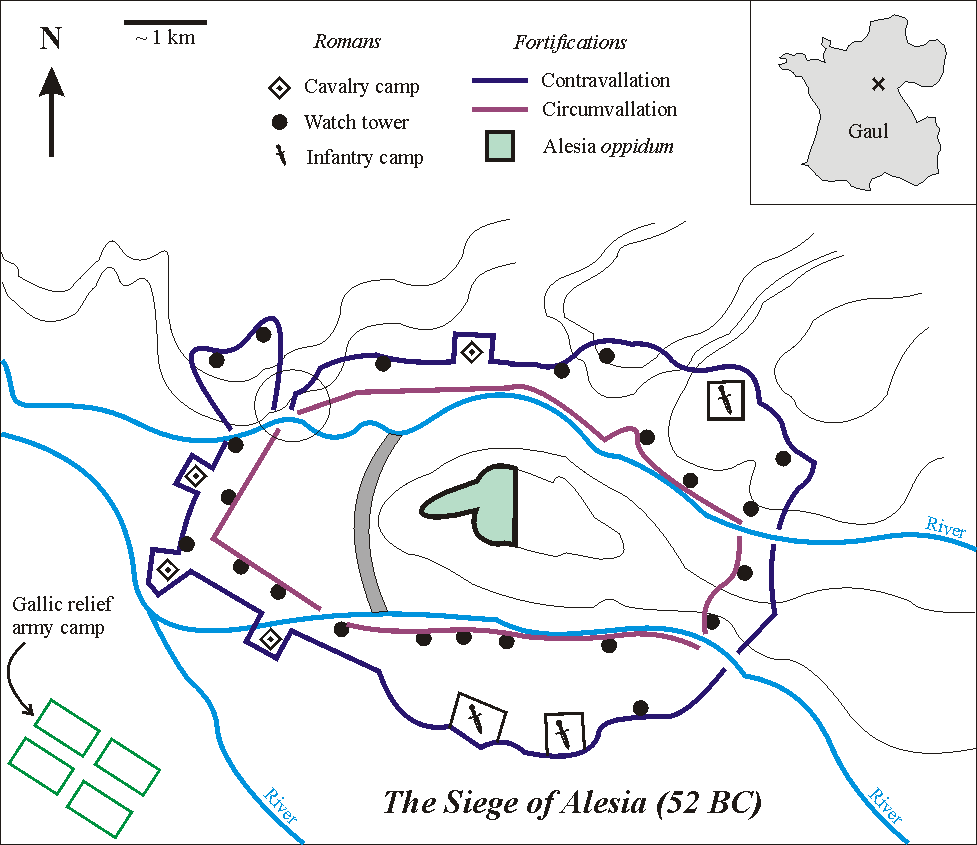
This decision to besiege the city did not initially concern Vercingetorix, as he believed that he could effectively perform a pincer manoeuvre on the Roman army. What he did not expect, however, was the intensity of the siege. The Romans wasted no time. Within hours, thousands of legionaries had begun digging trenches and marking out what would become one of the greatest siege systems ever constructed. Over the next few weeks, Caesar encircled the entire town with a ten mile long wall which reached 12ft high. This wall, called the Circumvallation, was not without its defences. If the Gauls wanted to assault the wall, they would first have to cross a 20ft wide trench, before they would encounter two more trenches, both 15ft deep and one filled with water from the nearby rivers. This defence was littered with countless hidden defensive traps. If they did reach the wall, sharpened stakes projected from the earth would tear apart anyone attempting to climb the defences.

A recreation of the rampart of the Circumvallation

The construction did not come without opposition. Caesar wrote that, during the construction of the siege fortifications, a cavalry battle took place in the three mile stretch of land between the wall and the town. The fight initially leaned in favour of the Gauls, before Caesar sent forth his infamous Germanic cavalry, who launched a devastating charge with such vigour and terror that it sent them running back to their encampment. As the men attempted to claw their way back through the city gates, some even attempting to climb the wall, Vercingetorix, fearing the Romans would exploit the confusion and force their way into the town, opted to close the gates, leaving countless terrified soldiers to be massacred at the gates of Alesia.

As construction of the fortifications continued, Vercingetorix concocted a plan to relieve his men. Under the cover of night, he ordered his cavalry to sneak past Roman lines and gather as many reinforcements as they could from across the Gallic lands to crush the Roman siege and bring a swift end to the war. According to Caesar, the relief force eventually numbered over 240,000 warriors, although modern historians generally believe the true figure was considerably smaller. Caesar, who learnt of this from captives and Gallic deserters, took a bold measure. In an effort to repel any would be attackers, he built a second wall around the first, effectively trapping his own army between two vast defensive lines. The second wall, called the Contravallation, had many of the same fortifications the Circumvallation did but instead faced outwards from Alesia, pushing the Roman army in between the two walls.

A map of the fortificiations surrounding Alesia

By now, the conditions within the city had grown grim. Their food supplies had begun dwindling and Vercingetorix not only had to feed his own army but the citizens of Alesia as well as countless refugees who had fled there following the Roman conquest. He offered a solution that would allow the citizens safe passage and food: allowing all people who couldn’t fight into the ‘no-mans land,’ hoping they would be allowed to pass through the Roman defences or feed them himself. Whilst partially an act of mercy, it was also a logistical decision to allow him to prioritise supplies for his own men. However, upon their reaching of the wall, Caesar denied the group, largely consisting of women and children, passage through his line. Vercingetorix also refused to readmit them, knowing that every extra mouth consumed precious food that his warriors needed if they were to survive until the relief army arrived. For days, the abandoned civilians wandered the narrow strip of land between the Roman and Gallic defences, begging both sides for food. Neither relented. Many eventually died where they stood, victims of a siege in which starvation had become another weapon of war.
Hoping to overwhelm the Romans, the Gallic relief army launched a major assault under the cover of darkness while Vercingetorix ordered simultaneous attacks from inside Alesia. Making use of ladders and wicker hurdles to bypass trenches and hooks to destroy the spikes, some of the Gallic army managed to begin to scale the wall, while arrows and other projectiles kept the Romans at bay. However, they were met by disciplined Roman legionaries, who fought from behind the ramparts and cut them down as they attempted to crest the peak of the wall. The onslaught lasted until dawn, with the morning light of day revealing the scale of the carnage. Both side suffered losses but the Romans held the line. The wall was still standing.

An illustration of Gallic warriors and Roman Legionnaires fighting at Alesia

Meanwhile, Commius, one of the commanders of the reinforcements, recognised that one section of Caesar’s outer line, built across steep and uneven ground, was less formidable than the rest. On high ground now commonly identified as Mount Réa, some of his scouts had identified a weak point where the Romans had failed to construct adequate fortifications due to hilly terrain. Commius deduced that if Caesar could be distracted by a more direct assault that a force, led led by Vercassivellaunus – a cousin of Vercingetorix according to Caesar, could breach the Roman line and liberate the town.
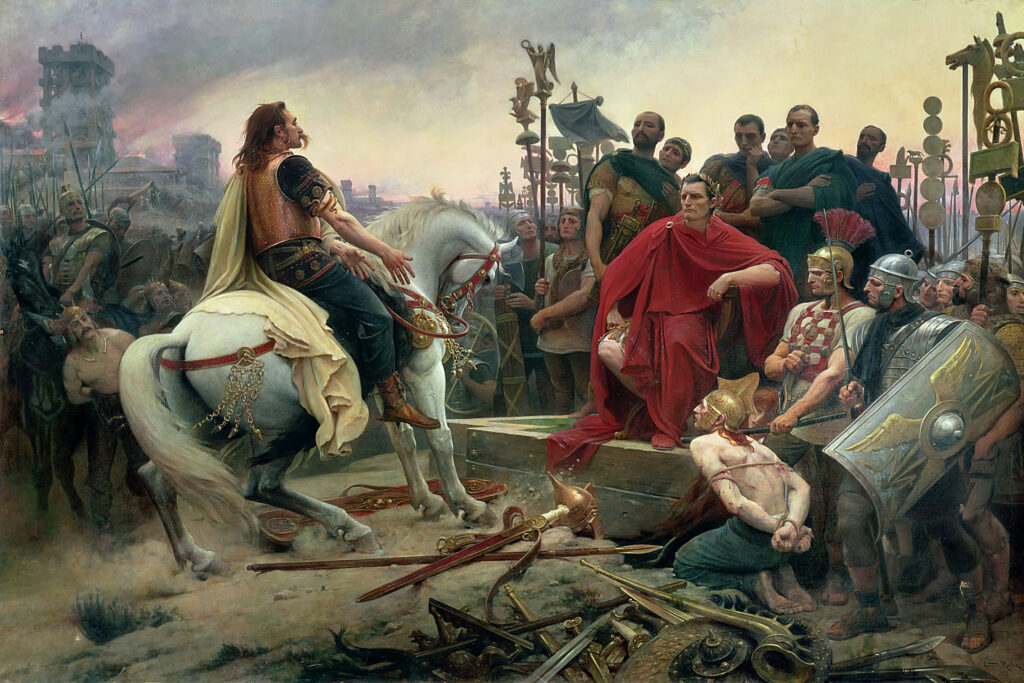
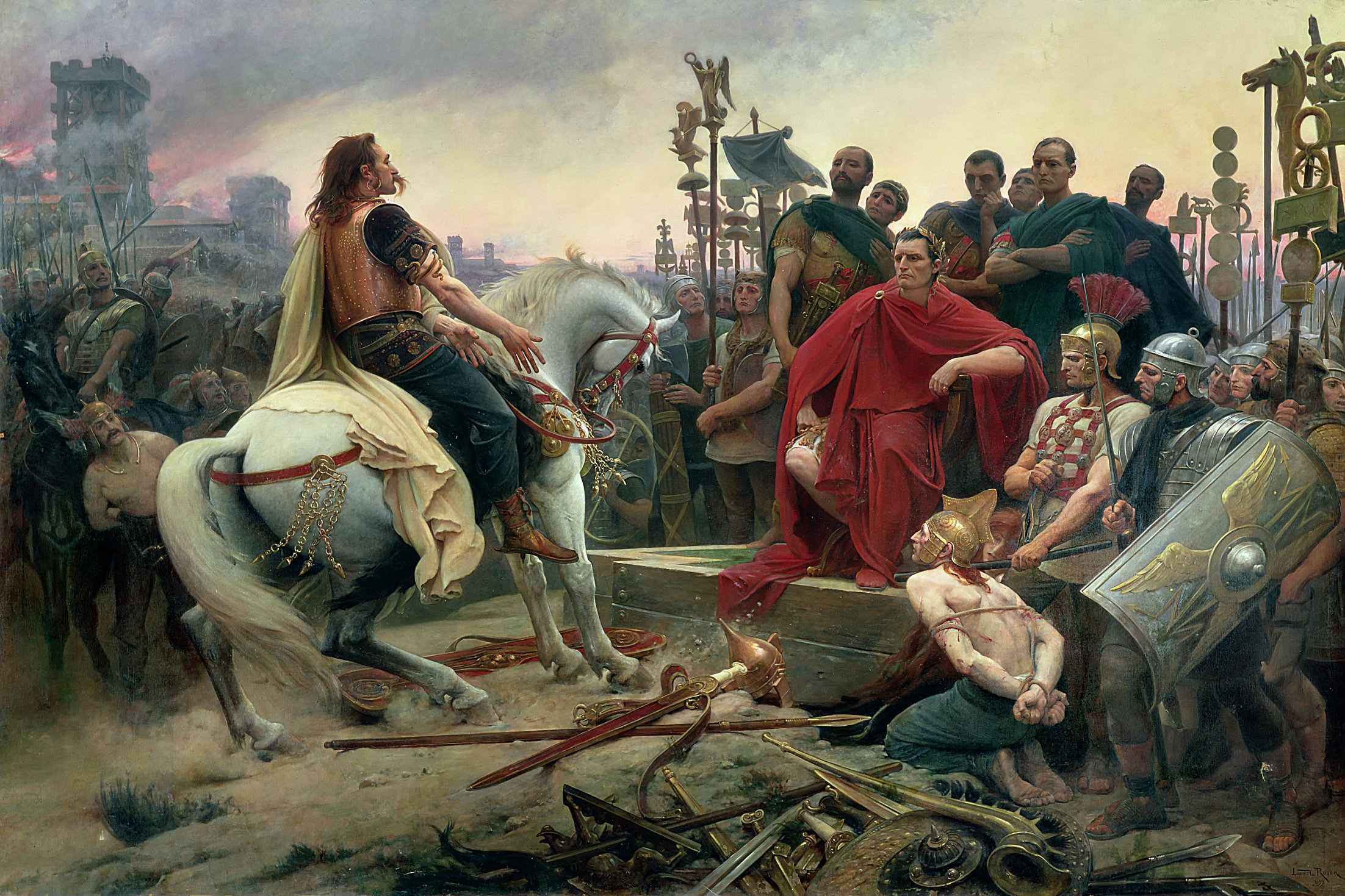
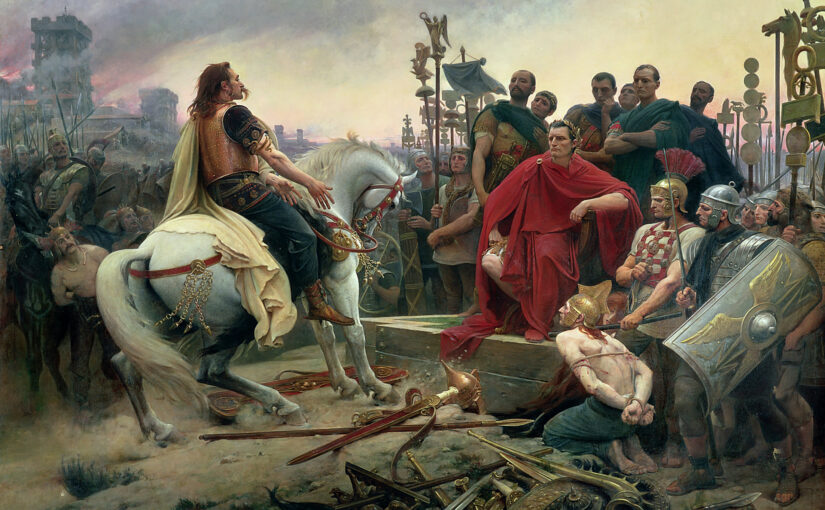
The attack went ahead at daybreak, with both the inner and outer wall under assault simultaneously. Caesar, notified of the assault near Mount Réa, took decisive action, going into the field of battle himself to confront the assault, Donning his distinctive scarlet commander’s cloak so his men could see him, Caesar rode to the threatened sector and ordered his cavalry to break from the fortifications and flank the force at Mount Réa from behind. Their final chance at repelling Rome dwindled in a second as the cavalry cut down the men behind them. The Gauls panicked, broke rank and were massacred in what had now quickly turned into a slaughter. The scene of them being trampled and cut to death caused the rest of the army to flee. They lost the battle. The next day, Vercingetorix surrendered to Caesar. Later Roman writers claimed he rode from the city in full armour before laying his weapons at Caesar’s feet, although whether the surrender unfolded exactly this way remains uncertain. The Gallic wars were over and Caesar was triumphant.

A painting of Vercingetorix surrendering to Caesar

Vercingetorix remained a prisoner for six years before being displayed in Caesar’s triumph through Rome in 46 BC. Once the celebrations ended, he was executed by strangulation in the Tullianum prison. His defeat marked the effective end of organised Gallic resistance and brought almost all of Gaul under Roman rule. For Caesar, Alesia was the crowning achievement of the Gallic Wars. The conquest made him unimaginably wealthy, won him the unwavering loyalty of his veteran legions and transformed him into the Republic’s most celebrated general. Yet his growing prestige alarmed many senators back in Rome. In many ways, the siege of Alesia did not simply decide the fate of Gaul; it set Rome itself on the path from republic to empire.

The Battle of Thermopylae

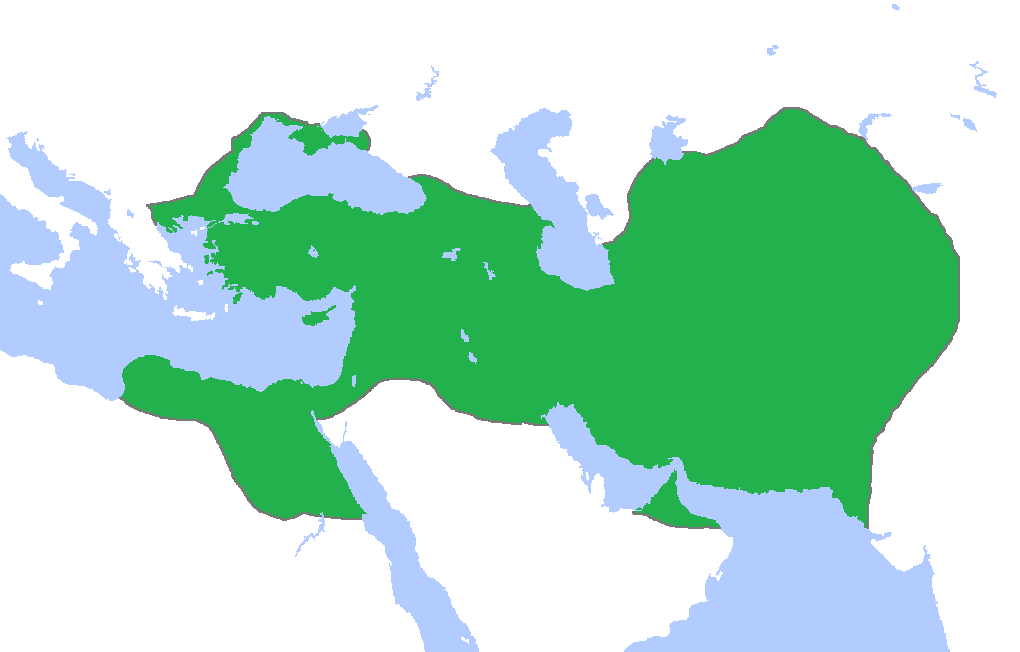
By 480BC, the Persian Empire was the largest on Earth. Persia, modern day Iran, was a shockingly progressive society for the time. Instead of being great conquerors, they were often seen as great liberators. The founder of the empire, Cyrus, famously freed the Jews from the city of Babylon, a city in modern day Iraq. There were no slaves and all labourers were paid a fair wage given their skill and contribution to a structure.

A map of the Persian Empire

19 years earlier, pro-democracy uprisings in Ionia were backed by Athens, another democratic state. In response, King Darius invaded Greece but was shockingly defeated at the famous Battle of Marathon by the much smaller Athenian Army.

A painting of the Battle of Marathon

Swearing revenge, the task of invading Greece was passed down from Darius to his son Xerxes, who soon began marching on Greece, with the largest army at the time of over 360,000 men

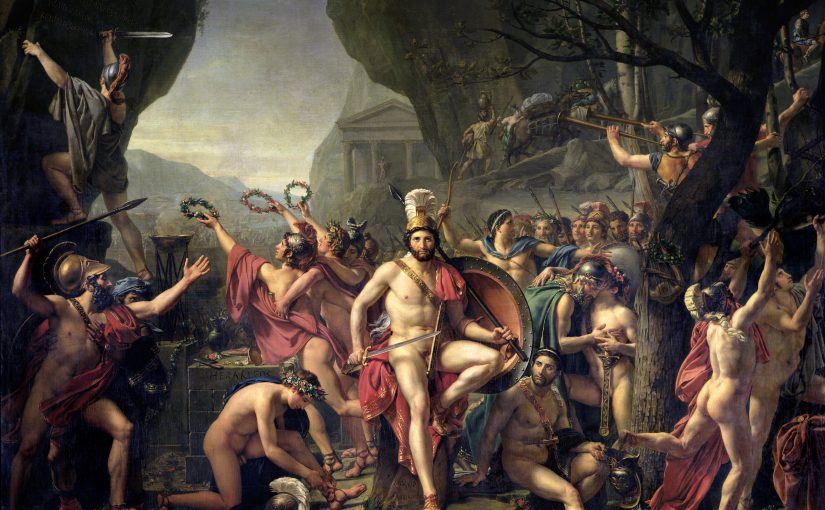
Leading the Greek defence was King Leonidas of the Greek City State of Sparta. Sparta is one of the most extreme societies in human history, being a eugenics based warrior state. When children were born, elders would inspect if the child was fit to fight. If not they were thrown off a mountain to die. Boys went off to school to be drilled into becoming soldiers. Men always became soldiers and lived in barracks 24/7; academics often lived in Athens rather than Sparta and all manual labour was done by the slaves called Helots. However, despite their brutal upbringing Sparta had one of if not the greatest infantry armies in the ancient world. Athenian leaders decided to stage a battle at Thermopylae to fend off the Persian Army whilst they prevented naval landings. 7,000 men opposed Xerxes massive army, lead by the famous 300 Spartans.

A map of the area

When the two sides met at the narrow strip of land, one side being a cliff and the other half being an ocean, the Persians immediately fired their arrows, making zero progress against the advanced armour of the Greeks. Eventually, Xerxes ordered his men to melee attack. Due to the hot weather, they were only able to fight in minute long bursts before tiring out. The weak Persian shields stood no chance against the longer Spartan Spears and the type of combat the Persians were used to in their conquest of the vast and open Middle East could not be applied in the narrow passage of Thermopylae.

However, their weak number soon dawned on the Greeks who turned and began to flee. Believing a victory, the Persians charged at the Spartans, breaking formation, before the Greeks turned around massacring the unorganised Persians. Some of Persia’s finest lie dead in the passage. However, a whisper came to Xerxes of another way to attack the Greeks.

An unorganised group of soldiers watched a narrow passage in the mountain. Without a Spartan officer, they had broken ranks after 2 days of nothing. Eventually, they are attacked by the elite Persian Royal Guard and run to the rest of the men. The Greeks are now trapped, the ocean to the north, the cliff face to the south, the large Persian Infantry to the West and the Persian Royal Guard to the East. Leonidas makes a very brave decision. He decides to let the rest of his men leave before the Eastern Guard can form up, whilst keeping behind the 300 Spartans to fend off the Persians, allowing them to escape.

In a last stand of gallantry, the 300 Spartans charge head on at the Persians. They fought until their spears broke and they fought with swords until they were blunt, fighting with bear hands and teeth. However, all of them were eventually wiped out including Leonidas, and Xerxes marched on. This last stand allowed the Athenians to deliver a strong naval victory and, fearing that the crossing into Greece may soon be attacked by Athenian Naval Forces, Xerxes returned home, whereupon his forces were defeated at Plataea by the Spartans.

Herodotus wrote about the battle as well as the rest of the war, in one of the first true history books that was not simply the art of myth making but actual fact. His rousing story birthed the Greek identity, portraying the Greeks as a civilised people and the Persians as evil enslaving monsters. The impact of Thermopylae impacted many wars and civilisation for centuries afterwards.