The Revolution had been fought partly over the principle that governments derived their authority from the people, but the new United States was far from politically settled. The Continental Congress had been deliberately designed to prevent the creation of another powerful central authority, but the resulting government was extremely weak. Under the Articles of Confederation, Congress had difficulty raising taxes, regulating trade or maintaining a strong national military.
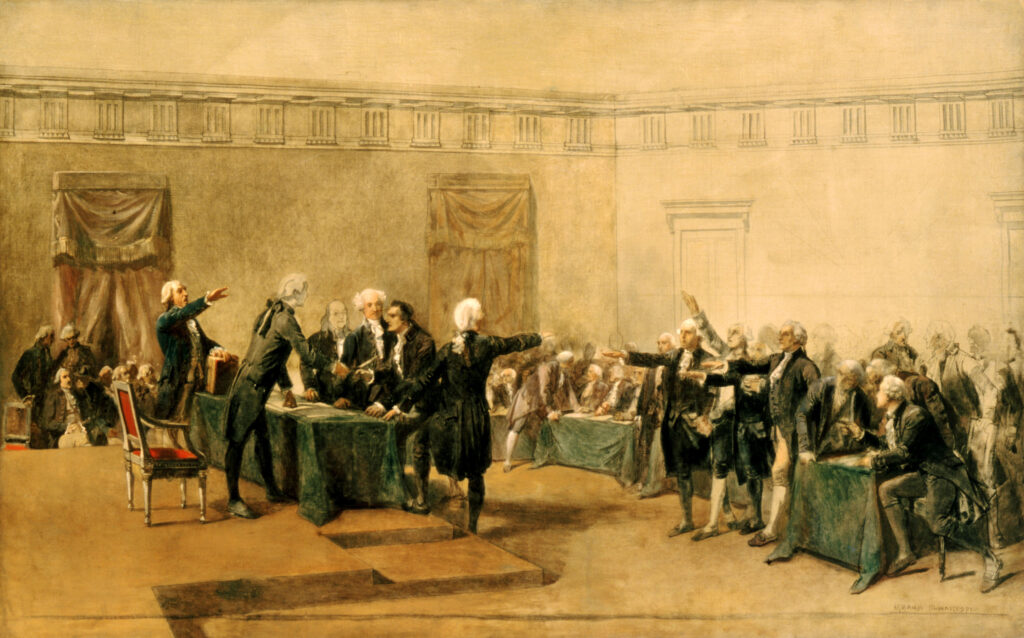
An illustration of the Continental Congress
The problems became increasingly obvious after the war. The United States was heavily indebted, states disagreed over trade and taxation, and fears grew that the new republic could collapse into political and economic disorder. In 1787, delegates gathered in Philadelphia to rewrite the country’s system of government. Rather than simply strengthening the Articles of Confederation, they created an entirely new Constitution. It established a federal government divided between three branches: the executive, legislative and judicial.
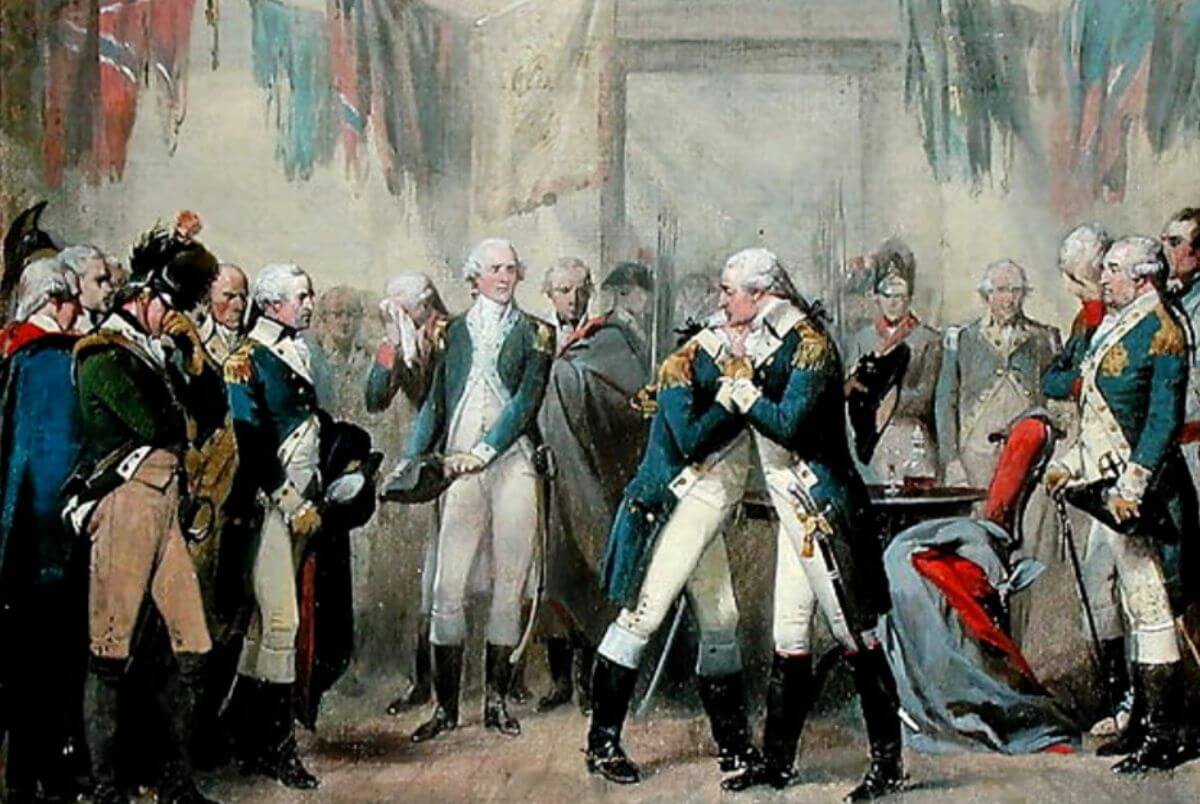
The presidency was deliberately designed to be powerful enough to govern but constrained by elections, Congress and the courts. There was also an obvious candidate for the first president. George Washington. Washington had become the most respected military figure in the new republic, but he had no desire to become a dictator. In December 1783, he famously resigned his military commission and returned to private life.
With a heart full of love and gratitude, I now take leave of you. I most devoutly wish that your latter days may be as prosperous and happy, as your former ones have been glorious and honourable.
Washington to his officers upon his retirement in 1783
A painting of Washington’s farewell to his officer’s at a tavern
In an age when victorious generals frequently seized political power, Washington’s decision was extraordinary. He had commanded an army for eight years and had the loyalty of thousands of soldiers. Had he chosen to use that popularity to establish himself as a permanent ruler, the new American government might have developed into something entirely different. Instead, Washington voluntarily surrendered his authority.
When the Constitution came into effect in 1789, Washington was unanimously elected as the first President of the United States. He established many of the conventions that would define the office, including appointing a cabinet of advisers and delivering an annual message to Congress. Washington did not attempt to turn the presidency into a monarchy. Nor did he attempt to remain in power indefinitely. After serving two four-year terms, he retired in 1797. His decision established an important precedent: the presidency was an office that a person could willingly leave.
A painting of the inauguration of George Washington
The American victory also had profound consequences outside America. France had played a decisive role in defeating Britain, but supporting the Americans had come at an enormous financial cost. The French government had accumulated huge debts while already struggling with an inefficient taxation system and an increasingly dissatisfied population. The irony was that France had helped create an independent republic partly to weaken its British rival, but the expense of doing so contributed to the financial crisis that eventually helped destabilise the French monarchy.
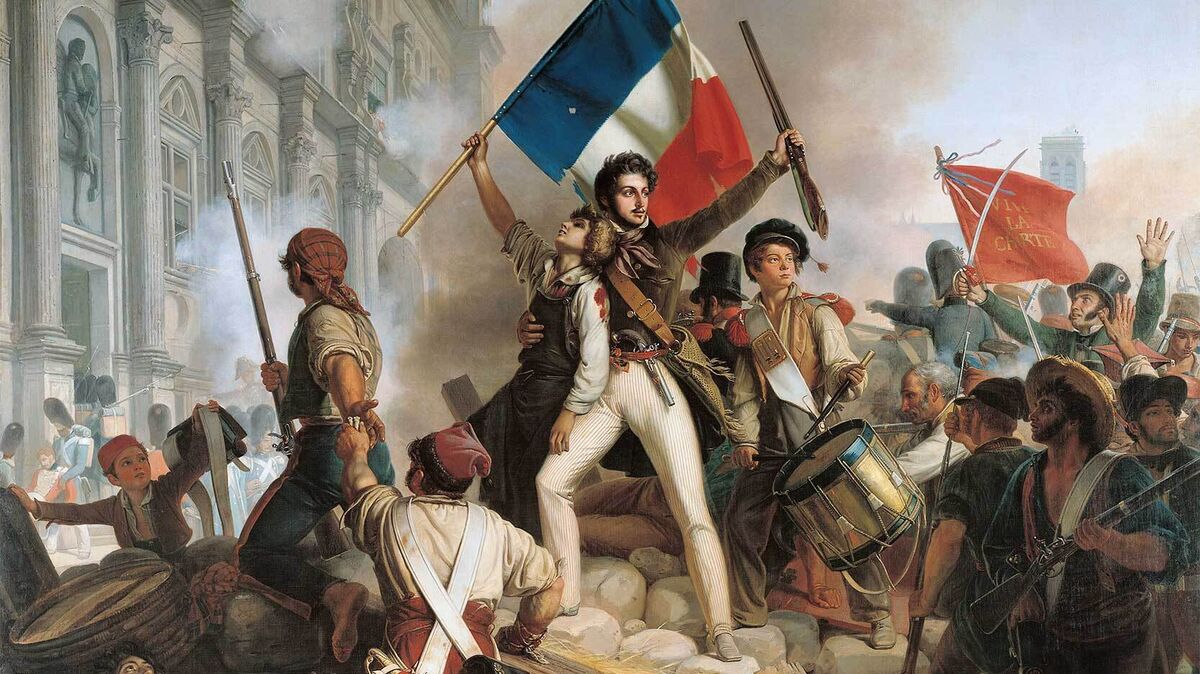
Within a few years, France itself would experience a revolution. The American Revolution therefore became an important source of inspiration for French revolutionaries. Ideas about popular sovereignty, constitutional government and the rights of citizens crossed the Atlantic. The American example demonstrated that an established monarchy could be challenged and that a new republic could be created in its place. The two revolutions were nevertheless very different. The American Revolution was primarily a war for independence from a foreign government, whereas the French Revolution became a much broader struggle over the structure of French society and government.
A painting of revolutionaries during the French Revolution
The American Revolution permanently changed the political landscape of the Western world. The United States became the first large-scale modern republic created from a successful colonial independence movement, demonstrating that a European imperial power could be defeated by its own subjects. Its declaration that governments derive their legitimacy from the consent of the governed became enormously influential, even though the revolutionary United States did not initially extend those principles to everyone. Slavery remained legal, women were excluded from political participation and Native American peoples faced increasing displacement as the new nation expanded westward. The Revolution was therefore both a radical transformation and an incomplete one.
Nevertheless, its ideas travelled far beyond North America. The language of liberty, constitutional government and popular sovereignty influenced political movements across Europe and the Atlantic world. The French Revolution would soon demonstrate how powerful those ideas could become. The war had begun with a dispute over taxation and political representation. It ended with the creation of a new country and a challenge to one of the fundamental assumptions of eighteenth-century politics: that monarchy and empire were the natural forms of government. The United States had won its independence. Now it had to prove that its experiment in republican government could survive.
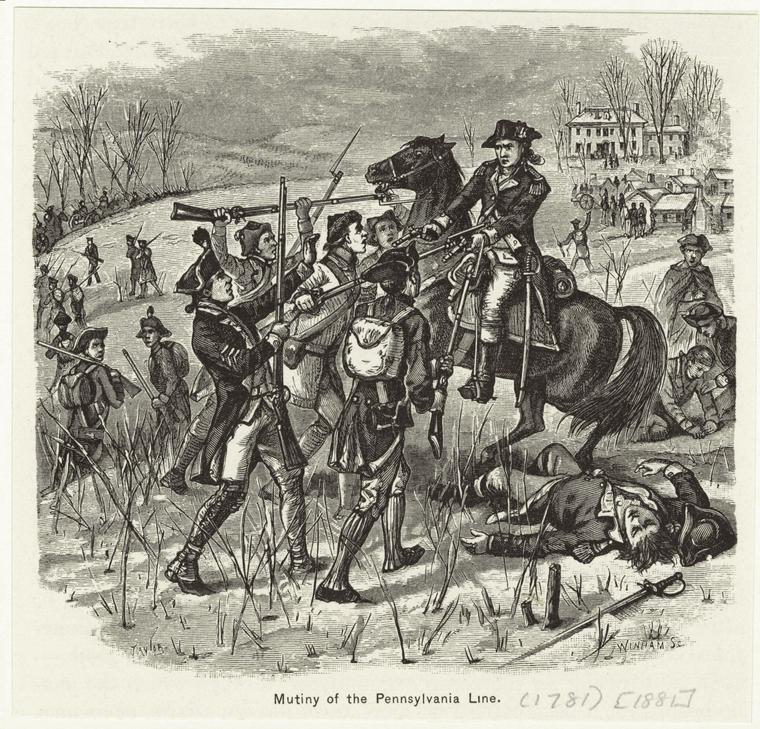
By 1781, both sides were becoming exhausted by the war. The Continental Army had suffered from shortages of food, clothing and pay, while mutinies had broken out among American troops. Britain, meanwhile, was struggling with the enormous financial cost of fighting a war thousands of miles from home. The French alliance had transformed the conflict, forcing Britain to fight not only the Americans but also France and, increasingly, Spain. Neither side could easily deliver a decisive blow.
An illustration of a mutiny on the Pennsylvania Line in 1781
The British had therefore shifted their attention towards the Southern Colonies, hoping that the large population of Loyalists there would allow them to rebuild their strength. General Charles Cornwallis had campaigned through the Carolinas and eventually moved his army into Virginia. He established himself at Yorktown on the Chesapeake Bay, intending to use the position as a secure base from which British forces could control Virginia and receive supplies and reinforcements by sea.
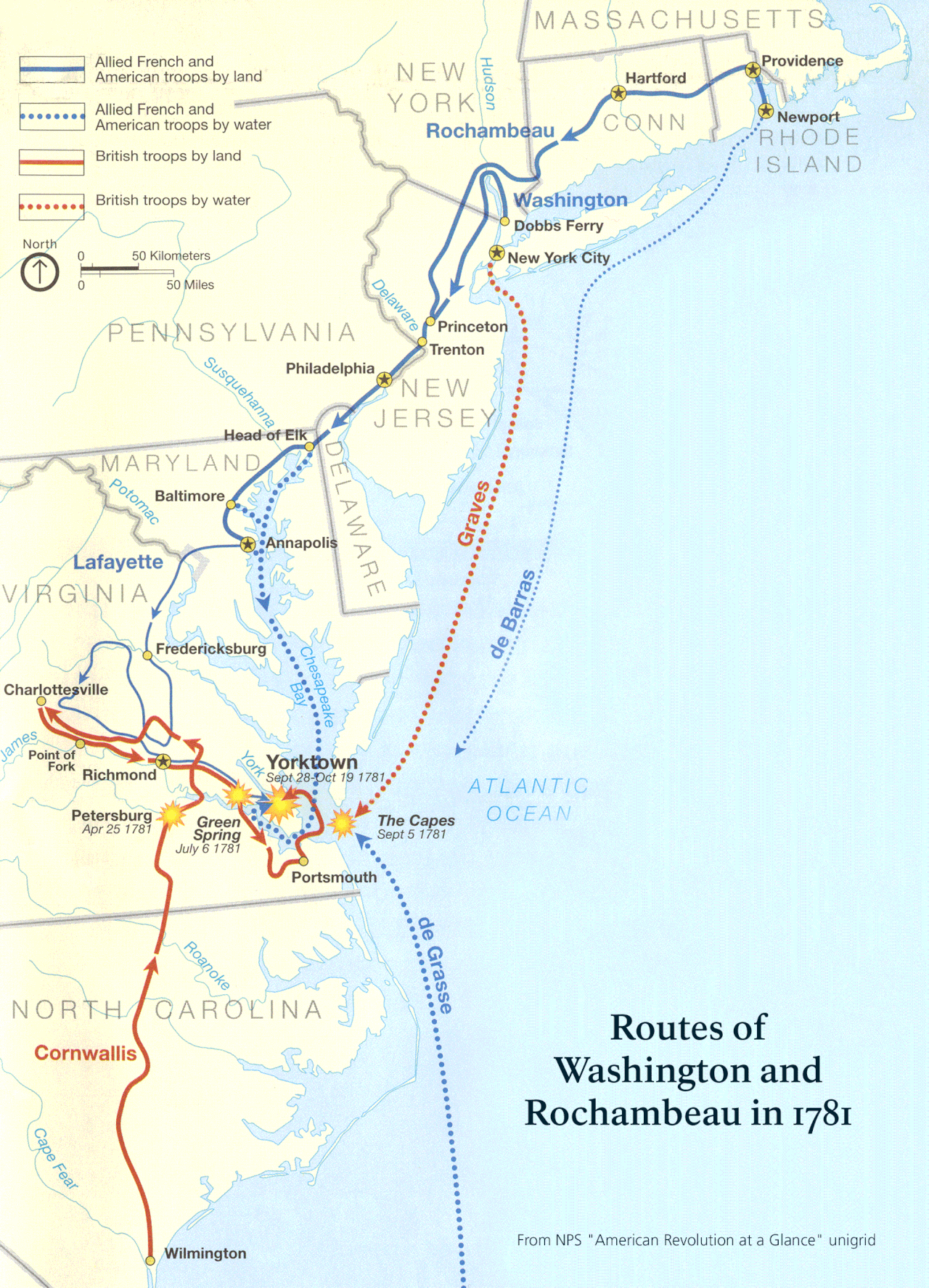
Unknown to Cornwallis, however, Washington had devised a plan that could trap him. The British commander in New York, General Henry Clinton, had intercepted American communications suggesting that Washington was preparing to attack New York City. Clinton therefore remained in New York, believing the city to be the main target. In reality, Washington was preparing to march his army south towards Virginia. The deception allowed Washington and the French commander, the Comte de Rochambeau, to move thousands of troops away from New York without the British immediately realising what was happening.
The map of the paths of the armies, colliding at Yorktown
At the same time, a French fleet under the Comte de Grasse sailed into the Chesapeake Bay. On September 5th, 1781, the French navy defeated the British fleet at the Battle of the Chesapeake. The victory was crucial. Cornwallis could no longer rely on the Royal Navy to evacuate or reinforce his army. Washington and Rochambeau arrived outside Yorktown and began constructing a series of siege lines around the British position. American and French artillery relentlessly bombarded the town while their soldiers gradually tightened the encirclement. Cornwallis repeatedly requested assistance from Clinton, but British reinforcements never arrived in sufficient numbers.
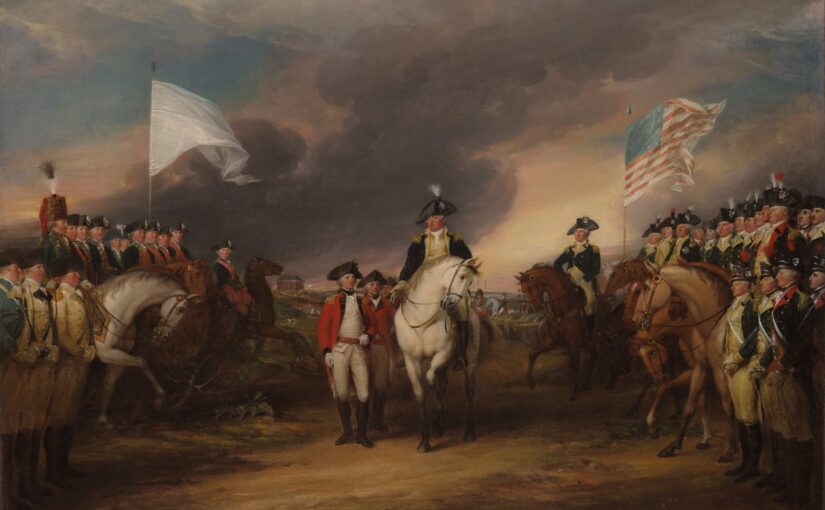
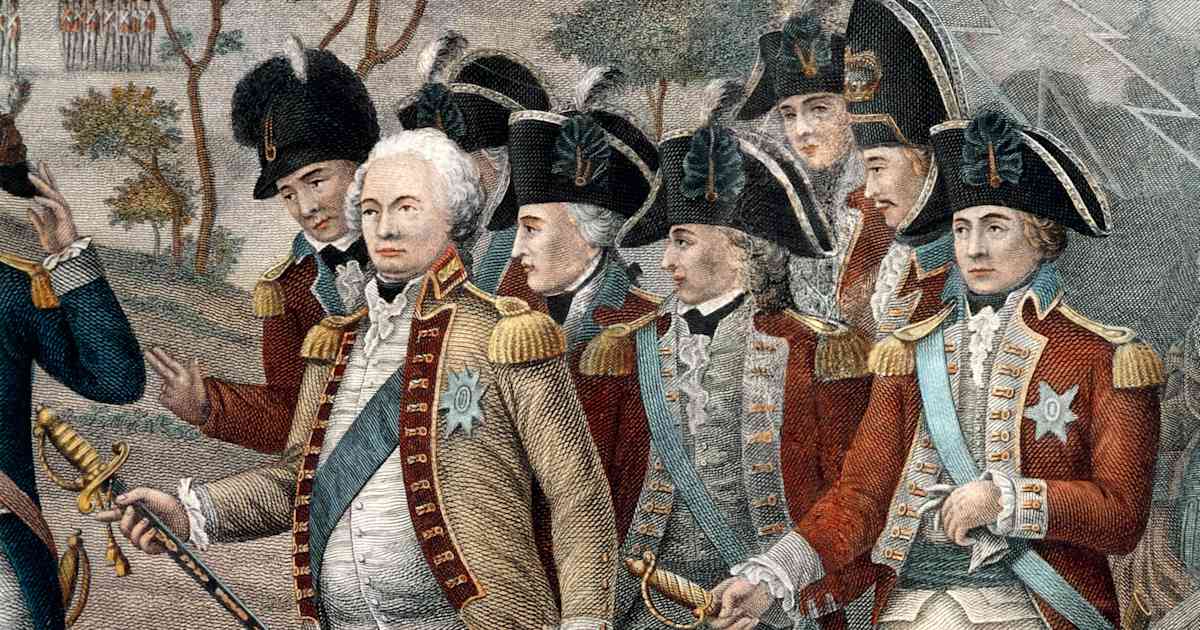
By October, Cornwallis’s position had become hopeless. His troops were surrounded on land, cut off from the sea and suffering from constant bombardment. On October 19th, 1781, Cornwallis surrendered approximately 8,000 soldiers to the American and French forces. The American Revolution was not technically over. British forces still occupied New York, Charleston and Savannah, and fighting continued elsewhere. However, Yorktown destroyed Britain’s political ability to continue the war. Parliament had lost the will to spend enormous sums of money fighting a conflict that increasingly appeared unwinnable.
A painting of Cornwallis’ surrender at Yorktown
Peace negotiations eventually produced the Treaty of Paris, signed in 1783. Britain formally recognised the independence of the United States of America and agreed to withdraw its forces from the thirteen former colonies. The new United States received territory extending westward to the Mississippi River and northward to the Great Lakes. The Americans, in return, agreed to recognise debts owed to British creditors and promised that Loyalists would not be persecuted or have their property unlawfully confiscated. Britain also retained control of Canada, while Spain recovered Florida from Britain. The treaty formally ended the American Revolutionary War.
For Britain, the result was humiliating. The world’s most powerful empire had been unable to defeat a rebellion in thirteen of its own colonies. Yet Britain itself did not collapse. It remained a major global power and soon began expanding its influence elsewhere. For the United States, however, victory created an entirely new problem. The Americans had won independence. They now had to decide what to do with it.
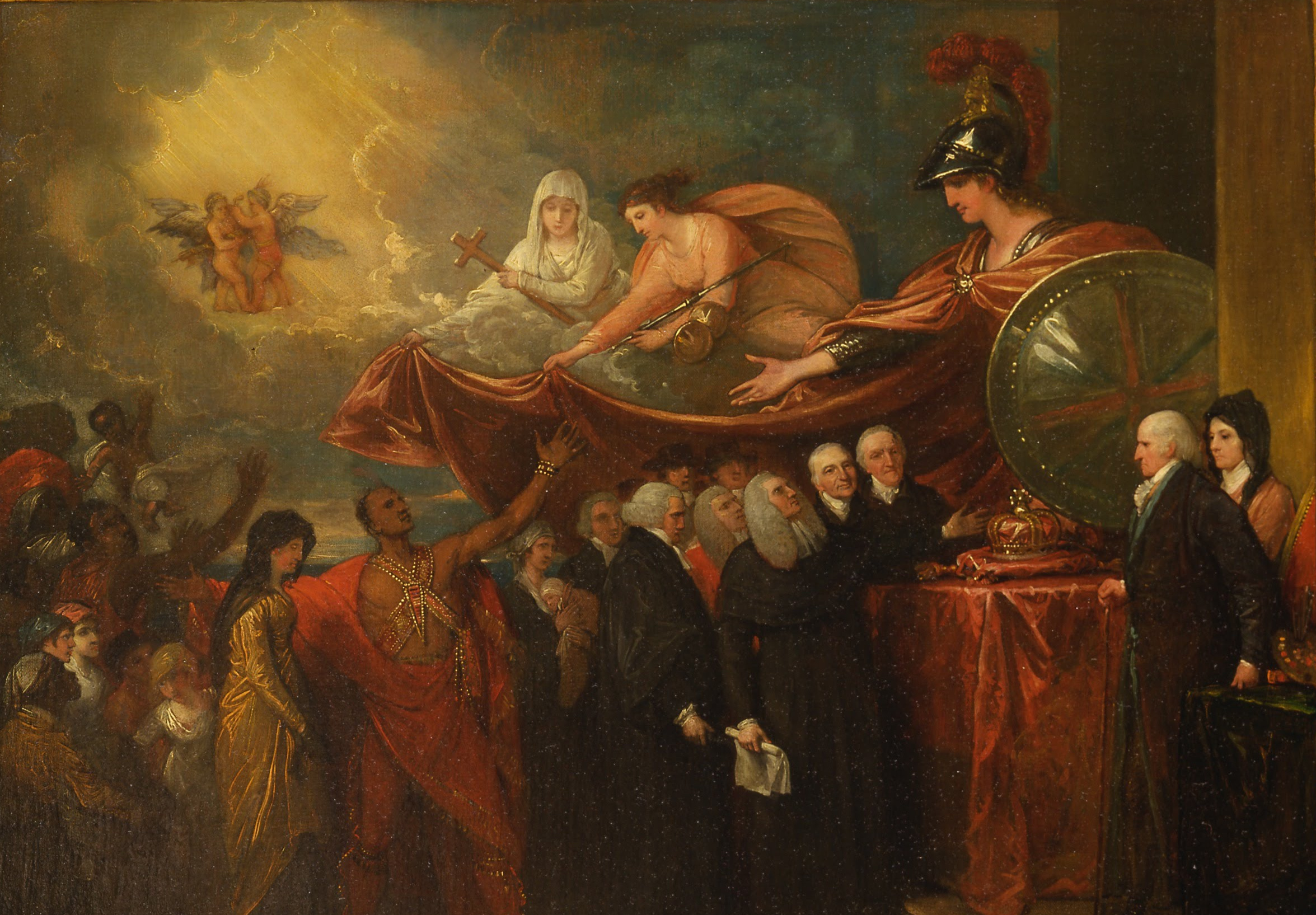
By 1780, the American Revolutionary War had entered a frustrating stalemate. British forces still held several important positions, particularly in New York, but their attempts to destroy Washington’s main army had repeatedly failed. The British government therefore began looking for a new strategy. Rather than continuing to fight for territory in the northern colonies, British commanders increasingly turned their attention towards the South. The decision was based on a simple assumption: the Southern colonies contained far more Loyalist support than New England. British commanders believed that large numbers of Americans in Georgia, South Carolina and North Carolina remained loyal to the Crown and would rise up once British forces arrived. If Britain could capture the Southern colonies and raise Loyalist militias, it could gradually isolate the rebellious northern states and restore royal authority.
A painting depicting Britannia, the national personification of Britain, taking in exiled loyalists
The strategy initially appeared to work. In December 1778, British forces captured Savannah, the capital of Georgia. A combined American and French attempt to retake the city in 1779 ended in failure, with the Allies suffering heavy casualties during the unsuccessful Siege of Savannah. The British subsequently strengthened their position in Georgia and expanded their control into the surrounding countryside. The next major target was Charleston, South Carolina. Charleston was one of the most important American ports in the South and the centre of the Southern war effort. In 1780, a large British army under General Henry Clinton surrounded the city. After a prolonged siege, American forces inside Charleston surrendered on May 12th, resulting in the capture of more than 5,000 Continental soldiers. It was one of the largest American defeats of the entire war.
With Charleston captured, the British appeared to have achieved exactly what they had wanted. Much of Georgia and South Carolina fell under British control, while thousands of American soldiers had been taken prisoner. Yet the British soon discovered a serious problem with their strategy. Winning territory was not the same as controlling it. The Southern colonies descended into a brutal civil war between Patriots and Loyalists. Local militias fought one another, ambushed British patrols and attacked supply lines. British commanders could capture towns, but maintaining control over the countryside proved considerably more difficult. Instead of producing a united Loyalist population, British occupation frequently encouraged further resistance.
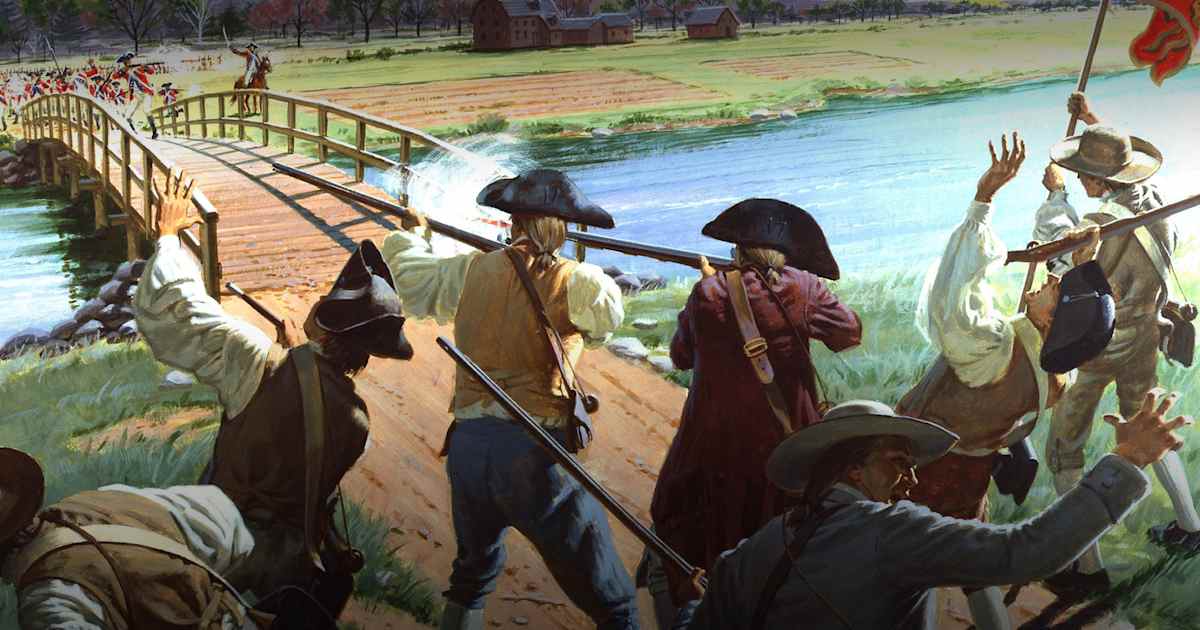
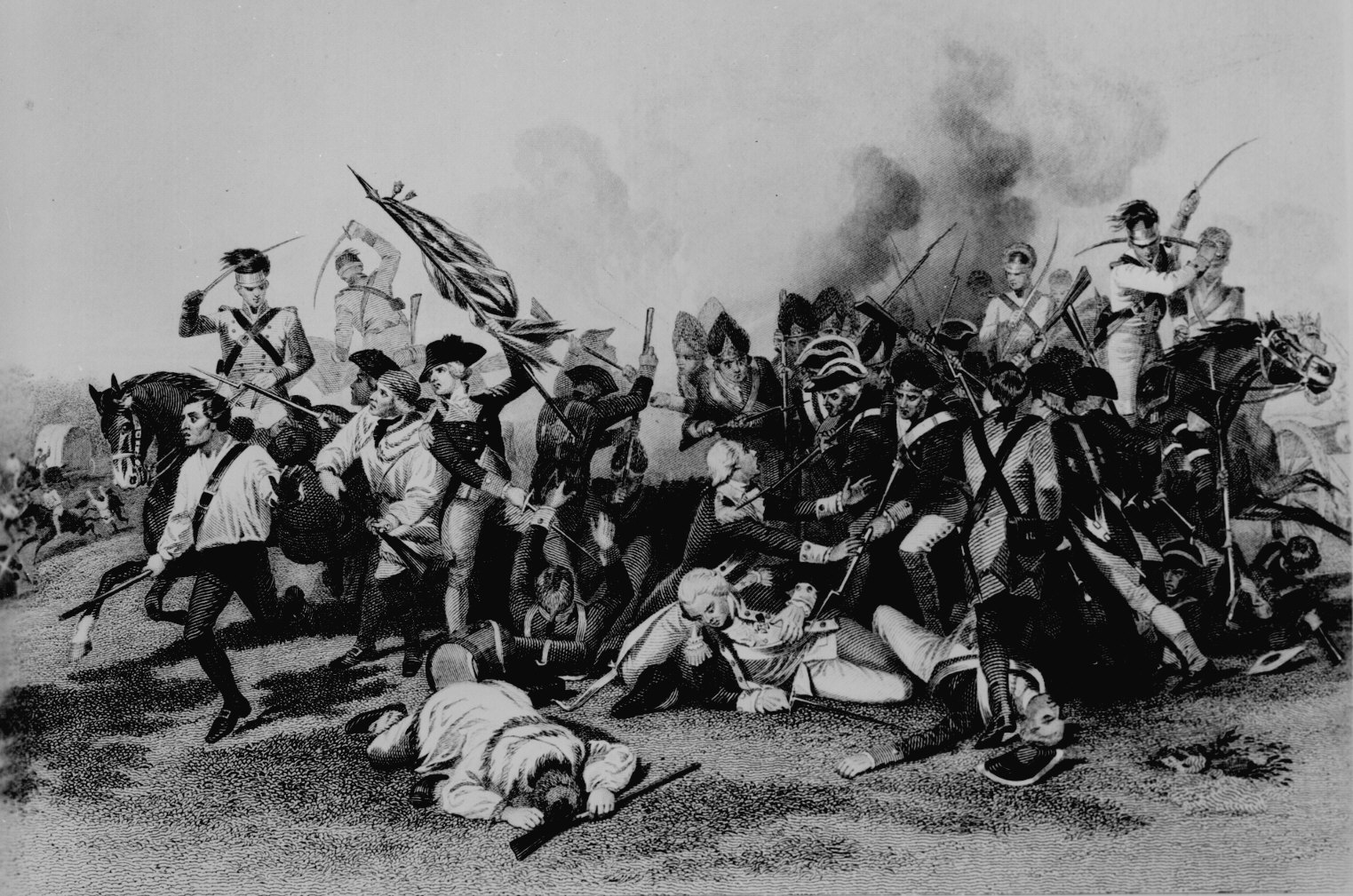
A paining of American and British forces fighting in the South
The British attempted to exploit the collapse of the Continental Army in the region by recruiting Loyalist militias. One of the most infamous Loyalist victories came at the Battle of Waxhaws in May 1780, where Lieutenant Colonel Banastre Tarleton’s troops defeated a force of American cavalry and infantry. Reports that American soldiers had been killed after attempting to surrender helped create the notorious reputation of “Tarleton’s Quarter.” The violence of the Southern campaign increasingly turned the conflict into a war between neighbours. Communities were divided between those supporting independence and those remaining loyal to Britain, while neither side could be certain who controlled the countryside.
Meanwhile, the American military leadership attempted to rebuild its forces. Congress initially turned to Horatio Gates, the celebrated victor of Saratoga, believing that his previous success made him the obvious choice to command the Southern army. Gates marched into South Carolina with the intention of confronting the British before they could consolidate their gains. His decision proved disastrous. On August 16th, 1780, Gates confronted a British army commanded by General Charles Cornwallis at the Battle of Camden. The American army collapsed almost immediately. Many of the militia troops fled without seriously engaging the British, while the Continental soldiers who remained were overwhelmed. Gates himself was forced to retreat from the battlefield, eventually travelling hundreds of miles away from his shattered army.
An illustration of the Battle of Camden
The defeat effectively destroyed Gates’ reputation as a military commander. The man celebrated for Saratoga had now presided over one of the most humiliating American defeats of the war. George Washington therefore selected a new commander: Nathaniel Greene. Greene understood that the Americans could not defeat Cornwallis by simply confronting the larger British army in a conventional battle. Instead, he adopted a strategy of attrition and manoeuvre. His objective was not necessarily to destroy the British in a single decisive engagement, but to force them to constantly march, fight and consume supplies while American forces remained capable of returning to the battlefield.
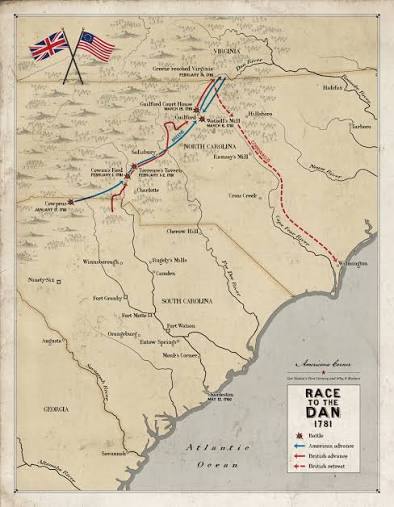
Greene famously divided his army, sending part of it under Daniel Morgan into western South Carolina. Cornwallis responded by sending Lieutenant Colonel Banastre Tarleton to destroy Morgan’s force. Instead, Morgan turned the tables. On January 17th, 1781, Morgan defeated Tarleton at the Battle of Cowpens. The American victory inflicted severe casualties on the British and forced Cornwallis to pursue Greene’s army into North Carolina. What followed became known as the Race to the Dan.
A map of Greene’s northern retreat
Greene deliberately retreated northwards, forcing Cornwallis to chase him across increasingly difficult terrain. The British army was constantly forced to march in pursuit of an enemy that repeatedly escaped them. By the time Cornwallis reached the Dan River, Greene had successfully crossed into Virginia and escaped. The retreat had achieved its purpose. Greene had preserved his army while forcing Cornwallis to exhaust his men and supplies. Greene then returned to North Carolina with reinforcements and prepared to confront Cornwallis once again.
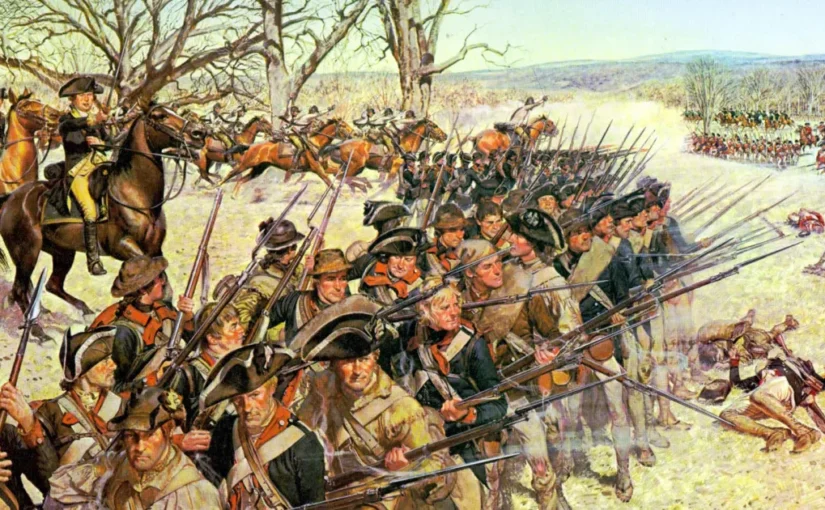
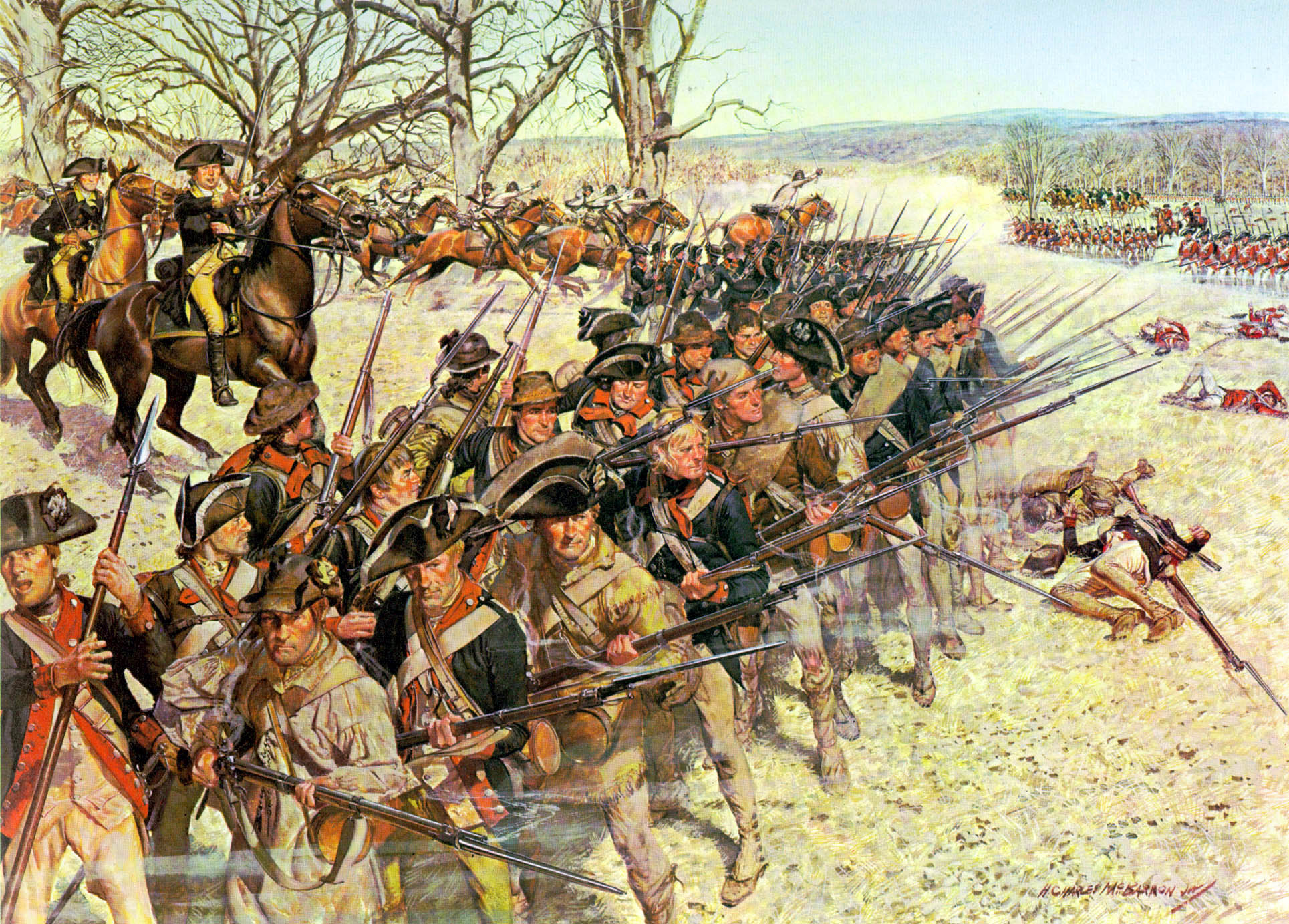
On March 15th, 1781, the two armies met at the Battle of Guilford Courthouse. The Americans were eventually forced from the battlefield, giving Cornwallis a tactical victory. But it was a devastating one. British casualties were so severe that Cornwallis could no longer afford to pursue Greene’s army into the countryside. The Americans had lost the battle, but strategically, Greene had achieved much of what he wanted. Cornwallis had been forced to fight his way through North Carolina while suffering heavy casualties and struggling to maintain his supply lines. Greene’s army, meanwhile, remained intact.
A painting of the Battle of Guilford Courthouse
The Southern Campaign therefore demonstrated one of the central problems facing the British war effort. Britain could still win individual battles and capture major cities, but it was becoming increasingly difficult to translate those victories into lasting control. The Americans did not need to destroy the British army outright. They simply needed to survive longer than Britain was willing to continue fighting.
Greene continued campaigning throughout the Carolinas, gradually forcing British forces to abandon much of the territory they had captured. Cornwallis eventually decided to move his army north into Virginia, where he hoped to establish a new British base and coordinate with reinforcements. Instead, he would find himself marching towards the decisive confrontation of the entire war.
An illustration of Cornwallis with some of his men
The British Southern strategy had begun with the capture of Savannah and Charleston and the belief that Loyalist support would restore the colonies to the Crown. By 1781, however, the countryside was consumed by partisan warfare, British supply lines were overstretched and American armies remained in the field. The war in the South had not been won by the Americans through one spectacular victory. Instead, Greene and his commanders had gradually worn down the British position, demonstrating that an army capable of winning battles could still lose a war.
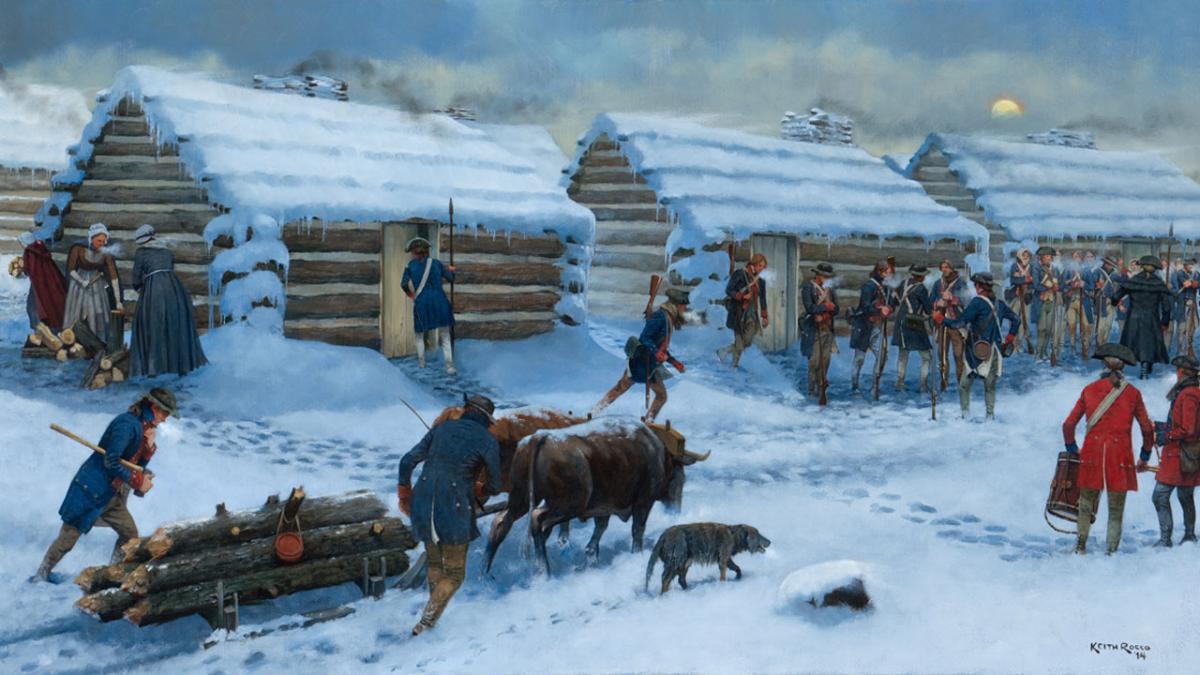
The American victory at Trenton and Princeton had prevented the Continental Army from collapsing, but Britain still possessed enormous military advantages. The British army controlled New York, had captured Newport in Rhode Island and was preparing to crush the rebellion in the southern colonies. Washington’s army therefore spent much of the winter of 1777 in Morristown, New Jersey, attempting to recover from the previous year’s disastrous campaign.
An illustration of the encampment at Morristown
The British attempted to regain the initiative in New Jersey, but Washington’s army proved much harder to destroy than expected. British forces were repeatedly harassed by American troops and militia, while Washington avoided committing his entire army to a battle that could result in its destruction. By the spring, the British had largely withdrawn from southern New Jersey and concentrated their forces elsewhere.
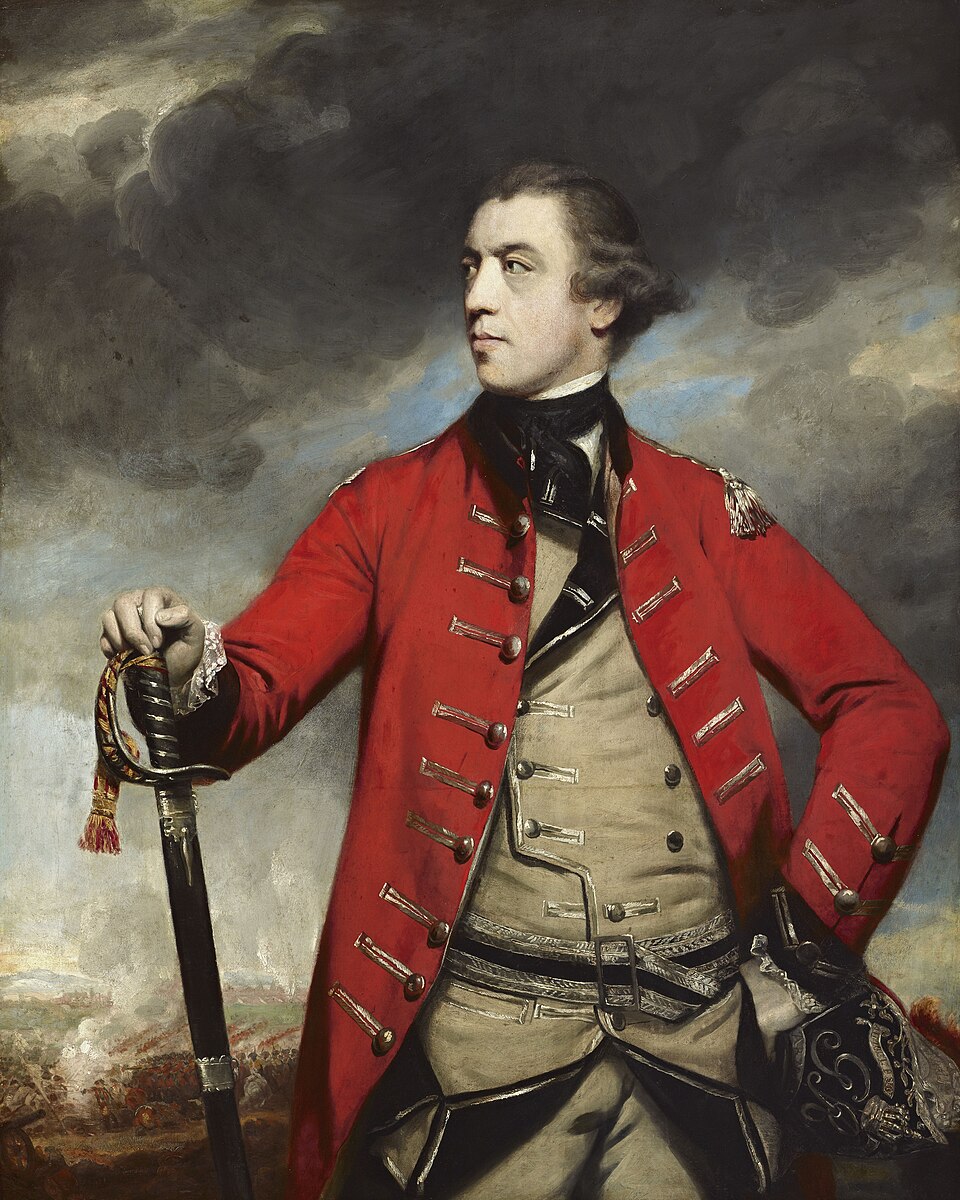
Britain’s attention now turned towards a potentially decisive strategy: separating New England from the rest of the American colonies. The Hudson River provided a natural route for doing so. If British forces could advance south from Canada while another army moved north from New York, they could meet somewhere along the Hudson Valley and effectively cut the rebellion in half. The northern part of this operation was entrusted to General John Burgoyne. His army advanced south from Canada in the summer of 1777, capturing Fort Ticonderoga before continuing towards the Hudson Valley. Meanwhile, General William Howe was supposed to move north from New York and meet Burgoyne.
A portrait of General Burgoyne
Instead, Howe made a crucial decision that would change the course of the war. Rather than marching north, he decided to attack Philadelphia, the political capital of the revolution. After defeating Washington at the Battle of Brandywine, British forces occupied Philadelphia in September 1777, forcing the Continental Congress to flee to York, Pennsylvania. Militarily, Howe had achieved an impressive victory. Politically, however, Philadelphia was less important than the British expected. Congress simply relocated, while Washington’s army remained in the field. More importantly, Howe’s decision meant that Burgoyne was now advancing through hostile territory without the support he had been promised.
Burgoyne’s army increasingly struggled with American resistance and a lack of supplies. American militia flooded into the region, while General Horatio Gates assembled a growing Continental force to block the British advance. The resulting confrontation centred on Saratoga, New York. Benedict Arnold once again played a crucial role. Arnold had become increasingly frustrated with Congress and his fellow officers, believing that his contributions were being overlooked while other generals received promotions and credit. At Saratoga, he clashed with Gates over how the American army should respond to the British advance.
A map of the area from the period
Gates preferred to maintain a defensive position and allow the British to attack the American fortifications. Arnold believed the Americans should take the initiative and strike Burgoyne before he could reorganise. Although Gates opposed an aggressive attack, Arnold eventually led troops into battle during the fighting at Bemis Heights. The American assault inflicted heavy casualties on Burgoyne’s army, and Arnold himself was seriously wounded after leading a charge against the British position. The Americans won the Battle of Saratoga on October 17th, 1777. Burgoyne was surrounded, cut off from reinforcements and supplies, and ultimately forced to surrender his entire army. The victory was a turning point. For the British, Saratoga demonstrated that the rebellion could not simply be crushed by military force. For the Americans, it provided desperately needed evidence that independence was achievable. But its greatest consequences were diplomatic.
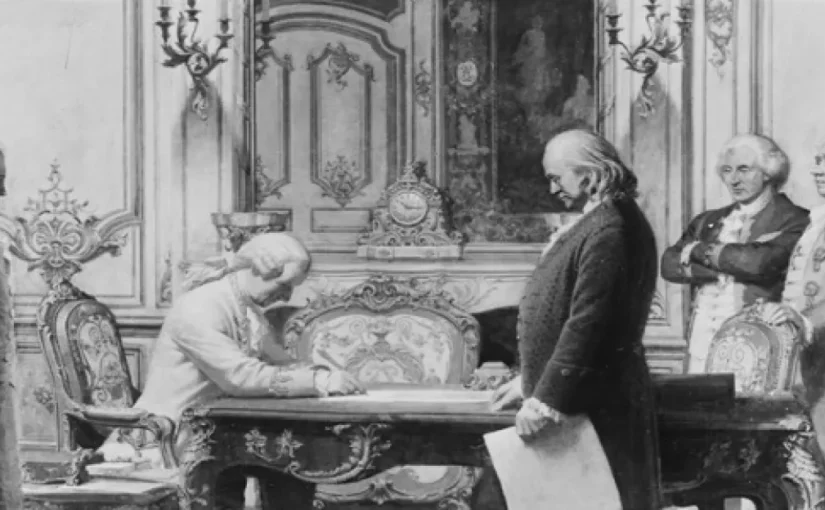
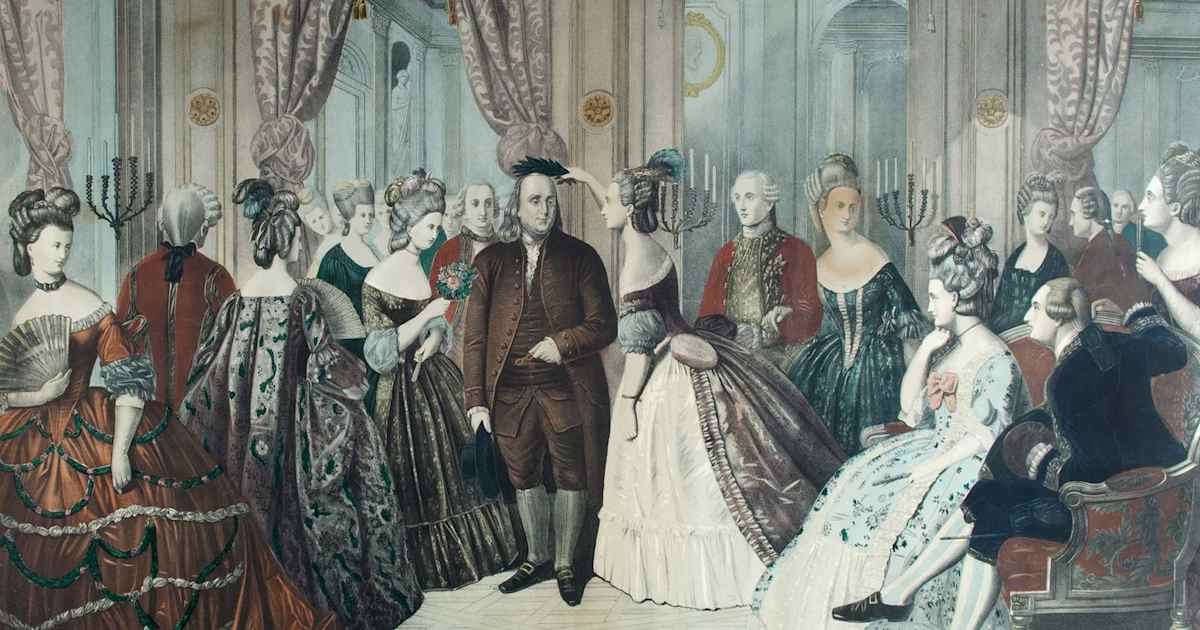
Benjamin Franklin had been sent to France to persuade King Louis XVI’s government to support the American cause. France had several reasons to oppose Britain. The two countries had been bitter rivals for generations, and France had lost much of its North American empire to Britain during the Seven Years’ War. Supporting the Americans offered France an opportunity to weaken its greatest rival and potentially recover some of the influence it had lost. Franklin proved to be an exceptionally effective diplomat. He cultivated influential figures at the French court and presented the American Revolution as a legitimate struggle against British tyranny. His personal popularity in Paris also helped him build support for the American cause. He became something of a celebrity in French society, although his diplomatic activities were considerably more important to the revolution than his famously active social and romantic life.
A painting of Franklin in the Parisian Court
The French government had already been secretly supplying the Americans with weapons, ammunition and other military supplies. However, openly entering the war against Britain was a much more dangerous decision. Saratoga changed the calculation. The American victory demonstrated that the Continental Army could defeat a major British force. France now had reason to believe that the United States might actually survive. In February 1778, France formally recognised American independence and signed the Treaty of Amity and Commerce and the Treaty of Alliance with the United States. The consequences were enormous.
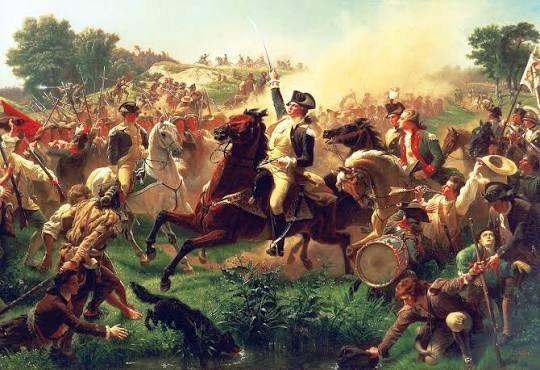
Britain was no longer fighting a rebellion confined to its thirteen colonies. It was now fighting France as well, and eventually Spain and the Dutch Republic would also become involved in the wider conflict. The British were forced to divert troops, ships and resources away from North America to defend their possessions and interests around the world. Burgoyne’s surrender therefore achieved something that Washington had been unable to accomplish through battlefield victories alone: it transformed the American Revolution into an international war. The British abandoned Philadelphia in the summer of 1778 as the new French threat forced them to concentrate their forces around New York. Washington followed them across New Jersey, eventually fighting the British at the Battle of Monmouth. The battle was largely inconclusive, but the Continental Army demonstrated how much it had improved since the disasters of 1776.
A painting of the Battle of Monmouth
Much of that improvement had taken place during the winter at Valley Forge. Washington’s army endured freezing temperatures, hunger and disease, but it also received an extraordinary contribution from a Prussian military officer, Friedrich Wilhelm von Steuben. Arriving at Valley Forge in 1778, Steuben introduced a systematic programme of training, teaching soldiers how to march, manoeuvre, maintain formations and handle their weapons effectively. He imposed strict discipline and helped turn the Continental Army from a collection of inexperienced militia and volunteers into a more professional fighting force.
By the time spring arrived, Washington’s army was considerably better trained and disciplined than the force that had been driven out of New York two years earlier. The war had entered a new phase. Washington had survived the disasters of 1776, Saratoga had brought France into the conflict, and the Continental Army was becoming a genuine professional fighting force. Britain still controlled major cities and possessed enormous resources, but the rebellion was no longer an isolated colonial uprising. It had become a global war – and Britain’s chances of crushing American independence were rapidly disappearing.
The year was 52 BC. For six years, Rome’s armies had fought a relentless campaign to conquer Gaul, defeating one tribe after another and extending Roman power ever deeper into Western Europe. Now, that long struggle was approaching its decisive moment at the fortified hill town of Alesia, in what is now the Burgundy region of France. The settlement, capital of the small Mandubii tribe, was one of the largest strongholds in Gaul, with an estimated population of between 80,000 and 170,000 people once the surrounding refugees arrived during the siege. The previous year’s campaigns had been among the bloodiest of the Gallic Wars, convincing many tribal leaders that Roman conquest threatened not only their political independence but their entire way of life. Although Julius Caesar had originally governed only the Roman provinces of Cisalpine Gaul, Illyricum and Gallia Narbonensis, his victories increasingly made it clear that he intended to bring the rest of Gaul under permanent Roman control. Roman armies occupied Gallic territory, demanded tribute, took hostages and intervened in local politics. Many Gauls also feared what Roman domination could mean for their traditional customs and religious institutions. Amid growing resentment, a young Arvernian noble named Vercingetorix succeeded where countless leaders before him had failed. Setting aside centuries of rivalry, he forged an unprecedented alliance between dozens of Gallic tribes, united by a single goal: to drive the Romans out of Gaul once and for all.
A statue of Vercingetorix near the village of Alise-Sainte-Reine, France
On Caesar, he had been a great political and military force in Rome for a long time. After serving as consul in 59 BC, Caesar secured an unprecedented five-year command as governor of the prior mentioned territories through his alliance with Gnaeus Pompeius Magnus, more commonly known as Pompey, and the immensely wealthy Marcus Licinius Crassus through an informal political partnership later known as the First Triumvirate. The command granted him four veteran legions and, more importantly, an opportunity. Burdened by enormous debts and surrounded by political rivals in Rome, Caesar needed military victories to enrich himself, reward his soldiers and build the prestige necessary to dominate Roman politics. Over the next six years, his campaigns transformed him into one of the Republic’s greatest generals, but they also made him powerful enough to alarm many members of the Senate.
By 52 BC, everything Caesar had built was at stake. A united Gallic revolt under Vercingetorix threatened to undo six years of campaigning and destroy the reputation that his political future depended upon. Victory at Alesia would not simply secure the conquest of Gaul; it would provide Caesar with the wealth, glory and military prestige that could ultimately bring a rise to absolute power. Defeat, by contrast, would likely have ended both his military career and his political ambitions.
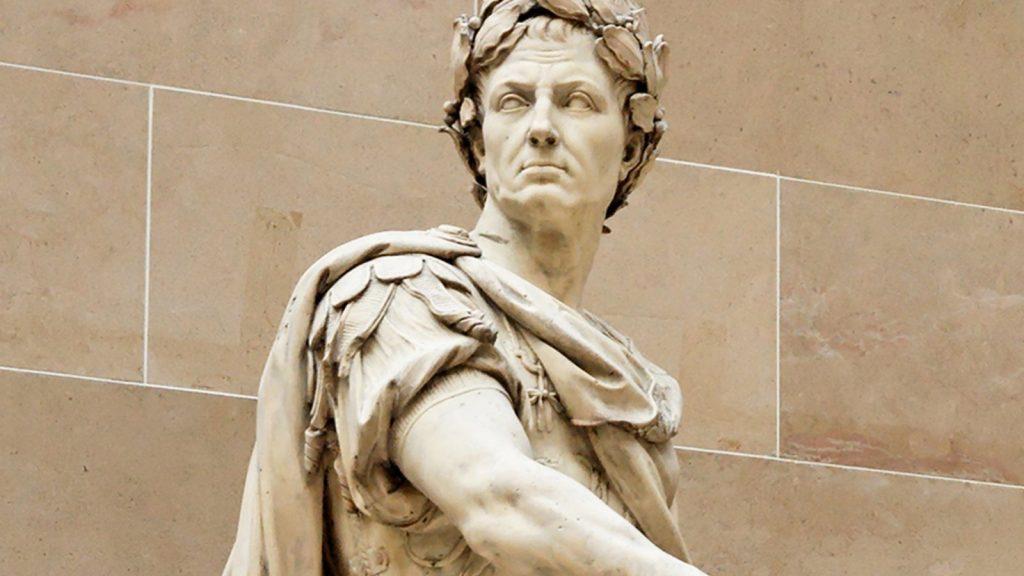
A statue of Julius Caesar in the Louvre in Paris, France
Vercingetorix knew that he could not defeat the Roman legions in a conventional pitched battle. Caesar’s army was among the most disciplined and experienced fighting forces in the ancient world. Instead, the Gallic leader adopted a ‘scorched-earth’ strategy, ordering tribes to burn their own villages, crops and food stores before the Romans could seize them. His hope was simple: if Caesar’s army could not feed itself, it would be forced to retreat. The strategy was proving effective until the wealthy city of Avaricum pleaded to be spared. Reluctantly, Vercingetorix agreed. Caesar immediately besieged the city and, after capturing it, his starving troops massacred much of its population and replenished their supplies. Although Vercingetorix soon recovered with a significant victory over Caesar at Gergovia, proving that the Romans were not invincible, he refused to risk another major engagement in open ground. Instead, after a series of cavalry clashes, he withdrew with roughly 80,000 warriors into the heavily fortified hill settlement of Alesia, believing its formidable natural defences would force Caesar to abandon the pursuit. Instead, Caesar made one of the boldest decisions of his military career: rather than retreat, he resolved to besiege the city itself.
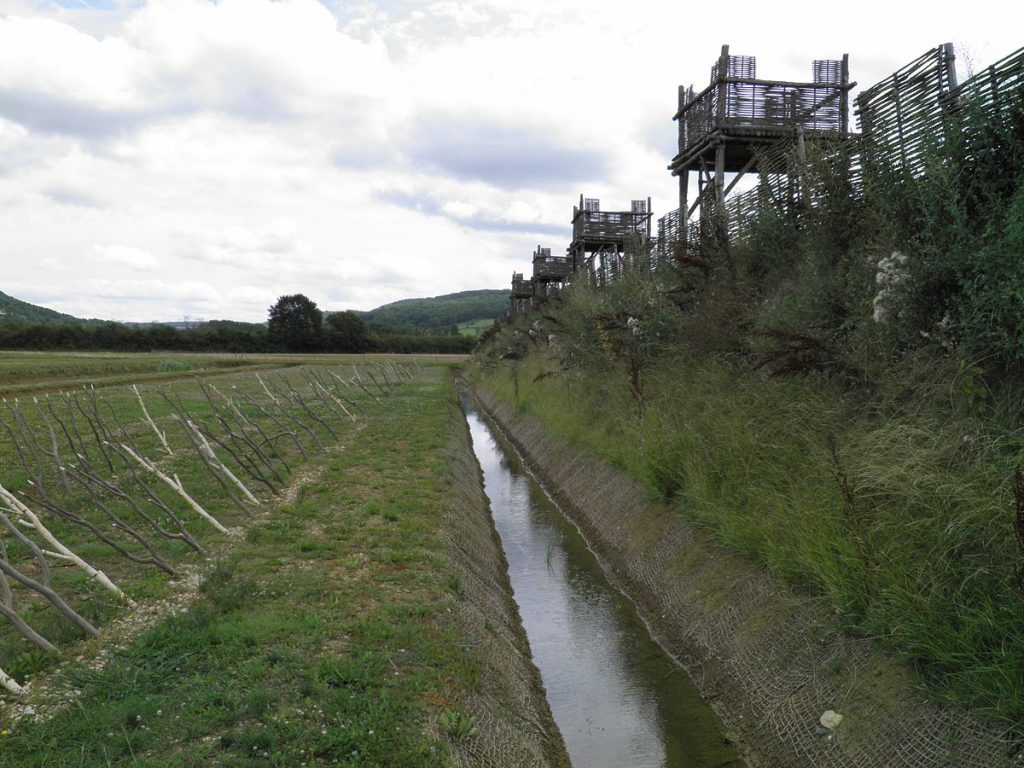
This decision to besiege the city did not initially concern Vercingetorix, as he believed that he could effectively perform a pincer manoeuvre on the Roman army. What he did not expect, however, was the intensity of the siege. The Romans wasted no time. Within hours, thousands of legionaries had begun digging trenches and marking out what would become one of the greatest siege systems ever constructed. Over the next few weeks, Caesar encircled the entire town with a ten mile long wall which reached 12ft high. This wall, called the Circumvallation, was not without its defences. If the Gauls wanted to assault the wall, they would first have to cross a 20ft wide trench, before they would encounter two more trenches, both 15ft deep and one filled with water from the nearby rivers. This defence was littered with countless hidden defensive traps. If they did reach the wall, sharpened stakes projected from the earth would tear apart anyone attempting to climb the defences.
A recreation of the rampart of the Circumvallation
The construction did not come without opposition. Caesar wrote that, during the construction of the siege fortifications, a cavalry battle took place in the three mile stretch of land between the wall and the town. The fight initially leaned in favour of the Gauls, before Caesar sent forth his infamous Germanic cavalry, who launched a devastating charge with such vigour and terror that it sent them running back to their encampment. As the men attempted to claw their way back through the city gates, some even attempting to climb the wall, Vercingetorix, fearing the Romans would exploit the confusion and force their way into the town, opted to close the gates, leaving countless terrified soldiers to be massacred at the gates of Alesia.
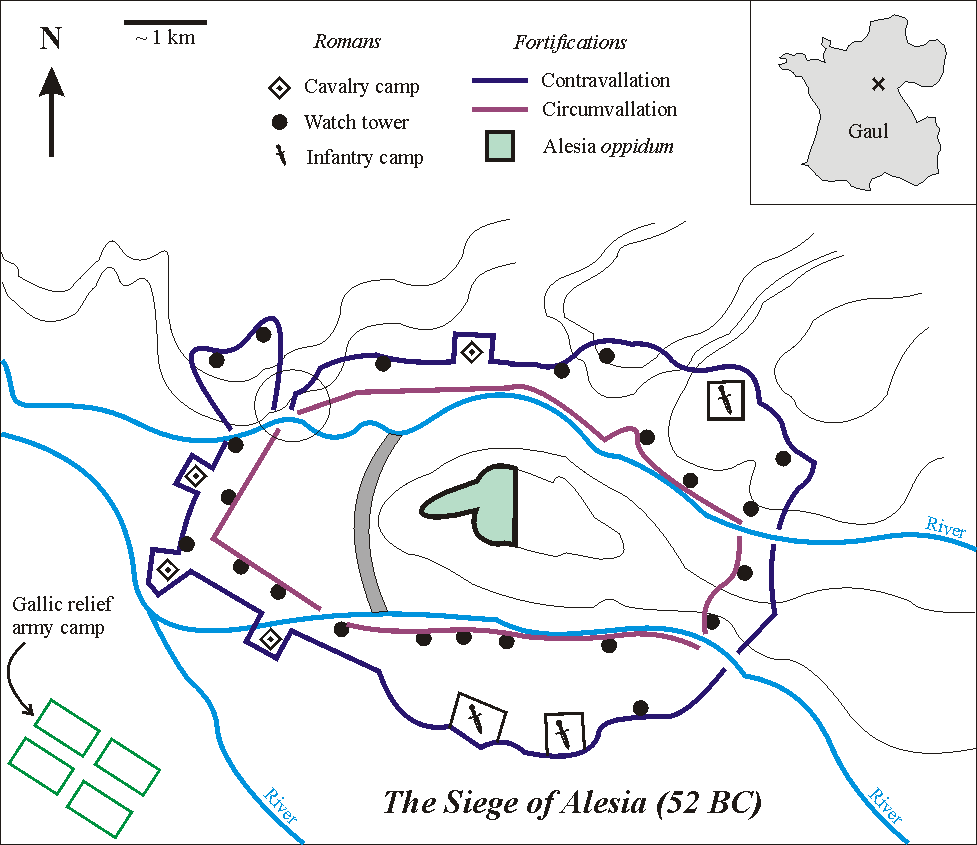
As construction of the fortifications continued, Vercingetorix concocted a plan to relieve his men. Under the cover of night, he ordered his cavalry to sneak past Roman lines and gather as many reinforcements as they could from across the Gallic lands to crush the Roman siege and bring a swift end to the war. According to Caesar, the relief force eventually numbered over 240,000 warriors, although modern historians generally believe the true figure was considerably smaller. Caesar, who learnt of this from captives and Gallic deserters, took a bold measure. In an effort to repel any would be attackers, he built a second wall around the first, effectively trapping his own army between two vast defensive lines. The second wall, called the Contravallation, had many of the same fortifications the Circumvallation did but instead faced outwards from Alesia, pushing the Roman army in between the two walls.
A map of the fortificiations surrounding Alesia
By now, the conditions within the city had grown grim. Their food supplies had begun dwindling and Vercingetorix not only had to feed his own army but the citizens of Alesia as well as countless refugees who had fled there following the Roman conquest. He offered a solution that would allow the citizens safe passage and food: allowing all people who couldn’t fight into the ‘no-mans land,’ hoping they would be allowed to pass through the Roman defences or feed them himself. Whilst partially an act of mercy, it was also a logistical decision to allow him to prioritise supplies for his own men. However, upon their reaching of the wall, Caesar denied the group, largely consisting of women and children, passage through his line. Vercingetorix also refused to readmit them, knowing that every extra mouth consumed precious food that his warriors needed if they were to survive until the relief army arrived. For days, the abandoned civilians wandered the narrow strip of land between the Roman and Gallic defences, begging both sides for food. Neither relented. Many eventually died where they stood, victims of a siege in which starvation had become another weapon of war.
Hoping to overwhelm the Romans, the Gallic relief army launched a major assault under the cover of darkness while Vercingetorix ordered simultaneous attacks from inside Alesia. Making use of ladders and wicker hurdles to bypass trenches and hooks to destroy the spikes, some of the Gallic army managed to begin to scale the wall, while arrows and other projectiles kept the Romans at bay. However, they were met by disciplined Roman legionaries, who fought from behind the ramparts and cut them down as they attempted to crest the peak of the wall. The onslaught lasted until dawn, with the morning light of day revealing the scale of the carnage. Both side suffered losses but the Romans held the line. The wall was still standing.
An illustration of Gallic warriors and Roman Legionnaires fighting at Alesia
Meanwhile, Commius, one of the commanders of the reinforcements, recognised that one section of Caesar’s outer line, built across steep and uneven ground, was less formidable than the rest. On high ground now commonly identified as Mount Réa, some of his scouts had identified a weak point where the Romans had failed to construct adequate fortifications due to hilly terrain. Commius deduced that if Caesar could be distracted by a more direct assault that a force, led led by Vercassivellaunus – a cousin of Vercingetorix according to Caesar, could breach the Roman line and liberate the town.
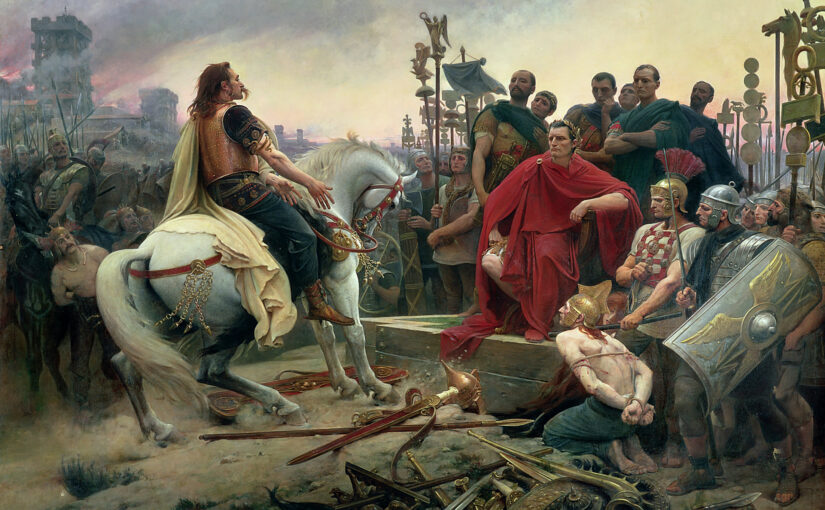
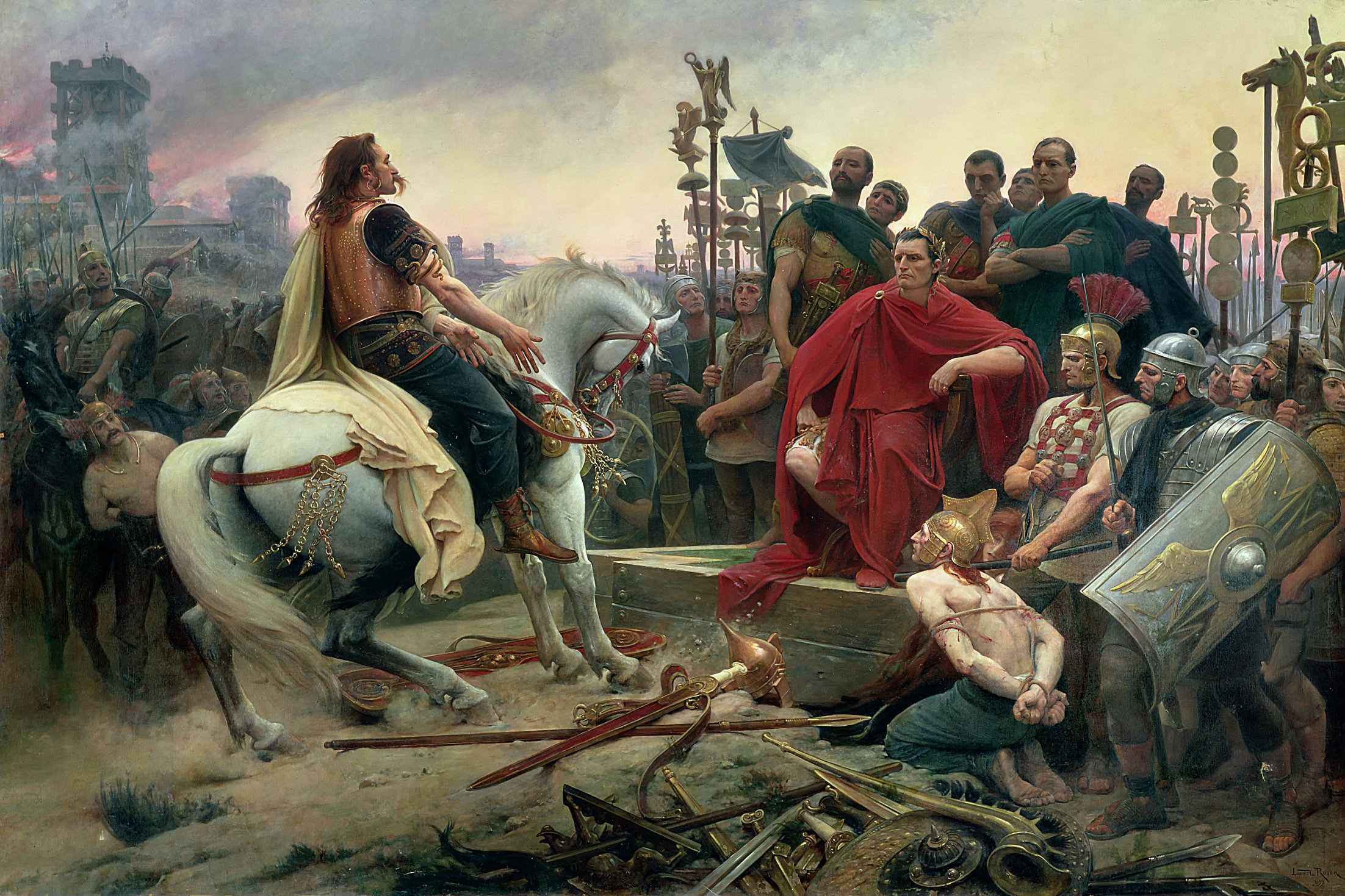
The attack went ahead at daybreak, with both the inner and outer wall under assault simultaneously. Caesar, notified of the assault near Mount Réa, took decisive action, going into the field of battle himself to confront the assault, Donning his distinctive scarlet commander’s cloak so his men could see him, Caesar rode to the threatened sector and ordered his cavalry to break from the fortifications and flank the force at Mount Réa from behind. Their final chance at repelling Rome dwindled in a second as the cavalry cut down the men behind them. The Gauls panicked, broke rank and were massacred in what had now quickly turned into a slaughter. The scene of them being trampled and cut to death caused the rest of the army to flee. They lost the battle. The next day, Vercingetorix surrendered to Caesar. Later Roman writers claimed he rode from the city in full armour before laying his weapons at Caesar’s feet, although whether the surrender unfolded exactly this way remains uncertain. The Gallic wars were over and Caesar was triumphant.
A painting of Vercingetorix surrendering to Caesar
Vercingetorix remained a prisoner for six years before being displayed in Caesar’s triumph through Rome in 46 BC. Once the celebrations ended, he was executed by strangulation in the Tullianum prison. His defeat marked the effective end of organised Gallic resistance and brought almost all of Gaul under Roman rule. For Caesar, Alesia was the crowning achievement of the Gallic Wars. The conquest made him unimaginably wealthy, won him the unwavering loyalty of his veteran legions and transformed him into the Republic’s most celebrated general. Yet his growing prestige alarmed many senators back in Rome. In many ways, the siege of Alesia did not simply decide the fate of Gaul; it set Rome itself on the path from republic to empire.